The Facebook inactive account policy is one sentence long
Does Facebook delete inactive accounts? On paper it can, and in writing it commits to no date. Nearly every rumour about Facebook inactive account deletion grows in the space between that permission and a missing schedule.
Meta's Terms of Service, effective January 1, 2025, raise the subject once. Section 4.2 reads: "We may disable or delete your account if, after registration, your account is not confirmed, your account is unused and remains inactive for an extended period of time or if we detect that someone may have used it without your permission and we are unable to confirm your ownership of the account" (Meta Terms of Service, read October 2026). Nowhere do the Terms turn "an extended period of time" into days, months or years. Three details matter. "May" grants a right and sets no duty. Disabling is named before deleting, which is the accurate reply to does Facebook deactivate inactive accounts: the Terms allow it and name no trigger. And the same section promises notice, "we'll let you know and explain any options you have to request a review", subject to listed legal and technical exceptions.
So does FB delete inactive accounts on a timer, the way some services do? Google publishes one, reserving the right to delete a personal account left inactive for at least two years (Google inactive account policy). Facebook publishes none, and pages quoting "three months" or "two to three years" cite no Meta source.
An old profile that refuses a login may be disabled, not erased, and the two call for different fixes. Rule strikes are appealed through the steps to get unbanned from Facebook, and the notices behind them are explained in what happens when you report a post on Facebook.
Your Reputation Solution is the account recovery and reputation firm behind this guide: it prepares appeals, ownership proofs and impersonation reports for people and brands whose profiles went missing.
When does Facebook delete inactive accounts, and what else removes one?
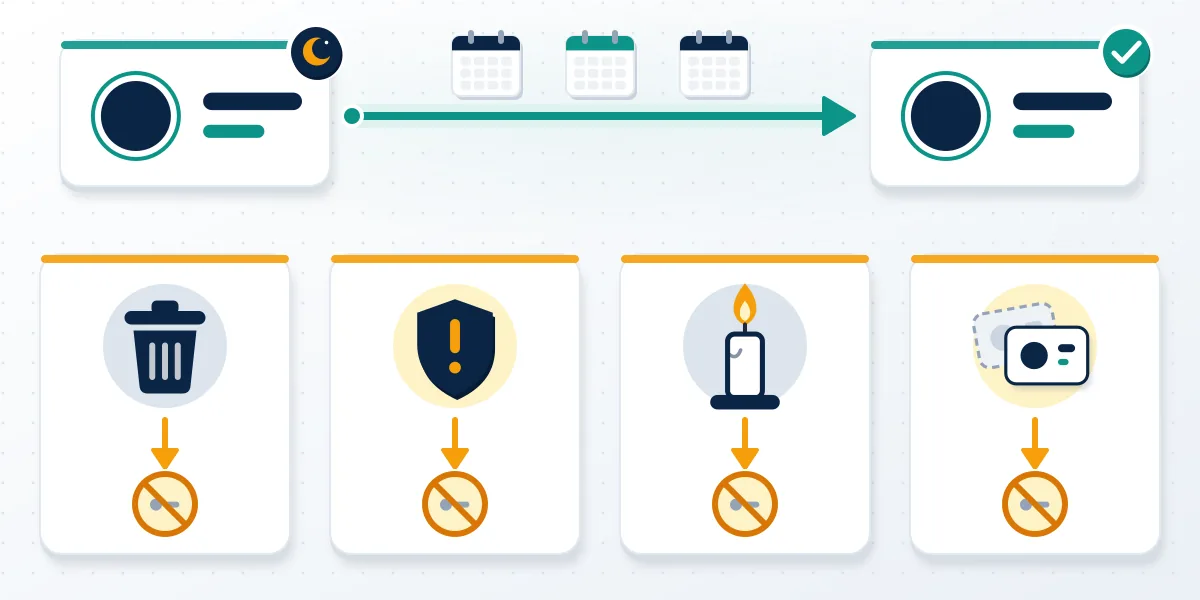
No date exists, because Section 4.2 says "an extended period of time" and nothing more precise.
That settles the longer versions too. Does Facebook delete inactive accounts after 10 years? Nothing published says ten, five or one. Will Facebook delete inactive accounts next year? Only Meta knows, and its Terms leave the choice open.
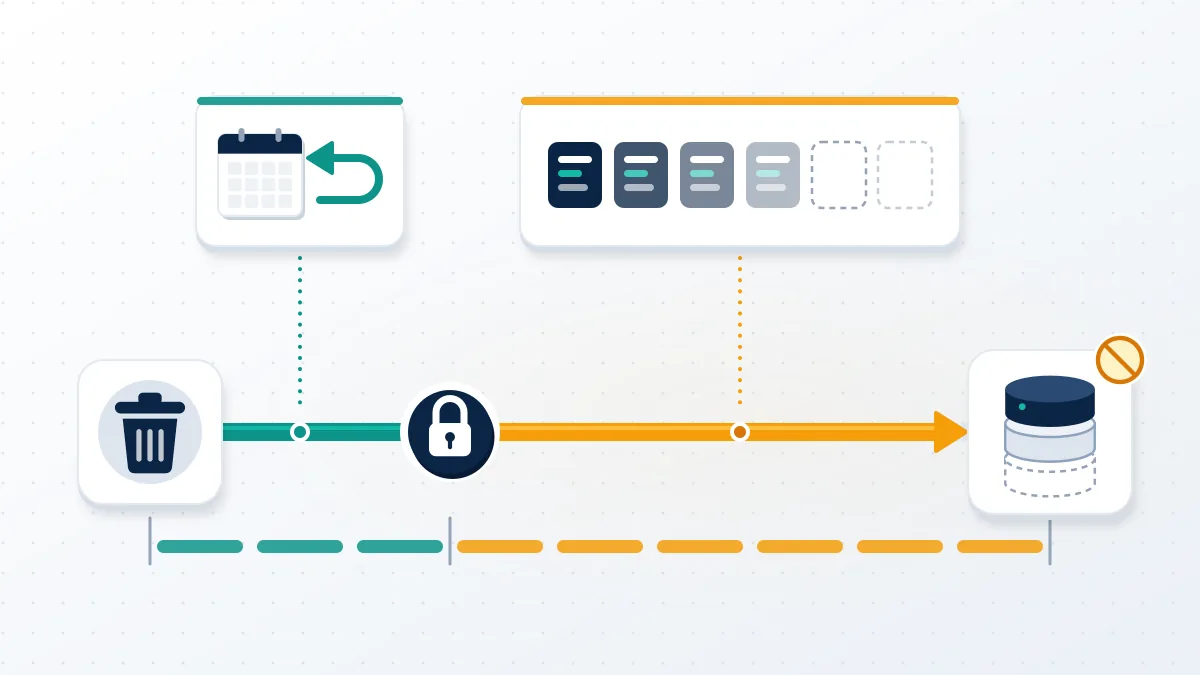
What does remove a profile is far better documented, and each cause leaves a different trace. Owners come first: a deletion request can be cancelled for 30 days, after which "your account and all of your information will be permanently deleted", and clearing everything posted "may take up to 90 days" (Facebook Help Center, read October 2026). Deactivation is the opposite case, since a deactivated profile is hidden from everyone and returns "at any time by logging back in". Enforcement is second: accounts that breach the Community Standards are disabled, and sign-ups never confirmed fall under the same Section 4.2 sentence. Death is third. Once Facebook learns of it, the profile is memorialized and stays online unless the person or the family asked for removal. So does Facebook remove inactive accounts? Its rules permit that and attach no clock, which is why people asking does Facebook delete unused accounts are usually looking at one of these causes.
Closing a profile yourself is covered in how to delete an account from Facebook; for a relative's profile, read how do you close a Facebook account when someone dies.
Elsewhere the clocks are real. Telegram erases idle accounts on a self-destruct timer, as how do you delete a Telegram account explains, while how do you delete an old Twitter account deals with logins lost years ago.
Clean-up on chat and video apps follows its own rules, set out in how do you delete a Snapchat account and how do you delete a YouTube channel.
When Your Reputation Solution reviews a "Facebook deleted my old account" case, the first checks are plain ones: whether the owner deactivated it years earlier, whether its email address has since closed, and whether it was disabled after a hijacker used it.
Searches such as "does facebook delete inactive accounts reddit" and "do facebook delete inactive accounts" exist because the official text is one clause. Treat any stated number of years as a guess.
How long until a Facebook username becomes available?
Nobody outside Meta can say, because Facebook publishes rules for holding a username and none for releasing one.
| What happened | Facebook's wording | What it means for the name |
|---|---|---|
| Owner changed the username | "You may not be able to reclaim your original username" | No release date published |
| Owner deleted the profile | Deletion can be cancelled for 30 days | Tied up for at least that long |
| Profile deactivated | Returns "at any time by logging back in" | Nothing says it is released |
| Profile memorialized | "No one can log in to a memorialized account" | Stays with the profile |
| Page left idle | Username "can also be removed because of inactivity" | Possible, no period given |

So when does a Facebook username become available? Only once the account holding it lets go, and even then no timing is promised. Facebook's guidelines say usernames "are generally given to the first individual or business who requests the name" and that "you can't have a username that is already being used" (Facebook username guidelines, read October 2026). The question "if i change my facebook username will it become available" gets a one-line reply: "You may not be able to reclaim your original username once you have changed it." Whether somebody else can take it, and how soon, is not stated. People typing "how long before facebook username becomes available" want a number, and none is published for profiles. Pages differ in kind, not in detail: "A Page's username can also be removed because of inactivity", with no period attached. Dots and capital letters create no new name, so johnsmith55 and John.Smith55 count as one.
In username cases, Your Reputation Solution prepares and files the report or appeal for the account owner; Meta alone decides what happens to a name.
Old addresses outlive the rename. A dead profile link can sit in results for months, which is where how to remove a webpage from Google search helps, and a stranger's profile reposting your photos is a matter of Facebook copyright infringement, not availability.
Can you get an old Facebook username back?
Sometimes, and only through the account that still holds it or through a rights-based report.
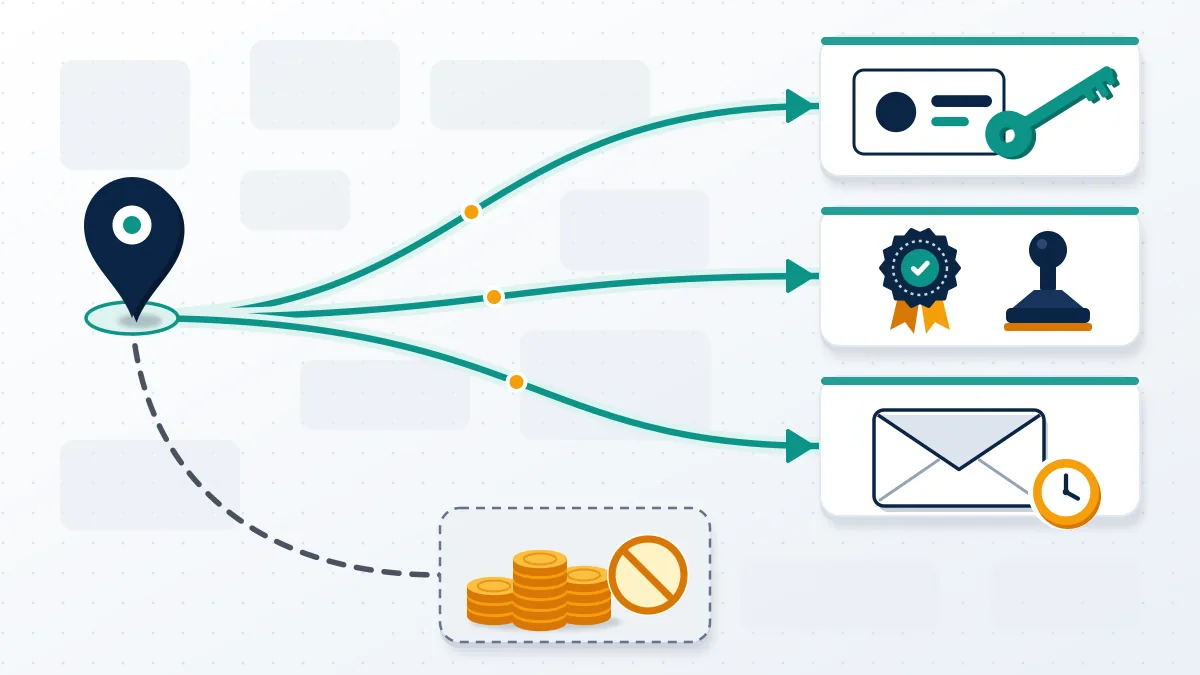
People searching how to get old Facebook username back sit in one of three positions. First, the name is still attached to an old profile of yours: recover that login through Facebook's account recovery page and the name comes with it. Second, you changed it and want it again. Open Settings and privacy, then Settings, Accounts Center, Profiles, pick the profile, select Username and type the old name; Facebook either accepts it or reports it unavailable. Third, someone else holds it. Inactivity gives you no claim, since usernames go to whoever asked first, and the Terms let Meta change a username only "in certain circumstances (for example, if someone else claims the username and it appears unrelated to the name you use in everyday life)". That leaves trademark and impersonation reports, both judged on evidence; the forms and proofs are laid out in how to claim a Facebook username.
Dormant accounts wearing your name and photos break the rules whatever their last login. See how to report an impersonator on Facebook and, for copies of a personal profile, how can I report a fake Facebook account.
Sellers offering to "release" a taken name follow a known fraud pattern: how to report a Facebook scam covers their profiles, and how to report someone on Facebook Marketplace covers their listings.
Abandoned profiles also get hijacked and used for threats. Both reporting threats on Facebook and how to report a Facebook account for harassment explain what to file and what to keep.
Paid shortcuts are where Your Reputation Solution draws its line: no buying, selling or "unlocking" of usernames, no password requests, and no promise that Meta will hand a name over. Those are the written limits of the service.
What to do with a Facebook account you no longer use
Decide once: sign in to keep it, or delete it yourself.
Locked out of an old Facebook profile, or watching a dormant account use your name? Your Reputation Solution reviews the case, tells you which route applies and prepares the filing with you. Have the case reviewed for free.
Keeping the profile takes little. Because Section 4.2 names unused accounts and unconfirmed ones in the same breath, the safe habit is a sign-in a few times a year from a device you control. While there, confirm that the email address and mobile number on the account still reach you, since reactivation and every recovery route depend on them. Replace a reused password and turn on two-factor authentication; an unwatched profile with an old password is an easy target. Export a copy of your photos first if they matter, so that nothing depends on a rule staying the same. Closing the profile is the cleaner choice when you are done with it: deletion can be cancelled for 30 days, then becomes permanent, and Pages only you control go with it. Leaving it idle is the weak option. Exposure stays yours while control slips away.
Posts on an idle profile stay public and reportable: how do I report someone on Facebook covers people, and the report post on Facebook menu covers single posts and Pages.
Reports stay confidential, as when you report someone on Facebook is it anonymous explains, and a group you once ran can be flagged the same way through how to report a Facebook group anonymously.
Age gives stale content no immunity. A years-old false statement can still raise the question can you sue for libel on Facebook, and on video platforms the equivalent rule is the YouTube defamation policy.
TikTok needs the same decision: how to delete TikTok account without logging in covers a lost login, and when you report a video on TikTok is it anonymous covers reporting a copy of you.
Tidying a channel you still own is the smaller job, and how to remove comments on YouTube walks through it.