
Three things people call a Facebook copyright claim
A Facebook copyright claim can mean three different things, and the fix depends on which one you are holding. First comes the copyright report, which a rights owner files through Meta's intellectual property form or its designated agent. Second is a Rights Manager match, where software compares an upload against a reference file and applies a rule. Third is the removal message the poster receives after either of those.
Each track has its own rules. Copyright reports work like a legal notice under the US Digital Millennium Copyright Act: only the copyright owner or someone authorized to act for them may file one, and Meta can remove the post, photo or video without warning the poster first. Rights Manager is a matching tool that Meta grants to eligible owners of video and audio catalogs; a match rule can block the upload, leave it up and monitor its views, claim a share of its ad earnings, or send it to a queue for manual review. Blocks are visible to the uploader, who can dispute them inside the tool. Then there is the received notice, which matters most to people who never filed anything, because the appeal or counter-notice instructions arrive there. Call all three a "claim" and you will answer the wrong one.
Mixing them up is expensive. Your Reputation Solution is an account recovery and online reputation firm that prepares copyright, trademark and counterfeit reports on Facebook for rights owners and their authorized representatives, and reviews removal notices for the people who receive them.
Telling them apart takes one look at the message. Talk of a match, a reference file or ad earnings points to Rights Manager. Named reporters plus counter-notice instructions point to a legal copyright report, and if you filed it yourself, you are the rights owner waiting on a decision.
Volume changes nothing on any of these tracks. According to Meta's Help Center, the number of reports does not decide whether content comes down, which is why services that promise to mass report an Instagram account or sell a Facebook mass report tool cannot manufacture a copyright violation.
One accurate notice from the owner outweighs a thousand strangers clicking Report, so TikTok mass reporting fails for the same reason as any WhatsApp mass report tool sold with a copyright angle: the platform checks the claim, not the crowd.
Is it copyright infringement on Facebook, or a different kind of report?
It is copyright infringement on Facebook when someone copies work you created, such as a photo, video, song or text, without your permission. Brand names, logos and fake products follow trademark rules instead, and content that is unlawful for other reasons goes through a legal channel. Every Meta form rejects claims that belong on another, so sorting comes first, and before any notice goes in, Your Reputation Solution confirms that the person asking owns the work or holds the owner's written authorization.
| What happened | Where it goes | Who can file | What the form asks for |
|---|---|---|---|
| Your photo, video, music or text was copied | Copyright report form | The owner or an authorized representative | The original work, the exact URLs, sworn statements, a signature |
| Your brand name or logo is used to mislead | Trademark report form | The trademark owner or a representative | The mark and the URLs where it is misused |
| Fake goods carry your registered mark | Counterfeit Report Form | The owner, their organization or client, or someone reporting for them | A registered trademark and the listing URLs |
| Defamation, privacy or another local law | Legal removal request in the Help Center | The affected person or their lawyer | The law involved and why the content breaks it |
| Impersonation, harassment, scams | In-app report under the Community Standards | Anyone who sees it | A reason picked from the report menu |

Of these routes, a Facebook counterfeit report is the narrowest. Meta's Counterfeit Report Form defines a counterfeit as an unauthorized imitation of a product bearing the original owner's trademark, states that other types of claims will not be addressed there, and warns that abuse of the form can end the reporter's account. Put a stolen product photo on a fake-goods listing and you have two problems at once: the photo is a Facebook copyright violation, and the listing is a counterfeit, so each goes on its own form. Legal removal is different again: a Facebook legal removal request covers content that breaks a local law without touching intellectual property, such as a defamatory post, and the reviewer needs the specific law rather than proof of ownership. Owners of registered marks can also apply for Brand Rights Protection, a Meta tool that the counterfeit form describes as covering trademark, counterfeit and copyright reports in one place.
Where one listing raises both problems, Your Reputation Solution files the copyright report and the counterfeit report separately, each with only the evidence its form asks for.
Usernames sit at the edge of Facebook and copyright infringement questions, and rarely belong in a copyright form. Brand-handle squatting is a trademark matter, which is also how you would claim an inactive Instagram username or chase a taken Twitter username.
Listing fakes can cost a seller Marketplace access, so anyone facing a permanent Marketplace ban after an IP report should read the removal notice before appealing.
Reporting copyright infringement on Facebook in six steps
Meta's form lives at facebook.com/help/ipreporting/report/copyright, and older contact-form links now redirect to Meta's help request pages. Anyone searching for a copyright report form FB page or a copyright report FB link ends up there, and reporting copyright infringement on Facebook through it takes six steps:
- Confirm your standing. Only the copyright owner or an authorized representative can file, and an agency filing for a photographer needs written authorization before the first report, not after.
- Collect the exact URLs. Link each infringing post, photo, video or reel rather than the profile or Page that hosts it; a post address carries a path such as /posts/, /photo, /videos/ or /reel/, while a bare profile address stops at the account name. Screenshot every one with the date visible.
- Prove the work is yours. Keep the original file with its metadata, the first place you published it, and a registration number if one exists; US law does not require registration to send a takedown notice.
- Pick the email the poster will see. Meta regularly passes the rights owner's name, the reporter's email and the report details to the poster, so use a business address or file through a representative.
- Complete the sworn statements. You confirm a good-faith belief that the use is unauthorized and that the report is accurate, then sign electronically.
- Save the confirmation. Questions can come back from Meta, and a disputing poster answers with a counter-notice that Meta forwards to you.
When Your Reputation Solution prepares these reports for photographers, the error we fix most often sits in step two: a link to the whole profile where the report needed the post itself. Second on the list is an email address the client did not want the other side to see. Neither mistake is fatal, though each one adds a round of questions before Meta can act on the Facebook takedown request.
What does a Facebook DMCA takedown request have to contain?
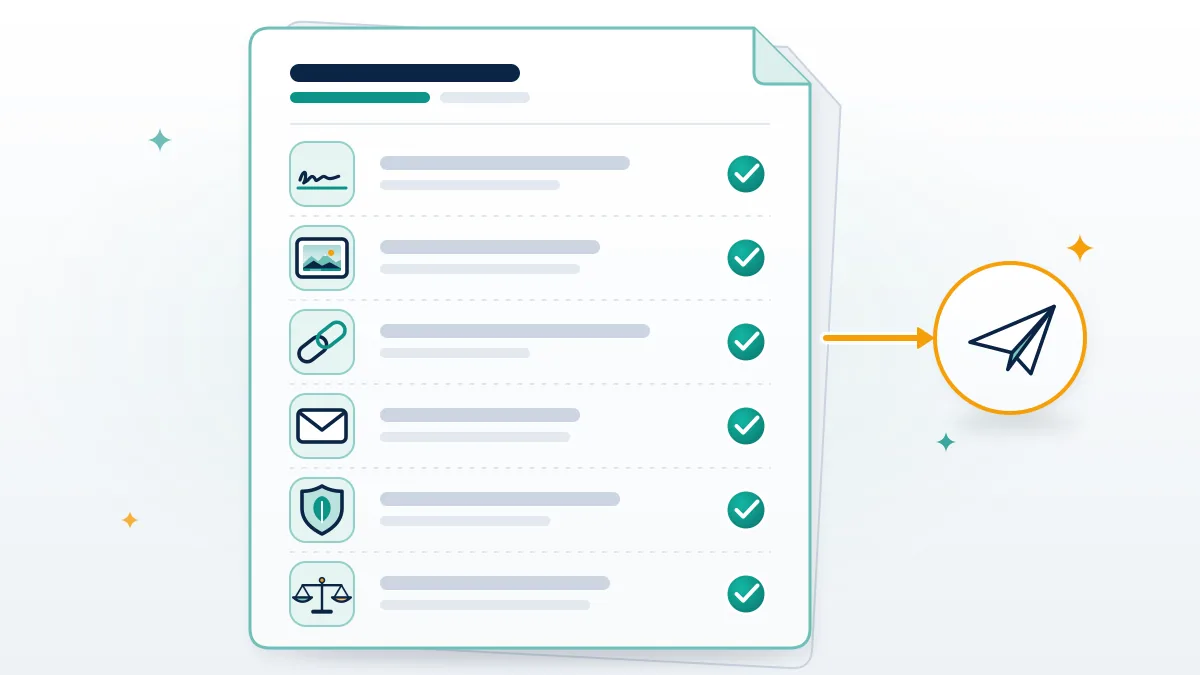
A Facebook DMCA takedown request is valid under 17 U.S.C. § 512(c)(3) when it carries six elements: a physical or electronic signature, identification of the copyrighted work, identification of the infringing material with enough detail to locate it, the complainant's contact information, a statement of good-faith belief that the use is unauthorized, and a statement that the notice is accurate and, under penalty of perjury, that the sender is authorized to act. Every one of those is collected by Meta's form, so most people never need a separate letter. The letter route still exists. Meta lists its designated agent at Meta Platforms, Inc., 1601 Willow Road, Menlo Park, CA 94025, and service providers register such agents in the US Copyright Office DMCA directory. Lawyers already sending a formal Facebook DMCA letter can use that address; everyone else is better served by the form.
One intellectual property system runs across Meta's apps, so the steps to take down a photo on Instagram mirror these. Copies that jump platforms need each platform's own process, whether that means a request to get someone's TikTok taken down or a notice against a channel elsewhere.
Pirated video that migrates to a channel on Telegram calls for a Telegram takedown, which runs on Telegram's own abuse rules.
Photos or video copied on Facebook? Your Reputation Solution can check which form fits, assemble the URLs and ownership evidence, and file as your authorized representative, so the notice carries the representative's details rather than your personal email. Request a copyright case review.
What does the poster see after a copyright report from Facebook?
The poster sees a removal notice, and Meta regularly includes the rights owner's name, the reporter's email and the report details. According to Meta's copyright reporting help page, a report filed by a representative shows the organization or client name instead.
Community Standards reports work the other way. Meta's Help Center says a reporter's information is not included when Facebook contacts the reported person about a policy report, so harassment or impersonation cases that don't depend on ownership keep the reporter's name out of it. Before choosing a route, Your Reputation Solution weighs that trade, because a copyright notice filed in anger hands the other side a name and an email address.
A Facebook copyright notice on the receiving end tells you that the content it names has already been removed. Under Meta's copyright policy, material can come down without anyone contacting the poster first, and only the person who posted the content can appeal or counter-notify, so a friend or a group admin cannot do it for them. Read the notice line by line before doing anything. It identifies the work the reporter claims, the reporter or their representative, and, for DMCA removals, the instructions for a counter-notice. Any copyright report from Facebook that hits a Page should reach every admin who manages it, because repeat-infringer consequences can land on the Page itself rather than on one person. Repeated notices matter far more than a single one. Under Meta's policy, accounts that keep infringing can be disabled, Pages removed, and photo or video posting limited, which turns one dispute into an account problem.
Fake copyright notices are a login trap
Real notices from Meta never ask for your password. Phishing messages dressed as a Meta copyright violation warning do exactly that: they threaten deletion within hours, link to a look-alike appeal form, and ask for the login plus the two-factor code. Open Facebook directly instead of the link.
If a fake notice captured a code, secure every account tied to the same phone number and email, not only Facebook. Telegram signs in with a code sent to the phone, so the Telegram account recovery steps start from the number, and a hijacked account used to send spam can end up as a Telegram frozen account.
For hacked messaging accounts, Your Reputation Solution runs a Telegram account recovery service that works from identity evidence and never asks for your password.
How do you dispute a Facebook copyright claim or counter-notify?
Counter-notify only when the removal was a mistake or a misidentification; for anything else, appeal the decision or ask the owner to retract.
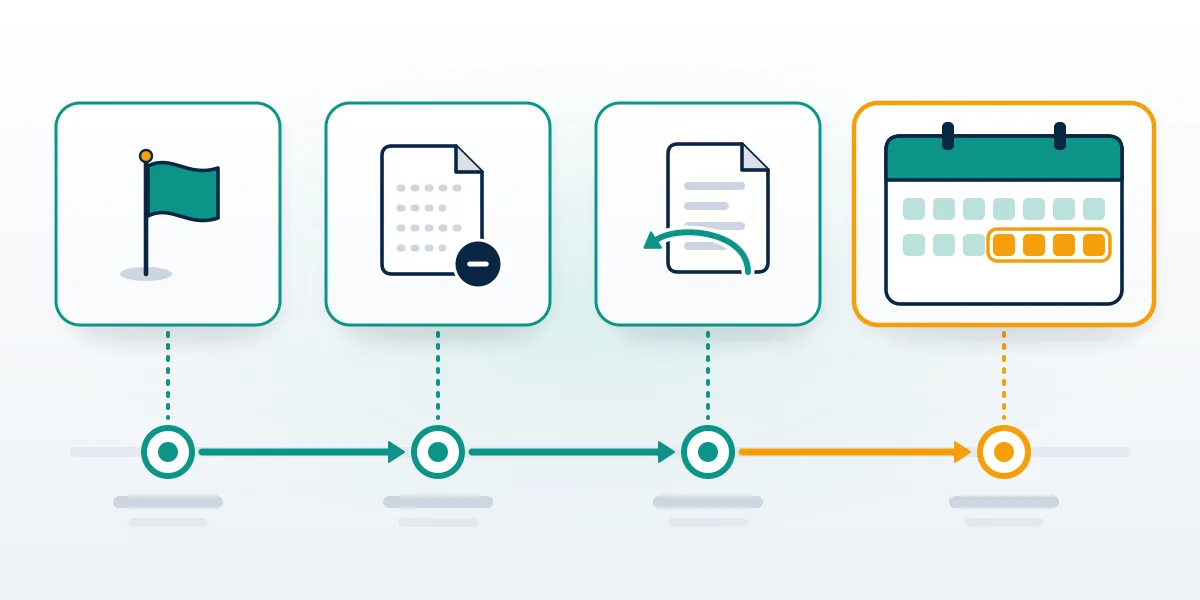
Counter-notices are legal documents, not complaint forms. Under 17 U.S.C. § 512(g)(3) it needs your physical or electronic signature, identification of the removed material and where it appeared, a statement under penalty of perjury that it was removed by mistake or misidentification, and your name, address and phone number with consent to federal court jurisdiction. Meta forwards the counter-notice, contact details included, to the person who reported you. Section 512(g)(2)(C) then sets the clock: the service restores the material not less than 10 and not more than 14 business days later, unless the reporter tells Meta that they have filed a court action. Restored content is not counted against you under the repeat-infringer policy, Meta's copyright policy adds. Weigh that benefit against the cost, because the reporter now holds your home address and a lawsuit becomes a live option.
Here is how the window plays out on a calendar. Suppose Meta receives a counter-notice on Tuesday, October 13, 2026: the tenth business day after that is Tuesday, October 27, and the fourteenth is Monday, November 2, so the content comes back between those dates unless the reporter has reported a lawsuit first. In that case the post stays down and the dispute moves to court, where Meta decides nothing.
Some disputes need no counter-notice at all. When the reporter is a client, a former collaborator or a licensee who misread the license, one polite message asking them to retract is worth sending before any sworn filing, and Your Reputation Solution drafts that message before it drafts anything under penalty of perjury.
Rights Manager claims have their own dispute button
Rights Manager blocks are not legal notices, so the counter-notice route does not apply at first. The uploader disputes the match inside Facebook, and Meta's Business Help Center says the rights owner can then uphold the block, release the claim, or submit a takedown request. That last option converts the match into a formal copyright report, which brings back every counter-notice rule above.
Keep copies of every notice, every dispute and every counter-notice. If the account is restricted months later, the appeal rests on that paper trail, much as it does in TikTok account recovery after being banned or when you recover a suspended TikTok account.
Do Facebook copyright strikes exist?
Not under that name: Meta's copyright policy page does not use the word strike, and IP removals count toward a separate repeat-infringer policy.
People search for Facebook copyright strikes because YouTube made the term famous, and YouTube's rule is simple: three active strikes and the channel is terminated, which is why so many creators end up trying to reinstate a terminated YouTube account. Facebook keeps no public counter like that. Its Community Standards strikes are real, and Meta's Transparency Center page on counting strikes, updated April 23, 2025, says every strike on Facebook and Instagram expires after one year, that for most violations it does not count strikes on content posted more than 90 days earlier, and that several pieces removed at once without separate notices count as one. Nowhere does that page mention copyright. For intellectual property, the rule is the repeat-infringer policy that 17 U.S.C. § 512(i) requires of service providers: Meta's copyright policy says accounts that repeatedly infringe can be disabled, Pages removed, and posting of photos and videos limited.
No threshold is published, so nobody outside Meta can tell you which notice will be the last one. In practice, Your Reputation Solution treats a second notice within the same year as the signal to audit every post the account still hosts.
Disabled accounts from IP removals follow the normal appeal path, the same one used to get your Facebook account back after being disabled. On Instagram, the route to recover a banned or disabled Instagram account also starts with the notices that caused it.
Feature limits are the quieter penalty: losing video posting can feel like being shadow banned on X, except that the limit follows a named policy rather than an unexplained drop in reach.
This appeal logic carries across platforms, from the steps to get an Instagram account unbanned to the way you appeal a Twitter suspension. Quote the notice, show the license or proof of ownership, and answer only what the notice raises.
Facebook photos copyright: who owns what you post?
You do: posting a photo gives Meta a license to use it, not ownership, and that license ends when the content is deleted.

Facebook's Terms of Service say users keep ownership of the intellectual property in content they create and share, and grant Meta a non-exclusive, transferable, sub-licensable, royalty-free, worldwide license that ends when the content is deleted from its systems. That license covers Meta, not other users. Anyone can see a photo on a public profile, but nobody is licensed to copy it, so a brand page that downloads it for an ad, or a reposting account that crops out the watermark, is making an unlicensed copy. Most Facebook photos copyright disputes, and most Facebook copyright infringement cases over images generally, turn on two facts: who took the picture, and whether any license was given, even informally in a message. Hold on to the original file with its metadata. Screenshots and re-uploads are copies too. Fair use is the exception people reach for, and Meta does not decide it for anyone; its copyright page tells users to seek legal advice.
Ownership follows the camera, not the subject, and Your Reputation Solution checks that before anything else: a picture a friend took of you belongs to the friend, so a copyright report from you will fail. Privacy or harassment routes from the table above fit that situation better than a notice that cannot succeed.
Cropping out a watermark can create a second claim. US law at 17 U.S.C. § 1202 bars intentionally removing copyright management information, such as the author's name or a copyright notice conveyed with the work, when the person knows or has reasonable grounds to know the removal will help conceal an infringement. Photographers whose credit line was stripped before the repost have that fact to put in front of a lawyer, even though Meta's form handles only the copy itself. Statutory damages for each violation of section 1202 run from $2,500 to $25,000 under 17 U.S.C. § 1203(c)(3)(B), so keep the watermarked original as evidence.
Reposting accounts are often spam networks, and a spam report targets the account, not the copy of your photo. An Instagram spam bot report and a copyright report do different jobs, so file both when both apply. Note the post URLs before either report, since a removed spam account takes its links with it.
Photos forwarded on WhatsApp sit outside Facebook's copyright form, and the options there are narrower: the guides on how to ban someone's WhatsApp account and how to get someone banned from WhatsApp both come back to a report that WhatsApp decides. Screenshots of the forward still help if the same photo later surfaces on Facebook.
Requests that get turned down
Some requests end at the first call. Your Reputation Solution files and follows up on copyright, trademark and counterfeit reports as an authorized representative, while Meta's intellectual property team makes the final decision on every one of them. That split matters, because an outside representative can make a report complete and accurate but cannot change what Meta's reviewers conclude from it.
No notice goes out for work the client does not own or license, because 17 U.S.C. § 512(f) makes anyone who knowingly and materially misrepresents infringement liable for damages, including costs and attorneys' fees. Commentary, criticism and parody that look like fair use stay off the list, and so do report floods of the kind a Telegram mass report bot advertises. Nobody on the team asks for a Facebook password or a two-factor code, and nobody can promise that Meta will remove a given post. Full limits are listed on the disclaimer page.
Be wary of anyone who messages you first offering to clear a Facebook copyright claim for a fee, since Meta does not sell reinstatement and does not use outside agents to collect payment for it. Genuine decisions arrive in the app or by email from Meta itself, never through a stranger's direct message. Whether a use counts as fair use is a question for a copyright attorney, not for a takedown service.