Is reporting a post on Facebook anonymous?
Yes, toward the person you report: Facebook never tells them who filed it. Its Help Center says so in one line: "We don't include any information about the person who filed the report when we contact the reported" (Facebook Help Center, Reporting abuse).
A Facebook report is a private flag sent to Meta's reviewers and automated systems, asking them to check one piece of content against the Community Standards. That flag is tied to your account, because Meta has to know who filed it: every report you send is listed in your own Support Inbox, with its status. What it never carries is your name toward the other side. Posters see an outcome, if there is one, and the rule behind it. So if you report a post on Facebook, is it anonymous? From the poster's side, completely. From Meta's side, never, and that split explains every exception below. Volume changes nothing either: Facebook states that the number of reports does not determine whether something is removed (Facebook Help Center), so ten reports on a post that follows the rules still leave it standing.
Your Reputation Solution is an account recovery and reputation management firm that prepares, files and escalates platform reports for people dealing with harassment, impersonation or report-driven bans. Anonymity tends to be the first question, and the worry behind it is specific: a neighbor, an ex or a coworker finding out.
Menus and buttons are covered in the step-by-step guide to reporting a Facebook post or Page; this page covers who sees your name.
Paid report services sell that anonymity, promising that dozens of unknown accounts will bury a post. Facebook's count rule is why does mass reporting work on Facebook gets an honest no; tools that mass report an Instagram account fail too.
What does the person you reported actually see?
They see a decision, never a name. Once Facebook removes a post or restricts an account, the owner gets a notification naming the Community Standard involved, often with an option to disagree. A review that finds nothing leaves Facebook nothing to tell them.
Can someone see if you report them on Facebook by digging through settings? No menu, notice or activity log shows a reporter, and apps promising to reveal "who reported you" ask for a Facebook login, which is reason enough to close them. What a person can see is the removal itself, and a removal is not proof that anyone reported anything. Meta's enforcement report says bullying and harassment is harder for its technology to catch proactively: "That's why we also rely on people to report this behavior" (Meta Transparency Center). Read the other way, a post pulled for spam or nudity may have been caught by Meta's own systems with no report at all. Put plainly, if you report someone on Facebook, will they know? They will know something happened when content disappears. Nobody will tell them it was you.
Reading a client's removal notice, Your Reputation Solution starts with the policy line, because it hints at whether a person or a classifier opened the case. People asking "if I report someone on Facebook, will they know" tend to picture a pop-up carrying their name. That screen does not exist.
On the receiving end, the notice is where any appeal starts: Facebook disabled account recovery runs on its own deadline, as does the route to get unbanned from Facebook Marketplace.
Instagram notices also name the rule, never the reporter, whether the outcome is a warning, a permanently disabled Instagram account recovery case or a lesson in how to unban an Instagram account.
Post, comment, photo, profile or Page: does the answer change?
Barely. Any standard report stays anonymous toward the poster, so if you report a profile on Facebook, is it anonymous? It is, exactly like a post. Only side routes differ.
| What you report | Anonymous to the poster? | The catch |
|---|---|---|
| Post | Yes | None |
| Comment | Yes, via Facebook | Group admins see who reports to them |
| Photo or picture | Yes, for rule breaks | Privacy removals come only from the person pictured |
| Profile | Yes | Some choices count as feedback |
| Page | Yes | Admins are not told |
| Messenger chat | Yes | Reported messages go to Facebook |
If you report a photo on Facebook, is it anonymous?
Community Standards reports on photos are as anonymous as any other: nudity, violence or harassment in an image gets reviewed without the uploader learning who flagged it. Privacy differs. For privacy cases, Your Reputation Solution prepares the report with the person pictured, since Facebook accepts those only from the person shown, a parent of a child under 13, or a legal representative or guardian (Facebook Help Center). That rule has a side effect clients should hear before filing: the uploader can work out who complained by looking at who is in the frame. The same help page encourages you to get in touch with the person who posted first, and such a message is signed by definition. If you report a picture on Facebook, is it anonymous when you are the one in it? Facebook hides your name, while the photo gives it away.
Is reporting a comment on Facebook anonymous?
Yes, when the report goes to Facebook. Pick Report comment to group admins instead and the admins "will know that it was you who reported it," while nothing reaches Facebook (Facebook Help Center). So if I report a comment on Facebook, is it anonymous? Choose the Facebook option. If you report a comment on Facebook, is it anonymous on your own profile? Those get hidden or deleted, not reported.
If you report a Page on Facebook, is it anonymous?
Page admins are never told who reported their Page. Ask "if I report a Page on Facebook, is it anonymous" as a fan or a stranger and the answer is the same.
Instagram asks impersonation reporters for ID, yet how to get an Instagram account taken down stays anonymous: the ID goes to Meta. TikTok hides reporters too when you get someone's TikTok taken down.
Automation adds nothing to that protection, since an Instagram spam report bot or a TikTok mass report bot runs on accounts someone else controls and platforms judge content, not headcount.
Four routes that do put your name in front of someone
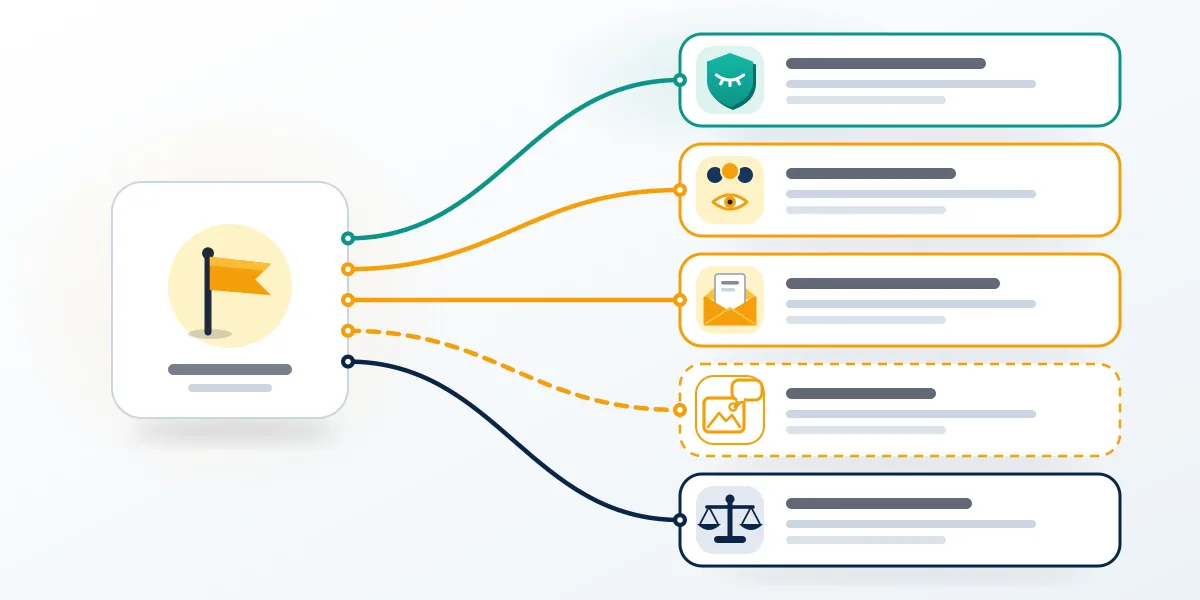
Every exception follows one rule, which Your Reputation Solution checks before anything is filed: once a report leaves the anonymous Community Standards queue, your identity can travel with it.
- Group admins. They see who reported to them, and Facebook receives nothing.
- Intellectual property forms. Removal notices "may include the name and email address of the rights owner who made the report" (Facebook Help Center).
- Privacy requests and direct messages. Only the person pictured can file, and a message to the uploader is signed.
- Legal process. Meta shares information "in response to legal requests, such as search warrants, court orders, production orders or subpoenas" (Meta Privacy Policy).
When you report someone on Facebook, is it anonymous even from a judge? Not necessarily. Standard reports stay anonymous toward the poster, yet the record of who filed sits with Meta, and a court order in a harassment or defamation case can reach the records Meta holds about your account. Copyright is the route people misjudge most. Anyone can file an intellectual property report, and some people pick it because it feels more official than the regular menu, then learn that the poster received their name and email. US copyright law requires a takedown notice to identify the complaining party and give contact details anyway (17 U.S.C. § 512(c)(3)), so this is legal design rather than a Facebook quirk. Before filing one, confirm you own the rights, keep proof of ownership ready, and assume the notice will carry your name.
People trying to take down a Telegram channel often use copyright too, and a legal notice always carries a name. Offers to mass report a Telegram channel buy risk, not results.
WhatsApp hides reporters as well, though its reports send recent chat messages to WhatsApp, as covered in how to ban someone on WhatsApp and get someone banned on WhatsApp.
Worried a report could be traced back to you? Your Reputation Solution reviews what you want to report, picks the route that keeps your name out of it where one exists, and files it with you. Facebook makes the final call. Book a free case review.
How do people work out who reported them anyway?
By context: audience, timing and the reporter's own words.
Is it anonymous to report someone on Facebook when only four people could have seen the post? Technically yes, practically not always. A private post shared with a friends list of 30 has a short suspect list, and an argument in a two-person Messenger thread has a suspect list of one. Timing is the second tell: a block or unfriend that lands the same hour a post disappears points straight at you. Talk is the third. Mentioning the report to a mutual friend, or commenting "reported" under the post, undoes everything Facebook kept private. None of this means you shouldn't report. It means anonymity is something the platform protects and you can still give away. So if I report a post on Facebook, is it anonymous inside a small circle? The system says yes, and the circle may disagree.
- Report to Facebook, not to group admins, unless you want the admins involved.
- Screenshot the post, profile link and date first, because reported content can vanish.
- Leave a gap before any block, unless you feel unsafe. Then block at once and call the police; safety outranks anonymity.
- Track it in Support Inbox under Reports about others, where a requested second review usually comes within 24 hours (Facebook Help Center).
Hiring help to pile on widens the circle. Whoever runs a WhatsApp mass report bot now knows your target, your grudge and your payment details.
What if the reports land on your account instead?
Then you won't learn who filed them either, because the rule runs both ways. If you report someone on Facebook, is it anonymous after they report you back? Yes, for both of you.
In that situation, Your Reputation Solution files and escalates appeals that argue the content rather than the reporter, and Facebook makes every final decision; nobody outside Meta can see or change who reported whom. Anyone selling the name of the person who reported you is selling a guess, a scam or stolen data, and anyone offering to "cancel" reports for a fee cannot deliver. Limits apply to this firm's own work too. It never asks for your password, never charges to make a report disappear, never files a copyright claim on content a client doesn't own, and never promises a timeline Meta hasn't committed to. Some bans end in a refusal no appeal can change, and some reports were right to be filed. Those limits are spelled out on the disclaimer page, worth reading before paying anyone for help with a Facebook report.
Retaliation rarely stays on one app. Counter-reports can hit an X account, where knowing how to appeal a shadow ban on X or recover a suspended Twitter account matters more.
Lost handles are the quieter cost; rules to claim an inactive Instagram username or claim an inactive Twitter username are strict.
On TikTok, how you recover a banned TikTok account differs from TikTok suspended account recovery: suspensions end on a date, permanent bans need an appeal.
YouTube runs its own form to recover a terminated YouTube channel. Telegram leans on the phone number, so how to recover a Telegram account starts there.
Telegram frozen account recovery is a separate appeal, and a hands-on Telegram account recovery service covers what the app can't.