
An Instagram account removal service files reports — it cannot force removals
An Instagram account removal service is a paid firm that collects evidence, picks the correct Meta reporting channel, files on your behalf, and works the appeal when the first decision comes back wrong. That is the entire job. Nobody in this business, us included, holds a button that deletes a profile.
Worth separating the two things people mean by it. Account-level removal targets a whole profile and is rare, slow, and reserved for sustained or severe violations. Content-level removal targets one post, Reel, Story, or comment, and it is where the overwhelming majority of successful cases live. When a provider advertises an instagram content removal service, content-level work is what they are selling, whatever the headline says about accounts.
The distinction matters because searches for "instagram removal service" and "instagram content removal service" surface two very different businesses wearing the same words. One does casework. The other sells outcomes: a flat fee, a target username, a promise the account is gone by Friday. Almost all the money lost in this category goes to the second group, and the tell is simple. Casework firms describe a process. Outcome sellers describe a result they have no mechanism to deliver.
Meta reviews reports as evidence submissions, not as votes. A reviewer opens the queue item, compares the reported content against the Community Standards, and decides. Ten reports from ten friends produce one queue item and one decision. That is also why the "instagram takedown service" pitch built on report volume falls apart on contact with the actual system. Our team took that pitch apart in detail in the breakdown of paid Instagram ban services.
So what does a legitimate provider actually add? Routing, evidence, and persistence.
Routing means knowing that an impersonation complaint, a copyright complaint, and a harassment complaint travel down three separate pipelines with three different evidence bars, and that filing the wrong one gets you a rejection that is hard to reverse. Evidence means a dated capture set, permalinks, government ID where the form requires it, and a written statement that maps the content to a named policy clause rather than to how the content made you feel. Persistence means filing the appeal, then the second appeal, then the escalation, on a schedule, for as long as the case stays viable.
One more boundary worth naming early: you cannot pay anyone to delete an account simply because you dislike it. There is a whole piece on this site about why deleting another user's Instagram account is not something you can buy, and everything below assumes you already accept that the lever is policy, not money.
Which report route does your Instagram post removal go down?
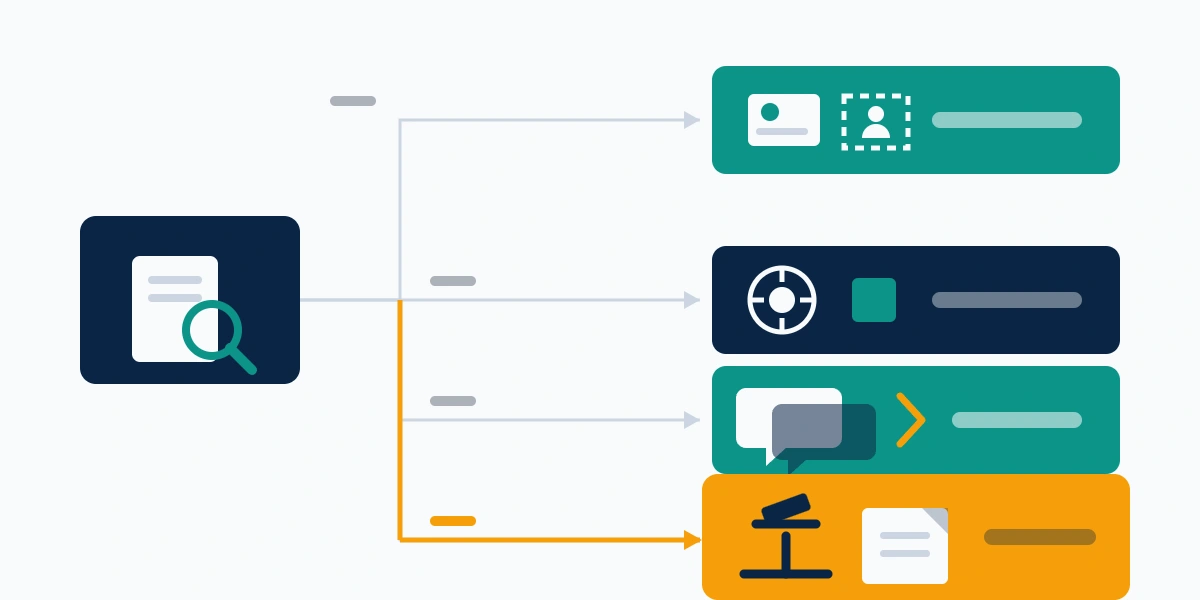
Instagram post removal is not one process. It is four, and picking the wrong one is the single most common reason a self-filed report dies quietly.
| Route | Use it when | Evidence bar | Typical first decision |
|---|---|---|---|
| Impersonation | An account or post uses your name, face, or brand to pass as you | Government ID, or proof of trademark for a business | 24-72 hours |
| Intellectual property | Someone reposted your photo, video, or Reel without a licence | Proof you own the original file, plus permalinks | 2-10 days |
| Bullying, harassment, threats | Content targets a specific person with abuse | Full-thread captures showing the pattern, not one screenshot | 24 hours to 7 days |
| Legal, including defamation | The statement is false, provably so, and causes real damage | Counsel-drafted notice, and in most cases a court order | Weeks to months |
Read that table as a routing map rather than a menu. The same fake Reel can qualify under two routes at once, and when it does, the stronger evidence bar usually wins faster. A stolen product video filed as harassment gets a shrug. The same video filed as an intellectual property claim, with the original camera file attached, gets pulled — because copyright review is closer to a documentary check than a judgement call, and Meta has a statutory incentive under the DMCA to act on well-formed notices.
People searching "how to force remove an instagram post" are usually hoping for a fifth route that skips all four. There isn't one. The nearest real thing to force is a court order, which compels Meta to act on a specific URL and is the only instrument in this list that does not depend on a reviewer's reading of policy. Everything short of that is persuasion with paperwork. Paperwork, done properly, is a skill.
An honest instagram post removal service, then, spends most of its billable hours on route selection and evidence assembly, not on filing, which takes minutes. On a new case, the first call is almost always about narrowing what to claim, and the second is about what we are cutting from the file because it weakens the rest. Reviewers do not reward volume. A tight three-page submission beats a forty-item dossier essentially every time.
Timing is the other variable people underrate. A report filed within days of publication competes against fresher context and a reviewer who can still see the surrounding thread; the same report filed eight months later arrives as an archaeology problem, with deleted replies and dead links doing half the arguing for the other side. If a post is going to be contested, contest it early.
Instagram reels removal works differently from feed posts
Instagram reels removal deserves its own section because Reels sit on a different distribution layer than feed posts, and the enforcement outcomes are not the same shape.

A feed post has one state: it is up, or it is gone. A Reel has at least three. It can be removed outright. It can be left on the creator's profile but pulled from Explore and the Reels tab, which strips roughly all of its reach while leaving the URL alive. Or it can be age-gated, which quietly removes it from recommendation surfaces for most of the audience. Only the first shows up as a removal in your report receipt. The other two look, from the outside, like nothing happened.
This is why an instagram reels takedown often gets reported back to us as a failure when it was a partial win. When the Reel is still reachable at its permalink but its view counter froze the day after filing, the report landed and the distribution penalty is doing the work. Stories are different again. They expire in 24 hours regardless, so filing on a Story is worth it only when you need the violation on the account's record, which is exactly when you should file. Strikes accumulate. A single Story report rarely does anything visible; four across two months is what precedes an account-level action.
Audio is the underused lever on Reels specifically. Meta licenses commercial music for personal accounts through deals with the major labels and publishers, and business or creator accounts draw from a narrower catalogue for that reason. Rights holders can claim the audio track independently of the video, and when a claim lands the usual result is a muted Reel rather than a deleted one. Where someone has set a Reel about you to a licensed track and used it commercially, the audio claim frequently resolves faster than the content claim, because it is a licensing question rather than a policy judgement. It does not delete the Reel. It does strip the thing carrying most of its reach.
Short-video enforcement is broadly converging across platforms, and our walkthrough of getting a TikTok taken down covers the same distribution-versus-deletion split from the other side.
"How to ban reels on Instagram" means two completely different things
This phrase, and its variants "how to ban instagram reels", "can you ban reels on instagram", and the half-typed "how to ban someone reels on", splits into two intents that share no solution at all.
The first is people who want Reels out of their own feed. That is a preference setting, not a moderation action, and no removal service is involved: you can mute a Reels-heavy account, mark individual Reels as "Not interested", or switch to the Following feed. Instagram does not offer a global off switch for the format.
The second is people asking how to ban Instagram reels made by someone else — usually a Reel about them. That is a takedown question, and it runs through the same four routes in the table above. There is no shortcut for it and there is no volume trick: the answer to "can you ban reels on Instagram" is yes, when the Reel breaks a specific rule, and no, when it is merely unflattering, unfair, or true. Plenty of tools claim otherwise, and our findings on Instagram mass report bots are not kind to them.
Not sure which route your case belongs in? Send us the permalinks and we will tell you which form applies, what evidence you are missing, and whether it is worth filing at all — before any engagement. Start a free case review.
How do you remove a fake Instagram account pretending to be you?
Impersonation is the fastest-moving category on this page, and it is the one where a service earns its fee most clearly.
Instagram's dedicated impersonation channel is the report an account pretending to be you form, and it is separate from in-app reporting. The in-app path — the account's profile, then the ⋯ menu, then Report, then "Something about this account" — routes into general moderation. The web form routes into identity review, where a human compares your ID against the impersonating profile. Same complaint, different queue, materially different outcome. Most people who tell us they "already reported it three times" have only ever used the in-app path.
The exact query people type is "how to remove a fake instagram account pretending to me", and the honest answer has three parts. File the web form with photo ID. Do not report from a brand-new account, because reviewers weight reporter history. And if the fake profile has already scammed someone, attach that evidence, because a fake account with a documented fraud attached moves from an identity dispute into a fraud queue with a much lower tolerance.
The pattern across our impersonation caseload is consistent. A clean first submission — real ID, clear side-by-side, no prior rejected reports on the same profile — usually clears inside 72 hours. Files that reach us after two or three self-filed rejections take substantially longer, and a meaningful share never clear at all. That gap is the actual argument for professional handling: the first submission is the one that counts, and re-filing the same claim after a denial poisons the record.
The phrase "delete fake instagram account" is also worth pulling apart, because it hides an ownership question. If the fake account is a duplicate you made and abandoned, you log in and delete it, and the account takedown walkthrough covers that. When it belongs to someone else, you cannot delete it, and you cannot remove Instagram profile content that is not yours under any circumstance. Only Meta can do that. Every product marketed as fake instagram account detection and removal services is really two things bolted together: monitoring that finds the clones, and ordinary reporting that files on them.
Businesses need a thicker file than individuals do
An instagram account removal service for businesses runs on different paperwork, and the extra work is front-loaded.
A brand does not have a passport to photograph. What it has is a trademark registration, and that registration is what unlocks Meta's Brand Rights Protection portal — a dedicated intake for rights holders that indexes impersonating accounts, counterfeit listings, and infringing Reels across Instagram and Facebook. Access requires verification of the mark. Once you have it, the same complaint that sat in general moderation for a fortnight lands in a rights-holder queue instead. Companies running quarterly takedown volume and no Brand Rights Protection registration are leaving the single largest available advantage unclaimed.
Defamation is where business cases most often stall. To report and remove defamatory Instagram profile content, you have to accept a hard constraint first: in the United States, platforms are not liable for what users post, so Meta has no legal obligation to remove a defamatory statement absent a court order. Meta's own policy will remove threats, coordinated harassment, and impersonation. It will not adjudicate whether a claim about your restaurant's hygiene is true. That is a court's job, and the realistic sequence is a defamation action, a judgment or injunction naming the specific URLs, and then submission of that order through Meta's legal channel.
Which means the business decision is usually about proportion. A single bad Reel with four thousand views rarely justifies litigation. A campaign of forty posts across Instagram and Facebook, from linked accounts, targeting a named executive, usually does — and it should be filed as one coordinated case across both surfaces, since the same Meta backend handles them. Our Facebook takedown guide maps that side, and when the campaign has spilled onto X as well, the X and Twitter takedown process runs on a separate but comparable evidence standard.
Detection deserves a note of its own, because the vendors selling fake instagram account detection and removal services to brands are solving the finding problem rather than the removal one. Their monitoring crawls for handles, logos, and product imagery, flags the clones, and then files the same standard reports anyone else would file. The monitoring is genuinely valuable at scale, since a brand with forty impersonators cannot find them by hand. The removal half of the package is not proprietary. Price the two separately when you evaluate a contract.
European and UK clients have one route that does not exist elsewhere. Under Article 17 of the GDPR, you can ask Meta to erase personal data published about you, and the request is assessed against data-protection law rather than Community Standards. The exemption for freedom of expression is broad, so journalism and genuine public-interest commentary survive it. Personal data reposted without a lawful basis, such as a leaked address or an unconsented photograph, often does not.
Suppression is the other half of the business answer, and it is slower than everything above. Pushing a damaging post out of branded search results takes 90 to 180 days of sustained work in our experience, and it does not remove anything. It changes what people find first.
What will we refuse to do?

We will not take a case where you are not the account owner or a documented subject of the harm. No third-party targeting, ever, whatever the reason.
Nobody here will ever ask for your Instagram password, and no legitimate provider will. We do not file copyright claims over content we cannot show you own, because a false DMCA notice is a sworn statement and it is perjury when it is wrong. Mass reporting is not something we run, buy, or coordinate. It does not work, as our teardown of Instagram spam report bots demonstrates in detail, and it can get the reporting accounts actioned instead. Removal of anything is never promised here, and you will hear in the first conversation when we think a case is unwinnable.
That last one is the vetting test to apply to anyone else, too. Ask a prospective provider what they do when a case fails. A casework firm has an answer involving appeals, timelines, and a point at which they stop billing you. An outcome seller changes the subject to their success rate. Ask what evidence they need from you; if the answer is "just the username", they are describing a report button, not a service. Our full limits are written out on the service disclaimer, and the team handling these files, several of us with years inside Meta's own Trust and Safety organisation, is on the about page.
Removal work is unglamorous and it is mostly documentation. As of August 2026 the pattern holds that has held since Meta narrowed its enforcement posture in January 2025: well-evidenced, correctly routed, narrowly scoped reports get actioned, and everything else waits. If you want that handled properly, the reputation and takedown services page is where to start, or send the links straight to our case review team.