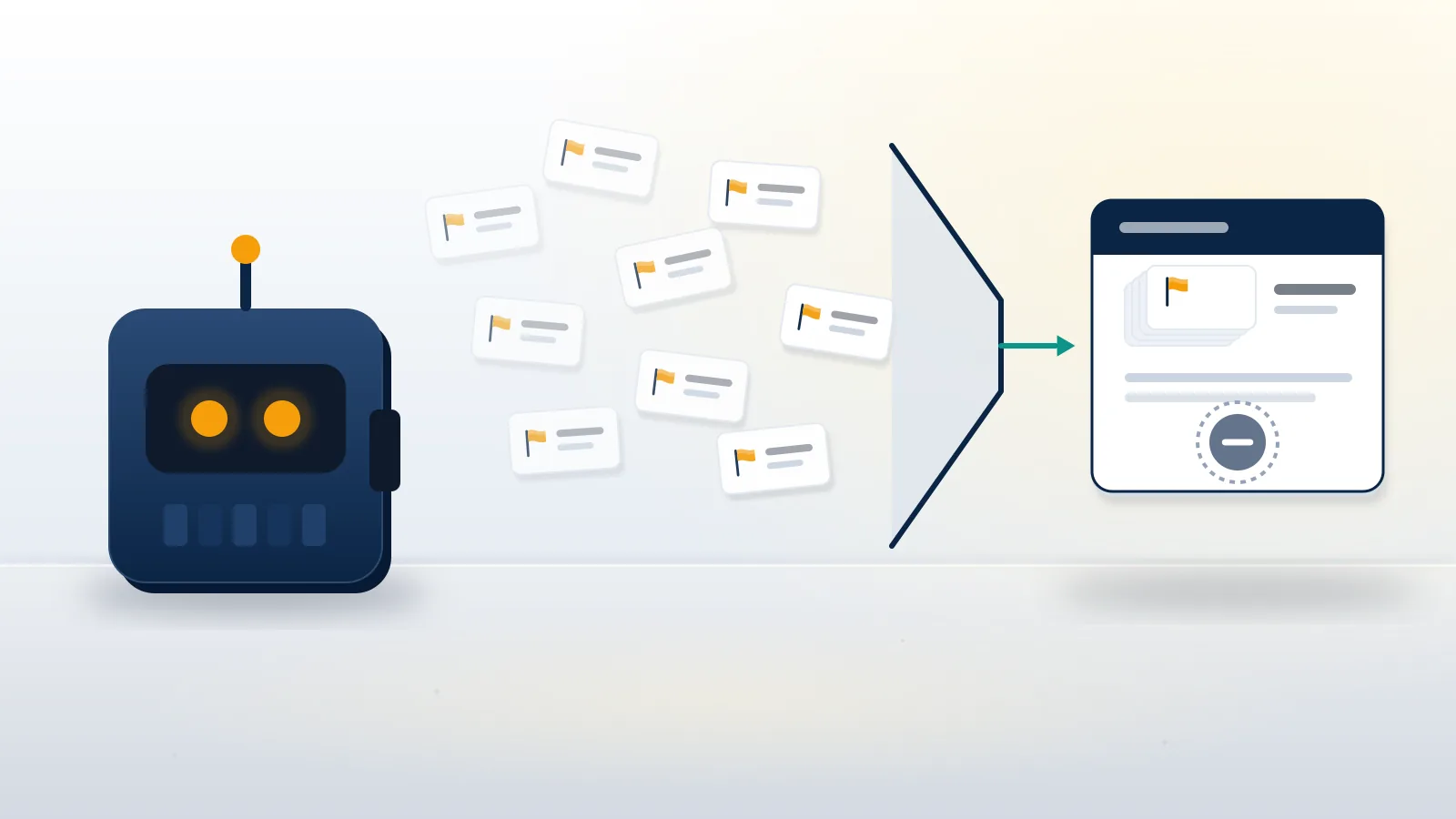
What is a mass reporter, and what does a report bot actually do?
A mass reporter is software, or a paid crew, that files the same complaint against one account over and over in the hope that volume forces a ban. The software version goes by several names: report bot, mass report bot, mass reporting bot. The human version is a "report group" coordinated in a chat. Both depend on one belief, that platforms count complaints and pull an account once the tally crosses some line. No major platform works that way. Instagram, TikTok, YouTube, X, Snapchat and Telegram each route a report into a queue tied to the specific rule the reporter selected, and a classifier or a human reviewer decides whether that rule was broken. Duplicate claims about the same post are grouped and judged once. A thousand reports saying a lawful photo is nudity produce one closed case, not a removal.
Your Reputation Solution is an account-recovery and reputation-management firm that works both ends of these campaigns: people whose accounts were mass reported, and people who need a genuinely abusive account taken down through the platform's own channels. This page is the platform-neutral review. It looks at mass report bots the way a security engineer would, by reading the code and following the money, rather than platform by platform. If you came here for one network, our Instagram mass report bot and tools review covers that market on its own.
Where do mass report bots come from?
Almost every report bot that Your Reputation Solution's security review looked at in October 2026 arrives through one of three channels. They look different. Underneath, they sell the same thing.
Mass report GitHub repositories
Searching mass report github or report bot github returns hundreds of repositories with names built from a platform plus "reporter" or "mass-report", and most share a skeleton: a README promising a ban within hours, a terminal screenshot printing "Report sent" in green, a requirements file and one script. Read the code instead of the README and the scripts usually fall into three buckets. Some simply reopen the platform's report form in a loop with a fixed reason, which gets rate-limited within minutes. Some log into a list of accounts that you have to supply, so you provide the "army" and you carry the ban risk. The third bucket ships a compiled binary or an obfuscated loader in the Releases tab that has nothing to do with reporting at all.
That third bucket is documented, not hypothetical. In July 2024 Check Point Research described the Stargazers Ghost Network, more than 3,000 fake GitHub accounts that starred, forked and watched malicious repositories so they looked trusted, and used them to spread infostealers such as Lumma Stealer and RedLine (Check Point Research, 2024). Tool-style repositories promising hacks and shortcuts were a favoured lure. GitHub's own Acceptable Use Policies list spam and inauthentic activity as a prohibited category, which is why even the harmless scripts get removed and reappear under new names every few weeks.
Free report bot links
A free report bot is usually a Telegram or Discord bot that asks for a target username and, very often, your own login "so the reports come from real accounts". A mass report bot free offer still has to earn money somewhere. The usual answers are the credentials you just typed, an upsell to a "premium wave", or your account itself, sold into the next panel as one more reporting identity.
Paid panels: the mass report service and the mass report website
A mass report service is the same idea with a checkout page. The typical mass report website shows tiers of 500 or 1,000 reports, a countdown timer, crypto or gift-card payment and no refund route that works. Some bundle an "instagram x report tool", one dashboard claiming to hit Instagram and X accounts together, which is the same loop pointed at two report endpoints. Our explainer on the Instagram ban service market shows how to tell these sellers apart from the narrow cases where an account removal is real.

Why doesn't report volume trigger a ban?
Platforms judge the claim, not the count. One accurate report that points to a real violation does more than ten thousand duplicates of a false one. Each complaint is a request to check a single policy. When you report a post on Instagram, the reason you tap decides which queue the case enters and which standard it is measured against. Reports against a whole profile travel a different path again, and the gap between an Instagram page report and an Instagram account report matters far more than how many were filed. Copyright and trademark claims never touch the in-app button at all: they go through dedicated Instagram report forms that require a named rights holder and issue a report number. A bot cannot fill those forms credibly, because each one asks for proof of ownership that the bot does not have.
Sellers do have one real screenshot to show. An automated system can apply a short restriction while a flagged case waits for review, and on some platforms a burst of reports moves a case up the queue sooner. The restriction lifts when the reviewer finds nothing. That is why buyers sometimes see the target "go down for a day" and assume it worked. Targets, for their part, often worry the reporter's identity leaks; Your Reputation Solution's guide to Instagram report apps explains what the reported person can and cannot see.
What can a mass report tool do to the person who runs it?
More than it can do to the target. The risk lands on the operator in four ways, and only the last depends on where you live.
Credential theft and malware. Any mass report tool that wants your login, or asks you to run a downloaded executable, is positioned to take the accounts you used plus whatever an infostealer finds in your browser: saved passwords, session cookies, crypto wallets.
Your own accounts. X's Misuse of Reporting Features policy prohibits submitting duplicate or false reports in large numbers, manually or through automation, and says severe misuse can lead to permanent suspension. Its platform manipulation and spam policy separately covers coordinated activity across multiple or fake accounts. Meta's Community Standards take the same line on inauthentic behaviour.
Payment loss. Gift-card and crypto payments to a panel are effectively unrecoverable.
Legal exposure. Where a campaign targets a named person with false claims, it can fall under harassment or cyberstalking law in jurisdictions that treat coordinated online abuse as a course of conduct.
A practitioner note from Priya Raman's side of the team: when a client forwards Your Reputation Solution a "working" report bot they were sold, the first thing our security review checks is not the reporting logic but the network calls. The pattern we see most often is a script that does very little reporting and a great deal of sending, usually a session token or a saved-password file posted to a webhook the seller controls. Clients are often surprised that the tool they bought to remove someone else's account is the reason their own was hijacked a week later.
Is a spam report bot the same as a mass reporting tool?
No. A spam report bot can be legitimate; a mass reporting tool aimed at one person is not. The difference comes down to accuracy, volume and consent. Group moderation bots on Telegram and Discord remove spam inside a community their owner runs and, in some setups, pass that spam to the platform's own detection systems. X's reporting policy also carves out automated reporting for law enforcement and certain non-governmental organisations, but only with X's prior consent. What those uses share is that the reports are true, the volume matches the actual amount of spam, and the platform agreed to receive them. A mass reporting tool inverts all three: false or exaggerated claims, inflated volume, and no permission. Platforms see that difference clearly, because the reports from a mass reporting tool keep failing review, and the accounts that file them are the ones that end up flagged for manipulation.
How does each platform handle a mass report bot?
The claims change by platform. The outcome mostly does not. This table compresses what Your Reputation Solution's separate breakdowns found, with the route that actually gets a violating account reviewed.
| Platform | What the bot claims | What the platform does | Route that works |
|---|---|---|---|
| Ban any profile with enough reports | Reviews each report against one guideline | Learn how to report someone on Instagram with the right reason | |
| X | "Suspension waves" | Treats bulk duplicate reports as a violation by the sender | See our Twitter mass report bot alternative guide |
| YouTube | Channel termination | Strikes follow Community Guidelines review, not report totals | Why a YouTube mass report bot can't terminate a channel |
| Snapchat | Permanent lock | Account checks run on evidence, not volume | What a Snapchat mass report bot really does |
| TikTok | Ban in 24 hours | Moderation queues by policy area | How to report someone on TikTok, or report a fake TikTok account |
| Telegram | Channel deletion | Moderators act on reported content and spam signals | The in-app way to report a Telegram account |
What actually removes a harmful account?
A specific report through the correct form, backed by evidence a reviewer can verify in under a minute. That is slower to describe than a bot and faster in practice, because it does not get thrown out. Matching the problem to the route is most of the work.
If a profile is pretending to be you, the ID-backed impersonation form beats any report button; our guide for when someone is impersonating me on Instagram walks through the four routes. Sustained abuse belongs in the harassment flow, and how to report harassment on Instagram sets out which one fits which pattern. Threats to share intimate images are an emergency, not a reporting contest: the Instagram sextortion report guide covers what to save, what not to pay and who to contact. Fraud has its own trail, and how to report a scammer on Instagram lists the agencies worth telling as well.
For brand and content theft, rights holders file an Instagram trademark infringement report or an Instagram DMCA takedown, both of which carry legal weight that no bot can fake. When a whole account or a run of posts and reels has to go, an evidence-led Instagram account removal service assembles the violations and files them through the right channel instead of flooding the generic one.
Some damage sits outside the platforms entirely. Search results are handled through publisher and Google routes, covered in our guide to remove negative content online, with dedicated walkthroughs to remove an arrest record from Google and for negative content removal in Australia, where the eSafety Commissioner adds a route most countries lack.
A real account is breaking the rules and the reports keep bouncing? Your Reputation Solution builds the evidence file, picks the policy the account actually violates and files it through the platform's own form. No bots, no bought reports. Book a free case review.
Were you the target of a mass reporter?
Then the campaign probably did less than it looked like, and the fix starts with the platform's appeal, not with a counter-attack. Check the account status screen first. It shows which rule the platform says you broke, and that tells you whether a review is still pending or a decision was made. If you reported something by mistake yourself, how to un report a post on Instagram explains what you can and cannot undo.
If the account was disabled and the appeal stalls, a professional Instagram unban service can prepare an evidence-based appeal, but this is exactly where the second wave of scams arrives. Before paying anyone, read are Instagram account recovery services legit and check how they plan to work.
What Your Reputation Solution will not do is short. It will not run, rent or recommend a mass report bot. It will not buy reports, ask for your password or promise that an account will be banned or restored by a date, because the platform makes that decision, not the firm that files the case. The full limits are set out on our disclaimer page.