
Google is the last stop, not the first
Google does not hold your arrest record. It indexes copies of it: a county court portal, a people-search profile, a booking-photo page, a local news brief, a police department post. Each copy is a separate URL with a separate owner, and each one has to change before Google's listing can change. That is why a single "delete" request never works, and why the order of the work matters more than any form.
An arrest record is the booking entry created when police detain someone: name, date, charge and agency. Criminal records are wider, covering charges, court outcomes and convictions, while a mugshot is only the photo taken at booking. All three can rank for your name, and an arrest that ended with no charge at all still produces the first one. People who type "remove arrest from google" are usually looking at one of those copies on page one, not at the record itself, and the copy is the thing that can actually be changed. Everything else follows from this distinction. To remove arrest record from google results, you identify which copy ranks, who controls it and what document that owner will accept, then work down the list in order. Anyone asking how to remove arrest record from google without that inventory ends up filing the wrong form against the wrong page.

This guide takes the record angle: courts, data brokers, news pages and Google's own tools. Mugshot-only galleries get their own walkthrough, and the general routes for clearing a name sit in our guide to removing your name from Google search. Your Reputation Solution is an online reputation management firm that maps every page carrying an arrest or court entry and works through them in the order a court order allows, for people whose case was dropped, dismissed, sealed or expunged.
Does expungement remove an arrest record from Google on its own?
No. An expungement or sealing order changes the official record, but it does not reach the copies that third parties scraped before the order existed. Expungement generally means the record is destroyed or treated as if the arrest never happened; sealing means it still exists but is hidden from the public and from most background checks. Which one you can get depends on the state, the charge and the outcome, and roughly a dozen states now seal qualifying records automatically under Clean Slate laws, a model Pennsylvania passed first in 2018. What the order gives you is leverage: a certified copy is the document that court portals, background-check vendors and most news editors ask for before they change anything. Without it, a site owner is weighing your request against a public record that is still true. With it, the page is publishing a record the state itself has closed, and that is a much weaker position for the publisher to defend.

Federal law adds a time limit on one channel. Under the Fair Credit Reporting Act, 15 U.S.C. § 1681c bars consumer reporting agencies from reporting records of arrest older than seven years, with an exception for jobs paying $75,000 or more; convictions carry no such limit. That rule binds background-check companies, not news sites or Google, which is why an arrest can vanish from a screening report and still rank for your name.
So the honest answer to how to remove criminal record from google starts in a courtroom or a clerk's office, not in a search box. Where no relief is available yet, the source-page work below still applies, but expect fewer yeses. Before any letter goes out, Your Reputation Solution checks which relief your state offers for the charge, because a request backed by an order gets a different answer from the same publisher.
How to remove arrest records from Google in three moves
Every successful case we have handled follows the same sequence. Skipping ahead is the most common reason a request stalls.
- Clear or narrow the record. Get the dismissal, sealing or expungement order, or at least a certified disposition showing the charge was dropped.
- Change the source pages. Send the order to each site that publishes the record and ask for removal, anonymisation or an updated outcome.
- Tell Google the page changed. Once a page is gone or no longer shows your name, file Google's Refresh Outdated Content request so the stale snippet drops out.
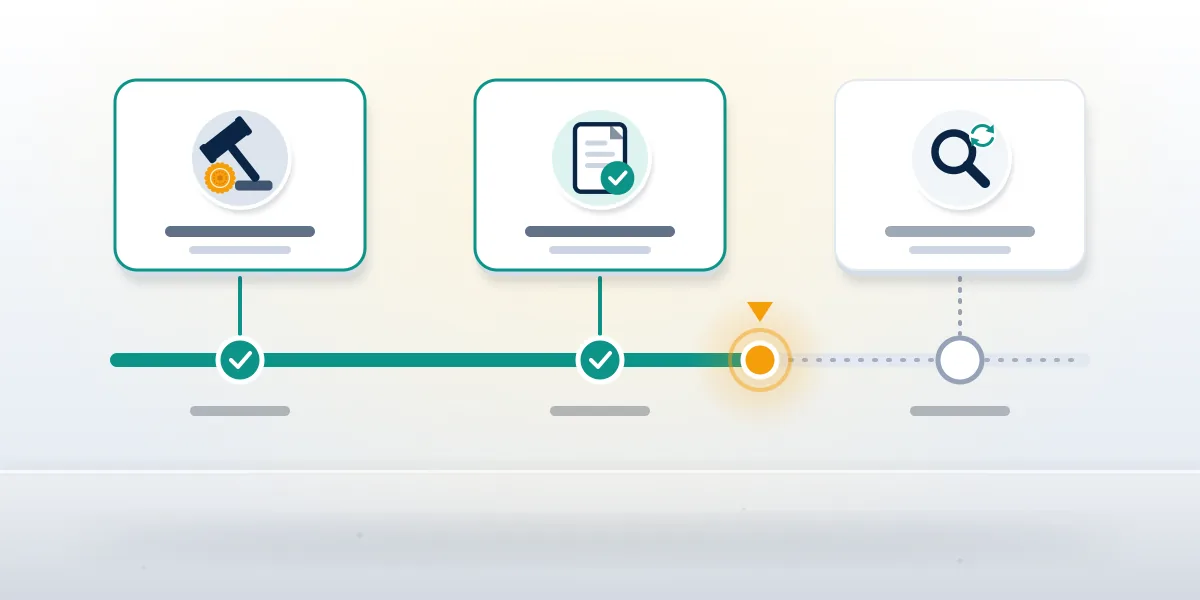
When we file these for clients, Google is almost never the slow part. Refresh requests on pages that have genuinely changed tend to clear quickly, while a court portal that republishes nightly from the clerk's database, or an aggregator that copied it, can take weeks of follow-up before anything moves. Order matters for a second reason: if you file the Google refresh while the source still shows your name, Google rejects it, and a rejected request does not speed up the next one. Brokers also resell to each other, so a profile removed from one site can resurface on a sister site within a month unless every copy in the same family is opted out together. Under that sequence, Your Reputation Solution starts every arrest case with an inventory of those sources, ranked by how much traffic each one draws for the name, because the page on position one deserves the first letter and position nine can wait.
If you are asking how to remove my arrest record from google, or how to remove your arrest record from google for someone in your family, the sequence is identical. Only the paperwork changes.
Where does the record live, and how do you take each copy down?
Four kinds of site publish arrest data, and each answers a different kind of request. Court and county portals follow the clerk: once the record is sealed, the portal entry usually disappears at the next sync, and a short email to the clerk with the order number speeds it up. People-search brokers, such as Spokeo, BeenVerified and Instant Checkmate, run self-service opt-out pages that remove a profile without any court paperwork at all, although the profile can reappear when the broker buys fresh data. Booking-photo galleries are a separate problem with a separate playbook. News sites decide case by case, under their own editorial policy. Removing arrest records from google therefore never means one request; it means one request per publisher, each written for what that publisher is allowed or willing to change, and each followed by a refresh once the page moves.

That split answers how to remove arrest from internet listings in practice: brokers by opt-out, portals by order, news by editor, galleries by statute where your state has one. Searches like "remove criminal record from internet" and "remove arrest from internet" usually land on a broker page first, because brokers build one indexable page per person. In broker cases, Your Reputation Solution logs every opt-out confirmation with its date, since a reappearing profile is easier to remove a second time when the first removal is on record.
How to get a police blotter removed from the internet
Start with whoever posted it. Police blotters are short public logs of arrests and calls, published by the agency itself or summarised by a local paper, and both versions are indexed fast because they sit on high-authority domains. Agency posts on Facebook or a city website are the easier target: in California, Penal Code § 13665 bars police from posting booking photos of people arrested for nonviolent crimes on social media except in narrow cases, and the state Attorney General's 2024 legal alert reads it as requiring removal of shared booking photos within 14 days. Newspapers are harder, because a blotter entry is accurate reporting of a public record. Ask for an update rather than a deletion first: an editor who refuses to unpublish will often append "charges dismissed" or remove the name from a minor-offence item, and either change gives you a page that no longer says what it said.

Some newsrooms have formal programmes for exactly this. Launched in January 2021, the Boston Globe's Fresh Start initiative lets past story subjects ask for updates, anonymised names or delisting from Google, with court records attached, and the Cleveland Plain Dealer ran a similar programme a few years earlier. In June 2021 the Associated Press said it would stop naming suspects in minor-crime stories.
Not sure which page to tackle first? Your Reputation Solution reviews the search results for your name, lists every page carrying the arrest and tells you which ones a court order can move. Get a free arrest record review, no password and no payment to start.
How do you remove DUI records from Google?
The same three moves apply, with one twist: DUI convictions are among the hardest records to expunge. Several states exclude them from expungement or sealing entirely, others impose waiting periods of up to ten years, and the DMV driving record is a separate file that never appears in Google at all. A DUI arrest that ended in dismissal or a reduced charge is a different case, and usually a sealable one. Answering how to remove dui records from google therefore begins with the disposition. Dismissed or reduced charges go through sealing and then the source pages. A conviction that cannot be cleared shifts the work to updating news items with the outcome, opting out of brokers, and building enough accurate, current pages about you that the DUI item slides down the results. For that last part, Your Reputation Solution uses suppression, which takes months rather than days.

Which Google tools apply once the source is gone?
Three Google forms matter for arrest cases, and each has a narrow job. Refresh Outdated Content re-syncs a result after the page itself changed; it cannot touch a page that still shows the record. Google's policy for sites that charge to remove content is the one form that acts on a live page: if a site charges you to remove your own record, Google can drop that URL from results. Results about you covers contact details and ID numbers, not court records, so filing an arrest under it wastes the request. Refresh requests need the exact URL of the changed page, and Google compares its stored copy with the live one: if the name or the charge still appears anywhere on the page, including a caption or a related-stories box, the request fails. Check the live page in a private window first, since some sites keep serving a cached version for days.
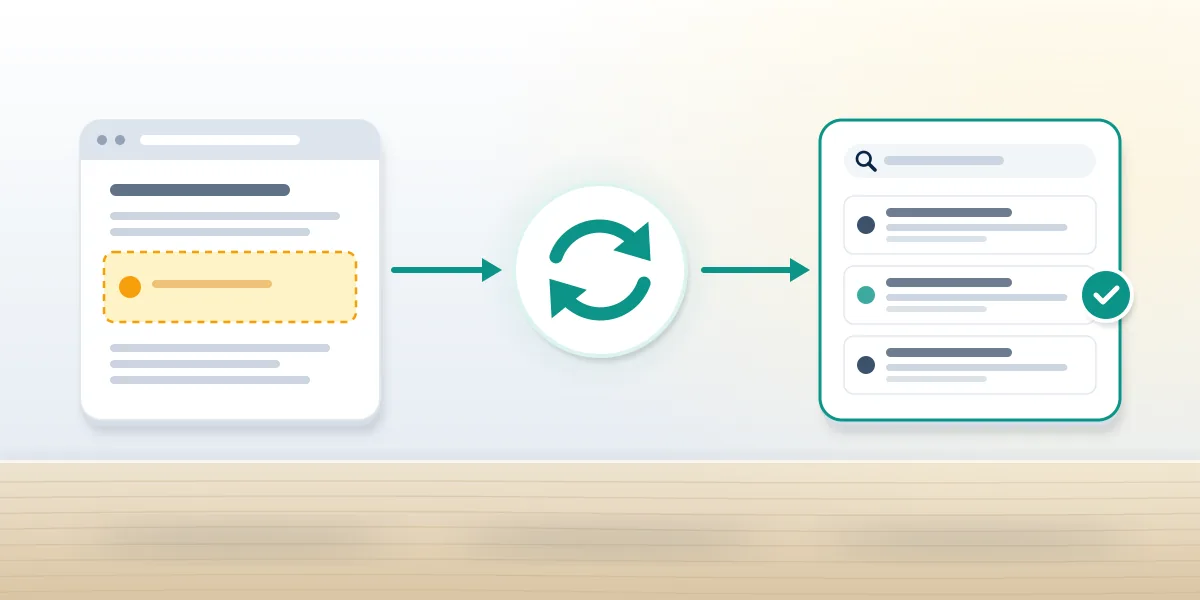
People in the EU or UK have a fourth route: a GDPR Article 17 delisting request, which Google weighs against public interest and which applies to its European versions only. For anyone else, the honest summary of how to remove your arrest record from google is that Google follows the page, so the page has to move first. Your Reputation Solution files the refresh only after confirming the source changed, which keeps every request on record clean.
What if the arrest spread to YouTube, Instagram or X?
Platform posts are easier to remove than court data, because each platform enforces its own privacy and harassment rules. None of them needs a court order to apply those rules. Bodycam clips, courthouse videos, screenshots of a booking page and local "crime watch" accounts all fall into this group. Two questions decide the route. First, does the post identify you by name, face or address in a way the platform treats as private information? Second, who owns the footage: the uploader, a news station, or you? A privacy report fits the first case, a copyright notice fits the second only where you own the material, and a harassment report fits accounts that repost the record to target you. None of these routes touches the court record itself, but removing the post also removes it from Google once the next crawl runs, which is often faster than any court-side step.
For video, you can file a YouTube privacy complaint, and YouTube judges whether you are uniquely identifiable, and anyone selling YouTube video removal as a guarantee deserves suspicion.
Where the uploader used your own camera footage, the copyright claim vs strike on YouTube difference decides what happens to the channel, and what a YouTube strike is explains the three-strike limit.
Ads promising to "erase your record overnight" are a scam pattern, so report scam ads on YouTube when one appears. Instagram Lives of an arrest fall under the same logic as Instagram Live copyright rules.
Before reporting a post, learn how to contact Instagram support through channels that actually answer; the Instagram help email list helps for privacy cases.
Here is what Your Reputation Solution will not do: promise that Google removes a true record, pay a mugshot site, fake a copyright claim, or ask for any account password. The limits of our work are written down, and anyone who tells you how to remove your criminal record from the internet in 24 hours for a fee is selling what those ads sell.
There is no Instagram customer support number for removals, so any caller offering one is not Meta. Accounts posting mugshots to harass people often land among the Instagram accounts disabled for bullying, taking their posts with them.
When a poster's profile disappears, deleted accounts on Instagram look different from blocked ones, which tells you whether the post is really gone.
Cleaning up your own history matters as much. Anyone who hid an account during the case can follow how to reactivate Instagram account steps, and what a deactivated Instagram account shows others explains what stayed visible.
On X, you can reactivate an X account within 30 days of deactivating it. Bulk-deleting old posts can trigger limits, so run a Twitter shadowban check before assuming a cleanup worked.
Should a limit stick, remove a shadow ban on Twitter covers the fix. Give it a few days before retesting. Mass deletions can also lock accounts; how to unlock an Instagram account covers that.
Suspensions follow a different path: an Instagram account suspended for no reason usually had a trigger, and a Snapchat account temporarily locked follows its own clock.
Removal scammers phish, so watch your inbox. Every genuine Instagram reset password email comes from a short list of senders, and security mail from instagram com is one of them.
Hijacked profiles that repost your record need recovery first; my X account was hacked walks through it. Impersonators also register your name as a handle, which a TikTok handle checker reveals.
You can check an Instagram username the same way, and read the rules before you purchase an Instagram username as a fresh start. How to remove your arrest record from the internet is a sequence. Record first, pages next, Google last.