How to report someone on Instagram, surface by surface
There are five places the Report button lives, and people miss this because the button looks identical in all of them. You can report a post or reel, a profile, a comment, a direct message, or a story. Each opens the same three-dot menu and the same category list. Each hands the reviewer a completely different piece of evidence.
Learning how to report something on Instagram and learning how to report someone are the same mechanical action pointed at different targets. One button covers both. The distinction matters at the review stage rather than the tapping stage. Reporting a profile when the problem is a single caption gives the reviewer an entire account to assess and no obvious violation inside it. Reporting the caption hands them the exact thing you object to, already isolated.
The mechanics barely vary. Open the thing that bothers you, tap the three dots (top right on a post, top right on a profile, a long press on a comment, the chat header on a message), choose Report, then pick a category. Meta documents the profile and post paths in its Instagram Help Center reporting article. Two routes sit outside this flow entirely: reporting a direct message or chat has its own entry point, and people without an account can report content without logging in.
People ask this a dozen ways. How do I report someone on Instagram, how do you report someone on Instagram, how can you report someone on Instagram, and the answer never changes: find the smallest piece of evidence that proves the violation, then report that one thing. One well-chosen report beats five vague ones, because five vague ones are five separate opportunities for a reviewer to find nothing. Where the problem is sustained abuse rather than a single bad post, our walkthrough on reporting harassment on Instagram across six surfaces covers the escalation order. If money changed hands, reporting a scammer on Instagram explains which outside agencies matter considerably more than Meta does.
How to report a post on Instagram versus a whole account
These are two different requests with two different ceilings. Choosing wrong is the most common self-inflicted wound in this entire process.
How to report a post on Instagram: open the post, tap the three dots in the top-right corner, choose Report, then select the category matching what the post actually does. The reviewer sees that post and judges that post. Realistically, the best available outcome is that the post comes down and the account behind it picks up a strike.
How to report an Instagram account: open the profile, tap the three dots beside the username, choose Report, then work through the account-level prompts. The reviewer is now assessing a person rather than a piece of content, which is a substantially higher bar to clear. Account-level reports succeed when the account itself constitutes the violation, meaning a fake profile, an impersonator, a bot farm, or a child under 13. They fail when the account is ordinary and only one of its posts is not.
The rule of thumb our team works to: report the smallest unit that fully contains the problem. If a single reel is the problem, report the reel. If every post is a copy of your photographs under someone else's name, the account is the problem and the profile-level report is the correct instrument. Doing both is not double coverage. Filing the same complaint twice adds no weight to either copy.
Which report category should you choose?
This is the highest-leverage decision in the entire process, and almost nobody treats it as a decision at all.
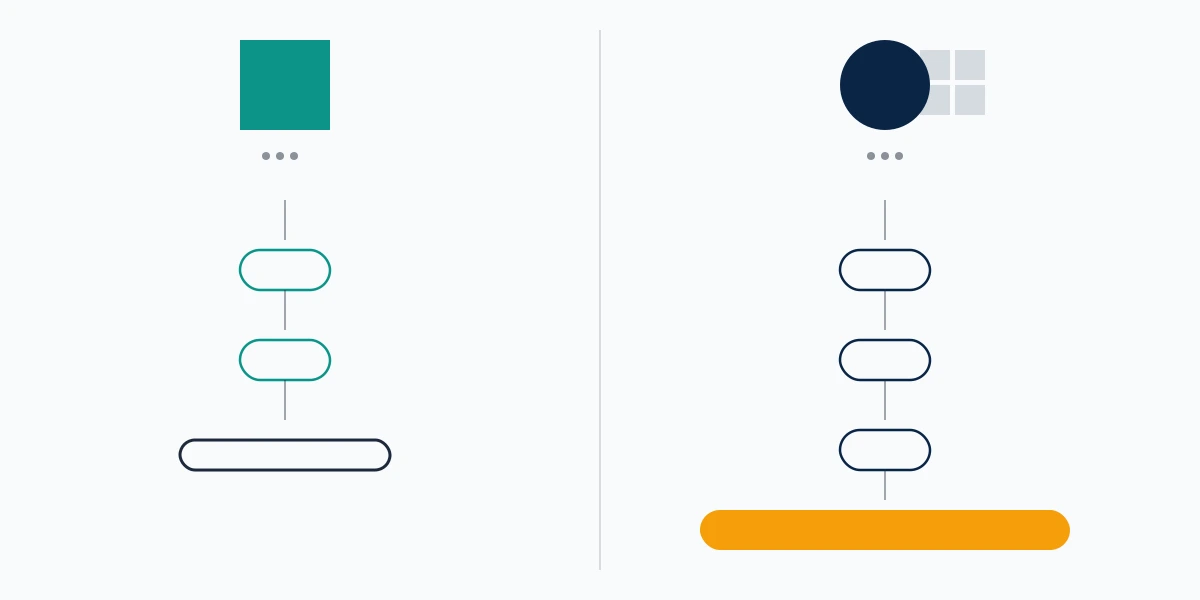
The category you pick determines which policy your report gets tested against. Instagram does not read your complaint and then go looking for a rule it might have broken. A reviewer opens the content with one specific standard in front of them, the one attached to the category you selected, and asks a narrow question: does this content violate this particular standard? Select "Bullying or harassment" for what is really a copyright problem and the reviewer will correctly find no harassment, then close the report. Nothing re-routes it to the right queue. That closure is final for that submission.
The categories Instagram surfaces cover nudity or sexual activity, bullying or harassment, hate speech, violence or dangerous organisations, sale of illegal or regulated goods, scam or fraud, false information, intellectual property, pretending to be someone else, and accounts belonging to a child under 13. Each maps to a section of Meta's Community Standards. Two minutes reading the relevant section before you file tells you precisely what the reviewer will be looking for, and often tells you that your situation does not qualify, which saves you the report.
One category is a trap. Impersonation does not run through the in-app button at all. Meta routes identity claims through a dedicated impersonation form that asks for government ID and lands in a separate review queue. Filing impersonation in-app is the single most common reason a genuine impersonation complaint goes nowhere, which is why that scenario gets its own full guide rather than a paragraph here.
What happens if you report someone on Instagram?
What happens if I report someone on Instagram is the question sitting underneath most searches in this cluster. The honest answer has four branches rather than one.
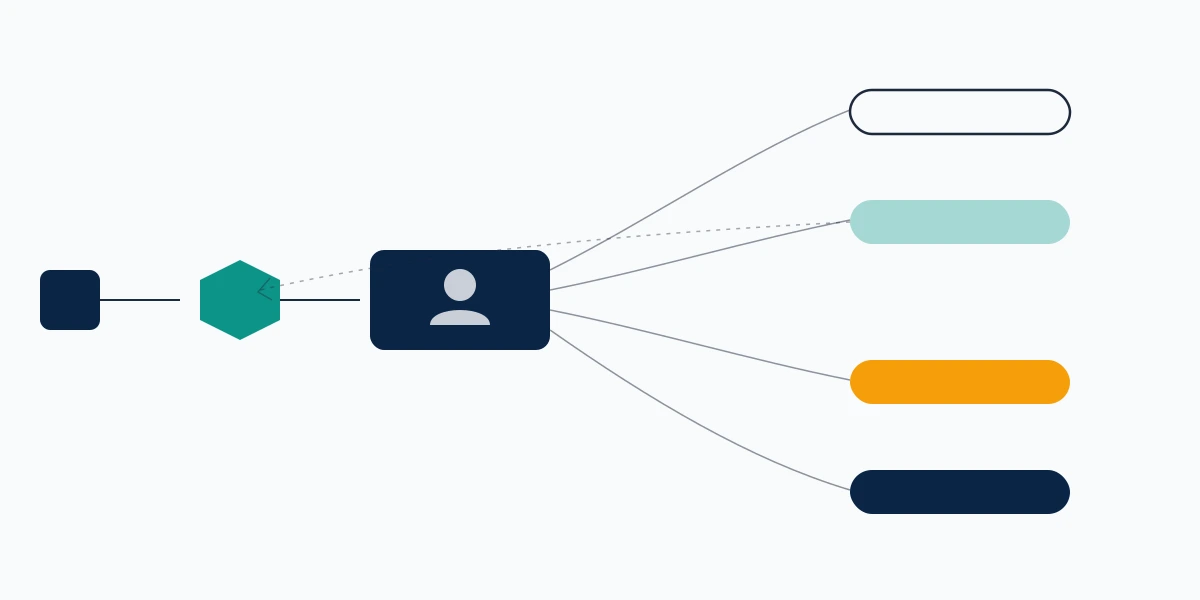
When you report someone on Instagram, the submission enters an automated triage layer first. That layer classifies it, tests the content against the policy attached to your chosen category, and in clear-cut cases acts without a human ever seeing it. Ambiguous cases route onward to a human reviewer. From there, exactly four things can happen: nothing at all, because the content does not breach the standard you cited; the content is removed while the account carries on normally; the content is removed and a strike lands on the account; or the account is disabled outright, which Meta reserves for severe or repeated violations.
You are not told which of the four occurred. Instagram notifies you that a decision was reached, not what that decision was, and it never tells you what happened to the other person's account. That asymmetry is deliberate, and it is also the source of nearly all the frustration people express afterwards.
The system has documented weaknesses at the account level, and they are worth knowing about before you pin hopes on it. In June 2026, Meta's own Oversight Board found that account deactivations lack due process, consistency and transparency, criticising the two-track structure in which some violations accrue strikes while others trigger immediate permanent disabling, with little meaningful support for anyone appealing. Reporting works. It is simply not precise, and anyone promising you precision is selling something.
Will reporting an Instagram account get it deleted?
Search phrasing gives the assumption away. People type how to report an instagram account and get it deleted, or how to report someone on instagram and get them deleted, as though deletion were a checkbox somewhere on the form. There is no such box. No threshold exists. No volume of reports converts into a removal.
An account is disabled when it breaks a policy badly enough, or often enough, and your report is one input into that assessment rather than the trigger for it. The variant how to report an instagram account to get it deleted describes an outcome you can make meaningfully more likely with a well-evidenced report in the correct category, and cannot make certain by any route available to a member of the public.
If you report someone on Instagram for something unpleasant but not against a rule, the likely outcome is no action. A rude comment, a bad review of your business, an ex posting a photograph you dislike but hold no rights over: none of these qualify, and repeat filings will not change that. Accounts that are genuinely removable tend to be removable on the first correctly-filed report. Accounts that are not, stay.
Where removal is realistic, the qualifying grounds are narrow and specific, and the evidence standard is higher than most people expect. If the account you want gone is your own dormant one, that is a different and far easier job, covered in deleting an old Instagram account you cannot log into. For a third party's account, the full evidence standards and the post-rejection routes live in our Instagram account removal guide.
Not sure which category your situation falls under, or whether it qualifies at all? Our team reviews the specifics before you file, so you spend one report on the right policy instead of three on the wrong one. Start a free case review.
Does the person find out you reported them?
No. Reports are confidential, and the person you reported sees a policy decision rather than a name.
When Instagram removes content, the notice tells the poster which standard the content breached. It does not say who complained, how many people complained, or when they did it. Reviewers work from the content and the policy, never from your profile. This holds whether you reported a post, a comment, a story or an entire account, and it holds whether you have one follower or a million.
There is one routine exception, and it catches people out badly. Intellectual property claims are not anonymous. When content comes down on a copyright or trademark complaint, Meta passes the rights holder's name and contact details to the person whose content was removed, because the law governing those claims gives the accused party a right to know who is accusing them and to file a counter-notice. File a copyright claim and you should expect to be named.
How to report someone on Instagram that blocked you
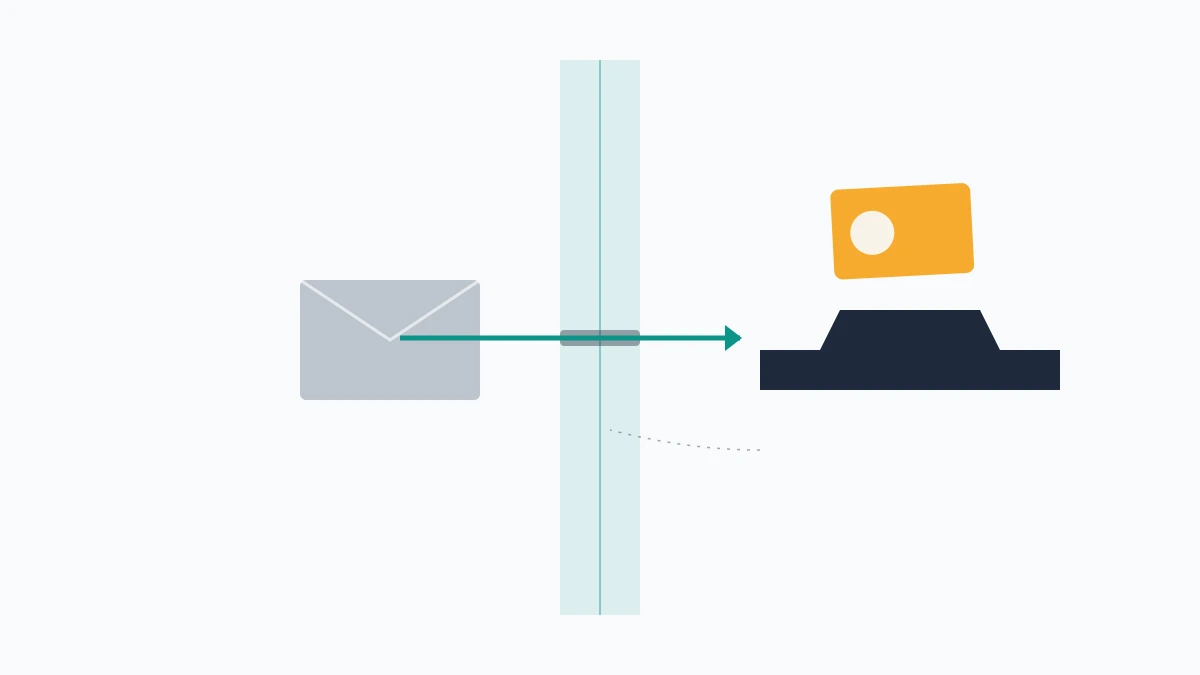
Being blocked removes your access to a profile. It does not remove the content from Instagram, and it does not remove your ability to report that content.
Three routes stay open to you. First, if you saved a link or a screenshot before the block landed, the content may still be reachable by URL in a browser even while the profile is invisible to your logged-in account, and the report link near the content works there. Second, anyone who can still see the account is able to report it, because the report is judged on the content and not on whose finger tapped the button. Third, the out-of-app reporting forms Meta provides for people without accounts work regardless of block status, since they are not tied to your login in the first place.
What none of these routes justifies is building a second account to watch someone who has blocked you. That crosses from reporting into evasion. It breaches Instagram's terms, and where the underlying situation is harassment it tends to undermine the very complaint you are trying to make, because the other side will produce it. If someone who is actively targeting you has blocked you, the evidence you already hold is the case. Log it, date it, file once, properly.
How to report someone on Instagram for buying followers
Buying followers breaches Meta's rules on inauthentic engagement, so yes, this is reportable. Manage your expectations about what follows.
File it under the spam or false-information branch of the category list rather than harassment, since the violation is engagement manipulation and not anything directed at you personally. Include what you can genuinely evidence: a follower count that jumped by tens of thousands inside a few days, an engagement rate sitting at a fraction of a percent against that count, comment sections stuffed with generic replies from accounts holding no posts of their own. Meta detects the large majority of inauthentic engagement through its own internal signals rather than through user reports, so your report is a nudge to a system already watching, not a revelation to one that was not.
Realistically, purchased followers get removed considerably more often than the purchasing account does. Instagram tends to strip the fake accounts, which quietly deflates the target's numbers, rather than disabling a profile whose only offence is vanity. Competitors reporting each other over follower counts almost never get the outcome they were hoping for.
This category is also where the mass-reporting myth runs strongest, meaning the belief that enough coordinated reports will force a removal. Volume is not a mechanism Instagram exposes, and organising a campaign puts your own account at risk rather than theirs.
Where to check the status of a report you filed
Most people file a report and then have no idea that it can be tracked at all. It can.
Open Settings, then Help, then Support Requests. The Reports tab lists what you have reported and shows where each item currently stands. Meta documents this surface in its support requests help article. Where a decision has gone against you and you believe it is wrong, that same screen carries a Request a Review option, a second look by a different reviewer, and it is the only appeal route the platform offers a reporter.
Here is what our team has observed filing these professionally. A report sitting untouched for more than roughly a fortnight is usually not queued at all, it is closed, and the notification simply never landed. Re-filing an identical complaint at that point achieves precisely nothing, because it is assessed as the same submission against the same standard. Filing a better complaint is different: a different category, tighter evidence, the specific policy line named. That counts as a genuinely new submission and gets assessed as one. The distinction between repeating yourself and improving your case is most of the gap between people who get outcomes and people who get frustrated.
Timelines vary widely by category. In our own casework across 2026, straightforward content reports have most often resolved inside a few days, while account-level and impersonation claims routinely run past a week and sometimes well beyond it. Treat any service quoting a guaranteed turnaround with real suspicion. The honest answer is a range, and our service limits and disclaimer sets out exactly what we will and will not promise.
What if the report lands on your account instead?
Reporting cuts both ways, and a meaningful share of the people who arrive on this page are on the receiving end of one.
If your own account has been restricted, suspended or disabled after somebody reported you, that is a different process with a different playbook: appeals, identity verification, and a review queue with no connection to the reporting flow described above. Start with Instagram suspended account recovery for the appeal sequence, or how to get back an Instagram account if you are not yet sure which failure state you are actually in. Where the account is already gone, recovering a deleted Instagram account is honest about the narrow window in which that remains possible, and contacting Instagram for account recovery maps the channels that genuinely reach a human being.
The same pattern repeats across Meta's other properties and beyond them. Recovering a Facebook account runs through five official paths. A blocked WhatsApp Business account has its own appeal form and its own evidence expectations. On TikTok the first question is usually credentials rather than enforcement, which is the ground TikTok password recovery covers.
One boundary deserves stating plainly. If an account was removed for child safety, terrorism, or sustained targeted harassment, no appeal route and no service will bring it back. That is not pessimism, it is Meta's stated position, and any firm telling you otherwise is charging you for an outcome it cannot deliver.
The same report button on other platforms
The mechanics travel between platforms. The policies and the escalation routes do not.
Every major platform now runs some version of the three-dot-to-report pattern, so the muscle memory transfers immediately. What each one will actually act on differs sharply. X responds to doxxing under a specific and fairly narrow policy, covered in reporting doxxing on Twitter, and its account-level enforcement follows different triggers again, mapped in getting someone suspended on X. Telegram is the real outlier, handling impersonation largely through a support address rather than an in-app form, which reporting a fake Telegram account walks through.
Commerce complaints form their own category everywhere. Reporting a TikTok Shop seller routes to a marketplace team rather than a content-moderation queue, and the disclosure rules governing who sees your name differ from Instagram's. On YouTube the removal levers are strike-based and copyright-heavy in a way Instagram's simply are not, and how a YouTube ban service actually works is the closest analogue to this page for that platform.
If you are dealing with the same bad actor across several platforms, file on each one separately and in the correct category for each. A report on Instagram has no effect whatsoever on the same person's TikTok.
Which Instagram reporting guide do you actually need?
This page is the map. The territory sits in four deeper guides. Picking the right one saves you a wasted report, and picking the wrong one costs you a fortnight of waiting for a decision that was never coming.
| Your situation | The guide you need |
|---|---|
| Someone is using your name, face or brand | Someone is impersonating me on Instagram covers the dedicated form, the ID it asks for, and what to do after a rejection |
| You want to know whether they will learn it was you | Does Instagram tell you who reported you covers the confidentiality rule and its one exception in full |
| You are wondering whether more reports means faster action | Instagram mass report bots and tools covers why volume thresholds do not exist and what the panels are really selling |
| You need an account removed and want to know if it qualifies | Removing someone else's Instagram account covers the six grounds Meta acts on and the evidence each needs |
If your situation is harassment, scams, or your own locked account, the links earlier in this guide point at the right place. If none of the four fits, that usually means you are dealing with a legal matter rather than a policy one, and a report is the wrong opening move.
What we won't do
A category this thick with scams deserves a plain statement of limits.
We will not guarantee that any account gets removed, because nobody outside Meta controls that decision and anyone claiming otherwise is lying to you. We will not ask for your password, and no legitimate firm in this space ever needs it. We will not file a copyright or impersonation claim on grounds we know to be false in order to force content down, because that is fraud, it gets the claim reversed, and it exposes the person who filed it. We will not run or sell coordinated reporting campaigns. We will not quote you a guaranteed turnaround.
What we do is unglamorous by comparison. Work out whether your situation genuinely qualifies under a specific policy. Choose the category that matches it. Assemble evidence that survives a sceptical reviewer. File once. Handle the appeal properly when a first decision comes back wrong. If you want a second opinion before you file anything, a case review costs nothing.