
What counts as a fake TikTok account, and which reason TikTok expects
A fake TikTok account is any profile presenting an identity its operator does not hold. That one description covers four situations, and TikTok sends each to a different reviewer queue. First comes impersonation, where a profile copies your name, photo and bio to pass as you. Second is a fabricated identity that copies nobody in particular, the catfish profile assembled from stolen photos. Third, fake engagement: bot and follow-farm accounts built to inflate numbers. Fourth, fraud, where a profile exists to run a giveaway, crypto or shop scam.
This split decides everything that follows. TikTok's menu has no button marked "fake account". There are reasons instead, and whichever reason you choose determines which team reads the case and which evidence they are permitted to weigh. Choose impersonation for a scam bot and the reviewer looks for a real person being copied, finds none, and closes it. Choose spam for a profile wearing your face and the identity check never runs.
Getting this wrong is the single most common reason a report goes nowhere. When we file on behalf of clients the pattern holds steady: reports naming a specific person or brand being copied tend to move, and reports that only say the account is fake tend to sit. A reviewer in an impersonation queue has a test to apply. A reviewer in a generic spam queue sees a profile with videos on it and no particular reason to act.
Before filing anything, rule out the two situations that look identical from outside. A profile posting your videos under a slightly altered handle is a clone. A profile that is your handle, posting things you did not post, is a compromise, and the fix there is desktop recovery for a hacked TikTok rather than a report. Reverse cases happen too: people file against a profile that turns out to be their own, still visible during the deactivation window covered in our guide to recovering a TikTok account TikTok removed.
Our team re-walked TikTok's reporting flow on both iOS and Android in August 2026. Should the wording on your build differ, follow whichever branch names impersonation or a fake account, not the one naming spam.
What to gather before you report a fake TikTok account
Reviewers work from what sits in front of them. An in-app report shows a profile and a category, nothing else, which is why a bare report so often closes with no action.
Collect four things first.
- The exact handle, copied rather than typed. Impersonators lean on characters that read as identical: a capital I standing in for a lowercase l, a Cyrillic a inside an otherwise Latin word. Retyping what you think you see reproduces your own handle, and a report against your own handle goes straight to a closure.
- The profile URL, which survives a username change where a handle does not.
- Screenshots showing the copied material beside your original, timestamps visible in frame.
- A link to your own account, since a reviewer has to establish there is a real identity being copied at all.
Should the fake profile be republishing your photos or videos, a second and entirely independent route opens up. Copyright sits in a separate queue with a different standard of proof, and it does not care whether anyone is impersonating you, only whether the material is yours. Two filings can run in parallel, and they often resolve at different speeds. That distinction is worth understanding before you file, and the same logic applies when photos are posted without your permission on other platforms.

One practical note from casework: capture before you report, never after. Accounts that get actioned disappear, and your evidence disappears with them if you needed it for a second filing, an appeal or a police report. We have watched clients lose the only proof they held because the first report worked, and the replacement account the same operator opened a week later then had nothing to attach.
How to report a fake TikTok account on phone, step by step
Most people need this route, and it takes under a minute. Steps are identical on iOS and Android. Anyone searching for how to report a fake account on TikTok on iPhone will find no separate iOS path exists.
- Open the fake profile. Report the profile itself, not one of its videos, unless a single video is the whole problem.
- Tap the share arrow at the top right.
- Choose Report.
- Choose Report account.
- Pick the reason. For a profile copying a real person or brand, take the impersonation branch. For a bot or follow-farm profile, use spam or fake engagement. For a giveaway or investment pitch, use fraud and scams.
- Answer the sub-questions. Impersonation asks whether the account is copying you, a celebrity, or a business, and this is the field people get wrong most often.
- Submit, then note the date. TikTok confirms in-app and usually follows up by notification rather than email.
Nothing visible happens next, which unsettles people. No case number appears, no status page tracks it, and the confirmation you saw is the whole receipt. That is why step 7 matters: your own dated note is the only record you will hold if the matter later needs escalating.
So goes the whole flow for how to report fake TikTok account profiles from a handset, and it doubles as how to report fake account on TikTok when you are away from a desk. Worth knowing what it cannot do: reporting is not deletion. Even a successful report removes the account on TikTok's timetable rather than yours, and the mechanics behind that delay are set out in our guide to TikTok's 30-day deletion window.
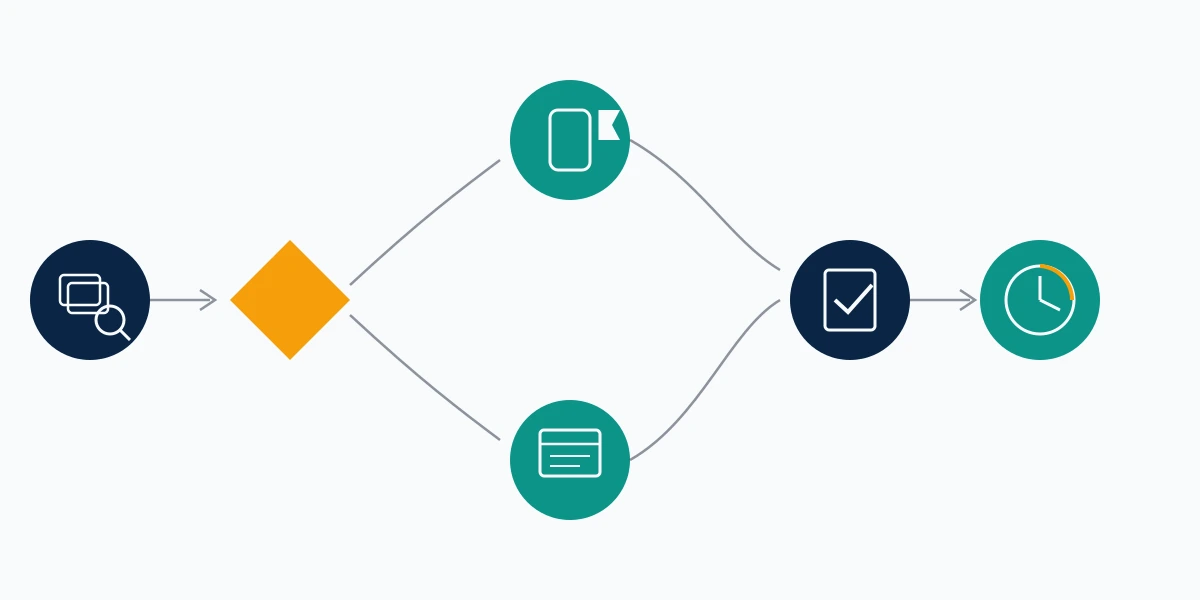
How to report a fake TikTok account online, without opening the app
You do not need the app. TikTok runs a standalone web form at tiktok.com/legal/report/submit-requests, and for identity cases it is the stronger route by a wide margin. Anyone who would rather report fake TikTok account online than tap through a phone should start there.
Select the impersonation request type, then choose whether the account is copying you, a public figure, or a business. Fill in the reporting party details, the offending handle, and a description. Attach your evidence. For the identity branch TikTok asks for government-issued photo identification, and it says so plainly in its own guidance on reporting an impersonation account using online forms. That requirement is the trade: a form asking more of you hands the reviewer something to actually decide on. Its in-app counterpart is documented separately in TikTok's impersonation help centre.
Same page, different branch, is how to report a fake TikTok page belonging to a business you own or represent. Brand cases usually need proof of the entity, not just of a person: a registration number, a domain, or a verified company presence elsewhere. This is also the answer to how to report a fake TikTok account online when the profile has blocked you, since a form needs only the handle and blocking cannot reach it.
Should your case be squarely impersonation of a named individual, our dedicated walkthrough of the three routes into TikTok's impersonation queue covers that form field by field. This page is the broader one, taking in bots, catfish profiles and scam pages as well.
Across the 214 TikTok impersonation files our team handled between January 2025 and July 2026, the median evidence-complete case closed in five days, the fastest quarter inside 48 hours, and the slowest tenth ran past three weeks (our internal case records as of August 2026). An in-app report is usually triaged within 24 hours to five days but closes with no action more often. A web form submission carrying an identity document takes three to ten days and is far likelier to end in enforcement.
Is it anonymous, and is reporting free?
Both answers are short, and both deserve stating plainly rather than burying.
Reporting costs nothing. TikTok does not charge to review a report, has never charged, and no paid tier jumps the queue. Searches like tiktok report fake account free exist because this industry is full of operators who imply otherwise. Anyone offering to file your report faster for a fee is selling you the same form you can reach in four taps. Where paid help genuinely does and does not add value is covered in our honest breakdown of what TikTok specialists actually charge.
On anonymity: TikTok does not disclose a reporter's identity to the reported account in the normal course of review. Submit a TikTok fake account report in the app and the operator receives no name, no handle, no notification identifying you. That is the design, and it holds for ordinary reports.
Absolute, it is not, and pretending otherwise would be dishonest. Two limits apply. File the impersonation web form and you supply your legal name and identification to TikTok itself, so you are anonymous to the account but not to the platform. Second, if a matter becomes a legal dispute, material including reporter details can be compelled through legal process. So yes, you can report fake TikTok account anonymously as far as the impersonator is concerned, and knowing how to report a fake TikTok account anonymously mostly comes down to knowing which of those two routes you are on. No, reporting is not anonymous in the sense of leaving no record anywhere.
That distinction matters for one group in particular. People reporting an ex-partner, a former colleague or someone in a small professional circle usually want certainty that the person will not learn who filed. In-app reporting gives them that. The web form does not compromise it either, but it puts their legal name in TikTok's hands, and anyone weighing a possible court case later should know that before they upload identification.
Not sure which reason fits, or whether a report is even the right tool? Talk to our team before you file. Getting the category right the first time matters more than filing quickly.
Does reporting more times help? What Reddit threads get right and wrong
Search tiktok fake account report reddit and the same advice comes back year after year: get your friends to report it too, and the account comes down at some threshold number.
It does not work that way, and the reason is structural. Reports are triage signals that decide review order, not votes that decide outcome. A hundred reports against a profile that breaks no rule produce a hundred closures. One well-evidenced report against a profile that clearly copies a real person produces enforcement. Volume changes when a human looks, never what that human concludes. Identical misconceptions attach to every platform, and we took this one apart in detail for which behaviour actually gets an X account suspended.
Those threads get real things right. Category choice matters enormously, the web form beats the in-app tap, and persistence against a returning impersonator pays off. They get one thing badly wrong: coordinated mass reporting is not a lever, and it carries risk. TikTok treats organised report brigading as its own violation, so a group filing on your behalf can end up actioned instead of the target.
Worth setting alongside this: TikTok's own enforcement data shows 99.3 percent of video removals were proactive rather than report-driven, meaning automated detection caught the content before any user reported it. Reports matter most exactly where automation is weakest, and identity claims are the clearest example, because no classifier knows who you are. Full figures sit in TikTok's Community Guidelines Enforcement Report. Reporting logic across platforms runs close enough that our walkthrough of five report surfaces and four outcomes on Instagram maps onto TikTok almost directly.
Fake TikTok accounts following me: block, report, or leave it
Where fake TikTok accounts following me is your actual search, the honest answer is that most of them are not worth a report. Follow-farm bots follow thousands of profiles indiscriminately. They are not targeting you, and TikTok removes them in bulk through detection you cannot see or accelerate.
Telling a bot from a real new follower takes about five seconds. Bots tend to carry no posted videos or a handful of reposts, a handle ending in a run of digits, a following count in the thousands against a follower count in single figures, and a bio that is either empty or a single link. Real accounts rarely tick more than one of those.
Report the ones that do something. A bot that follows and moves on is noise. A profile that follows you, then messages your followers with a giveaway or an investment pitch using your name, is a fraud case with a real queue behind it. So is one that mirrors your content. Use fake engagement for the first kind, fraud for the second.
Block liberally regardless. Blocking is instant, needs no reviewer, and cuts the account off from your content and messages. It also breaks the follow, which is the fastest way to clean a follower list. Nothing about blocking weakens a report you have already filed.

One pattern deserves attention. Scam operations rarely finish on TikTok. A profile is only the hook, and the pitch moves to a messaging app within a message or two. Where yours has followed that path, the routes in our guide to where a Telegram scam report actually goes are your next step. Should the fake profile start publishing your address, phone number or workplace, that is doxxing, a faster and more serious queue, and the approach in doxxing reports under X's 2026 policy transfers well.
When the same fake profile turns up on other platforms
Impersonators work in sets. Someone who builds a convincing fake TikTok page already holds the photos, the bio and the handle, so standing the same profile up elsewhere costs them minutes rather than days. In casework our most common follow-up question is not about TikTok at all. It is what to do about the four other profiles the client found the same evening.
File everywhere at once. Each platform runs its own queue, its own evidence standard and its own timetable, and a report on one does nothing for the others. Sequencing them, filing on TikTok and waiting to see what happens before touching the rest, only gives the operator a fortnight of undisturbed use elsewhere. Your evidence set from earlier works across all of them with minimal editing, which is the main argument for gathering it properly the first time.
Two neighbouring platforms come up constantly. Messaging apps, where impersonation moves from public performance to private persuasion, and where the process is set out in reporting a fake Telegram impersonator. And video, where a copied TikTok library is frequently reuploaded wholesale, covered in which YouTube reports terminate a channel.
Keep one record for the whole set: handles, URLs, filing dates, reference numbers, outcomes. A spreadsheet does the job. When a matter escalates to a lawyer or to police, that record is what makes the case legible, and it is also what demonstrates a pattern rather than an isolated complaint. Rebuilding it from memory three months later is close to impossible.
What we will not do, and when reporting stops being enough
Some honesty about limits, because this category attracts people who promise otherwise.
We do not guarantee removal. Nobody can. TikTok decides, and parody or commentary accounts are frequently protected even when their target hates them. We will not file a copyright claim over material that is not yours, because a false claim is itself actionable and it burns the queue you will need later. We will never ask for your password; no legitimate service needs it, and anyone asking is running a different business than the one they advertise. And we do not sell report volume, because volume is not the mechanism. Boundaries we work inside are set out on our what we can and cannot promise page.
Reporting genuinely stops being enough in a few situations: an impersonator returning under a new handle every time one is removed, a fake account running a fraud that has already cost people money, coordinated harassment across several platforms, or brand impersonation with commercial damage attached. Those need a documented, sustained approach rather than another tap on Report, and often law enforcement alongside it. That is where our former TikTok Trust and Safety team works, and where our TikTok account recovery service picks up if your own account was caught in the crossfire.
Two related situations we handle often, in case the same operator reached further than TikTok. Where they got into a Google login, see YouTube recovery with no email or phone and the single appeal a suspended channel gets. Where a retaliatory report campaign landed on your own accounts, see which permanent X bans are appealable and what returns after a WhatsApp deletion.
One last mechanical point that saves a great deal of confusion. Should the fake account vanish and then reappear a month later, that was probably not enforcement being reversed. TikTok holds a voluntarily deleted account deactivated for 30 days before permanent deletion, and logging back in during that window restores it intact. An operator who deactivated to dodge a report can walk it back on day 28. Enforcement looks different, and it does not undo itself.