What to do in the first hour after you find the fake profile
The first hour matters less than people expect for the takedown and more than they realize for the damage. A cloned profile almost never earns anything from its own grid. It earns from direct messages sent to your followers: a crypto pitch, a fake giveaway, a "my main account got locked, can you send me a code" request. So the order is warn, document, report. Not the other way round.
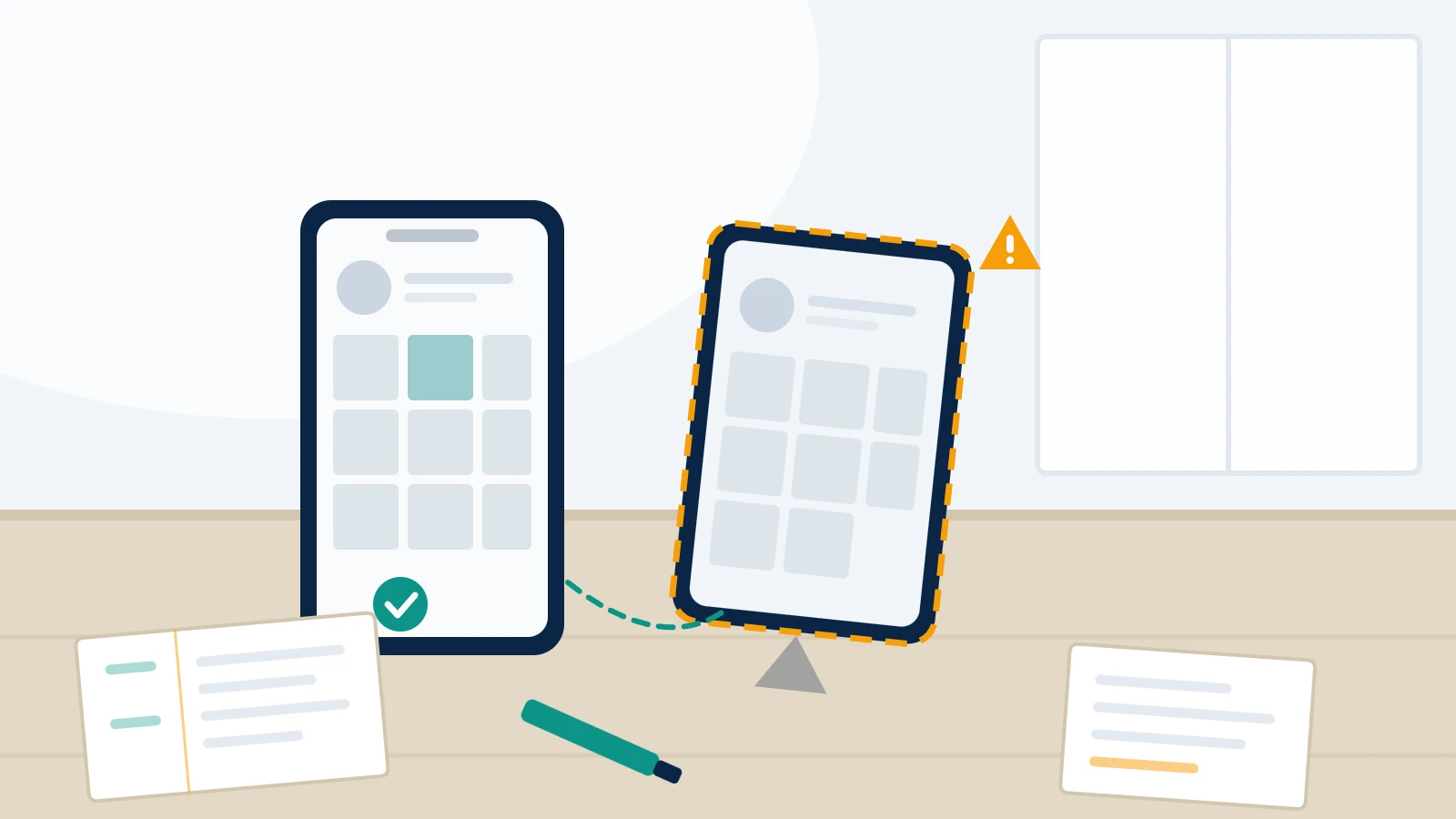
Post a story from your real account naming the fake handle and stating plainly that you will never ask anyone for money or verification codes. Then screenshot the impersonating account Instagram is hosting: the bio, the follower count, the grid, and at least three posts or messages where it presents itself as you. Copy the profile URL. Note the date and time of each screenshot.
Only then file the report. That sequence is deliberate. When a report succeeds the profile disappears, and your evidence goes with it. Of the 189 Instagram impersonation cases our team reviewed between January 2025 and July 2026 (our internal records as of August 2026), 34 arrived with the fake account already gone and no usable screenshots, which left the client unable to support a bank dispute, an employer conversation, or a police report. Someone is impersonating me on Instagram, someone on Instagram is impersonating me, somebody is impersonating me on Instagram: whichever version of that sentence is running through your head right now, take the screenshots before you take any satisfaction. What to do if someone is impersonating me on Instagram starts with evidence, not with the Report button.
What to do if someone is impersonating you on Instagram splits into two questions that people tend to merge: what stops the harm today, and what removes the account. Warning your followers stops the harm. Only Meta removes the account. Keeping those two apart makes the next week far less frustrating.
The same split answers the panicked version. What if someone is impersonating me on Instagram and a client calls before Meta replies? Then the warning post and the dated screenshots matter more than the takedown, because those are what a client, a bank, or an employer will actually accept. What to do when someone is impersonating you on Instagram more than once, with several clones live at the same time, is the same work repeated: one report per account, each carrying its own evidence. There is no bulk route, and nobody sells one that works.
Our intake form asks people to paste whatever they searched before they found us, and the variety is remarkable: instagram someone impersonating me, instagram someone is impersonating me, someone impersonating me instagram, account impersonating me instagram, impersonating account instagram, instagram impersonating me, instagram help someone is impersonating me. Same problem, same two forms, same evidence. The only phrasing that changes anything is the one you write inside the report. And if the account you are looking at is not a clone but your own profile in someone else's hands, that is a different emergency: our Instagram hacked account playbook covers it, and speed matters far more there.
Why is someone impersonating you on Instagram?
Impersonation on Instagram is almost always financial, and the motive tells you which evidence to gather. Four patterns cover nearly everything we see. The most common by a wide margin is follower fraud: the clone copies your photos and bio, follows your existing followers, and messages them with an investment or giveaway scam that works precisely because your face is attached to it. Second is romance and catfishing, where your photos build a relationship with strangers who will never meet you. Third is harassment, usually someone who knows you, building a profile designed to embarrass you and written in a voice that mimics yours. Fourth, and the one businesses see most, is commercial diversion: a fake shop taking orders and payments under your brand name.
Why is someone impersonating me on Instagram, specifically? Usually because you are reachable. A public account with a few thousand engaged followers is worth more to a scammer than a celebrity account, because your followers actually reply. A person impersonating me on Instagram does not need a large audience to profit. They need a trusting one. That is also why the answer to why is there an Instagram account impersonating me is rarely personal. In most cases nobody chose you. A scraper found a public profile with clear photos and a believable bio, and a human took it from there.
The distinction matters practically. A financial clone hands you evidence of fraud, which strengthens both the Meta report and any police report. A harassment clone hands you a pattern of targeted behaviour. A commercial clone hands you a trademark angle that personal cases simply do not have.
How to find out who is impersonating you on Instagram
Here is the honest version, because most pages dodge it: you probably cannot. How to find out who is impersonating you on Instagram has no legitimate answer that ends in a name and an address. Instagram will not tell you who registered an account, and it should not. That information moves through a subpoena or a law-enforcement request, which means a police report or a lawyer, not a service.
What you can legitimately observe is still useful, and all of it is public. Check whether the account follows people you know offline, which points at someone in your circle rather than a scraper. Watch the posting times across a week; a consistent window suggests a timezone. Run a reverse image search on the profile photo to see where else that image set appears, because clone operators reuse the same set across dozens of accounts. Note the username pattern, since scaled operations favour predictable suffixes: an added underscore, a doubled letter, a trailing number. Then open the three-dot menu on the profile, tap About This Account, and record the join date and the country the account is managed from. That last field is genuinely useful and almost nobody looks at it.
This is also the stage where people go hunting for peers rather than answers. Search someone impersonating me on Instagram reddit and you will surface hundreds of threads; search someone is impersonating me on Instagram reddit and you will surface the same threads with more despair in them. Read them for calibration, not for identification. No comment section can tell you who registered an account, and the ones that claim to are guessing from the same public signals you already have.
Anyone offering to unmask the person behind an account for a fee is guessing, scraping data they should not hold, or simply taking your money. We do not do it and we say so on the first call. What our team does instead is package the observable signals into a report a Meta reviewer can act on quickly, and, where there is real financial loss, into a file a police report can reference. The limits of that work are written out in our service disclaimer.
Four routes for reporting an Instagram impersonating account
There are exactly four legitimate routes, and choosing the wrong one is the single most common reason a report goes nowhere. Route one is the in-app report, which suits anyone with an Instagram account and an obvious case. Route two is Meta's dedicated impersonation web form, which works even if you have never had an account and is the only route that collects identity evidence. Route three is the intellectual-property route, open to you when you hold a registered trademark. Route four sits outside Meta entirely: law enforcement or a lawyer, for when the first three fail or real money is involved. Our broader walkthrough on how to get an Instagram account taken down covers the other violation types; this page stays on impersonation.
| Route | Who it is for | What it needs | Typical first decision |
|---|---|---|---|
| In-app report | Anyone with an Instagram account | The fake profile, no ID | 1–3 days, often automated |
| Impersonation web form | The person being impersonated, account or not | Government photo ID matching the impersonated name | 1–5 days, human review |
| Trademark / IP report | Registered brand owners | Registration number, infringing URLs | 2–7 days |
| Police report or counsel | Fraud, extortion, sustained harassment | Screenshots, dates, financial records | Weeks |
People search this step a dozen ways: impersonating instagram report, instagram impersonating report, instagram report account impersonating me, instagram report someone impersonating me, report someone impersonating me on instagram. Every one of them leads to those same four doors.
To file the in-app version, open the fake profile, tap the three dots, then choose Report, then Something about this account, then It's pretending to be someone else, then Me. That wording is current as of August 2026 and Meta revises it, so read the options rather than counting taps.
How to report an Instagram account that is impersonating me, when the in-app route has failed or you have no account, means using Meta's dedicated impersonation form. Select the option confirming you are the person being impersonated, paste the profile URL, and upload the ID. Instagram's impersonation policy page sets out what the platform treats as impersonation and what it protects as parody, which is worth five minutes before you write the description field. How to report an Instagram account impersonating you is the same form whether the impersonating Instagram account has ten followers or ten thousand.
How to report someone impersonating me on Instagram, in the phrasing most people actually use, comes down to which door fits. How do I report someone impersonating me on Instagram when an Instagram account is impersonating me and messaging my followers under my photos and my name? The web form with ID, every time. If an Instagram account impersonating me is instead a parody account that says parody in the bio, none of the four doors will open, however the report is worded. How to report someone impersonating you on Instagram when the victim is not you, a parent filing for a child or an assistant for a principal, needs the authorised-representative option plus proof of that authority. Reports from unrelated third parties are closed without review, which is exactly why crowd-sourced reporting achieves nothing.
What Instagram asks for, and why the ID upload is unavoidable
The impersonation form asks for a photo of a government ID. This is the step that stops people, and the hesitation is reasonable, so here is the plain version. Meta requires it because the form is a claim about identity. You are asserting that a name belongs to you and not to the account holder, and without a document the reviewer has two competing claims and no way to choose between them. There is no version of this process that skips identification, and no service can bypass it for you.
Three practical details decide most outcomes. The name on your ID has to match the name being impersonated, not your handle; if you work under a professional name that differs from your legal one, say so in the description field and attach something linking the two, or the report gets rejected on a mismatch that never gets explained to you. The photo must show the full document including its edges, because cropped images fail automated checks. And file from an email address you actually monitor, since Meta's response often lands there rather than in the app.
When we file these, the rejection we see most is not a policy disagreement at all. It is a name mismatch on an otherwise strong case. A refiled report that addresses the discrepancy in the first two lines of the description succeeds far more often than the same report sent again unchanged. If handing over identity documents worries you, our privacy policy sets out how we treat client material, and note that on the Meta form the upload goes directly to Meta, not through us or anyone else.
Not sure which of the four routes fits your case? Send us the profile URL and what the account is doing. Talk to our team for a free 60-minute review. We will tell you which door to knock on, what evidence Meta will want, and whether the case is one we would take at all.
Instagram won't remove account impersonating me: what to do next
This is where most people are when they find us. Instagram won't remove account impersonating me is not a rare outcome, it is the normal second stage. Of the 189 cases in our records, 71 arrived after Meta had already rejected at least one report. A rejection usually means one of four things: the reviewer could not verify your identity, the report came from someone other than the impersonated person, the account was judged parody or fan content, or the description never actually said what the account was doing. An account impersonating me on Instagram that survives a first report is not necessarily one Meta approves of. Far more often, the report simply gave the reviewer nothing to act on.
Refile rather than repeat. Open a fresh report through the web form and, in the first two lines, state the specific behaviour. "This account uses my name and photographs to solicit payments from my followers" beats "this is fake" by a wide margin. Attach the two or three strongest screenshots rather than twenty. If the account is asking people for money, say so explicitly, because fraud is escalated differently from ordinary impersonation. Refiled cases in our records take another three to nine days for a first decision.
If Instagram won't take down an account impersonating me even after a properly evidenced refile, the remaining levers sit outside Meta. Fraud reports go to the FBI's IC3 portal in the US and identity misuse to IdentityTheft.gov, both of which produce a reference number that strengthens a later Meta escalation. A lawyer's letter carries weight when there is documented financial loss. Be realistic about the ceiling, though: Meta's decision is final inside Meta's system, and nobody, ourselves included, can force a reversal. Our guide to why Meta refuses most account-deletion requests explains where that line sits and why.
How to stop someone impersonating you on Instagram for good
Removal is not prevention. How to stop someone impersonating you on Instagram over the long run comes down to three unglamorous habits. Register the obvious variations of your handle yourself, before someone else does; our guide to claim Instagram username covers the process and its limits, including what happens when the handle you want is already held. Thin out the public set of clear face photos a cloner can harvest. And search your own name and handle with an added underscore or number once a month, which surfaces most clones within weeks instead of months. Clone operators rebuild. The people who stop having this problem are the ones who keep looking.
What no bot, ban service, or mass report will do for you
Spend ten minutes searching this topic and you will be offered a mass-report bot, a Meta insider, or a guaranteed 24-hour removal. None of it works, and some of it will cost you the account you still have.
Meta's enforcement weighs the severity of the violation, the quality of the evidence, and the reported account's history. It does not count reports. We have tested this repeatedly and written up what actually happens in our breakdowns of Instagram spam report bots and the mass-reporting tools sold for Instagram. Coordinated reporting is itself a Community Guidelines breach, so the realistic downside is enforcement against the reporters. If someone is pitching you a paid takedown, our review of what Instagram ban services actually sell is worth reading before you pay anyone anything.
Here is what we will not do, stated plainly. We will not guarantee removal, because nobody controls Meta's decision. We will not ask for your password or a verification code, ever, and neither will Instagram. We will not file a copyright or trademark notice over content we cannot show you own, because a false notice is unlawful and it burns the account it was meant to protect. We will not identify the person behind an anonymous account. And we will not take a case we think is unwinnable: roughly one enquiry in six gets told to go to the police instead, because that is the only route that leads anywhere.
Someone is impersonating my business on Instagram
Business cases run on a different track, and the difference is leverage. Someone is impersonating my business on Instagram gives you an option personal victims do not have. If you hold a registered trademark you can report through Meta's intellectual-property channel instead of the personal impersonation form, and IP claims are assessed against a documentary standard rather than a judgement call about identity. Registration is what unlocks it; an unregistered trading name puts you back on the ordinary route. The USPTO's trademark basics set out what registration actually covers.
The commercial damage also moves faster. An Instagram impersonating business account typically runs a fake storefront: it lifts your product photos, advertises a discount, takes payment through a link, and vanishes. By the time customers complain to you, the chargebacks are yours to explain. So the first move for a brand mirrors the personal one but louder: a pinned post and a story naming the fake handle, plus a note to your support inbox so staff answer consistently.
Where a business case gets complicated is content. Clone shops reuse your posts and Reels wholesale, which often means a copyright claim on the individual assets moves faster than the account report does. That parallel route is covered in our guide to removing Instagram posts and Reels. For brands weighing whether to handle this in-house, our Instagram case-handling service sets out what we do, what it costs, and where we say no.
Can you get in trouble for impersonating someone on Instagram?
Yes, though less automatically than most people assume. Impersonating someone on Instagram always breaches Meta's Community Guidelines, which is a platform matter and ends in account removal once a report is verified. Whether it is also a crime depends on where the impersonator sits and what they did with the account. In California, Penal Code 528.5 makes credible online impersonation carried out to harm, intimidate, threaten or defraud a misdemeanour punishable by up to a year and a fine. New York and Texas have comparable statutes. Federal exposure appears when the impersonation is the vehicle for wire fraud or identity theft rather than the offence itself.
So can you get in trouble for impersonating someone on Instagram if the account is obvious satire? Generally no. Parody and fan accounts are protected on the platform when they are labelled, and protected in law when no reasonable person would read them as genuine. That protection is exactly why a well-known clone with parody in the bio survives reports that would remove an unlabelled one.
For the person being impersonated, the practical translation is this. The criminal angle is a lever, not a shortcut. A police report will not speed up Meta. What it creates is a documented record supporting a bank dispute, a chargeback defence, an employer conversation, or a civil claim later on. File it when there is money or a threat involved. Skip it when the account is merely irritating, and put that energy into the report and the follower warning instead.