
What an Instagram DMCA takedown actually removes
An Instagram DMCA takedown is a notice aimed at specific pieces of content. You name the posts, Meta reviews them, and the posts come down or they don't. What the process has never had is a button that deletes the account behind them, and that gap is the source of most of the disappointment in this corner of the internet.
Meta's copyright form is built around content identifiers. It asks for the links or IDs leading directly to the material you are reporting, and the content types it offers are a photo, video or post, a story, an ad, or "other". The form itself notes that an Instagram account holds many individual photos, videos, captions and comments, and that the copyright in all of them rarely belongs to one rights owner. There is no "remove this account" choice.
None of that means copyright never costs anyone an account. Meta says it disables the accounts of repeat infringers in appropriate circumstances, and US law makes that a condition of its safe harbour rather than a courtesy: 17 U.S.C. § 512(i) requires a termination policy for repeat infringers. One report removes posts. A pattern of upheld reports is what eventually removes a person. You do not control that threshold, you cannot see the counter, and filing the same complaint four times does not move it.
Absorb one more limit early. Reports are not votes, and a reviewer matching content against a written policy is what removes something, which is why report volume does not decide outcomes on any large platform. In the casework our former Meta Trust & Safety team handles, the most common reason a legitimate claim dies is that it was filed into the wrong queue, not that it was under-evidenced.
Do you actually own it, and can you show it?
Ownership is the first thing a reviewer tests and the first thing most filers assume rather than establish. You own the photograph you took. You do not automatically own the photograph someone took of you — being in the frame is not authorship, and that single confusion accounts for a large share of rejected claims. A commissioned shoot usually belongs to the photographer unless a contract moved it. A track you licensed for a Reel is not yours to enforce.
Copyright also stops at the edge of the work itself. The US Copyright Office is blunt that copyright does not protect names, titles, slogans, or short phrases. Your handle, your business name and your tagline are trademark territory, and filing them as copyright puts your claim in a queue that cannot grant it.
What a reviewer wants is boring and documentary: the original file with its embedded capture data, an upload that predates the copy, a contract or invoice if the work was made for you. Screenshots of your own post are the weakest form of this, because a screenshot proves you can see something, not that you made it. Across every major service, the evidence pack platforms actually accept is much the same, and the file that wins is almost always the one you nearly deleted.
There is a practical trap here for anyone locked out of their own account. In-app reporting needs a live Meta login, so if your originals sit inside an account you can no longer reach, that becomes the first problem to solve rather than the second — and regaining Meta access without the old email is a different process with its own paths.
Save the evidence before it disappears
A successful takedown destroys your own record. The infringing post vanishes, and with it the URL, the caption, the view count and the comment thread you might later need to show a court, an insurer or a client. Capture everything first.
Photograph the infringing post with the URL bar visible, save the post URL as text rather than only inside an image, note the date, and record the account handle separately from any screenshot of it. Do the same for your original. Then leave both alone.
Half of that discipline is simply not deleting things yourself. Account deletion is where evidence goes permanently — what actually returns after a deletion, and what never does is a harder line than most people expect, and on most platforms the answer is nothing. There are narrow exceptions with a clock attached: TikTok holds a deleted account for 30 days before it becomes irreversible. Instagram's grace period is its own, and neither is a filing strategy. If the original uploads that prove your authorship live in an account you are thinking of closing, export them before you close anything.
The Instagram copyright report form, field by field
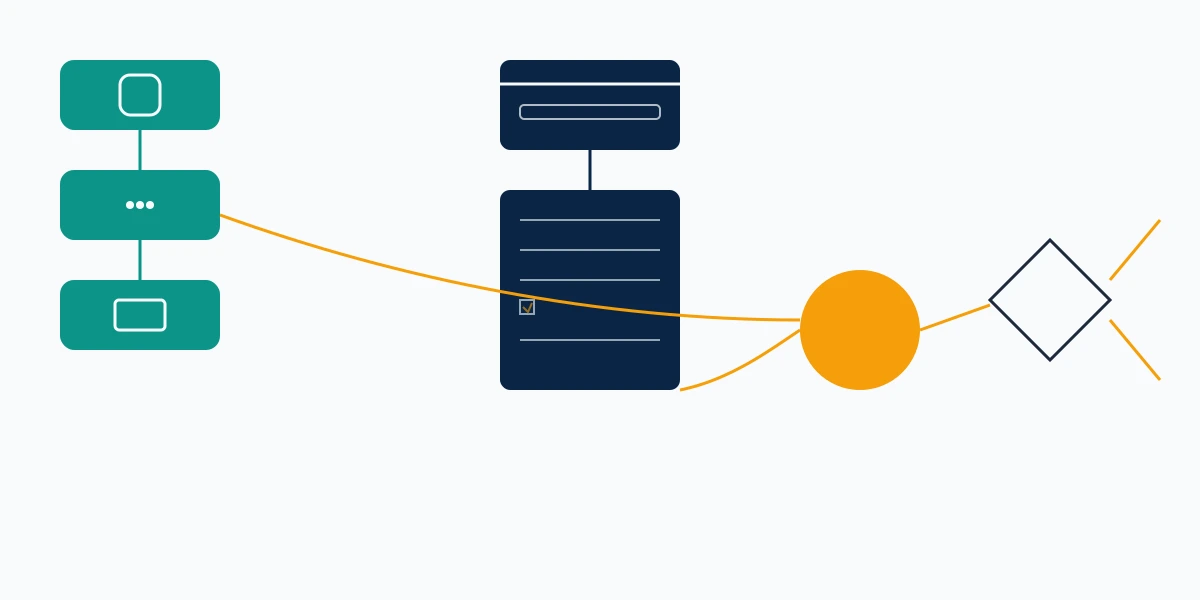
The instagram copyright report form sits at help.instagram.com/contact/552695131608132, and the most useful thing we can tell you about it is how to reach it. Instagram's own copyright help page sends readers to a different address, and that address bounces a logged-out visitor to a login screen offering nothing but Log in, Forgot password? and Create new account. Your actual destination is buried in a query parameter on that login URL and never surfaced on screen. Type the contact address in directly instead.
When our team walked the form on 21 August 2026, it rendered in full for a logged-out visitor — no login prompt, no password field. We stopped short of submitting, because pressing send means filing a sworn legal notice, so treat "you can complete it without an account" as verified and "a logged-out submission is accepted" as untested. These forms get revised without notice, so what follows is a snapshot rather than a specification.
Some guides call it the instagram dmca takedown form. Meta calls it a copyright report. It is the same document, and choosing I am the rights owner or I am reporting on behalf of my organisation or client reveals the working version of it:
| Field | What it wants |
|---|---|
| Your details | Full name, mailing address, email entered twice |
| Rights owner | The owner's name and the country where you assert rights |
| The work | Type (photo, video, text, other), a link to your original, a description |
| Reason | The content copies your work, you appear in it, or it uses your name |
| Infringing content | At least one link or ID, with more boxes available |
| Signature | An electronic signature matching your full name |
The third relationship option, I am reporting on behalf of someone else, is a dead end. Select it and the form withdraws the remaining fields and tells you a report must come from the rights owner or someone authorised to act for them, such as an attorney or agent. Friends reporting for friends do not clear that bar.
Two warnings sit on the form itself and deserve more attention than they get. Abuse of the form may result in termination of your own account. And Instagram will pass the rights owner's name, your email address and the nature of your report to the person who posted the content — which is the next section, and the reason to reach for a professional address rather than a personal one before you start typing.
An instagram dmca form filed by email instead exists, but it is slower by Meta's own description. Going that way means verifying the current registered agent in the US Copyright Office's DMCA designated agent directory first. As of the December 2025 designation, Instagram's agent is reachable at [email protected], while Facebook's is a separate registration at [email protected], at the same street address and the same phone number. Only the email and the attention line tell them apart, and a notice about an Instagram post sent to Facebook's agent has landed on the wrong record.
If the account holding your originals is a Facebook one you cannot open, work through the five official Meta recovery paths before you start the notice.
How to report copyright infringement on Instagram, step by step
Whether you search instagram report copyright infringement or report copyright on instagram, you land on the same two routes, and the choice between them is about who you are rather than what was taken.
- Confirm you hold the rights, and that the claim is copyright rather than trademark or impersonation.
- Collect the infringing links and your proof of authorship.
- For a single obvious repost while logged in, use the in-app report on the post itself.
- For anything with legal weight — an unresponsive infringer, a commercial theft, a case you may escalate — open the copyright form directly and file there.
- Keep the confirmation email. It carries your report reference.
In-app reporting is fast and shallow, attaching a category and little else. The instagram copyright infringement form carries your sworn statement, your contact details and your evidence, which is why it is the route that survives a dispute. Filing an instagram copyright infringement report through both channels at once does not double your odds; it splits one case across two queues.
Instagram is not unusual in running a separate legal lane beside its ordinary report button. Reddit does the same thing, and knowing which route actually works there saves the same wasted week.
Claims, not strikes: what happens after you file
People arrive here asking how to give copyright strike on instagram, and the honest answer starts by correcting the vocabulary. Instagram has no published copyright strike counter. Meta does publish a numbered strike ladder, but that same page says the restrictions generally apply to Facebook accounts, and the ladder is scoped to Community Standards enforcement rather than to copyright. Meta has never published how many copyright removals disable an Instagram account, nor a threshold below which an account is documented as safe. Instagram says only that repeated infringement means your account "may be disabled".
So an instagram dmca report produces a removal and an unpublished, discretionary mark. Not a visible strike, not a countdown.
How to give copyright strike on instagram reels
There is no Reels-specific answer, and be wary of any guide that supplies one. Meta publishes a single copyright reporting route and does not document a separate procedure for Reels, feed posts, Stories or comments. What genuinely differs for Reels is the automated music licensing system, which mutes or blocks unlicensed audio without anyone filing anything. That is a different machine entirely from the human notice you are sending. Nor does Meta publish internal routing or response times by content type, so nobody can honestly tell you Reels move faster or slower.
Then the reply arrives. The person you reported can file a counter-notification, and this is where an instagram copyright complaint stops being a form and starts being a legal position. Instagram states that if it forwards your counter-notification to the reporting party and they do not notify Meta that they have filed a court action to keep the content down, it will restore or cease disabling eligible content, and that this process can take up to 14 business days. The widely repeated "10 to 14 business days" is not Meta's phrasing — that range comes from § 512(g)(2)(B), which is what the statute requires of the provider. Meta's own number is the 14.
Read that clause slowly, because it is the part that surprises people. Restoring the content is the default. Stopping it means going to court, and if you are not prepared to, the takedown may be temporary.
The asymmetry is familiar to anyone who has been on the receiving end of platform enforcement — one appeal and the real odds after it on X, or a single official appeal for a suspended YouTube channel. If a counter-strike lands on your own Instagram account while this plays out, our Instagram account recovery service handles that side too.
Instagram tells the infringer who you are
Instagram reports are anonymous. Copyright reports are the documented exception, and that catches people badly.
The form states it plainly: submit it and Instagram passes the rights owner's name, your email address and the nature of your report to the person who posted the content. Counter-notifications run the same way in reverse. We have written separately about the one report type that names the person who filed it, because the gap between what people assume about reporting and what actually happens with an IP claim is wide enough to change decisions.
This is not a reason to avoid filing. It is a reason to file deliberately. Use a business or professional email address. Use a company name as the rights owner where the rights genuinely sit with the company. If the infringer is someone you know personally, or someone whose reaction you have cause to fear, weigh that before you submit rather than after — and if harassment is already part of the picture, copyright is the wrong instrument and law enforcement is the right one.
If you are unsure whether your case belongs in the copyright queue at all, our team will tell you straight in a free case review — including when the answer is that no notice will help.
Instagram DMCA fake account takedown: usually the wrong queue
An instagram dmca fake account takedown is the request we decline to file most often, because the tool does not do the job people want from it.
If a fake account is using your photographs, the copyright route reaches those photographs. It does not reach the account, the handle or the name — those are impersonation and trademark matters, and copyright cannot touch a username. Meta routes impersonation through its own form with its own evidence standard, usually identity documents rather than authorship proof. Filing the wrong one costs you weeks. The evidence standards that win an impersonation case are the same across Meta, and proving a profile is impersonating you works the same way on Facebook as on Instagram.
Against a convincing fake the correct move is usually both, in order: an impersonation report against the account, and a copyright report against the specific stolen posts. They run in different queues at different speeds.
Learning how to report stolen content on instagram is also rarely the end of it, because stolen content travels. The same lifted Reel tends to surface on three platforms inside a week, and each has its own lane — Telegram, for instance, takes copyright complaints at a dedicated address rather than through the in-app report. Enforcement outcomes differ too: a frozen Telegram account keeps read access while an Instagram removal simply deletes the post.
The notice that is a scam, and the notice that costs you
Two different dangers share this keyword, and both are worth naming.
If you received an instagram copyright infringement notice as a direct message, treat it as fraud until proven otherwise. Real copyright action arrives as content disappearing and a notification inside the app, never as a DM with a link and a deadline. It works because it borrows real vocabulary and real urgency, and because the link harvests your login. Instagram does not ask you to verify your account to avoid a copyright strike. Nobody legitimate does.
Danger number two points the other way. A false or retaliatory claim has consequences for the filer, and the popular version of this warning is wrong in a way worth correcting. Under 17 U.S.C. § 512(f), knowingly and materially misrepresenting that content is infringing makes you liable for damages, costs and attorneys' fees to anyone injured — a civil claim, not a criminal charge. And the penalty-of-perjury language in a DMCA notice does not cover what most guides say it covers: under § 512(c)(3)(A)(vi) the oath attaches to your statement that you are authorised to act for the rights owner. The good-faith belief and the accuracy of the notice are declared, not sworn. That is a narrower hook than "filing a false notice is perjury", and it is still enough to make a careless notice expensive. On top of the statute, Meta terminates accounts that abuse the form.
Here is where we stand. We will not file a notice over content you cannot show you own, and we will not file one aimed at a critic, a competitor or an ex — that is not a service we offer at any price. Nobody here will ask for your Instagram password, and no legitimate provider will. We do not promise removal, because Meta's review is discretionary and a counter-notification can undo a takedown that was entirely valid. Our full boundary is published in the service disclaimer.
That last point is the one to carry into any conversation with a paid provider. A service promising a guaranteed Instagram takedown for a flat fee is selling a mechanism Meta does not offer, and the tells are consistent across this industry — the same ones we catalogue in our Telegram recovery service breakdown and in the published cost ranges for TikTok recovery. Ask any provider which specific rule the content breaks and what happens if a counter-notice lands. If they cannot answer both, keep your money.