Is there an Instagram page report, or only an account report?
There is no Instagram page report, because Instagram has no Page object. Facebook has Pages. Instagram has profiles, some of them switched to a professional or business account type, and "page" is the word people reach for when they mean a profile they have landed on. An instagram report page search and an instagram account report search therefore finish in the same two places: the report control on a piece of content, or the report control on a profile.
That distinction matters more than it sounds, because those two controls do not offer the same choices.
Your Reputation Solution is an account recovery and online reputation firm that prepares and escalates platform filings for the people those filings concern. Meta still makes the final decision. Nothing on this page changes that, and any service claiming otherwise is selling something it cannot deliver.
Ask it however you like. How do i report an instagram account, how do you report an instagram account, how to report a instagram account, how do you report instagram account, instagram report account, instagram report an account: every phrasing ends at the same pair of buttons. So the useful question is not where the button sits. It is which intake you have walked into, and what that intake is permitted to act on.
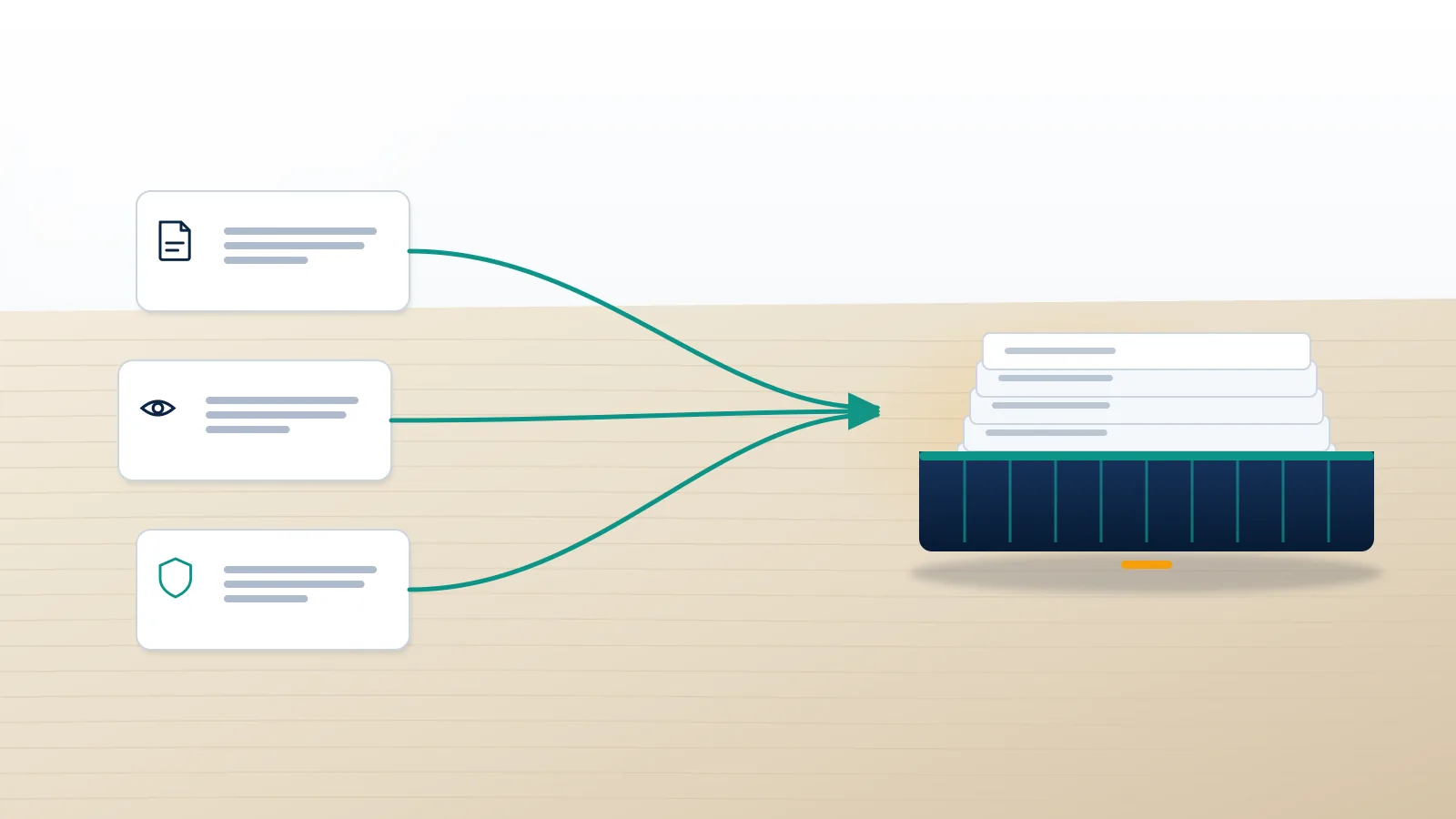
Three routes exist, and people confuse them constantly:
| What you are reporting | Where it goes | Who may file |
|---|---|---|
| A post, reel, story, comment or message | In-app report on that content, nine reason categories | Anyone with an Instagram account |
| A whole profile, including a professional or business one | In-app report on the profile, three reason categories | Anyone with an Instagram account |
| An account impersonating a specific person | The impersonation form, or the in-app impersonation flow | The form: only the person impersonated or their authorised representative |
Row three swallows most of the wasted effort, and it is the row Your Reputation Solution most often has to explain to someone who has already filed three times. Read it twice before filing anything.
How to report an Instagram account, post, or profile from the app
Reporting an Instagram account takes three taps, and both paths are documented on Meta's own help page for reporting a post or profile. For a post, open Options in the top right, select Report, and follow the prompts. For the whole profile:
- Tap the username from their feed or story post, or search the username from Explore to reach the profile.
- Tap Options next to the username.
- Select Report, then choose the type of account you are reporting, and follow the on-screen instructions.
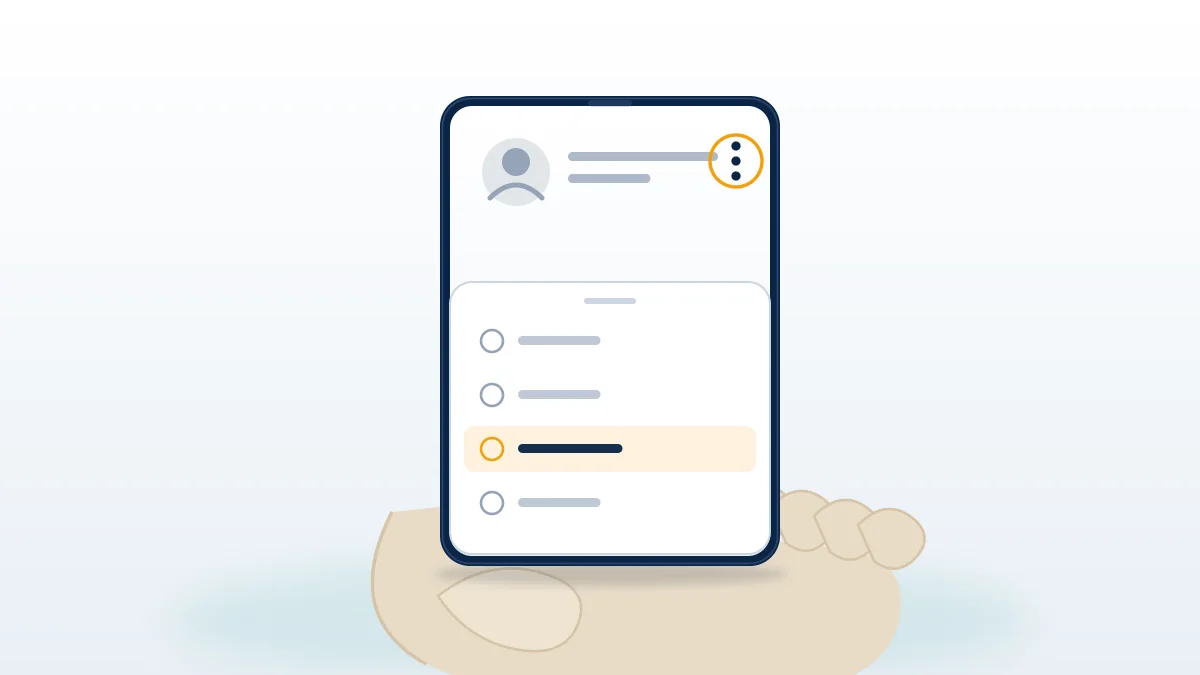
Searches for how to report instagram account and how to report any instagram account both land here, and the answer does not shift with the target. Personal, creator, business or verified, the control is identical; only the reason list you are offered changes.
Notice what the flow never asks for. There is no field for a screenshot, no box for a timeline, no place to explain the history between you and the account. The in-app report sends a category and a target, and that is the whole payload. Everything you know that the category does not carry is simply lost at submission.
Write down what you selected, then, because Instagram issues no receipt naming the category. When a case later needs escalating, the first thing we ask a client is which reason they picked, and most people cannot remember. The filing then has to be reconstructed from guesswork, which is a poor start for an appeal.
Every surface has its own report control
Instagram does not funnel everything through one form. Its index of reporting routes carries separate intakes for a post, a comment, a message or chat, a story, a note, a live broadcast, a reel, a place or hashtag, a seller or product, and, new to the current help centre, a custom AI. Each sits beside the thing it covers.
Your Reputation Solution routinely re-files a stalled case on a different surface without changing one fact inside it. Pick the surface closest to the evidence. A scam run through direct messages reads far stronger as a message report than as a profile report, because the profile itself may look spotless. Where someone is selling under a stolen brand, the seller-or-product intake describes the problem better than any of the three profile reasons manage.
What if you have no account, or they blocked you?
Instagram's answer here is unusually blunt: ask a friend. Blocked, or without an account at all, you are told to have someone who does have one file the report using the control beside the content, and Meta adds that it cannot act until it can find what you are reporting. Send your friend the links and the screenshots. Impersonation is the single exception, and it has a form of its own, covered further down.
Being unable to see a profile also means being unable to watch it change. We treat a blocked reporter as an evidence problem before it is a filing problem, because a username edited overnight turns yesterday's screenshot into something a reviewer can no longer match to anything.
Does it work from a computer?
Yes for the ordinary report controls, and occasionally only from a computer for the form-based routes. The impersonation form carries a note telling anyone who cannot upload files from a phone to finish on a desktop machine. That split repeats across platforms: our write-up on hacked TikTok account recovery from a desktop found the browser handling the filings while the app kept ownership of identity checks.
Why does an Instagram account report offer fewer reasons than a post report?
Because Instagram judges content against its rules, and a profile is not content. Your Reputation Solution keeps both reason lists open during intake, because which of the two applies decides what a case can be filed against at all. The post-level report currently lists nine reason categories: I just don't like it; bullying or unwanted contact; suicide, self-injury or eating disorders; violence, hate or exploitation; selling or promoting restricted items; nudity or sexual activity; scam, fraud or spam; false information; and intellectual property. The profile-level report lists three. A profile can be reported for posting content it shouldn't, for pretending to be someone else, or for belonging to a child under 13.
Nine against three is the most useful fact on this page.
It means a profile you find plainly abusive may have no matching profile-level reason at all, and the route through is to report the posts that establish the pattern rather than re-filing against the profile. Your chosen reason is the frame the reviewer works inside. We have watched well-documented harassment cases stall for exactly this reason, filed against a profile whose own posts were bland while the abuse sat in comments and messages nobody reported.
Worth knowing what the first option does, too. "I just don't like it" is not an enforcement request and was never meant as one. It feeds the ranking side of the system, and picking it on content that genuinely breaks a rule spends your report on a preference signal. Your Reputation Solution sees that choice more often than any other on cases that arrive already filed and already closed, usually made by somebody who read the list quickly and took the option that felt truest.
X behaves the same way at a structural level, something we traced when looking at how the reason you pick on a tweet decides the outcome: the category routes the report to a queue with its own evidence bar, and a strong case filed under the wrong heading loses to a weak one filed correctly.
A report is a signal, not a verdict. Meta's framing for advertising complaints, which we unpacked in a guide to reporting a scam ad and the advertiser behind it, is that a report may prompt another review, not that it decides one. The post side of this — the full nine reasons and the ways a content filing can end — is laid out in what happens when you report a post on Instagram. This page stays with the profile.
Blocking is not reporting either. Removing or blocking someone reshapes your own feed and changes nothing on Meta's side, which is the distinction we drew for X in removing versus blocking bot followers. Do both where the account is harassing you: block to stop the contact, and report to put it on the record, since a block leaves no trace anyone at Meta will ever look at.
Filing under the wrong heading is the commonest reason a solid case goes nowhere. Already reported, and nothing happened? Tell Your Reputation Solution what you filed and what came back, and we will tell you which intake the case belonged in.
How to report a fake Instagram account, and when "fake" is the wrong reason
Searchers type this as instagram report fake account, report fake account instagram, or report instagram fake account, and all three hit one wall: Instagram has no reason category called fake. It recognises impersonation, meaning an account pretending to be a specific person, business or organisation. Meta's impersonation page states the boundary plainly: you can report an account for impersonating someone or something, but not for misrepresenting itself.
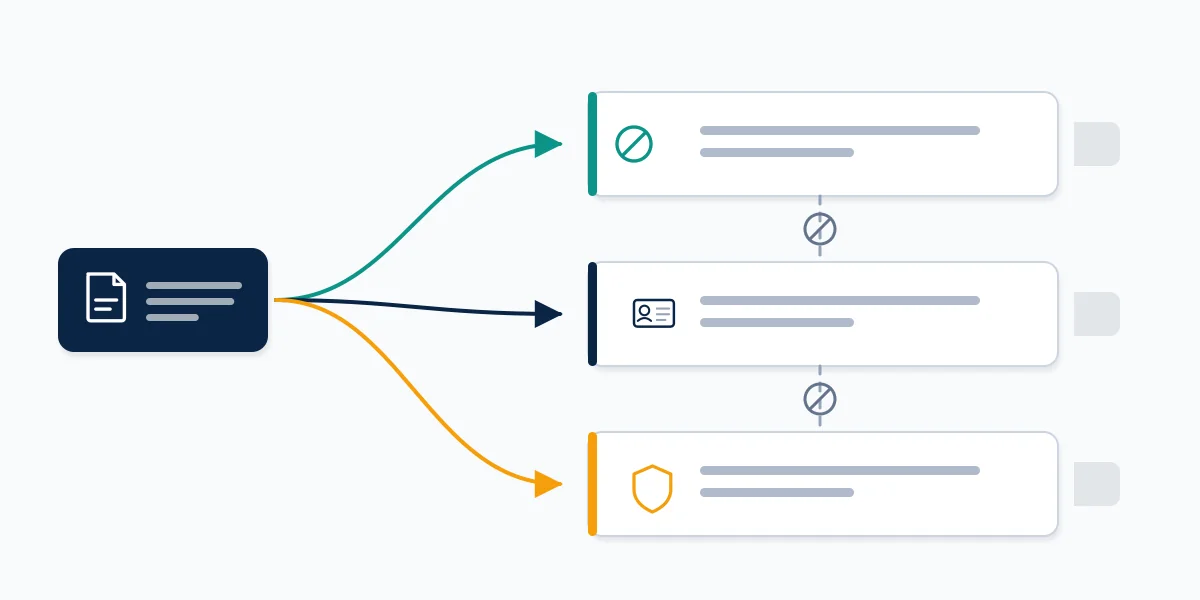
So an instagram fake accounts report splits three ways in practice, and we sort every incoming case into one of them before touching a form:
- A bot or throwaway with stolen photos and no particular target. Report its posts under scam, fraud or spam. Inventing a fake-account reason wastes the filing.
- An account copying a real person's name and photographs. That is impersonation. Report the profile for pretending to be someone else, or use the form below.
- An account using a registered brand name as its username. Instagram treats this as a trademark matter and handles it separately.
So how to report a fake account on instagram has no single answer. It has three, and choosing badly among them is why filings disappear.
A fourth case hides inside the second. When a real account is stolen and then used to impersonate its own owner, reporting it as a fake profile works against you, because a successful impersonation report may disable the very account you want back. Recovery has to lead, and the impersonation report follows only if recovery fails.
So how do i report a fake instagram account is the wrong first question when the account used to be yours. A profile built from scratch with your photographs is an impersonation case; your own profile with the email and phone swapped out is a recovery case. The screenshots look almost identical, and the routes have nothing in common.
The trademark route surprises business owners, and Your Reputation Solution raises it early with every brand client, because a claim built on ownership alone tends to come back refused. Usernames are handed out first come, first served and are never reserved, and Instagram's help centre is explicit that not every use of a trademark in a username infringes it: a mark used for something unrelated to the goods or services it covers falls outside the policy. Holding the registration does not, by itself, win the handle back. eBay draws the same line between an ordinary complaint and a rights-owner filing, which is why reporting a seller there routes differently from reporting a listing.
One number that does not exist is worth knowing about. Quarterly enforcement figures for fake accounts are published by Meta, and the scope line at the top of that report says Facebook. No Instagram equivalent appears in the series. Anyone quoting an Instagram fake-account removal rate is extrapolating from a Facebook metric, and we will not do that arithmetic on your behalf.
How do you report a fake instagram account you can no longer see, because it blocked you the moment you noticed it? Capture it first, from any account that still has a view of the profile. A fake instagram report is worth exactly what the evidence attached to it is worth, and profiles come down, sometimes at their own operator's hand, before a reviewer ever opens them.
Which Instagram impersonation report form applies to you?
The in-app route and the form have different eligibility, and that one difference decides which you should use. Anyone can file an impersonation instagram report from inside the app. The form cannot be filed by just anyone, so Your Reputation Solution establishes which of the two a client is actually eligible for before anything else happens.
The in-app route covers other people too
Instagram's instructions for reporting an account for impersonation permit a filing when the impostor is pretending to be you, someone you follow, a celebrity or public figure, or a business or organisation. The path runs Options, then Report, then Report account, then "It's pretending to be someone else", and finally the impersonation type. Nothing in it asks who you are. So whether you search instagram report impersonation or report impersonation instagram, the control is the same one, and advice aimed at fans and followers is usually sound as far as this route goes. We often start here precisely because it needs no documents and costs nothing to attempt.
The form: only you, or someone you represent
The instagram impersonation report form at help.instagram.com/contact/636276399721841 is narrower, and its own text says so. Meta can act only on reports from the person being impersonated or their authorised representative, such as a parent or legal guardian. It asks for your full name and email address, your relationship to the person impersonated, that person's full name and Instagram or Threads username, the display name and username on the reported account, a photograph of your ID, and a photograph of you holding that ID. The ID confirms identity only and is deleted within 30 days. A line that is easy to skip: report one impersonating account per submission, and file again for the next, which turns a cloned network into a queue of separate filings rather than a single job.
Authorised representative is narrower than it sounds. A parent filing for a child fits Meta's own example. A social media manager filing for a client does not, and we do not pretend otherwise: on brand cases the named officer or rights holder signs and supplies the ID, and our team prepares everything around it. Anyone offering to file that form as you is offering to misrepresent a sworn identity claim.
That identity gate is not an obstacle to route around. No service, Your Reputation Solution included, can satisfy a platform's identity check for somebody else, and the same wall stands at the centre of Google and YouTube account recovery, where one login governs everything and no third party gets past it. The ID comes from the person whose identity is being misused.
If your business is the one being copied
Report impersonation of an organisation in-app, and treat the username itself as a separate question through the trademark route. Where a fake account is also defaming the business or trading under its name, more than one intake applies, and they share no queue. At least five separate legal intakes sit behind Instagram with no single inbox among them, which we mapped in the five Instagram legal removal routes, and Meta's own wording there is that reporting does not guarantee removal. Choosing wrongly burns the window. YouTube creators learn this when the wrong monetisation appeal is filed and the deadline for the right one has already passed.
Brand cases are also where sequencing decides everything, so we file the impersonation report first and hold the trademark claim back until the username question is genuinely the remaining problem. Running both at once tends to produce two thin filings instead of one strong one.
Intellectual property is the single place where reporting stops being anonymous. TikTok warns rights owners it may pass their name to the uploader when it acts, covered in our look at the TikTok copyright and DMCA route, and the same exception applies at Meta: your report is anonymous except when the claim is intellectual property infringement.
What happens when you report an Instagram account?
Meta reviews the report against its Community Guidelines and hides or removes the content where it finds a violation. Where it removes nothing, the report is not simply binned. It may instead be used to show you less of that kind of content, ranking similar posts lower in your feed, in Suggested posts and in Explore. Your Reputation Solution sets client expectations against that mechanism rather than against the outcome they were hoping for. That is the honest answer to what happens when you report instagram account activity you find repellent but which breaks no rule: your own feed shifts, and the account stays where it is.
You may be able to check the status of a filing afterwards, and a reported instagram account is never told who filed it. The exception, again, is intellectual property.
Where that status lives catches people out. It is not an email and not a notification, but a support area inside the app that most users have never opened, and we start every stalled-case review there rather than with the client's memory of events. An entry showing a closed report with no action is a different problem from no entry at all, and the two need different next moves.
Timelines are the part nobody will promise you honestly, so here is the shape of it. Automated categories such as spam move in hours. Anything needing a human reviewer, including impersonation, harassment and contested identity, runs to days, and the form-based routes are slowest because they wait on document review. We work to 24 to 72 hours on clean credential recoveries and 90 to 180 days on search-result suppression, and quote nothing faster, because nothing faster is real.
How many reports does it take?
Not a number. Volume is not the mechanism, and the belief that it is keeps an entire mass-report industry solvent. Group takedowns work the same way, documented in our account of how a Facebook group actually gets shut down: what admins post and approve settles it, and the tally of reports does not. Anyone searching how to get an instagram account deleted by reporting is hunting for a lever that is not connected to anything.
Your Reputation Solution turns away every enquiry that arrives asking for volume, and there are a lot of them. The threshold myth and the apps built to sell it get their own treatment in Instagram report apps and whether anyone finds out.
Coordinated false reporting does carry a cost, and it lands on the reporter. Platforms treat it as a violation in its own right, and an appeal against that kind of action has to be filed from inside the account that was hit, the trap we described in an X suspension for inauthentic behaviour.
You often cannot tell whether your report worked
When a profile disappears, the page a visitor lands on looks identical whether Meta disabled it, the owner deactivated it, or the owner deleted it. We set out what that screen does and does not reveal in the signs of a banned Instagram account. Owners also delete on their own timetable, with their own undo window, as deleting a Facebook account shows. Do not read a vanished profile as proof your filing worked. Do not read a surviving one as proof it failed. The only record that speaks to either is the status entry against your own report, which is why keeping track of what you filed matters more than watching the other account.
Should a decision go against you, Instagram points to a disagree-with-decision route rather than a fresh report, and re-filing an identical claim under an identical category tends to close as a duplicate. Add something the first filing lacked, change the surface, or change the category. A comment thread nobody reported, a message screenshot with the timestamp visible, a second profile in the same pattern: any of those is new material. Repetition alone is not new evidence, and a dozen identical submissions read to a reviewer as one submission sent twelve times.
What Your Reputation Solution will not do
We will not ask for your password, and no legitimate recovery or reporting service ever needs it. We do not file reports against accounts for people with no claim to the identity involved, do not sell mass reporting, do not promise that any account will come down, and do not file copyright or trademark claims over marks a client does not hold, because a false notice is a sworn statement made under penalty rather than a tactic. Our limits and disclaimers set out the rest, including what no appeal reverses: child sexual exploitation, terrorism and dangerous-organisation content, sustained coordinated harassment, and confirmed fraud.
When should you report an Instagram account to police instead?
When a crime has been committed, and never as a substitute for the platform filing. Police hold no removal button at Meta. What a law-enforcement report produces is an incident number, a record your bank or insurer can act on, and a lawful route for investigators to request data Instagram will not hand to you directly.
Preserve the evidence before filing anything, because reporting and blocking can each make a profile vanish while you still need it. Capture the username, the display name, the bio, the follower and following counts, the posts, and the full message thread, with timestamps visible in every shot. Record the profile URL as text as well as inside the screenshot, since a username can be edited but the account behind it cannot be renamed out of existence. Your Reputation Solution builds this pack before filing anything, and the reason is unglamorous: a reviewer who cannot locate the content closes the case.
Understand what each channel can reach. An in-app report can remove content and disable an account, and it will tell you almost nothing about who was behind it. A police report cannot remove anything, but it opens a lawful route to subscriber records, payment trails and IP logs that no reporting form will ever surrender to a member of the public. Running both is not duplication. Two different questions are being asked of two different bodies, and we sequence them so the platform filing does not destroy the evidence an investigation still needs.
The ordering is not obvious, which is why it goes wrong so often. A successful impersonation report removes the profile, and with it the public record of what that profile posted, who it followed and how long it ran. Investigators can still obtain the underlying data from Meta through legal process, but the open-source picture you could have handed them in an afternoon is gone. Where a case is heading for law enforcement anyway, document exhaustively first and file second.
That advice inverts for an active threat. If someone is posting your address, your workplace or your children, the content coming down matters more than a complete archive: file immediately, and capture what you can on the way.
Then choose the right desk, and be specific about what you want from it. A fraud report needs the payment detail, the amounts and the dates; an impersonation or harassment report needs the account, the timeline and whatever shows the person behind it knows who you are. In the United States, internet crime goes to IC3 at ic3.gov, consumer fraud to reportfraud.ftc.gov, and a named local suspect or an immediate threat to your local force. If money moved, call the bank before anything else, the sequence we set out for reporting a scammer on TikTok, where the payment rail moves faster than any platform queue ever will.
Those two portals are United States bodies, and readers elsewhere need their own equivalent. Your Reputation Solution checks which body holds jurisdiction before advising anyone to file, because a report lodged with the wrong authority usually produces no reference number and no record a bank will accept. Most countries route online fraud and impersonation through a national cybercrime unit or a police online-reporting portal rather than a local station.
Reporting instagram account to police is also right for sextortion and image-based abuse, alongside the in-app filing. Report the conversation and the profile both, because Instagram reviews only the most recent stretch of a reported chat, the detail driving our Instagram blackmail and sextortion guide, which also covers hashing an image on StopNCII before it spreads further. Do not pay, and do not delete the thread in order to feel better: the messages are the case, and an account that has been paid once is asked again.
If your identity is the one being used, and both the in-app report and the form have come back with nothing, the case has stopped being a reporting problem and become an escalation problem. That is where our team earns its fee: not by pressing a button harder, but by working out which of Meta's intakes has jurisdiction over your particular facts, then building the filing that intake actually reads. For the neighbouring walkthrough, our guide to reporting someone on Instagram surface by surface goes deeper on posts, comments and messages than this page does.