What an Instagram scam looks like in 2026
An Instagram scam is a scheme that uses Instagram's reach, its messaging or its name to take money or account access from someone who believes they are dealing with a real person, a real business or Instagram itself. The platform is the introduction. The theft almost always happens somewhere else: a payment app, a crypto exchange, a lookalike login page, a WhatsApp thread. That gap is the whole design, because Meta's systems can read a DM and cannot read a bank transfer. The scams Instagram's own filters catch are the ones that stayed on Instagram.
The numbers behind that design are public. The Federal Trade Commission's April 2026 data spotlight puts reported losses to scams that began on social media at $2.1 billion for 2025, an eightfold rise since 2020, with nearly 30% of everyone who reported losing money to a scam saying it started on a social platform. Facebook produced the most losses, then WhatsApp, then Instagram. Among people aged 18 to 29, 40% of loss reports began on social media (FTC, April 2026).
Meta is not idle. In its March 11, 2026 enforcement update, the company reported removing over 159 million scam ads in 2025, 92% of them before anyone filed a report, and taking down 10.9 million Facebook and Instagram accounts tied to criminal scam centres, plus a further 150,000 in a joint operation with the Royal Thai Police that ended in 21 arrests. Scammers on Instagram operate at industrial scale, and the scammers Instagram removes in bulk are replaced in bulk. Scamming on Instagram is a volume business whose unit economics survive a 92% removal rate.
Your Reputation Solution is an account-recovery and reputation firm that files and escalates platform cases for people whose Instagram login was taken through one of these schemes, and the diagnostic on this page is the one its team runs before a case opens. It matters because the nine patterns below share one skeleton. A stranger, or a friend's stolen account, opens the conversation. A deadline arrives within a few messages: a prize expires, an account gets deleted in 24 hours, a trading window closes. Then comes the move off Instagram, to a link, a WhatsApp number or a payment rail, and from that point it is a scam Instagram itself never sees. Recognise the skeleton and the costume stops mattering. The same crypto and giveaway scripts run as paid scam adverts on YouTube, where the flag icon under the video does nothing.
The nine Instagram scams running right now
Instagram scams in 2026 sort into nine families, and the sort matters more than the catalogue. Your Reputation Solution sorts incoming cases the same way, because each family demands a different first move from the victim. A phishing link wants your password within the hour. A fake shop wants one card payment. A romance con wants months. The table gives the shape of each; the sections below give the tells.
| Scam family | How it opens | What it wants | Your first move |
|---|---|---|---|
| Fake copyright, guidelines or Meta Verified notice | DM, email or WhatsApp with a 24-hour deadline | Your login and two-factor code | Check Recent emails in the app; click nothing |
| Investment and crypto | A follower's "results" post, then a DM | Deposits to a wallet or platform | Assume the platform is fake until proven otherwise |
| Romance and the long con | Weeks of friendship, then a money problem or a tip | Repeated transfers | Reverse-image the photos; never send money |
| Fake shops and sellers | An ad or a DM offering a product below market | Card, Zelle or crypto payment | Pay only through methods with dispute rights |
| Hacked friend or cloned account | A friend asks for a code or a favour | Your login code, a vote, a transfer | Telephone the friend |
| Giveaways and ambassadors | "You've been selected" | A fee, shipping, or a discounted purchase | Real brands never charge winners |
| Sextortion | A new match asks for intimate images | Money, then more money | Stop paying, preserve evidence, report |
| Job and recruiter offers | A recruiter DM with a salary attached | Personal data, an upfront fee, task deposits | Verify the recruiter off-platform |
| Recovery agents and ban services | An offer to fix the first scam | A fee, then your password | Treat every unsolicited fix as the second scam |
Fake copyright, Community Guidelines and Meta Verified notices
The message says your account has violated copyright, or Community Guidelines, or that a Meta Verified payment failed, and that the account will be permanently disabled within 24 hours unless you appeal through the link. The sender calls itself "Instagram Support", "Meta Community Standards" or a "Copyright Center", none of which exist as accounts that message users. Genuine intellectual-property complaints are dull paperwork filed by rights holders through platform forms: X's trademark form demands a registration number before it accepts a complaint at all, and Meta's notices arrive by email from its own domains and appear inside the app. Nothing real arrives with a countdown. This family gets its own section below, because it is the one most likely to cost you the account rather than a payment, and Your Reputation Solution treats the message as a takeover attempt in progress rather than a nuisance.
Investment and crypto "flips"
Investment fraud is the most expensive of all scams on Instagram by a wide margin. The FTC attributes $1.1 billion of the $2.1 billion social-media total for 2025 to investment scams, more than half of all money lost (FTC, April 2026), and the FBI's 2025 Internet Crime Report, released in April 2026, counts more than $11.36 billion in cryptocurrency-related losses across all channels, $7.2 billion of it in crypto investment schemes. The Instagram version starts with a profile posting screenshots of gains, a DM offering to "teach" you, and an invitation into a signals group. That group lives on Telegram, and reporting the Telegram group they moved you into is a separate filing from reporting the Instagram profile. The trading platform is a website the scammer controls. Deposits show a balance. Withdrawals require a "tax" first.
Romance scams and the long con
Romance scams that started on social media took $298 million in 2025, and nearly 60% of people who lost money to a romance scam that year said it began on a social platform (FTC, April 2026). On Instagram the opening is a follow and a compliment from a profile with a plausible life. The con runs for weeks. Money enters late, either as an emergency or, in the "pig butchering" variant, as a tip about an investment the new partner has quietly been making. The conversation moves to WhatsApp early, partly for intimacy and partly because Instagram's message filters stop reading at that point.
Fake shops, fake sellers, fake buyers
Shopping is the most reported scam on Instagram rather than the most expensive: more than 40% of people who lost money to a scam on social media in 2025 said it began when they ordered something they saw in an ad (FTC, April 2026). The goods never arrive, or a counterfeit does. The DM-seller variant asks for Zelle, Venmo or crypto because those rails carry no buyer protection, which is the same logic behind the fake listings Your Reputation Solution maps in the five Facebook Marketplace report routes: a platform report never refunds anyone, and the payment provider is where money returns, if it returns at all.
The hacked friend and the cloned account
A message from a friend's real account asks you to receive a code "by mistake" and send it back, or to vote in a contest through a link, or reports that they made money with a crypto mentor. The account is hijacked and the script is automated; an Instagram scammer running a hundred stolen accounts does not type. The friend is not the scammer on Instagram, the person holding their login is. The cloned version copies a friend's name and photos to a new profile that follows you and starts the same conversation, and that case runs through the impersonation form rather than the in-app Report button. Both versions push you toward Snapchat or WhatsApp, where messages vanish or leave Meta's view; if the chat did move, report the Snapchat account as well, because the evidence there expires by design. When the hijacked account is yours, the recovery route in the account section below applies.
Giveaways, ambassadors and "you've been selected"
A brand-styled account announces you have won, and the prize needs a shipping fee, a "verification" deposit, or your card details for a release form. The ambassador variant invites you to represent a brand if you first buy the product at a discount, and the discount code charges full price to a merchant that never ships. Real brands never charge winners, and real ambassador programmes do not require inventory purchases. The comment-spam version, an account replying "DM me, you've won" under a creator's posts, is cross-posted under YouTube videos too, where creators hide the spammer from the channel rather than argue.
Sextortion
A new match, an exchange of intimate images, then a demand for money with a threat to send the images to your followers and family. Paying buys a second demand. A reported thread is judged on its recent messages, so the first fifteen minutes after a sextortion threat are about preserving evidence before the extortionist deletes it. When the threats spill onto Facebook, they become an object-by-object case, and how to report harassment on Facebook depends on whether the abuse landed in Messenger, on a post or on a profile. Your Reputation Solution handles only the account side of these cases; the extortion itself is a criminal matter. Anyone under 18 should involve a parent or the police before anything else.
Job offers and recruiter DMs
The recruiter has a title, a company and a salary range, and the interview is a chat on WhatsApp or Telegram. Then comes the fee: for equipment, for a background check, for "training", or a set of paid micro-tasks that need a deposit to unlock earnings. Meta's Messenger scam detection, expanded in March 2026, flags suspicious job offers because the pattern is that common (Meta, March 2026). Most fake recruiters keep a matching fake LinkedIn, and reporting a fake LinkedIn profile takes five taps and never reveals your name to the person reported. Verify any offer through the company's own careers page and a phone number you found yourself.
Recovery agents and ban services: the scam on Instagram that follows the first
The second scam targets people who just lost to the first. An account comments under your post, or a DM arrives, from a "recovery expert" or "certified hacker" who can get your money or your account back for a fee. Some ask for the fee. The sharper ones ask for your password "to start the recovery" and take the account. Legitimate account-recovery work exists, and it never asks for a password: our review of whether Instagram account recovery services are legit sets out the tests, and the same standard applies when you ask what a legitimate recovery service actually does for a TikTok account. Your Reputation Solution never contacts scam victims unsolicited, and no firm that does should be trusted with a login.
The mirror image is the ban service: for a fee, someone promises to get the scammer's account deleted through mass reports. Meta bans accounts for behaviour and evidence, not report volume, which is why Instagram ban services sold on Discord and Telegram mostly take the payment and vanish, and why WhatsApp bans numbers for behaviour, not reports in exactly the same way. Money spent here is a third loss.
Anatomy of the fake "copyright violation" WhatsApp message
People searching for "Instagram copyright violation WhatsApp" have usually just received one. It arrives on WhatsApp from a number you do not know, with a Meta-styled avatar and a display name such as "Instagram Support" or "Meta Copyright Center". The same text also lands in Instagram DMs, comments, tagged posts and email, but WhatsApp is the variant that unsettles people most, because the scammer knew your number. They knew it because you published it: the WhatsApp button on a business or creator profile is public, and scam-centre tooling scrapes it.
The text follows a template. Your account has been reported for copyright infringement, or violates Community Guidelines, or your Meta Verified subscription failed. It will be "permanently disabled within 24 hours" unless you appeal. A button reads "Appeal", "Verify ownership" or "Confirm your account". The link goes to a domain that is not instagram.com or meta.com; researchers at Guardio have documented waves using cheap country-code endings such as .cf, with "instagram" placed in the subdomain. The page behind it is a login form. Newer kits relay your two-factor code in real time, so a code typed there is used within seconds, and some variants add a payment page for a "Meta Verified" fee that harvests card details (SafeBrowz, June 2026).
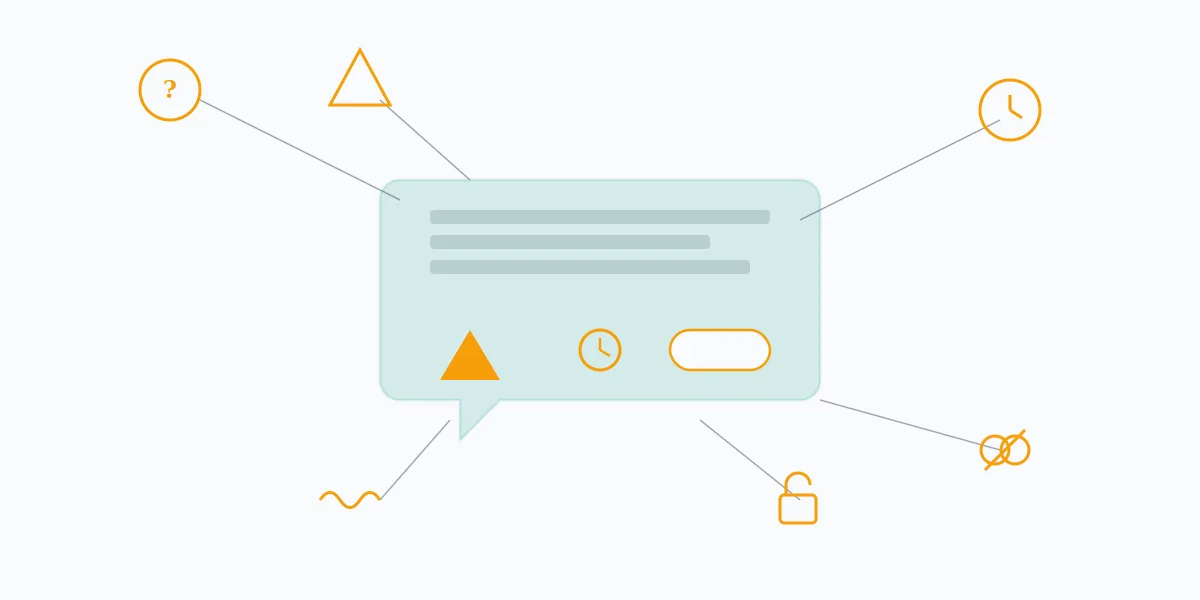
Then the takeover. The attacker changes the email address, enables their own two-factor, and uses your account to send the identical message to your followers, which is how one compromised account becomes fifty. When Your Reputation Solution reviews one of these screenshots, the tell is rarely the grammar; it is the sender, the deadline and the domain, in that order. Grammar has improved since the 2019 waves. The other three cannot improve, because a real notice has none of them.
Real notices look nothing like this. Meta's intellectual-property process starts with a form: the real Instagram copyright report form is filed by the rights holder, and the notice you receive as the accused party comes by email from a Meta domain and shows inside the app. Telegram's copyright route is a single email address with no form at all, and X wants a registration number. None of them threatens deletion on a clock.
Real deletion is slow everywhere. TikTok holds a deleted account for 30 days before anything is final, and Instagram's own deletion request sits for 30 days as well. A genuine enforcement action against your account appears under Settings, then Account Status, with a Request Review button beside it. It does not appear as a WhatsApp countdown.
Is this message really from Instagram? A three-minute check
Three checks inside the app settle the question, and none of them involves the link in the message.
The 14-day Recent emails list
Instagram keeps a log of every email it has sent you in the last 14 days, and it settles most phishing questions in under a minute. Your Reputation Solution starts every screenshot review with this list, before the message itself is read. Open the app, then More, Settings, Accounts Center, Password and security, Recent emails. Two tabs appear: Security, for login and security notices, and Other, for everything else. If the email in your inbox is not in that list, Instagram did not send it, whatever the sender field says (Instagram Help Center, Review recent emails sent from Instagram). The check has one limit: it covers email only. A WhatsApp message or a DM never appears there, which is itself the answer, because Instagram does not send account notices through WhatsApp or from user accounts.
Account Status and the official sender list
The second check is Account Status, under Settings. It lists every enforcement action against your account, the content that triggered it, and a Request Review option where one exists. An empty Account Status beside a "24-hour deletion" message in your inbox is a contradiction, and the inbox is the part that is lying. The third check is the sender. Instagram's phishing guidance lists the domains it sends from, including @fb.com, @meta.com, @account.meta.com and subdomains of facebookmail.com and metamail.com, and its security notices come from [email protected]. Meta's own scam guidance is blunter: "Don't trust messages demanding money, offering gifts or threatening to delete or ban your account." A real notice never asks for a password, an ID number or card details, and it never routes an appeal through a stranger's link.
Not sure whether the message on your screen is real? Send the screenshot to Your Reputation Solution through the contact page and the team will tell you, free, whether it matches a phishing pattern it has handled. No login, no password, no code, ever.
How to report phishing to Instagram
An Instagram phishing report is a different record from a scam report, and the two go to different places. For an email, forward the whole message to [email protected], the Instagram report phishing email address named in Meta's phishing guidance; it exists for messages impersonating Instagram, not for a romance scammer's handle. For a DM, open the conversation, tap the sender's name, choose Report, then select the scam or fraud option, and the report reaches Meta's review queue with the thread attached. The sender never learns who filed it, since Instagram never names the reporter outside intellectual-property claims. To report phishing to Instagram is to hand Meta a sample of the kit, which is useful; to report the scammer's profile, Story, ad and comments is a separate discipline, and our surface-by-surface guide to reporting a scammer on Instagram covers every route, the police and IC3 ladder included.
Scammed on Instagram and the money is gone: the first hour, day and week
If you were scammed on Instagram and paid, the first call is to the payment provider, because money moves on the bank's clock and Instagram has no lever on it. What can still be reversed depends entirely on the rail.
| Payment rail | Reversible? | Who to contact | Timing |
|---|---|---|---|
| Credit or debit card | Often, as a chargeback | The card issuer's dispute line | Up to 120 days from the transaction; call the same day |
| PayPal Goods and Services | Sometimes | PayPal's dispute process | 180 days from payment |
| Zelle, Venmo, Cash App | Rarely; treated as authorised | The app's fraud team and your bank | Same day; some banks reimburse specific imposter-scam patterns |
| Wire transfer | Rarely | Your bank's fraud desk, then the receiving bank | Within hours, before funds are withdrawn |
| Cryptocurrency | No | The exchange you sent from; IC3 | Immediately, for tracing only |
| Gift cards | Rarely | The card issuer's fraud line | Same day, with card numbers and receipts |
Your Reputation Solution does not recover lost money, and no legitimate firm does, so the first hour is the calls above, in the order of your losses, plus one more: if you typed a password anywhere during the scam, change it before you call the bank, because the account is the faster theft. The first day is evidence and filings. Screenshot the entire thread from first contact, the profile, the URL of the fake shop or platform, and every payment reference, then store them outside Instagram. File with the FBI's Internet Crime Complaint Center at ic3.gov and with the FTC at reportfraud.ftc.gov, and make a local police report if your bank or insurer asks for one; most do. Two things a report will not do: it will not refund you, and it will not delete the scammer on your instruction. Only platforms delete accounts, a rule our Snapchat deletion piece states in its first sentence, and Instagram is no different.
Funds come back through chargebacks, provider disputes and, occasionally, law-enforcement seizures; a company promising to retrieve your money for a fee is the second scam described above, wearing a suit. The first week is when that offer arrives. It is also when to check whether your face or video has been reused as bait, because scammers lift testimonials and selfies from victims to seed the next round, and a YouTube privacy complaint gets a video that identifies you taken down through a six-screen wizard, with the uploader given 48 hours to remove it first.

Scammed on Instagram and the account is gone: taking it back
If the scam took your login, go to instagram.com/hacked from a phone or computer you have used with the account before, and do it in the first hour. The flow offers a login link by email or SMS, and if the attacker has already swapped the email address, the notice Instagram sent to your old address from [email protected] carries a "secure your account here" link that reverses the change without a new appeal, and that notice is the first document Your Reputation Solution requests on a takeover case. Where neither works, Instagram asks for a short video selfie, turning your head in different directions, to match against the photos on the account; it says the video is deleted within 30 days and used for nothing else (Instagram Help Center, hacked accounts). Accounts with no photos of you fall back to the original registration email or phone and the device type you signed up on.
Once you are in, do four things before anything else. Change the password. Turn on two-factor authentication with an authenticator app or a passkey, both supported by Instagram as of August 2026, rather than SMS, because a code sent by text is a code a scammer can talk out of you. Log out every session you do not recognise under Password and security, and remove any third-party app you did not authorise. Check Accounts Center for a Facebook profile you did not link, since attackers attach one to hold the door open. The full sequence, with what to do when each step fails, is in our step-by-step hacked Instagram recovery guide.
What happens next depends on what the attacker did with the account, and this is where three different cases get mistaken for one. A lockout, where the attacker changed credentials and nothing else, is the clean case. Your Reputation Solution has guided 247 hacked-Instagram recoveries since 2022 (our internal records as of May 1, 2026); the median time from filing to a restored login was 38 hours, and clean credential cases resolve in 24 to 72 hours. A strike, where the attacker posted spam or scam links before you got back in, leaves an enforcement mark that is appealed through Account Status, and the appeal has to name the takeover and the dates. A termination for fraud is the hard case: an account that sent the copyright lure to a thousand followers has, in Meta's records, committed fraud, and some of those accounts are never restored. Accounts removed for child sexual abuse material, terrorism or sustained harassment are outside recovery by anyone, and a firm claiming otherwise is lying to you.
When the team works a takeover that began with the copyright lure, the second question, after that notice, is whether the attacker has posted, because a post turns a lockout into a strike case and changes what the appeal has to say. Filing a lockout appeal for a strike case costs days.
The WhatsApp version of this takeover deserves a line, because the same kits harvest the six-digit WhatsApp code. If the attacker re-registered the number and then deleted the account, what returns after WhatsApp deletion is a working but empty account, not your history; a ban or a lockout is recoverable, a deletion is not.
The Instagram account recovery service page explains what the service covers, what it needs from you, and what it will never ask for.
What Your Reputation Solution will and won't do after an Instagram scam
The list is short on purpose. The team will read your screenshots and tell you, free, whether the message is a known phishing pattern. It will file and escalate a hacked-account recovery through Meta's own channels, prepare an Account Status appeal that explains the takeover, and harden the account afterwards so that the same kit fails next time.
It will not recover money; that path runs through your bank and the agencies above. It will not guarantee an outcome, because Meta makes the decision and publishes no deadline. It will never ask for your password, a login code or remote access to your phone, and any message claiming to come from the firm that asks for one is itself a scam. It will not sell you a "ban" on the scammer, and it will not file a copyright or trademark complaint it knows to be false against anyone, which would make the firm a version of the thing this page describes. The full scope and limits are written down, including the categories no one can reverse.
Instagram scamming will keep evolving faster than any list of nine, and the message on your screen next year will wear a different costume. The skeleton will not change. A stranger, a deadline, a move off the platform. See those three and you have already seen the scam.