
What the Telegram copyright policy covers, and what it never touches
The telegram copyright policy is two paragraphs long, and the first one disqualifies most of the people who read it.
Under the FAQ heading "A bot or channel is infringing on my copyright. What do I do?", Telegram states that "Private groups and chats on Telegram are private amongst their participants. We do not process any requests related to them." Only then does it describe the remedy: for "a bot, channel, sticker set, or other content that is a part of Telegram's public platform," submit a complaint to [email protected]. The page adds that such requests "should only be submitted by the copyright owner or an agent authorized to act on the owner's behalf."
The boundary is not about how serious the infringement is. It is about which side of the public wall the content sits on. A channel anyone can join through a t.me link is in scope. A 40-person invite-only group your file was leaked into is not, and no quantity of evidence changes that, because Telegram is not declining to act. It is declining to look.
That single distinction resolves most telegram copyright violation cases before they start. It also explains a pattern we see constantly: a client forwards a screenshot from a private group, we explain the boundary, and the real work becomes finding whether the same file has been reposted into a public channel where a notice can actually bite.
One more misconception is worth killing early, because it sinks more claims than the public-private rule does. Owning the thing in the picture is not the same as owning the picture. Whoever pressed the shutter holds the copyright, which is why a copyright report fails when you are only in the photo and why that situation needs a privacy route instead. Copyright protects the work, not the subject.
There is no Telegram copyright report form
Search volume for telegram copyright report form and telegram dmca form is substantial. Neither exists.
We checked this directly rather than repeating what other guides say. Telegram publishes no copyright web form. The address telegram.org/dmca does return a page, but the body served is the ordinary Telegram homepage: 19,913 bytes, titled Telegram Messenger, containing zero occurrences of the words copyright, DMCA or infringement. It is a catch-all route, not a policy page. Telegram's Terms of Service mention copyright nowhere at all. The only remedy the FAQ offers as markup is a mailto link.
Most competing guides hedge on this, because hedging is safe. It is worth stating flatly instead: as of August 2026 there is no telegram dmca form to fill in, and any site presenting one is either a middleman harvesting your case details or something worse.
This is where the platform comparison gets uncomfortable. Meta built a dedicated intake with fields, a case number and a status page, and our walkthrough of the Instagram DMCA takedown copyright report form covers what that structure gives a rights holder. Telegram gives you an inbox. The legal weight of the notice is identical. The tooling around it is not.
The Telegram DMCA email address, and the two mailboxes people confuse it with
The dmca telegram email address is [email protected]. That is the whole answer, and it has not changed.
Telegram's FAQ carries exactly three of its own addresses, and mixing them up is the most common filing error we see. [email protected] handles vulnerability reports. [email protected] is what Telegram calls its "automated takedown email address" for illegal public content, and, under a separate question, the address for appealing a bot or sticker set banned unfairly. [email protected] is the copyright address.
Send a copyright claim to abuse@ and it does not vanish. Telegram folds intellectual property into its general takedown process and says elsewhere in the same FAQ that it can take down sticker sets violating intellectual property rights. But dmca@ is the address Telegram names for this purpose, so it is the one to use. Anyone publishing confident claims about the relative speed of the two queues is guessing; Telegram releases no such data, and neither do we.
Something worth knowing before you write. Telegram is not an American company. Its privacy policy, last updated 21 August 2026, names Telegram Messenger Inc. as the service provider, with Telegram Group Inc. and Telegraph Inc. in the British Virgin Islands and Telegram FZ-LLC in Dubai. No US entity appears anywhere in it.
That matters more than it sounds. Section 512 of the US Copyright Act is a conditional liability shield rather than an obligation. No provider of any nationality is required to run a notice-and-takedown regime, and the statute directs notices to a provider's registered designated agent. Telegram operates no such US-registered agent. What you send to [email protected] is therefore a voluntary copyright complaint that borrows the DMCA's structure, not a statutory section 512 notice carrying the legal consequences one would.
Which raises the obvious question of why Telegram acts at all. It answers that itself, in the FAQ, with unusual bluntness: it processes takedown requests for illegal public content in order "to continue distributing Telegram through the App Store and Google Play." App-store access is the pressure point. Hold onto that sentence, because it is the reason the escalation ladder further down this page is built the way it is.
How to report copyright on Telegram from inside the app
The in-app route is the fastest thing you can do, and Telegram documents it per client. From the FAQ: on Android, tap the message and select Report. On iOS, press and hold the message. On Desktop, Web or macOS, right-click the message and select Report. Then pick a reason.
| Client | Path to report an infringing message |
|---|---|
| Android | Tap the message, then select Report |
| iOS | Press and hold the message, then Report |
| Desktop, Web, macOS | Right-click the message, then Report |
A genuine Copyright reason exists in that menu. Telegram's own API schema defines a dedicated copyright report reason alongside spam, violence and the rest, which means an in-app telegram copyright report is a real category rather than a spam flag wearing a different label. To report a whole channel instead of one message, open the channel profile and use the three-dot or overflow menu. That path works in every current client, though Telegram's public FAQ documents only the per-message route.
Use both routes. The in-app report creates a record inside the moderation system; the email creates a written legal record with your evidence attached. They are not alternatives, and filing a telegram report copyright infringement channel case through the app costs nothing beyond the thirty seconds it takes.
What the app will not give you is a case number, a status page or a reply. For the mechanics of platforms that do return those, compare Telegram's scam reporting route, which runs on the same machinery under a different clause, or our surface-by-surface Instagram reporting map, where five surfaces produce four measurably different outcomes. Adjacent claim types run on these same rails, and how to report a fake Telegram account uses the identical menus with a different reason selected.
What to attach to a Telegram copyright infringement report
The searches phrased as report copyright infringement telegram what to attach are asking exactly the right question. Notices fail on evidence far more often than on wording.
Attach four things. First, proof you own the work: the original file with its metadata, a registration certificate if you have one, an invoice or contract if the work was commissioned, or a dated publication link predating the infringement. Second, identification of the work itself, specific enough that a stranger could match it. Third, the location of the infringing material, which on Telegram means links. This is what report copyright infringement telegram link queries are circling, and it is not optional: Telegram asks for t.me/... or @... links in its takedown instructions, and a notice without them cannot be actioned because there is nothing to point a moderator at. Include the channel link, the message link, and the @username separately, since usernames get changed and recycled within days.
Fourth, your contact details. More on why that is unavoidable in a moment.
Capture all of it before you file. A removed channel takes its message history with it, and so does an operator who deletes the post the moment they sense a report. Our account-recovery team makes the same argument about what actually returns after a WhatsApp account is deleted: once it is gone, no escalation reconstructs it, so evidence you did not screenshot is evidence you no longer have.
If the claim concerns a brand name or logo rather than a creative work, you are in trademark territory, which is a different statute and a different notice. Meta's separate trademark route shows how sharply platforms distinguish the two, and a copyright notice about a trademark problem gets rejected on the merits.
The six elements that make a copyright notice valid
Telegram is not bound by section 512, as established above. Write to its standard anyway. A notice built to the statute is complete, unambiguous, and much harder for any platform to set aside as too vague to act on.
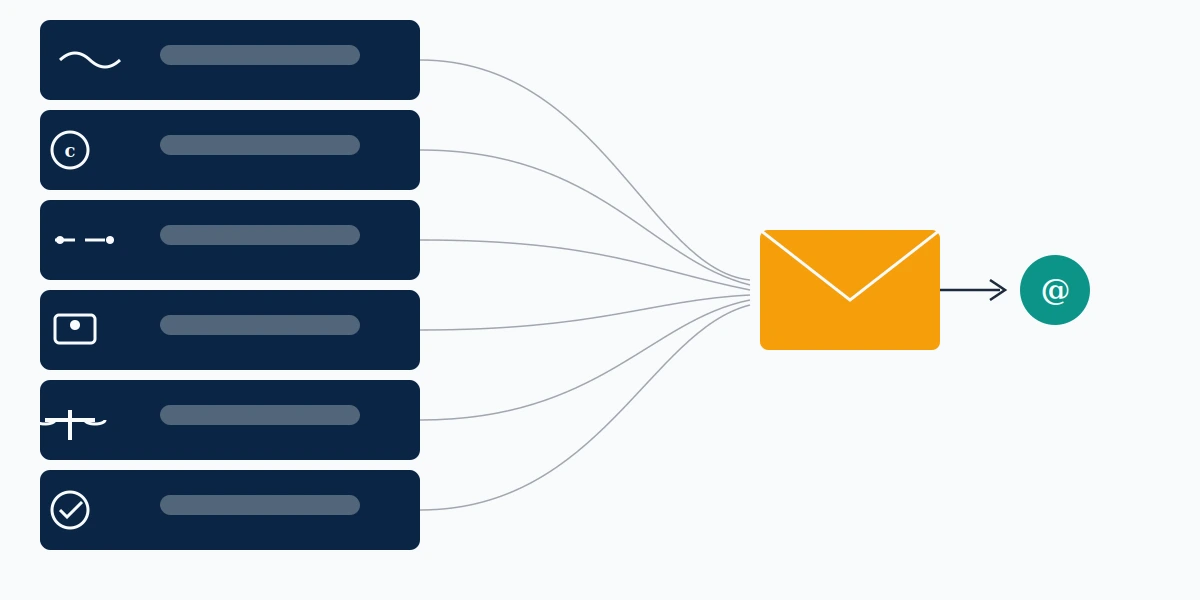
17 U.S.C. 512(c)(3)(A) requires substantially six things:
- A physical or electronic signature of a person authorized to act for the owner of the infringed right.
- Identification of the copyrighted work, or a representative list where one notice covers multiple works at a single site.
- Identification of the infringing material, plus information reasonably sufficient to let the provider locate it.
- Information reasonably sufficient to let the provider contact you.
- A statement of your good-faith belief that the use is not authorized by the owner, its agent, or the law.
- A statement that the information is accurate, and, under penalty of perjury, that you are authorized to act for the owner.
Element six is written wrong almost everywhere, including in templates sold as compliant. The perjury clause does not cover the whole notice. Read the statute closely and it attaches to one thing only: your statement that you are authorized to act on the owner's behalf. Accuracy is asserted. Authority is sworn. The practical consequence is that an honest mistake about whether a particular upload was licensed is not perjury, while filing on behalf of a rights holder who never appointed you is precisely what the clause was written to catch.
Picking the right basis matters as much as completing the notice. Our route-by-route Reddit removal guide quantifies how much the rule you cite decides the outcome on a platform offering several parallel routes, and the same logic governs here.
Filed a notice and the channel is still live, or it reappeared under a new name within a week? Send us the links and we will tell you honestly whether it is something we can work on.
Can you report copyright infringement on Telegram anonymously?
No. Anyone telling you otherwise is selling something.
This is the hardest answer on the page, because report copyright infringement telegram anonymously is a high-volume search and the honest response disappoints everyone who types it. A copyright notice is a legal assertion of ownership. Elements four and six above require your contact information and your sworn statement of authority. A notice without them is not a weak notice. It is not a notice at all, and no version of a valid claim conceals who is making it.
What you can control is exposure. Your details go to Telegram, not onto a public page. Filing through a law firm or an authorized agent puts that agent's name on the notice instead of your home address, which is the closest thing to distance that genuinely exists, and it is a legitimate option rather than a loophole. What no route offers is invisibility from the platform itself.
Telegram publishes no counter-notice procedure, so there is no documented mechanism by which your notice reaches the channel operator. That is not a guarantee of confidentiality. It is an absence of published process, which is a different and considerably less comforting thing.
The contrast with policy reports is stark, and worth understanding before you choose a route. Reporting harassment or a scam is genuinely anonymous on most platforms, and you can report a fake TikTok account free and anonymously with no identity trade at all. Intellectual property is the documented exception nearly everywhere. Our breakdown of what happens when you report someone on Twitter found X withholds the reporter's identity in every category except IP claims, and filing a TikTok IPR claim passes your name to the seller by design. Telegram is not unusually invasive here. Copyright law is simply built on the premise that an accuser is identifiable. Our disclaimer sets out what we can and cannot promise on any takedown.
What telegram copyright content removal delivers, and what to do when nothing does
Two outcomes are documented: removal of the specific infringing content, or removal of the entire channel, bot, group or sticker set. Telegram publishes no rule for which one it picks, committing only to perform "the necessary legal checks" and take content down "when deemed appropriate."
Searches for telegram copyright content removal and contact details tend to arrive expecting a directory of departments, an escalation contact and a case-tracking portal. There is one address and one in-app button. That is the entire published surface.
Discount anything you read about regional geo-blocking as a copyright outcome. We went looking for it and it is not there. Telegram's moderation measures, as listed on its EU Digital Services Act guidance page, are functionality suspension, FAKE and SCAM labels, and blocking or deleting users, bots, posts, channels and groups. Its API restricts content by platform, meaning iOS, Android or all, never by country and never for copyright. There is also no published repeat-infringer policy and no published response time, which is why every "5 to 14 days" figure in circulation is one person's guess repeated until it hardened into a fact.
Here is what we can tell you from filing these ourselves, offered as observation rather than as a promise. Most notices we send to [email protected] get no acknowledgement of any kind. That silence is not a rejection, and it is not a queue position either, because there is no queue you can see. Where we do see movement, it tends to arrive as a fait accompli: the channel is simply gone one morning, with no email explaining why. Notices covering a single clearly-owned work with working t.me links fare visibly better than notices bundling twenty items across five channels, which is an argument for filing separately rather than comprehensively. And a removed channel reappearing under a near-identical handle within days is common enough that we treat the first removal as the start of the work rather than the end of it. We publish no success rate and no average turnaround, because Telegram makes the decision and any number we attached to that would be marketing rather than measurement.
Every route here is free, which answers the report copyright infringement telegram free searches directly. Telegram charges nothing, and no stage of the official process has ever cost money.
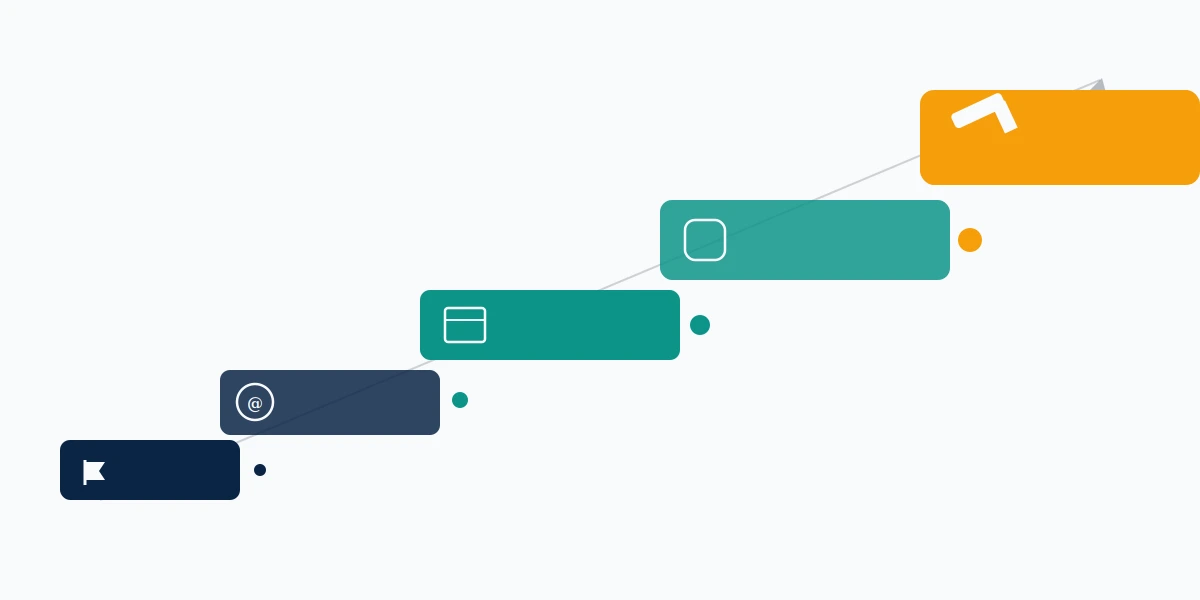
When silence continues, escalate outward rather than resending. Refile only with genuinely new evidence, a new link or a new upload, because duplicate notices read as noise to a triage layer. EU rights holders have a second statutory channel through Telegram's DSA illegal-content mechanism, though be warned that its reporting destination is geo-gated and redirects to the homepage from outside the EU. Above that sit the infrastructure layers: the host or CDN serving any external file the channel links to, then the App Store and Google Play, where Telegram has already told you distribution pressure is what moves it. A court order sits at the top and has genuinely worked, with Indian courts having ordered Telegram to disclose infringing channel operator details, but it is slow and expensive. Honest advice is that it fits commercial-scale piracy rather than a single stolen course.
When copyright is the wrong tool, and the scams that follow a filing
A significant share of telegram content removal requests are not copyright cases at all, and filing them as one guarantees rejection.
If someone is publishing your address, phone number or documents, that is a privacy violation, and how to report doxxing on Twitter shows how differently platforms treat private-information claims. If the content is abusive rather than stolen, the six real harassment reporting routes are the working model. If a channel is running a fraud using your branding, fraud is the enforceable claim and the scam reporting escalation ladder fits better. Impersonation is a fourth category again. Threads asking about telegram copyright infringement reddit almost always contain three of these four problems mislabelled as one, which is also why report copyright infringement telegram reddit answers contradict each other so freely.
Now the part nobody warns rights holders about. Filing a complaint makes you visible to people who monetise desperation, and the approaches arrive within days: an account offering guaranteed removal for a fee, a "Telegram moderator" who is not one, a service asking for your login so it can "monitor" the channel. The pattern matches the one documented in our blackmail and sextortion reporting guide, where the second wave of harm reliably arrives after the first report is filed.
So here is what we will not do, stated plainly. We will not guarantee that Telegram removes anything, because Telegram decides, and no service claiming otherwise is being honest with you. We will never ask for your Telegram password or login code, since nobody legitimate needs either. We will not file a notice for content you do not own, because a false sworn statement of authority is the one part of a copyright notice carrying real legal consequences. And we will not pretend the free route is broken when it works. For a single infringing post, with clean ownership proof and correct links, filing it yourself is often all it takes. We charge for the cases that survive that: the channel reappearing under a new handle every fortnight, the ownership chain that needs untangling, the escalation nobody has time to chase. Our content removal and takedown services exist for those, and the team behind this guide is the reason we would rather tell you to file it yourself than sell you something you do not need.