Reputation Management· 11 min read

Is a WhatsApp Ban Service Real? Number Takedowns in 2026

A WhatsApp ban service is a paid offering that claims to get a target's number banned by flooding it with mass or fake reports. Most do not work: WhatsApp, owned by Meta, bans numbers for behavior and evidence — spam, bulk messaging, unofficial apps — never for report volume, so a compliant number stays live. Many sellers just take the payment and vanish. The only reliable removal is a truthful report of a genuine violation.

Concept illustration of a whatsapp ban service marketplace beside a shielded WhatsApp number resisting a wave of coordinated reports.

A WhatsApp ban service, a number takedown, and an account takeover are three different things

Type "whatsapp ban service" into a search box and you land in a market where three unrelated ideas wear almost the same words. Sorting them out first will save you money and, in a few cases, keep you out of legal trouble.

A WhatsApp ban service is a paid offering that promises to get a chosen number banned on demand, usually by firing mass or fabricated reports at it. A whatsapp number takedown or whatsapp account takedown is the legitimate removal of an account that genuinely breaks the rules: an impersonator, a harassment account, a scam number trading on your name. A WhatsApp account takeover is the opposite of both, where someone has hijacked your number and you want it back, which is a recovery problem rather than a takedown. The pages that rank for these terms blur them constantly, and one popular guide about takeovers even ranks for "takedown." They are not interchangeable. The evidence you need, the form you file, and the realistic outcome all differ depending on which one you actually have.

Do WhatsApp ban services actually work?

Mostly no, and the reason sits in how WhatsApp decides a ban in the first place. WhatsApp, owned by Meta, disables a number for what the number does: sending bulk or automated messages, blasting people who never saved the contact, running an unofficial client like GB WhatsApp or WhatsApp Plus, or matching known spam and fraud patterns described in its account-ban policy. Its abuse systems weigh behavior, evidence, and severity. They do not count how many strangers tapped "Report" and hand a ban to whichever account collected the most. That design is deliberate. If raw report volume could delete an account, coordinated brigades would remove anyone they disliked, and the platform would be trivially weaponizable. A rule-abiding number absorbs a thousand reports about as well as it absorbs one.

When a ban service does appear to work, look closely and one of two boring explanations is almost always underneath. Either the target genuinely broke a rule and would have been actioned anyway, or a fabricated impersonation or "dangerous content" flag tripped a first-pass automated restriction that a human reviewer lifts on appeal within days. Neither is something you bought. When we walked through one of these WhatsApp mass-report bots step by step, the promised ban never landed against a compliant number, and the same pattern holds when people ask whether mass reporting works on Facebook, Instagram, or X. The wording changes. The result does not.
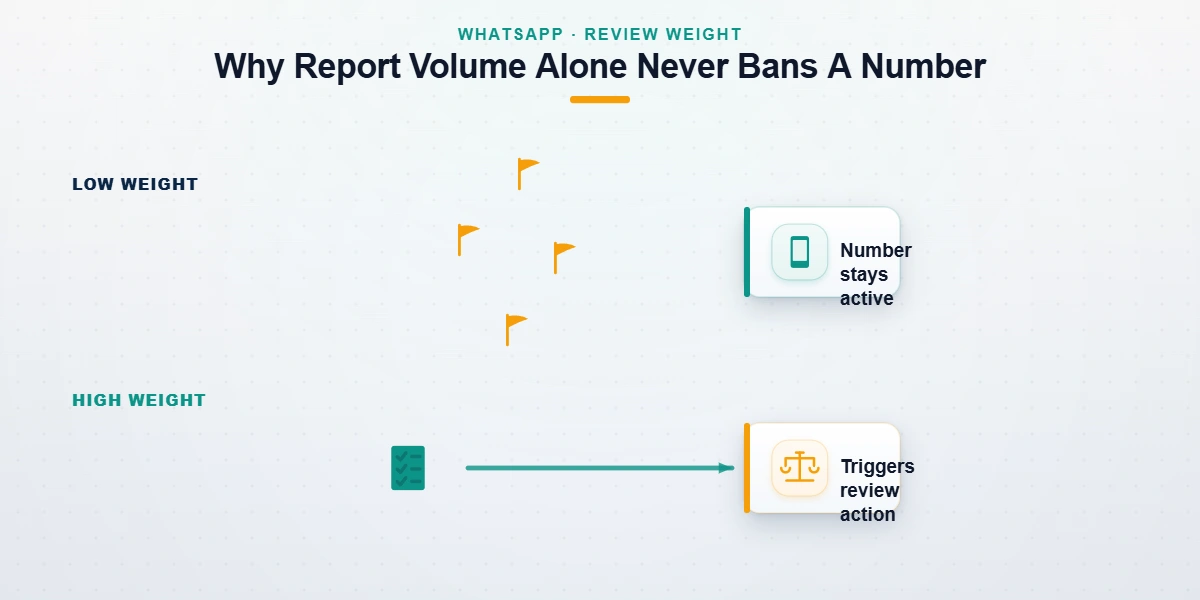
Diagram showing why a whatsapp number ban service fails because WhatsApp weighs evidence and behavior over raw report volume.

Why a banned WhatsApp number behaves differently from a banned social account

Here is the part almost no guide covers, and it is the one that matters most when a number is involved rather than a username. Your WhatsApp identity is a phone number, not a handle, so a ban attaches to the number itself. That has consequences people rarely think through. A temporary ban clears on its own once the offending behavior stops, often within hours. A permanent ban, though, follows the number, so recycling the SIM or buying a "clean" replacement does not wipe the history the way registering a fresh email would. Carriers also reassign disused numbers, which means a number you are trying to reclaim may already belong to a stranger. And two-step verification with a registration PIN survives a SIM swap, which is exactly why we tell every client to switch it on. A number is not a disposable account. Treating it like one is how people turn a recoverable problem into a permanent one, and it is why reclaiming a WhatsApp number on a new phone or without the original SIM is its own separate process.

The whatsapp number ban service market: how the scam actually runs

Search "whatsapp number ban service" and you find Telegram channels, SlideShare decks, and SMM panels, not companies with a return address. That anonymity is the product's main feature and its main risk. Sellers advertise a flat rate per target, often around $100, with a "72-hour, 91% success, money-back" guarantee no honest vendor could keep. Payment is demanded in cryptocurrency or friends-and-family PayPal, rails with no buyer protection, and the "proof" is before-and-after screenshots anyone can fake. The most documented pattern is an extortion loop: one operator bans a target for a fee, then sells that same victim a "restore" for a larger fee, quietly working both ends of one account. The same loop runs in the Instagram ban service market and every platform beside it.

A few tells separate this market from anything legitimate. No real service can name a success rate for banning arbitrary numbers, because the platform decides, not the vendor, so any "90%-plus guaranteed" figure is invented. Claims of "verified reporter accounts" or an "insider at Meta" are unverifiable by design and usually false; reviewers cannot force or reverse decisions outside the normal pipeline. And a money-back promise from an anonymous seller who only accepts crypto is not a guarantee at all. There is no one left to hold to it once your money is gone.

Is buying a WhatsApp ban service legal, and who carries the risk?

Buying one is not a neutral act, and the exposure lands on the buyer, not the anonymous seller. Filing knowingly false reports violates WhatsApp's Terms of Service, and coordinated false reporting can get the reporter's own number actioned. The attack cuts both ways. Depending on where you live and what you intend, targeting someone through a whatsapp account takedown scheme built on fabricated claims can also cross into civil harassment, defamation, or, once money changes hands for a knowingly false report, fraud-adjacent territory. If the plan involves cloning a business to file a false impersonation claim, or filing a copyright notice on work you do not own, that copyright route is a formal legal action, and a false one carries real liability under the DMCA. None of this reaches the seller, who stays anonymous and keeps your payment. The person most likely to be harmed by a WhatsApp ban service is the person who paid for it.

What actually gets a WhatsApp number or account taken down

There is a legitimate version of what people want from a ban service, and it runs on evidence, not volume. WhatsApp removes an account when the account, or what it does, breaks a written rule or the law. The qualifying categories are narrow and specific: impersonation of you or your business, harassment and threats, sharing your private or intimate images without consent, scam or fraud activity, and content built on your copyrighted work. You report these in-app by opening the chat or profile, tapping the contact, and choosing Report. For non-consensual intimate images, create a case hash at StopNCII.org so participating platforms, WhatsApp included, can block re-uploads before they spread. What WhatsApp will not do is remove a number over a lawful argument, an unflattering but true message, a competitor you dislike, or a personal dispute. One honest, well-documented report does what a thousand purchased ones cannot, and our step-by-step guide to getting a rule-breaking WhatsApp number banned walks the process end to end.

Business impersonation is its own track. If a scam number is trading on your company's name or logo, WhatsApp's brand and intellectual-property process treats it differently from a personal impersonation report, and a documented trademark or copyright claim carries far more weight than a screenshot. This legitimate whatsapp number takedown is exactly what enterprise brand-protection vendors resell at a premium. The difference is that the underlying report is the same one an individual can file, backed by real proof of ownership.
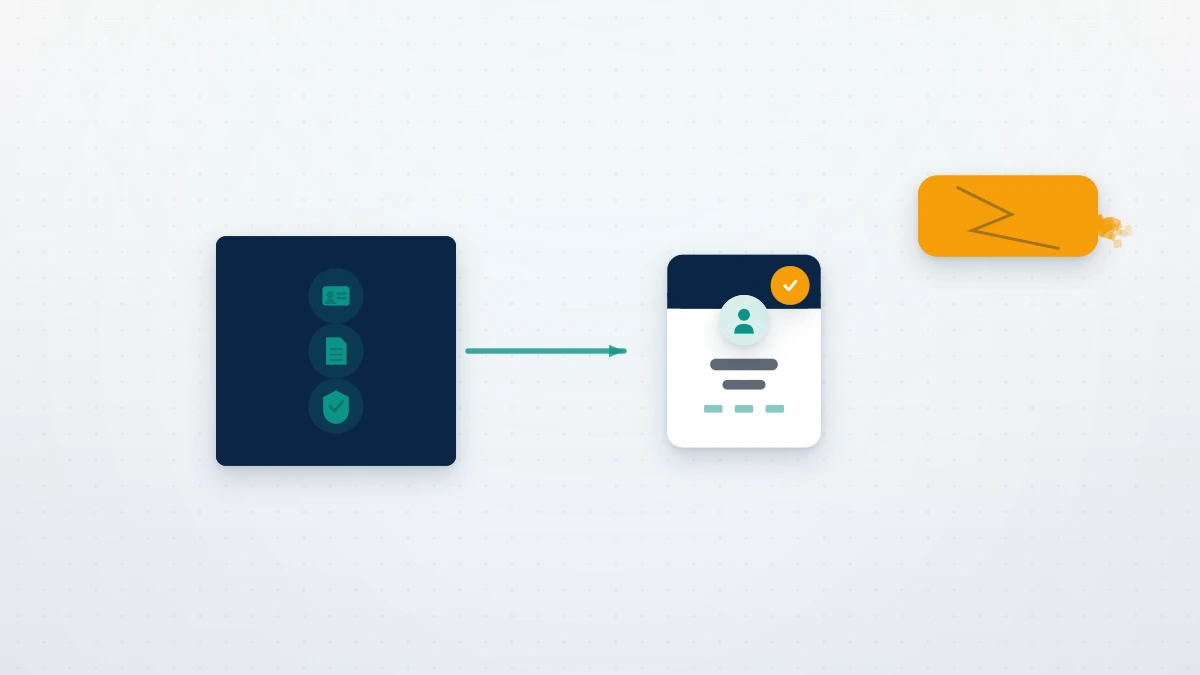
Concept illustration of a legitimate whatsapp account takedown built on documented evidence versus a fake paid ban service.

What we will and won't do, and the cases we turn away

We field these requests most weeks, so the boundaries come first. We do not run mass-reporting or coordinated-reporting campaigns. We do not guarantee the takedown of any account or number. We never ask for your password or a verification code, we never accept pay-to-ban arrangements, and we never submit fabricated reports or file copyright notices on work a client does not own. We pursue removal only of accounts that genuinely violate WhatsApp's rules or harm our client, whether that is impersonation, harassment, non-consensual imagery, fraud, defamation, or IP theft, and never a personal dispute. If the goal is to get an ex, a critic, or a business rival banned over a lawful account, we decline at intake instead of taking a fee. When we do file a WhatsApp impersonation report with proper evidence, WhatsApp usually responds within a few days and removes the number where a real violation is documented. Where there is no violation, we say so before you spend anything.

Being impersonated, harassed, or scammed on WhatsApp? Request a free case review and our team will tell you honestly whether the number can be removed, and how. We never ask for your password, and we will never sell you a ban. Our published limits spell out exactly where we draw the line, and you can meet the team handling these cases.

How to protect your WhatsApp number from a ban attack

If you are the potential target rather than the buyer, a few habits blunt most ban attacks before they start. Turn on two-step verification with a registration PIN, so a hijack-then-report combination cannot lock you out and the lock survives a SIM swap. Keep your app official: running GB WhatsApp, WhatsApp Plus, or any modded client is itself a ban trigger, which hands an attacker the outcome for free. If you send outreach, use the official WhatsApp Business API and message only people who opted in, because cold-blasting contacts who never saved you is the fastest way to get flagged, reports or no reports. And if you are falsely reported and hit with a temporary ban, do not panic-buy a "restore." Tap "Request a review" in the app. If you were fully banned, recovering a banned WhatsApp account runs through the official reinstatement path, and business numbers on the API appeal through the Business Help Center. As of July 2026, that in-app review remains the fastest legitimate way back, and it costs nothing.

Frequently asked questions

Almost never for a rule-abiding number, and rarely as advertised. A WhatsApp ban service claims to get a target banned by firing mass or fake reports at it, but WhatsApp weighs each report by the severity of the violation and the evidence behind it, not by how many arrive. A compliant number absorbs a thousand complaints about as well as one, because the abuse system is built to discount coordinated reporting. When one of these services seems to work, it is usually because the target genuinely broke a rule, or a false flag tripped a temporary automated block that a reviewer reverses on appeal within days. The rest of the market is straightforward fraud: anonymous sellers take crypto or friends-and-family PayPal and deliver nothing. If a real account is harming you, a documented report of an actual violation is the only path that holds up, and it is free to file yourself.

A whatsapp number ban service and the mass-report bots sold alongside it rely on the same false premise: that flooding a number with reports forces a ban. WhatsApp does not work that way. It bans numbers for behavior and evidence, such as bulk messaging, automation, unofficial apps, and matched fraud patterns, and it treats report volume as a weak signal precisely so brigades cannot weaponize it. Against a rule-abiding number these tools produce nothing, or at most a short automated block that clears within hours or a couple of days. The vendors hide this behind screenshots and refund guarantees that vanish the moment you ask for the money back. We have walked through the mass-report bot version of this pitch in detail and found the promised ban never materializes against a compliant target. Save the fee, and if there is a genuine violation, report it through WhatsApp's own channels instead.

To get a whatsapp account takedown for an impersonator, you report the specific violation with evidence rather than pay for volume. Open the impersonating chat or profile in WhatsApp, tap the contact name, and choose Report. For a business being impersonated, use WhatsApp's brand and intellectual-property channels and attach proof of ownership, such as a trademark registration or the original copyrighted material. For non-consensual intimate images, create a case hash at StopNCII.org so participating platforms can block re-uploads automatically. Impersonation is the most reliably removed category because it is unambiguous once you show the real you beside the fake. What will not work is reporting a number simply because you dislike it; WhatsApp needs a genuine policy or legal violation to act. If you are unsure whether your situation qualifies, that is exactly what a free case review is for, and we will tell you honestly before anyone spends time or money.

A whatsapp number takedown and a ban get confused constantly, but they describe different events from different directions. A takedown is the removal of a violating account, initiated by a victim or their representative who reports a genuine breach: impersonation, harassment, non-consensual imagery, fraud, or IP theft. A ban is the enforcement action WhatsApp itself applies to a number for its own behavior, such as spam, bulk messaging, or running a modded app. A takedown you request; a ban WhatsApp imposes. There is a third term worth separating: an account takeover, where an attacker hijacks your number and you want it back, which is a recovery problem, not a takedown. Getting these straight matters because the evidence, the form, and the timeline differ for each. Filing a takedown report when your real issue is a takeover, or buying a ban service when you actually need to report a genuine violation, wastes time you may not have.

It can carry real legal and account exposure. Buying a WhatsApp ban service means submitting knowingly false reports, which violates WhatsApp's Terms of Service and can get the reporter's own number actioned for coordinated reporting. The attack cuts both ways. Depending on your jurisdiction and intent, filing fabricated reports or harassing a target this way can also stray into civil harassment, defamation, or fraud-adjacent territory once money changes hands for a false claim. If the scheme uses a fraudulent copyright notice, filing one you know to be false carries liability under US copyright law. And most sellers in this market are simply scammers, so you also risk losing the payment outright. In short, the buyer holds all the exposure while an anonymous seller holds none. The only conduct we consider is reporting a genuine violation with real evidence, which is lawful and does not put your own account at risk.

There is no fixed clock, and any service quoting an exact ban in 24 hours is guessing or lying. For a clear, well-documented violation, such as an impersonation report with a side-by-side of the real and fake profiles, WhatsApp often responds within a few days. Harassment and non-consensual-image cases can move faster because they are treated as safety priorities. Defamation and complex disputes take longer and frequently need a lawyer's letter behind them. Two things drive the timeline more than anything else: whether the violation is unambiguous, and whether your evidence is complete on the first submission. A report filed under the wrong category, or without proof of who you are, gets closed and you lose time re-filing. Across the impersonation and harassment cases we have handled, most genuine violations resolve in days rather than weeks, while cases with no real violation do not resolve at all, because there is nothing for a reviewer to act on.

A ban attaches to the phone number, not to a username, which changes what happens next. A temporary ban lifts on its own once the offending behavior stops, usually within hours to a couple of days, and no purchase speeds that up. A permanent ban stays with the number, so swapping SIMs or buying a replacement does not clear the history the way a new email address would reset a social account. If you set up two-step verification with a registration PIN, that lock persists through a SIM change and blocks a hijacker from re-registering your number elsewhere. One more wrinkle catches people out: carriers recycle inactive numbers, so a banned number left unused can eventually be reassigned to a stranger who inherits none of your data but does start fresh. If your own number was banned in error, the in-app Request a Review option is the correct and free first step, not a paid restore service.

No, not on demand and not over a personal dispute. We do not run mass-reporting campaigns, we do not guarantee any takedown, we never ask for your password, and we never submit fabricated reports. Anyone offering to ban a number for a flat fee is either scamming you or putting your own account and legal standing at risk. What we do is narrower and honest: where an account genuinely violates WhatsApp's rules or harms our client, through impersonation, harassment, non-consensual imagery, fraud, defamation, or intellectual-property theft, we build a documented, evidence-based report and pursue legitimate removal through the platform's real channels. If no violation exists, we say so at intake rather than take your money. Request a free case review and our team will tell you plainly whether your case is one we can actually help with, and if it is not, we will point you to the free in-app tools that fit your situation.

About the author

Priya Raman

Senior Security Engineer

Priya leads our post-recovery security work — making sure a recovered account stays recovered. She's a top-100 bug bounty researcher on HackerOne with disclosed findings in Meta, Google, and Microsoft platforms. She holds the OSCP and CEH certifications.

OSCPCEHHackerOne Top 100
Continue reading

Related guides

All guides
Account Recovery

How to Get Someone's WhatsApp Banned: 2026 Report Guide

To get someone's WhatsApp banned, report the account to WhatsApp for the specific policy it breaks — a scam, impersonation, harassment, or spam — using the in-app Report button, which sends your last five messages with that contact to Meta for review. WhatsApp bans accounts on verified violations, not on how many people report them. Legitimate, well-evidenced reports are typically reviewed within 24–72 hours; false reports are not actioned and can flag your own account.

Read guide
Account Recovery

WhatsApp Mass Report Bot Scams: What Actually Works (2026)

A WhatsApp mass report bot almost never works. WhatsApp, owned by Meta, bans accounts for verified violations — scams, impersonation, harassment — not for how many reports arrive, so its systems weigh the reported messages, the evidence, and the account's history rather than report volume. Most tools sold as mass report bots are scams or malware. If a report wave wrongly restricted your number, that is usually a recoverable appeal.

Read guide
Account Recovery

Recover Banned WhatsApp Account: 2026 Appeal Guide

To recover a banned WhatsApp account, open WhatsApp, tap Request a Review on the ban screen, and confirm your 6-digit code to send your appeal to WhatsApp's review team. For temporary bans you simply wait out the countdown; permanent bans require this appeal or an email to [email protected]. As of June 2026, WhatsApp typically reviews appeals within 24-72 hours, and no legitimate service can speed that up or guarantee the outcome.

Read guide
Confidential · no-recovery, no-fee

Past the DIY phase?

If your case is past what these guides cover, the free assessment is the right next step.

Start free assessment

Answered 24/7 · avg. 47 min response