Does Instagram tell you who reported you?
No. Not in a notification, not in Account Status, not on any screen that ships in the app. When a report lands, the reviewer who picks it up sees the reported content and the policy line it might cross. Who flagged it is not part of the decision, and it is never passed downstream to the account that got reported.
That design is deliberate, and understanding why makes everything below easier to follow. A report is not an accusation with a signature attached to it. It is a routing ticket. It moves one piece of content into a queue where it is measured against Meta's Community Guidelines, and the person who filed it stops mattering the moment it arrives.
Which kills the assumption most people bring to this question. Reports do not vote. Fifty reports against a compliant post produce exactly what one produces: nothing. Meta's strike documentation ties enforcement to the severity of the content, the context it was shared in, and the account's violation history, never to a tally. We took that mechanic apart at length for a different platform in our breakdown of how reports actually reach a human reviewer, and the vocabulary changes while the routing does not.
Our team includes former Trust & Safety reviewers who sat on the other side of that queue. A reporter's identity was not on the screen they worked from. It was not withheld from them as a courtesy to the reporter; it simply was not relevant to the question they were being asked, which was whether a specific post broke a specific rule.
Are Instagram reports anonymous on every surface?
Yes, across every in-app reporting flow. Whether you report a post, a Story, a Reel, a comment, a direct message or an entire profile, the account on the receiving end gets no sender information. If it is removed, the notice cites the guideline that was broken. It does not cite a person.
So when people ask is reporting on instagram anonymous, the accurate answer has two halves. Instagram does not show your identity to the person you reported. Instagram does know who you are — your report is tied to your account internally, which is how the platform detects and discounts coordinated false-reporting rings. Anonymous to the other user, never anonymous to the platform. Those are different claims, and conflating them is where most of the bad advice on this topic starts.
Asked in reverse, does instagram show who reports you comes from a different reader: someone who has just been restricted and is reading the notification for clues. There are none in it. Meta's removal notices are template text keyed to a policy category, and two reports filed by two completely different people against the same post generate an identical message.
Worth knowing: the anonymity rule is not uniform across platforms, so answers you read about one do not transfer. LinkedIn, for instance, keeps ordinary reporters confidential but handles trademark and copyright claims through a named process, which is the same split Meta uses. Our LinkedIn takedown walkthrough sets out where that line falls there. Assume nothing carries over between platforms until you have checked.
The one report type that names the person who filed it
Here is the exception nearly every article on this topic misses, and it is not a small one.
Intellectual property reports are not anonymous. When content is removed because someone filed a copyright or trademark claim, Meta tells the person who posted it who made the claim. Instagram's own help documentation on IP removals states that the notification includes the name and email address of the rights owner, and where an authorised representative filed on a client's behalf, the name of the organisation that owns the right. That is not a leak or an edge case. It is the designed behaviour, and it exists because copyright disputes are legal disputes between two identified parties, not moderation calls.
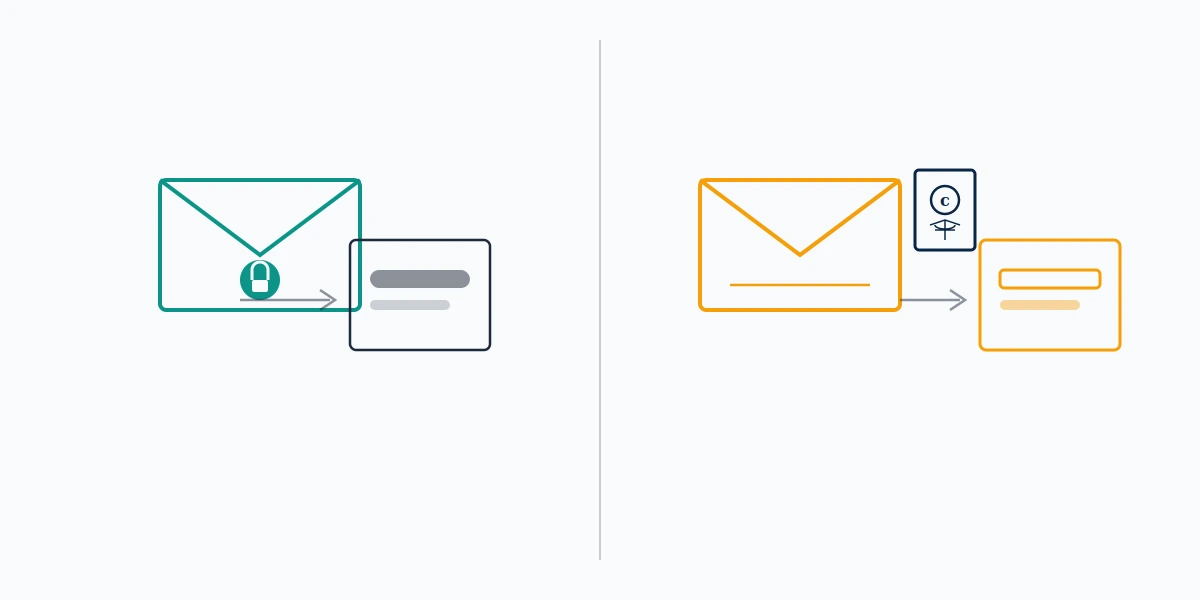
Disclosure runs both directions. If the reported party files a DMCA counter-notification, Meta forwards that counter-notice to the original claimant, including the contact details the counter-notice requires. File a copyright claim and you should expect the other side to learn your name. File a counter-notice and you should expect the same.
This matters practically for two groups. Photographers and brands filing against an infringer should budget for the fact that the other side will know it was them, and file from a business address rather than a personal one. Anyone whose post was removed on an IP claim can trust the name in that notice: it is genuinely the reporter, and the only circumstance in which Instagram hands it to you.
There is a related pattern worth separating out. Impersonation reports are not IP reports, though people file them interchangeably. Meta may ask a reporter to verify their own identity during an impersonation review — that verification goes to Meta, not to the reported account. Our guide to when Meta asks a reporter for ID covers where that request appears and what it is used for. TikTok draws the line in a similar place, where only the web form accepts identity documents while the in-app route does not, which we mapped in our three routes for reporting impersonation.
Can a court order reveal who reported you?
In narrow circumstances, yes. But this is not Instagram telling you anything. A court compels the disclosure, and the mechanism is completely different.
Meta discloses account records in response to valid legal process, and its government data requests report states that each request is reviewed for legal sufficiency, with overly broad or vague requests rejected or sent back for greater specificity. In practice this route opens through civil litigation — a defamation suit, most often — where a subpoena seeks records tied to a specific account. That route is slow, costs real money in legal fees, and requires a filed case with a legitimate claim behind it. No consumer product feature exists for it, and no service can shortcut it.
Be honest with yourself about whether that describes your situation. In the Instagram cases we reviewed between May 2025 and May 2026, 141 clients arrived convinced a coordinated report campaign had caused their restriction (YRS internal records, May 2025–May 2026). On review, most had a straightforward policy violation on a single post and no evidence of a campaign at all. Reports feel personal. Enforcement almost never is.
How to check report status on Instagram, and your report history
There are two separate screens here, they do different jobs, and confusing them is the single most common mistake we see. Neither one shows a reporter's identity.
Support Requests covers reports you filed. Open Settings and tap Support Requests, then tap any individual report to see where it landed. Instagram's help page on checking a report you submitted confirms this is the surface that carries both status and history — which is also the honest answer to how to see account report history instagram. Think of it as your own filing history. Each entry shows the outcome of the report you sent, never who else reported the same account.
Account Status covers actions taken against you. The path is Settings → Account → Account Status, and Instagram's Account Status documentation describes what sits there: content removed for violating Community Guidelines, your history of violations, any restrictions currently applied and how long they last, plus a Request a Review button to appeal a decision you think is wrong.
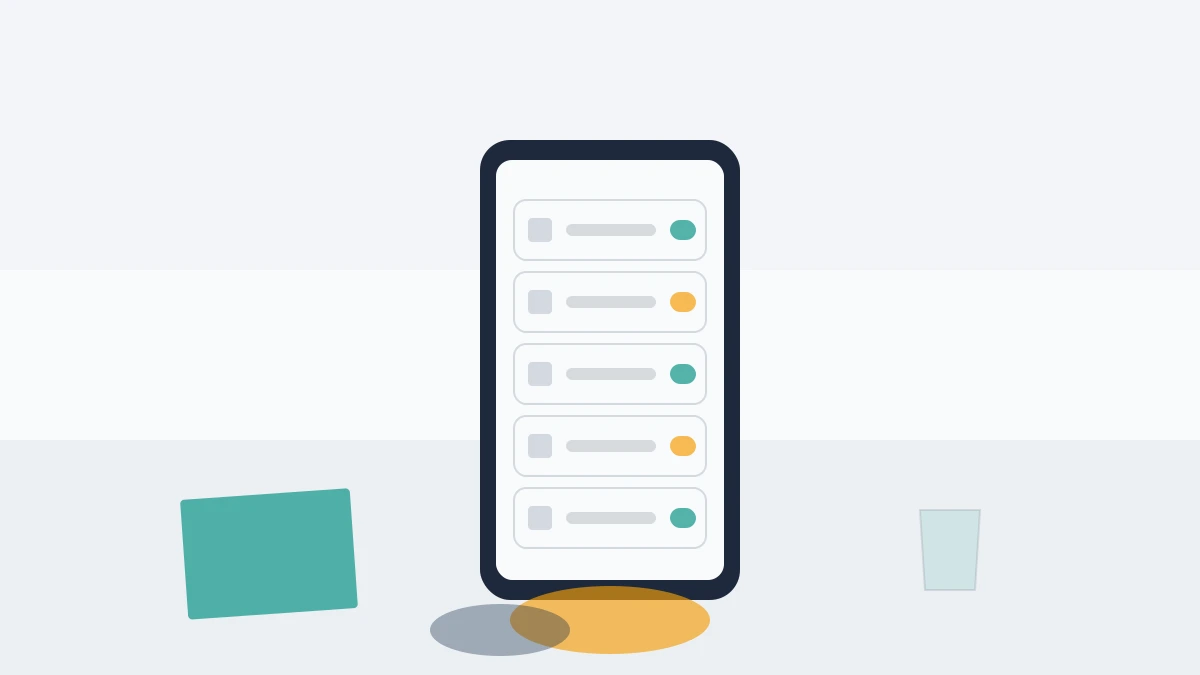
A third screen, the one that shows who reported you, does not exist. It never has. Screenshots claiming otherwise are edited, and browser extensions or apps promising the same are harvesting your login.
Read Account Status before you do anything else, because the label it shows determines which route is even open to you. A removed post with the account intact is a different problem from a feature restriction, which is a different problem again from a disabled account, and each has its own appeal path. YouTube makes this hierarchy unusually legible, and our guide to identifying which enforcement action landed is a useful primer on why the tier matters more than the anger. Working primarily from a desktop? The equivalent ticket-tracking habits translate — we set them out in our desktop-first recovery workflow.
How long does an Instagram report take?
Instagram publishes no service-level commitment, and anyone quoting you a firm number is inventing it. What we can give you is the shape we observe across our own caseload, sorted by what actually drives the variance: violation type.
Automated classification is close to instant. A report against content that a classifier can score with high confidence — recognised spam, nudity, a known-bad link — is often actioned within minutes to a few hours, with no human involved at any point. Reports that need context are the slow ones. Harassment, bullying and hate speech turn on who said what to whom and why, which means a human queue, and in our observation those commonly run one to three days, sometimes longer during high-volume periods. Impersonation reports that require the reporter to verify identity stretch further, because the clock includes the reporter's own response time.
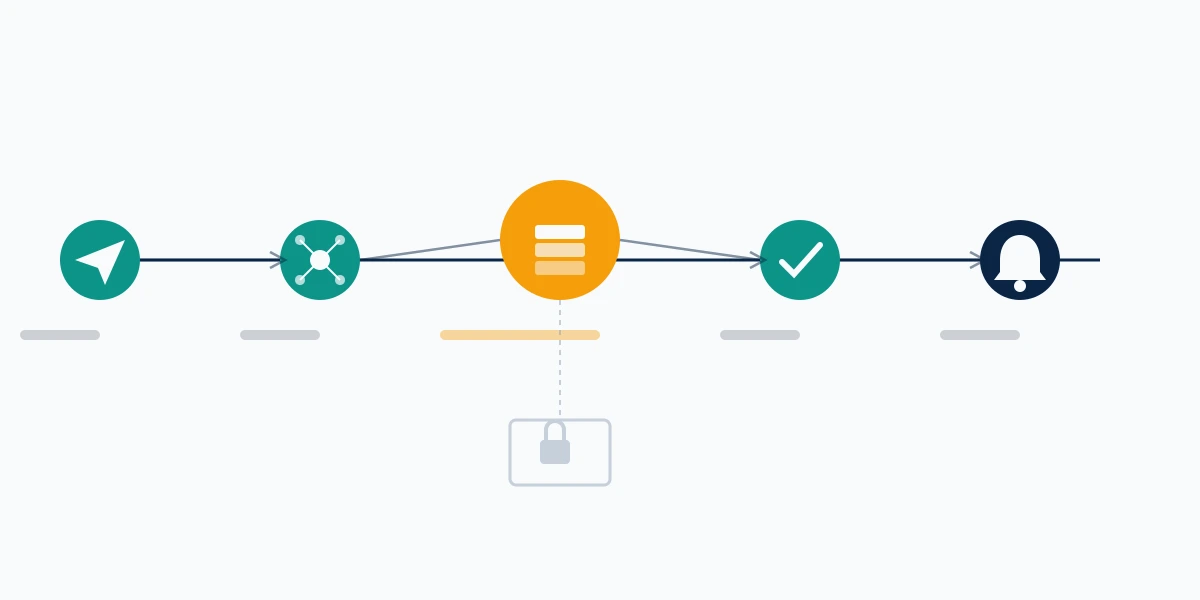
Copyright claims are their own category and typically the slowest, since a rights-holder claim and any counter-notice both carry statutory steps that cannot be compressed.
For a cross-platform sense of scale, X publishes decisions on suspension appeals in roughly five to twenty-one days in the cases we track, which we detail in our breakdown of real appeal timelines on X. TikTok runs a different clock again, where a thirty-day window governs what can still be restored before data is purged — the mechanics are in our guide to TikTok deletion types. Instagram sits between the two, and none of the three publishes a guarantee.
One thing worth saying plainly: silence is not rejection. A report with no visible outcome after a week has usually been actioned in a way you cannot see, such as content being demoted in recommendations rather than removed. Meta applies that intermediate response often, and it produces no notification to anyone.
Been restricted and cannot tell which action landed? Send us the exact wording of your notice and a screenshot of Account Status. We will tell you which route applies, what evidence it needs, and whether yours is one of the cases that does not need us at all — start a free case review. We never ask for your password, at any stage.
What happens if someone reports you on Instagram?
Most of the time, nothing. A report against content that does not break a rule is closed and leaves no mark on the account. There is no counter that increments, no note in your file, no quiet penalty. This is the part people find hardest to believe when they are anxious, and it remains true.
When a report is upheld, the outcome scales with severity. Mildest is a removal with a warning, where the post comes down and the account carries on. Above that sit feature restrictions, where you keep the account but lose specific abilities for a set period, commonly posting, commenting or going live. Repeated or severe violations lead to the account being disabled, which is appealable through Account Status. At the top end, a small set of violation categories skip the ladder entirely and disable an account on a single confirmed instance: child sexual abuse material, credible violent threats, terrorism and dangerous-organisation content, and coordinated fraud. Those are not recoverable by us or by anyone else, and any service that tells you otherwise is lying to you.
Once a decision is upheld and your in-app appeal has been rejected, one route remains that most coverage of this topic never mentions. Meta funds an independent body, the Oversight Board, which accepts appeals against content decisions and can overturn them, and Instagram documents the referral path at its Oversight Board appeal page. You need the reference number issued when your appeal was refused, the case has to fall inside the Board's remit, and it selects only a fraction of what it receives. Slow, and worth knowing about anyway, because it is free and it sits outside the queue that just told you no. Users in covered European regions have a parallel option through the Appeals Centre Europe.
The read-only state that reports can trigger has a close cousin on Telegram, where user reports push an account into a restricted mode until it is appealed. We cover the mechanics and the appeal route in our guide to the read-only state reports can trigger, and the parallel is instructive because Telegram, too, never names the reporters.
The genuinely bad outcome is losing access to a disabled account while the recovery email on file is dead. That converts a survivable restriction into a much harder identity-proof problem, and it is worth fixing your recovery contacts today rather than during an emergency. The three proof routes that still work when the email is gone are set out in our Meta lockout recovery guide.
How to report an Instagram account anonymously
You already do. There is no separate anonymous mode to enable, because the standard in-app flow is the anonymous one — tap the three dots on the post or profile, choose Report, pick the closest policy category, and submit.
Two practical notes on getting it right. Pick the category that genuinely matches the violation rather than the one that sounds most serious, because a misfiled report is routed to the wrong policy queue and closed. And report the specific content, not just the account, when the violation lives in a post or comment; reviewers act on items, and a profile-level report against a content-level problem often produces nothing.
Where anonymity genuinely breaks is the routes outside the in-app flow: the IP form covered above, and any report that becomes part of a legal complaint. If you are reporting someone who already knows you and you need the anonymity to hold, stay inside the app and do not file an IP claim.
Worried about broader exposure rather than this one report? The reporting flow is rarely the leak. Dormant accounts you no longer control usually give away far more, and closing them is the higher-value move. Our walkthrough on closing an old account you can no longer log into covers the erasure route when the login is gone.
Can anyone find out who reported you?
No, and this is the part of the page we want to be unambiguous about.
No service, tool, extension, contact or paid tier can reveal who reported an Instagram account. The data is not exposed through any public surface, and no vendor portal reaches a different Meta system than the one you can already see. We do not offer reporter de-anonymisation, we will not attempt it, and we say so on the first call rather than after taking a deposit. Anyone advertising it is either selling you nothing or selling you a credential-harvesting page dressed up as a lookup tool.
Worth stating flatly, because this specific search attracts a well-developed scam economy. Tells are consistent: a promise to identify the reporter, a request for your login "to run the check", payment up front in crypto or gift cards, and no verifiable business identity. We have logged the same pattern across platforms, and the 312-case Instagram breakdown shows how it plays out in practice, where 88 of our clients had already paid someone else and 79 of them got nothing. Honest pricing is quoted after triage, never before, and the benchmark we hold ourselves to is set out in our WhatsApp recovery pricing guide.
One more variant of this pitch deserves naming, because it is subtler. Some sellers do not claim to unmask anyone; they claim to have the report "withdrawn" or "cancelled" for a fee. That is not a thing either. A submitted report cannot be recalled by the person who filed it, let alone by a stranger, and enforcement already turns on the content rather than the report. Money spent there buys nothing at all.
We never ask for your password. Not to check a report, not to file an appeal, not at any stage of any case. The full boundaries of what we take on, and what we refuse, are published on our service limits page.
When a report-driven loss needs more than an appeal
Most report outcomes do not need us. A single removal with a warning needs nothing but time, and a first feature restriction usually expires on its own. If Account Status shows a clean, appealable decision and you can articulate why the policy was misapplied in two sentences, file the review yourself. Roughly a third of people who contact us turn out not to need paid help at all, and we would rather tell you that.
Where outside help earns its cost is narrower. Repeat restrictions that keep landing on content you believe is compliant suggest a classifier problem rather than a content problem, and that argument has to be made precisely. Disabled accounts with a business dependency have a deletion clock running behind them. Cases where a report cascade is genuinely coordinated need the pattern documented before an appeal, not asserted in it. In all three, the work is evidence assembly and argument quality — we cannot reach a reviewer you cannot reach, and we do not claim to.
When we file these, the appeals that reverse are the ones that quote the exact guideline named in the notice and rebut it in two sentences. Appeals that explain how much the account means to someone do not move reviewers, because the reviewer is working a checklist. That is the whole craft, and it is learnable.
Triage before quote is the standard to hold any provider to, on any platform — the reasoning is the same one we set out in our Telegram triage-first case process and in our guide to what a legitimate recovery service does. Want us to look at an Instagram case specifically? Our Instagram recovery service page sets out the process end to end, including what we decline.