
What counts as twitter trademark infringement, and what X leaves alone
Confusion is the entire test. X acts when a registered mark turns up in a username, display name, profile photo or post in a way that could mislead people about who they are dealing with, and it declines when that same mark appears somewhere nobody would misread. One distinction settles most cases before a reviewer reaches your evidence. A competitor who irritates you is not infringing. Someone using your brand name to criticise your brand is not infringing either, because naming the thing you are discussing is what trademark law calls nominative use, and it is protected almost everywhere. X's trademark policy weighs the account as a whole rather than the handle in isolation, which is why two accounts holding the same word can end differently, and why the strength of your feeling about one of them predicts nothing about the outcome.
Your Reputation Solution is a reputation and account-recovery firm whose team sorts platform complaints into the queue that will actually move them. Trademark is the queue people misidentify most often, usually because the word trademark feels like the strongest thing they can say.
Take two accounts using the same coffee-roaster wordmark. One sells bags of coffee, copies the logo into its avatar and answers customer questions as though it were the roastery; that account trades on confusion, and the policy reaches it. The other reviews coffee, names the roastery in every third post and looks nothing like it; the policy leaves that one alone however unflattering the reviews get.
Parody, commentary and fan accounts sit outside the policy by design, and X tightened those rules on 10 April 2025: the label has to appear at the start of the display name rather than buried in the bio, and the profile photo cannot be identical to the real account's. An account meeting both conditions is compliant even while using your mark, and reporting it burns a filing. An account failing them may well be actionable, though the ground is often impersonation rather than trademark, and those two forms lead to different places. Ownership matters as much as content here: X is narrower than most people assume about who may delete what, which our breakdown of who can actually delete a tweet on X sets out case by case.
Six things get called a twitter trademark dispute, and only one of them uses this form
Search results for these terms are a genuine mess, so separating them before you file anything saves a wasted week. Your Reputation Solution settles which row a case belongs in before anything else, because that answer changes the evidence, the form and the odds.
| What people call it | What it actually is | Where it goes |
|---|---|---|
| Trademark infringement report | A registered mark misused in a handle, display name, avatar or post | X's trademark form |
| Impersonation report | An account posing as you or your business, registration or not | X's impersonation form |
| Copyright complaint | Your photographs, video or text copied | X's DMCA notice |
| Counterfeit goods | Fake product listings trading on your mark | X's counterfeit form |
| The Twitter ownership case | Litigation over who owns the Twitter marks themselves | Nothing you file |
| Brand guidelines | Rules for displaying X's own logo in your marketing | Nothing you file |
Four of those are report types, and the distinctions between them are not cosmetic. An impersonation report moves faster than a trademark one because it needs no registration certificate, which matters when a fake support account is actively taking messages from your customers. A copyright complaint runs on the DMCA's statutory machinery, counter-notice and all, and covers what you made rather than what you are called. Counterfeit goods get a dedicated intake path separate from ordinary trademark misuse, because the evidence there concerns products rather than identity. Choosing between them is not a matter of picking the most serious-sounding option; each form asks for different proof, and supplying the wrong proof reads to a reviewer as no proof at all. Your Reputation Solution keeps that choice separate from the emotional weight of the case, because the two rarely point the same way.
Rows five and six are not report types, and they are where searches go astray. Anyone looking up x trademark guidelines or twitter trademark guidelines will mostly land on X's own brand toolkit, which governs how you may display X's logo in your own marketing and has nothing to do with reporting anyone. Meanwhile twitter trademark, twitter trademark dispute and twitter x trademark infringement now pull mainly coverage of a cancellation proceeding filed in December 2025, in which a newcomer argued X Corp had abandoned the Twitter name and bird logo and X countersued to keep them (X Corp. v. Operation Bluebird). That case concerns who owns the Twitter marks. It has no bearing on a complaint about your own mark, and its current position is worth checking rather than assuming.
Filing into the wrong queue is not merely slow — the report closes, and the closure joins the account's history, which is the reason Your Reputation Solution asks what a client wants to happen before asking what happened. This pattern repeats across platforms. TikTok states outright that copyright and trademark claims run on separate legal tracks with their own forms, a split our guide to TikTok's own trademark-versus-copyright divide walks through, while a cloned-logo advert on YouTube is handled as a rights-holder matter rather than a community-guidelines one, which changes the evidence entirely when you are reporting brand-impersonation ads on YouTube.
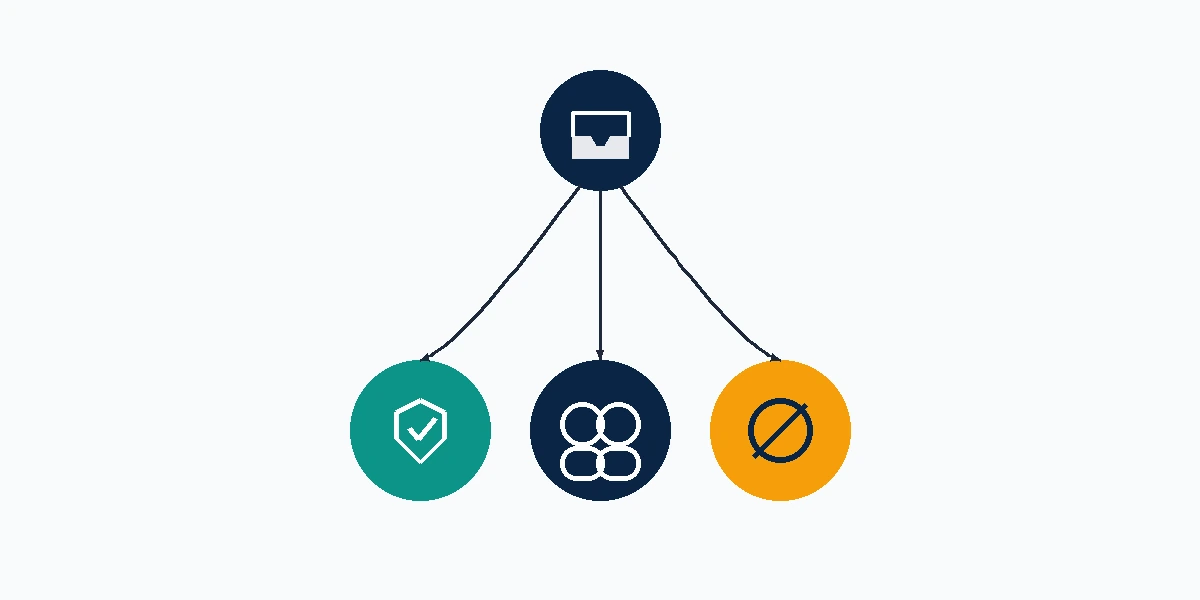
Who is allowed to file a twitter trademark infringement report?
The mark's owner, or somebody formally authorised to act for the owner. X's trademark report form opens by asking which of those you are, then branches into an owner path, an authorised-representative path, and a path for people reporting on someone else's behalf. Whichever branch you pick changes what you must supply, and picking the flattering one costs you the filing. Registration is the hard gate underneath all three. Every source that has documented this intake agrees X wants a registration number, a jurisdiction and a link to the register entry, which means an unregistered or common-law mark generally cannot be filed here even where national law would recognise it. That surprises people who have traded under a name for a decade and assumed the trading itself was the right; in most systems it may well be a right, just not one this particular form is built to read.
It also explains why the difference between a trademark, a patent and a copyright deserves five minutes before you open anything: the strongest claim you hold may not be the one you were about to assert. Employees filing for their employer are representatives rather than owners, and that path expects an authorisation letter naming the person acting.
Here Your Reputation Solution stops. An authorisation letter is a legal instrument signed under a declaration of authority, and we do not draft, sign or file one for anybody — a boundary published in our limits and refusals, and one worth checking in anyone you hire. Whether X requires you to hold an account before submitting is genuinely unclear: some walkthroughs say yes, others say a registered rights holder needs none, and X's public pages do not settle it. Assume you may need one.
That third branch, for people reporting on someone else's behalf without authorisation, exists mostly as an intake door. Nothing in X's published material suggests an unauthorised third party's complaint gets the same substantive review as an owner's, so a customer who spots a fake storefront is better off telling the brand than filing alone. Reporting somebody for using your name differs from reporting them for wearing your face, and platforms separate the two deliberately — Snapchat runs the identical split, as our walkthrough of reporting a Snapchat account for impersonation shows. Where a paid service is involved, honest ones say plainly which evidence they can verify and which they cannot, the standard applied in our explainer on how a TikTok ban service verifies trademark claims.
What does the twitter trademark report form actually ask for?
More than most people arrive holding. Public documentation of the twitter trademark report form agrees on its shape, and it runs to four blocks.
The four blocks, and the one that stalls people
Your own details come first: name, email, a contact number and the company you act for. The mark's details come second, and this block is where filings stall — the mark as registered, the registration number, the class or classes it covers, the issuing register, and a direct link to the record. Block three identifies the target: the exact handle, the URL of the specific post or profile element, and a description of the misuse. Block four is authority, where a representative uploads the letter proving it. Put briefly, the short answer to how to report trademark infringement on twitter is that you open X's intellectual-property intake, pick the branch matching your standing, and attach a registration the reviewer can verify without leaving the page. Gathering all four before you start matters more than it sounds, because the form does not reliably hold a half-finished submission while you go hunting for a certificate number.
Your Reputation Solution treats that assembly step as the whole job on a brand case, since everything after it is typing.
Why the free-text box decides more than the certificate
Two things deserve saying plainly. That description field is free text, and it settles more cases than the certificate does, because a reviewer working a queue needs to see the confusion rather than infer it. Naming the class of customer who would be misled, and the specific post where the misleading happens, does more than three paragraphs of outrage. We read a great many rejected filings, and the fault sits in that description far more often than in the underlying rights. Separately, a twitter trademark infringement form is a legal declaration rather than a complaint box, and a filing you know to be misleading can cost you your own account.
Searched twitter report trademark infringement or x trademark report and landed on a walkthrough promising six clicks? Check its screenshots — most of the widely circulated ones still show Vine and Periscope, products that no longer exist. Routing tables age better than screenshots, which is why YouTube's privacy-complaint routing table remains a useful model for sorting a complaint before you open anything. Commercial misuse forms its own category again: a fake storefront trading on your brand sits closer to counterfeit than to identity, and the same line between fraud and knock-off goods shapes what happens when you report a seller on Facebook Marketplace.

What X does to an account after a twitter trademark report
Four outcomes are documented, and suspension is only one of them. X may attach a disclaimer to the profile, making the account state that it is not affiliated with you. It may require a username change and release the handle. Offending profile elements — the header image, the avatar, the bio line — may be stripped while the account itself stands. Or the account may be suspended outright, which is reserved for the clearest cases. Reading that list in order is worth doing, because most brand owners arrive expecting the last outcome and would be better served by the second: a released handle you can then register solves the problem permanently, while a suspension leaves the handle frozen and unavailable to everyone including you.
Nothing here is instant, and nothing here is promised. X publishes no service-level commitment for trademark reports, and the turnaround figures circulating online cite no X statement at all. Any firm quoting you a number for this is quoting itself, Your Reputation Solution included, which is why no date gets promised on a trademark filing here.
What the reported account receives is thinner than the DMCA equivalent. Where a copyright notice produces a detailed message naming the complaint and the statutory route back, a trademark enforcement notice tends to name the policy and the action taken, leaving the accused to work out the rest. We see this process from that end far more often than from the filing end: the account that woke up labelled, renamed or suspended, needing to work out what hit it. Appeal mechanics run broadly alike across the large platforms, which is why the pattern in how Instagram account suspensions get appealed transfers reasonably well to X. While a review runs, ordinary account controls remain yours and remain worth using; muting and blocking limit what reaches you without touching the complaint, much as blocking an account and deleting comments on YouTube works independently of any report you have filed.
Why does the twitter trademark policy reject so many complaints?
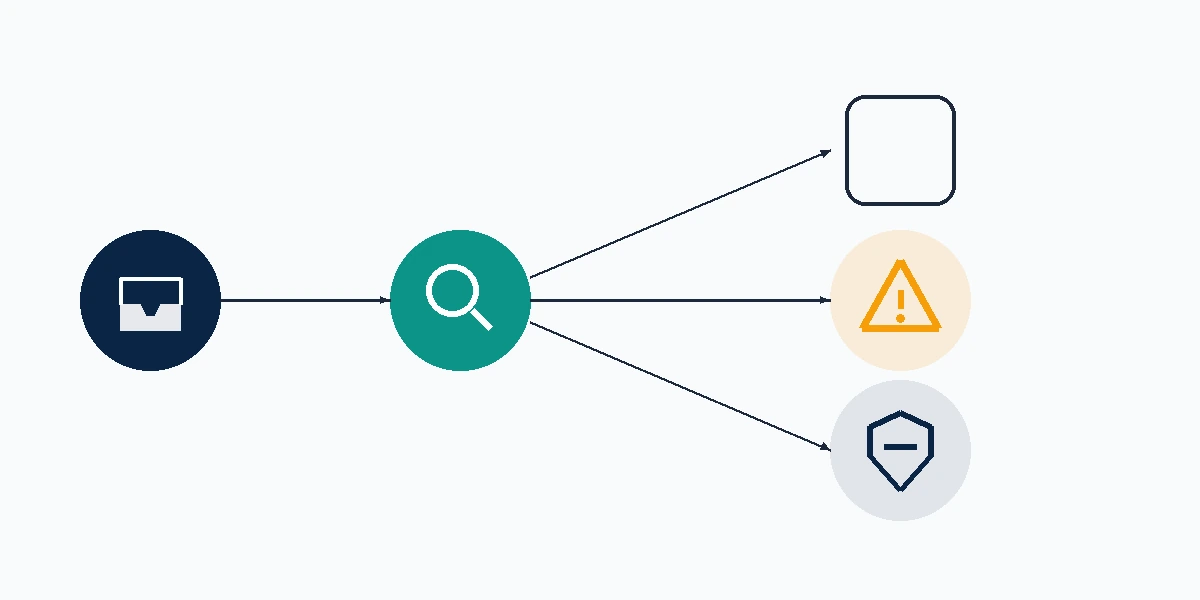
Because most rejected filings fail on standing or on confusion rather than on the facts of the annoyance that prompted them. Five reasons account for nearly all of it: no registration to cite; a registration in a class unrelated to what the account actually does; use that is nominative or descriptive rather than confusing; an account already compliant with the parody labelling rules; and a description asserting confusion without showing it. Notice what is missing from that list. None of the five concerns how damaging the account is, how long it has been running, or how many followers it has, though those are the facts most complaints lead with — which is why a rejection so often reads as though the reviewer ignored the case entirely. They did not; they answered a narrower question than the one you asked.
There is a sixth reason, and it is the one worth understanding, because it changes what you do next. The twitter trademark infringement policy is a content policy, not an ownership tribunal. X will remove a misleading use of your mark. It will not decide that you own a name when somebody else says they do, and it will not transfer a handle to you as a remedy in a genuine dispute.
Not sure whether yours is a trademark matter, an impersonation matter, or a commercial dispute no platform can settle? Your Reputation Solution will read the situation and say which one it is, including when the answer is that no report fits and you need a lawyer instead. Tell us what happened — reframing before you file costs nothing, and refiling after a rejection costs weeks.
Nor is that limit peculiar to X. Google draws it in the same place and says so explicitly, refusing to adjudicate brand disputes and acting only on narrow qualifying grounds, the constraint sitting behind both tools in our guide to clearing the Google Search result afterwards. A hijacked business name frequently lives in more than one place at once, and the version sitting in a local listing survives the X takedown entirely — fixing a hijacked Google Business listing is a separate job with its own route.
Your handle got hit by a trademark complaint. What now?
Read the notice before you appeal, because it names the ground. A trademark action is not a copyright action, and it carries no statutory counter-notice: X publishes no trademark equivalent of the DMCA counter-notification, so the route back runs through the ordinary appeal against the enforcement decision rather than a separate rebuttal form. Confusing the two wastes the appeal, since arguments written for a counter-notice answer a question nobody asked you. Naming the correct ground in the opening line costs nothing and changes everything a reviewer does next. What helps instead is evidence answering the confusion test rather than protesting the outcome, and the difference shows immediately in how a reviewer reads the first two lines. An appeal opening with unfairness invites a judgement call; one opening with the reason no reasonable person could have been confused invites a check.
Nominative use gets stated as such — you resell the brand, you review it, you report on it — and shown in an account that makes this obvious to any reader. Rights of your own in a different class or a different country belong in the appeal, with numbers. Parody and fan accounts should be brought into line with the April 2025 labelling rules first, and the appeal should say so, because one filed from a still-non-compliant profile answers nothing. Fixing the profile and then appealing is a sequence, not a choice between two options.
Your Reputation Solution prepares and escalates that appeal for people who ask; X's review team decides it, and that decision is theirs alone. No password is ever requested, and no honest firm will ask for one. Timelines follow the queue rather than the merits, and a clean recovery generally takes 24 to 72 hours from the point a case is properly documented, longer where identity checks are involved. Sorting the lockout into the right route is most of the work, the same discipline behind our walkthrough for recovering a locked Instagram account. Business accounts carry more exposure than personal ones and deserve documenting more carefully from the first hour, a lesson running through recovering a blocked WhatsApp Business account as well.

The takedown offers that arrive after you file
Filing a public complaint tends to attract private offers, and the pitch is consistent: guaranteed removal, an insider at X, a fee to expedite a queue. None of it holds. X's reviewers are not reachable through a broker, expedited trademark review is not a product X sells, and a guarantee attached to somebody else's decision remains the clearest signal in this market that you are being sold something imaginary. The offers tend to arrive within days of a public complaint, which tells you how they find you: they are reading the same timeline you are, not a queue inside X. Two details give them away almost every time — a price quoted before anyone has seen your registration, and a promised date attached to a decision the seller does not make. Neither is a close call.
Here is where Your Reputation Solution stops, stated as plainly as the Instagram version of this page states it. Trademark complaints do not get filed, drafted or assisted with on anyone's behalf, and no help goes to a person claiming a mark they do not hold — filing without standing is abuse of the process, it carries consequences for the filer, and it sits among the limits and refusals published on this site. Passwords are never requested. What is on offer is narrower and more useful: working out which route your problem actually belongs in, and handling the account side when an enforcement decision lands on you.
Apply the same test to anyone else you are weighing up. Almost every platform report worth filing is free and self-serve, and reporting a group on Telegram takes three taps and no intermediary, as our guide to reporting a Telegram group, route by route shows — so a fee should buy preparation and escalation rather than access. And where the real problem turns out to be your own name rather than your brand sitting in search results, that is a different job again, mapped in our guide to delisting personal information from Google.