
The Recovery-Service Market Is Split in Two
Type "TikTok account recovery" into a search bar and the results split cleanly down the middle. On one side sit appeal-preparation firms with named staff, intake forms, and published fee ranges. On the other sit pages selling "certified TikTok hackers" who promise the account back within hours, payable in Bitcoin. Both worlds buy the same keywords. They are not the same business, and confusing them is how people get robbed twice: once by whoever took the account, and again by whoever promised to bring it back.
A TikTok account recovery service is a firm paid to do three things: identify which enforcement or access failure actually took the account down, assemble the evidence TikTok's reviewers need to reverse it, and file the case through the platform's official appeal and identity-verification channels. That scope covers hacked accounts, login lockouts, community-guideline strikes, temporary suspensions, and permanent bans, and each follows a different pathway with different odds. What no service can do is reach into TikTok's systems and flip a switch. TikTok recorded roughly 200 million account-level enforcement actions per quarter in its latest Community Guidelines Enforcement Report (TikTok Transparency Center, 2026), and every reversal in that pile moved through a documented review queue, not a back door. A provider claiming insider access, guaranteed reinstatement, or 24-hour turnaround on a permanent ban is describing a product that does not exist.
There is no third category.
This page covers the decision layer: what hiring help costs, how to vet a provider, and which cases are worth paying for at all. For deeper appeal mechanics on a specifically banned account, our professional TikTok unban guide walks the enforcement tiers one at a time. If you would rather try the free route first, which is reasonable for simple lockouts, start with our walkthrough of how to recover a TikTok account using nothing but TikTok's own flows.
How Much Does TikTok Account Recovery Cost?
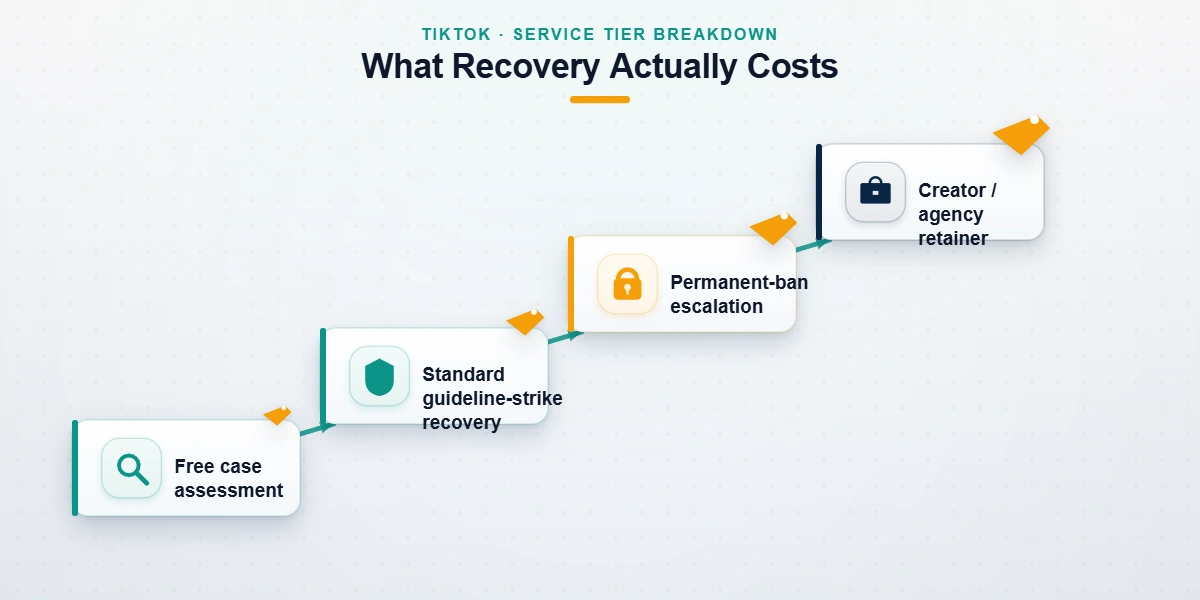
It depends on which tier of trouble the account is in. Across the eligible TikTok cases our desk has closed since January 2026, fees and timelines cluster into four bands (our internal records as of July 2026):
| Case type | Typical fee | Typical resolution |
|---|---|---|
| Hacked account or login lockout | $300–$600 | 3–10 days |
| Strike or temporary suspension | $400–$900 | 5–14 days |
| Permanent ban, eligible category | $900–$2,500 | 2–6 weeks |
| Severe-category violation | Declined at intake | — |
Market-wide, TikTok account recovery service cost runs from roughly $300 for a clean hacked-account case to about $2,500 for a permanent-ban appeal, and most reputable firms bill a flat fee per case rather than an hourly rate (our survey of nine competing providers' published pricing, June 2026). Three pricing patterns should raise questions. A fee quoted before anyone has read your ban notice is a guess dressed up as a diagnosis. "Success-based" pricing sounds safe but is routinely paired with a non-refundable "filing charge" that quietly becomes the real price. Any figure dramatically below market — the $50 recovery offers all over Telegram — is bait. When a money-back guarantee is the headline, read what triggers it. Most refund only if the provider never files anything, which is not the failure that actually happens.
We quote after triage, not before, and about a fifth of intake gets declined at that stage because no legitimate path exists. More on that below.
How Do You Tell a Legit Provider From a Scam?
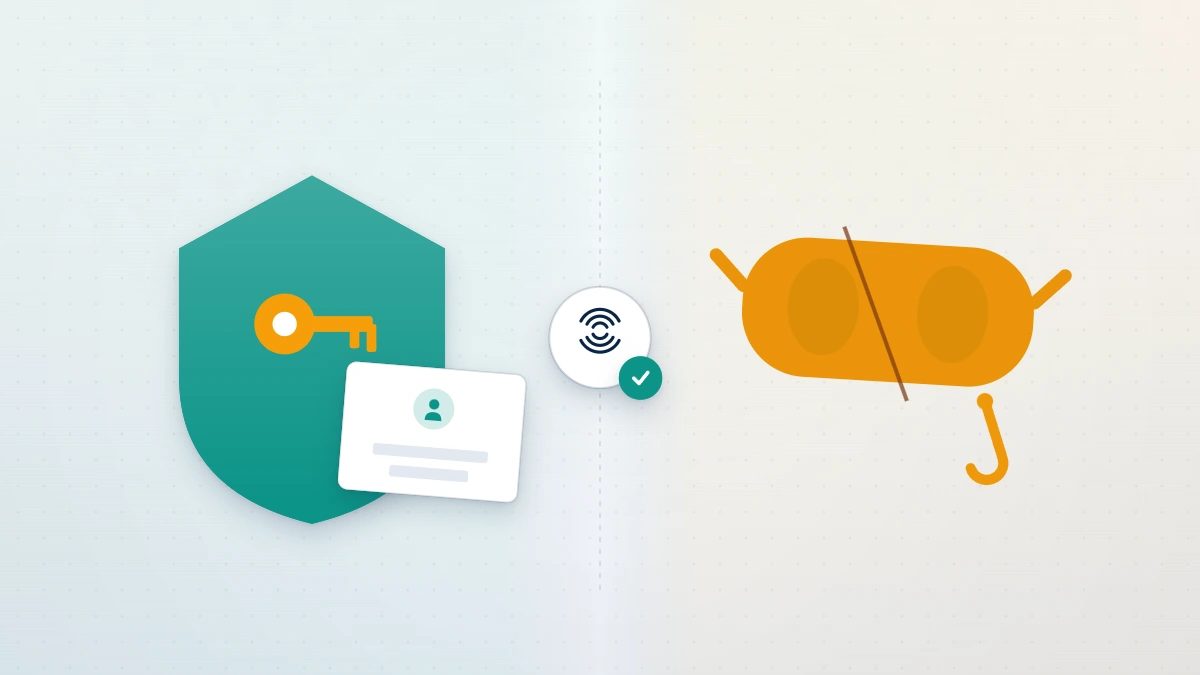
If you have been searching is TikTok account recovery service legit, here is the uncomfortable shape of the market: legitimate firms exist, and they are outnumbered. The FTC's guidance on recovering hacked accounts exists partly because recovery scams follow account loss the way tow trucks follow accidents.
Five signs you are talking to the wrong people:
- Payment demanded in crypto, gift cards, or wire transfer. No legitimate firm bills this way.
- Any request for your password or a logged-in session. Appeals never require credentials, and we never ask for them.
- A guaranteed outcome, or a fixed 24-hour promise on a permanent ban.
- Contact that exists only inside Telegram or WhatsApp, with no named humans anywhere.
- Pressure to pay before anyone has read your ban notice or login screenshot.
A separate cluster of sites answers the search hire someone to recover TikTok account with literal hacker-for-hire offers: breaking into the account rather than appealing for it. Most of those listings are plain advance-fee fraud, but even the "real" ones are proposing unauthorized access that violates the Computer Fraud and Abuse Act in the US and TikTok's terms everywhere, and that can turn a victim into a co-conspirator. It also poisons the legitimate path. Appeal reviewers who spot credential-sharing or automation flags on an account routinely deny otherwise winnable cases. In our team's combined years inside platform Trust & Safety, we never once saw a "hired hacker" produce a durable recovery; accounts snatched back that way get re-flagged by the same integrity systems within days. The boring, documented, official-channel route is not just safer; it is the only route that holds.
Hiring Someone to Recover a TikTok Account: What Actually Happens
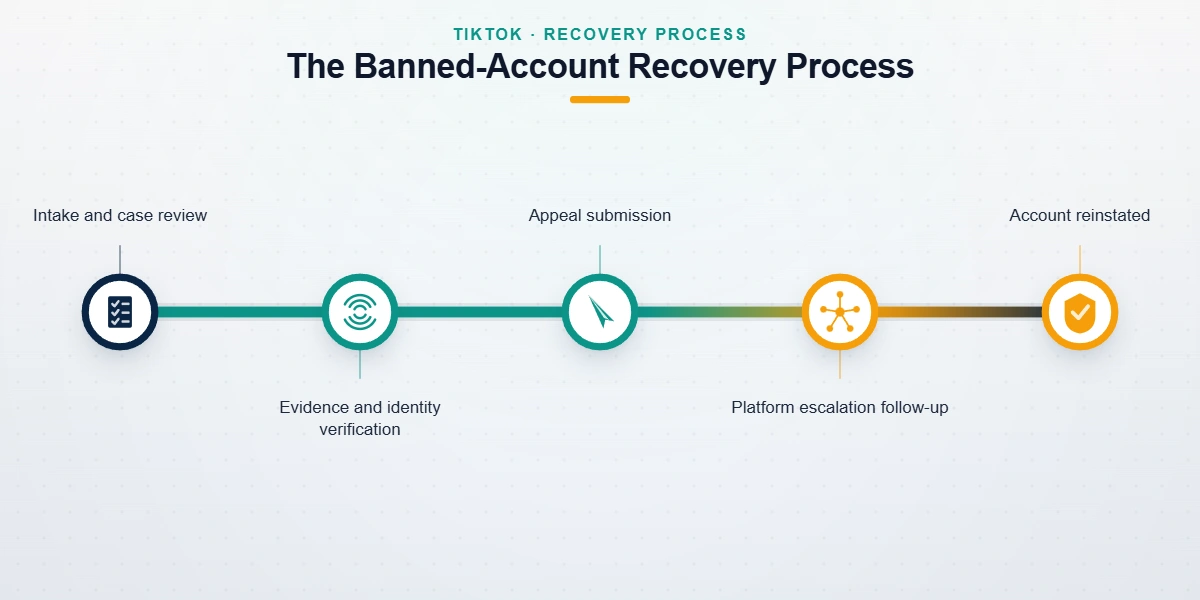
Triage comes first, and it is free. You send screenshots of the ban notice or login error, the account handle, and a short timeline of what happened. Within 24–48 hours we identify the enforcement tier and check the cited violation against what is actually recoverable. About one case in five stops right here, at no charge, because no honest path exists.
Then the evidence package. TikTok's in-app appeal gives you a single 1,000-character text field. The draft we file runs 700–950 characters against the specific guideline cited, attaching identity or original-content proof where the channel accepts it. Rushed, emotional self-appeals burn the one shot most enforcement actions allow. This drafting stage is where a specialist earns the fee.
Filing goes through the right door, which matters more than people expect. Ban appeals run through the in-app Appeal flow or TikTok's web feedback form; hacked-account cases run through the login-troubleshoot path instead. File the wrong one and the case is auto-rejected before a human ever reads it. That pathway split is why we keep separate playbooks for recovering a hacked TikTok account and for permanently banned account recovery.
Escalation and follow-up fill the following weeks. Denied first-pass appeals can still move through secondary review where eligibility allows, and business accounts sometimes qualify for commercial-support channels. Silence from TikTok is normal; a provider going silent is not, so case updates go out on a fixed weekly schedule.
Reinstatement ends with hardening, not celebration. A recovered account with the same weak email and reused password gets taken again. Passkeys plus a session audit close the loop.
Across the 160 eligible TikTok cases we have closed since January 2026, the median resolution ran 11 business days; the slowest permanent-ban reversal took 41 (our internal records as of July 2026). When we file these, the first platform response usually lands inside a week. The escalation tail is what stretches timelines, not the initial review.
Locked out right now? Send us exactly what the ban notice or login screen says and start a free case review. Within 48 hours you will know whether the case is worth pursuing, before any fee changes hands.
A Specialist, an Agency, or a Tool?
The labels mean different things, and the difference affects price. A TikTok account recovery specialist is typically a single practitioner, often ex-platform staff, who works the appeal personally and charges toward the lower end of the ranges above. A TikTok account recovery agency wraps the same core work in a team: intake staff, a case manager, escalation coverage across time zones, sometimes legal review for business accounts. Agencies cost more and earn it mainly when the account is a revenue channel with contracts attached. Either way, the team behind the recovery work matters more than the label on the door. Ask who, specifically, will touch your case.
And the tool? There is no legitimate TikTok account recovery tool. No software automates getting an account back. Everything sold under that name is either a phishing kit hunting the credentials you still have or a paid wrapper around forms TikTok publishes for free. The closest real thing is TikTok's own login-troubleshoot flow, which costs nothing.
Software cannot argue a case.
How to Pick the Best TikTok Account Recovery Service
"Best" in this market means most verifiable, not most confident. The best TikTok account recovery service for your case is the one that survives five questions. Who, by name, will work the case, and does that person have a checkable history? Do they ever decline cases — a 100% acceptance rate is a warning, not a credential? Are the fee, the refund trigger, and the expected timeline in writing? Do they volunteer, unprompted, that they never need your password? And can they name the exact TikTok channel they plan to file through, and say why?
A provider that clears all five will not mind being compared against others. That is the standard we built our banned-TikTok recovery service around, and you should hold us to it as skeptically as you would hold anyone else.
Recovery vs. Reinstatement: Two Different Requests
A TikTok banned account recovery service works the enforcement side of the house: strikes, suspensions, and permanent bans, where the account still exists but TikTok has decided to restrict or remove it. Access recovery — hacked account, lost phone number, changed email — is a different queue with different proof requirements. And a TikTok account reinstatement service usually refers to a third thing entirely: TikTok Shop seller accounts pulled for marketplace-policy violations, which appeal through the Seller Center track rather than the consumer app. The distinctions decide eligibility at each desk. As of May 2026, US users have a 30-day window from a permanent-ban notice to appeal before data deletion begins; strikes expire on their own schedule and are individually disputable; Shop reinstatements turn on commercial documentation such as invoices and supplier records rather than identity proof.
Severity honesty, since marketing tends to blur it: temporary suspensions often resolve on their own, strikes are the most winnable paid work, permanent bans are genuinely hard and hinge on the violation category, and severe-category terminations do not come back at all. Our guide to suspended TikTok account recovery covers that middle tier in detail.
Why Was the Account Banned in the First Place?
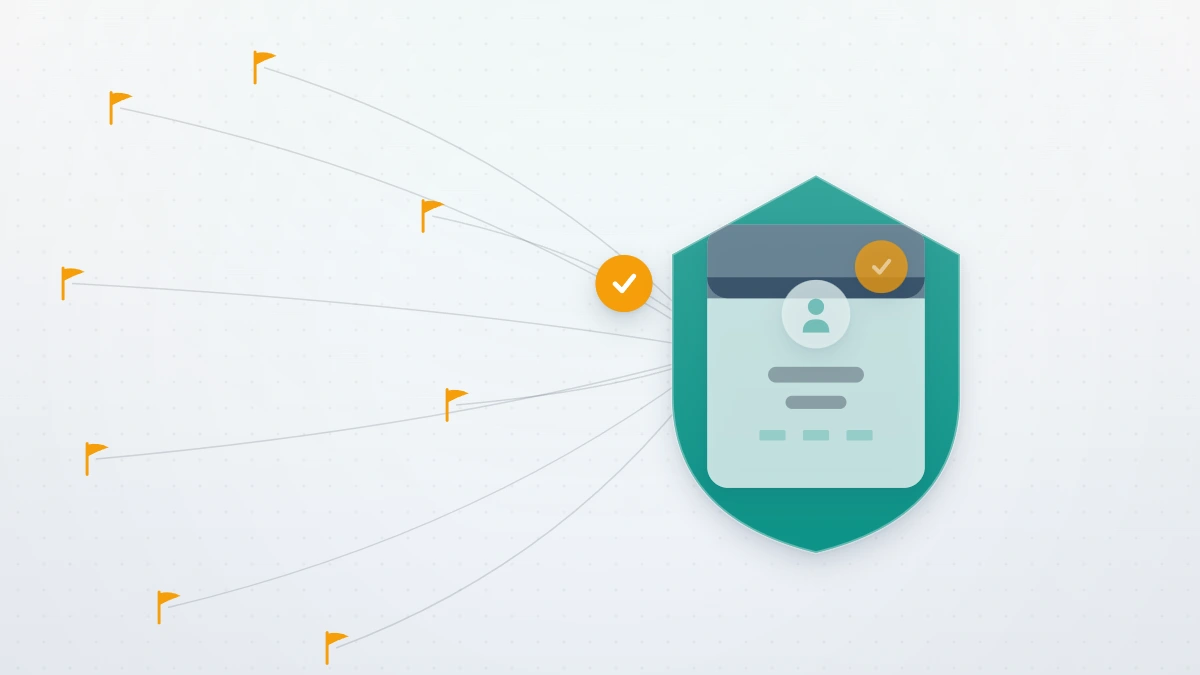
Every recovery case starts with a cause, and the cause sets the strategy. Some bans are earned. Plenty are not, and the trigger clients least expect is coordinated mass reporting. We tested that mechanism from the attacker's side in our analysis of whether TikTok mass-report bots actually work, and the finding cuts both ways: report bots are largely scams, but organized campaigns of genuine human reports can push borderline content into automated enforcement. Our Instagram mass-report study found the same dynamic on Meta's side.
The pattern is cross-platform. Our findings on the mass report twitter bot trade and on Instagram spam-report bots point the same direction: the paid bots are mostly theater sold to angry buyers, while human report brigades produce real wrongful enforcement. The report-for-hire markets themselves are documented in our Telegram report-bot deep dive and our review of Snapchat mass-report tools.
Why this matters for recovery: if the ban followed a burst of hostility — a feud, a stalker, a business rival — say so in the appeal, and date it. Wrongful-enforcement cases driven by report brigading are among the most recoverable we handle, because a human reviewer can see the mismatch between the cited guideline and the actual content.
When the Attack Does Not Stop at TikTok
Coordinated attackers rarely limit themselves to one app. The takedown playbooks they use are public; we have documented them ourselves, from getting a TikTok taken down immediately to the process for getting an Instagram account taken down. Read from the defender's chair, those guides show exactly which evidence the platforms act on, and therefore what a fabricated report against you looks like.
The same policy hooks exist for taking down a Twitter account and inside the Facebook account takedown process: impersonation, copyright, harassment. Each hook is narrow, and each generates a paper trail an appeal can reference later.
Messaging platforms run their own versions, covered in our guides to Telegram channel takedowns, Snapchat account removals, and how WhatsApp numbers get banned.
Video platforms too: our walkthrough of getting a YouTube video taken down shows how copyright and privacy claims get used, and abused. Anyone who recognizes their situation in more than one of these guides should capture everything with timestamps. Cross-platform evidence is what turns "my account was banned unfairly" into a case a reviewer can act on.
What We Refuse to Do (and Why It Protects You)
Refusals define a legitimate practice better than promises do. We never ask for your password or a logged-in session, on TikTok or anywhere else. Guarantees are off the menu too, because outcomes belong to TikTok's reviewers, not to us. Fraudulent DMCA claims and manufactured copyright strikes are out as well, no matter how fast a client wants a result. Severe-category cases — CSAM, violent extremism, sustained harassment, fraud-linked terminations — get declined at intake, because no honest channel exists for them and anyone who accepts one is charging you for theater. Speed we cannot document never goes into a quote: access cases resolve in days, enforcement appeals in weeks, and the full list of limits sits on our disclaimer page.
If a provider's sales page reads like none of this applies to them, believe the page. Then close the tab.