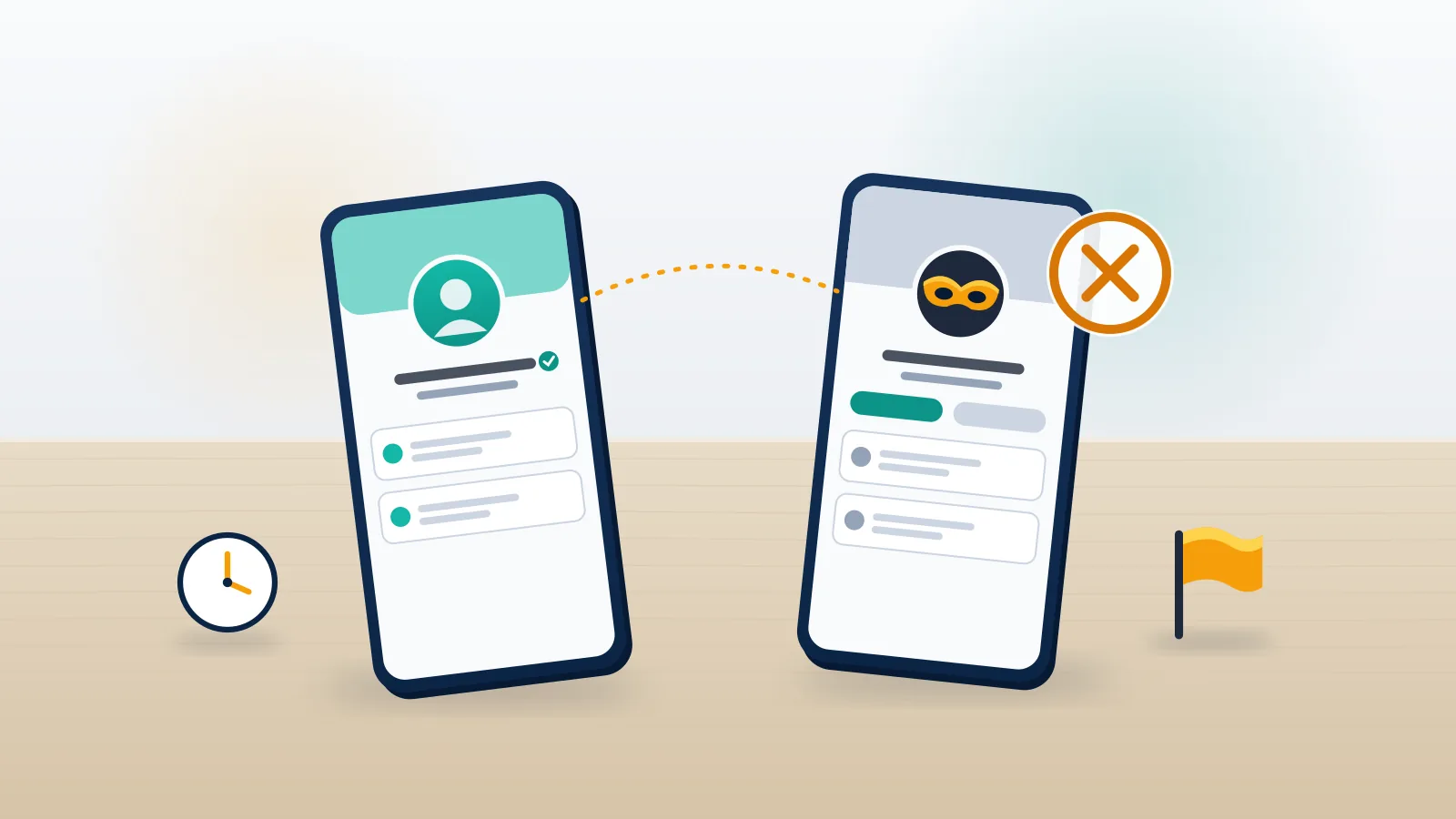
Why won't Facebook remove fake profiles you have reported?
Facebook usually refuses because its first review never connected the fake to you. When a reader writes to us that "Facebook won't remove a fake profile of me," or that Facebook will not remove fake profile reports they filed twice, the cause is nearly always the same: the report arrived as one signal among millions, a classifier looked for a policy match, found none it could prove, and closed the ticket.
Scale explains a lot of it. Meta's own fake accounts enforcement data puts actioned fake accounts at roughly 1.1 billion in Q4 2025, down from about 1.4 billion in Q4 2024, and Meta says 99.9% of those were caught before anyone reported them (Meta Community Standards Enforcement Report, 2025). Meta's FY2025 annual report estimates that violating accounts still make up under 5% of daily active people (Meta 10-K, 2026). The system is tuned for spam farms and bot networks. A single human impersonator copying one person's photos does not look like a farm, so it slips through the filter built for farms.
So why does Facebook not remove fake accounts that clearly copy you? The person reading your report, if a person reads it at all, sees a profile with a plausible name, a few friends and no obvious spam. Without a side-by-side comparison and proof of identity, "pretending to be me" is an unverified claim. People ask why doesn't Facebook delete fake accounts that took a full photo album; the answer is that the photo reuse is handled under a different policy (privacy or intellectual property) than the impersonation itself.
Your Reputation Solution is a reputation and account-recovery firm that files, documents and escalates these reports for people and businesses. We start from the rejection notice, because the wording tells you which part of the review failed.
What to do if someone created a fake Facebook account of you
Freeze the evidence first, then report. That order is the difference between a case Meta can verify and one it closes in an afternoon.
People describe it a dozen ways: someone made a fake Facebook account of me, someone has made a fake Facebook account of me, someone made a fake account of me on Facebook, someone set up a fake Facebook account in my name. Clients also type the shorthand "someone created fake facebook account my name" into search at two in the morning. The situation behind every version is the same, and so is the first hour.
- Copy the fake profile's URL and take dated screenshots of its profile photo, cover, About section and friend list.
- Warn close contacts in one short post on your real profile, so nobody sends money or codes.
- Turn on two-factor authentication on your own account; impersonators sometimes try the real one next.
- File the report as "Pretending to be someone", then "Me", not as a generic fake account.
So what to do if someone creates a fake Facebook account tomorrow, after this one is gone? The same four steps, plus the repeat-offender tactics further down. And what to do when someone created a fake Facebook account months ago and you only just found it: check whether it has already messaged your contacts, because those messages become your strongest proof. Someone is impersonating me on Facebook is a sentence Meta hears constantly; a profile URL with dated screenshots is what it can act on.
Read the rejection notice before you refile
Facebook not removing fake profile reports is rarely random. Whether Facebook won't remove fake profile complaints, Facebook not deleting fake account reports, or Facebook won't delete fake account cases that look obvious to you, the Support Inbox message usually falls into one of four patterns. Each one points to a different fix.
| What the notice says | What it usually means | Your next move |
|---|---|---|
| "Doesn't go against our Community Standards" | The reviewer could not link the fake to you, or reviewed the wrong profile | Request another review, then refile with the profile URL, not the name |
| "We've reviewed the profile" with no detail | An automated close, often on a first-time report from an unverified account | Refile through the impersonation route and attach ID |
| No reply after 7 days | The report sits behind higher-severity queues | Refile from a second route (non-user form or a friend's account) |
| Profile gone, then a new one appears | The original was removed; this is a repeat offender | Treat it as harassment and escalate (see below) |
Two details change outcomes more than anything else. First, report the profile URL (the long facebook.com/profile.php?id= number or the vanity handle), never just a display name, because names are not unique and reviewers do pull the wrong account. Second, check which box you ticked. A report filed as "fake account" asks Meta whether the profile is inauthentic. A report filed as "pretending to be someone" and then "Me" asks whether it is you, and only that route triggers the identity check that wins these cases. Our team covers the full set of reporting menus in the guide to reporting Facebook impersonation of you or your Page; this page is about what happens after those menus have already said no.
How to get Facebook to remove a fake profile after a "no"
The order matters, because each step leaves a record the next one can cite. If you want to know how to get Facebook to take down a fake profile that survived a first report, this is the ladder Your Reputation Solution works through on every refused case.
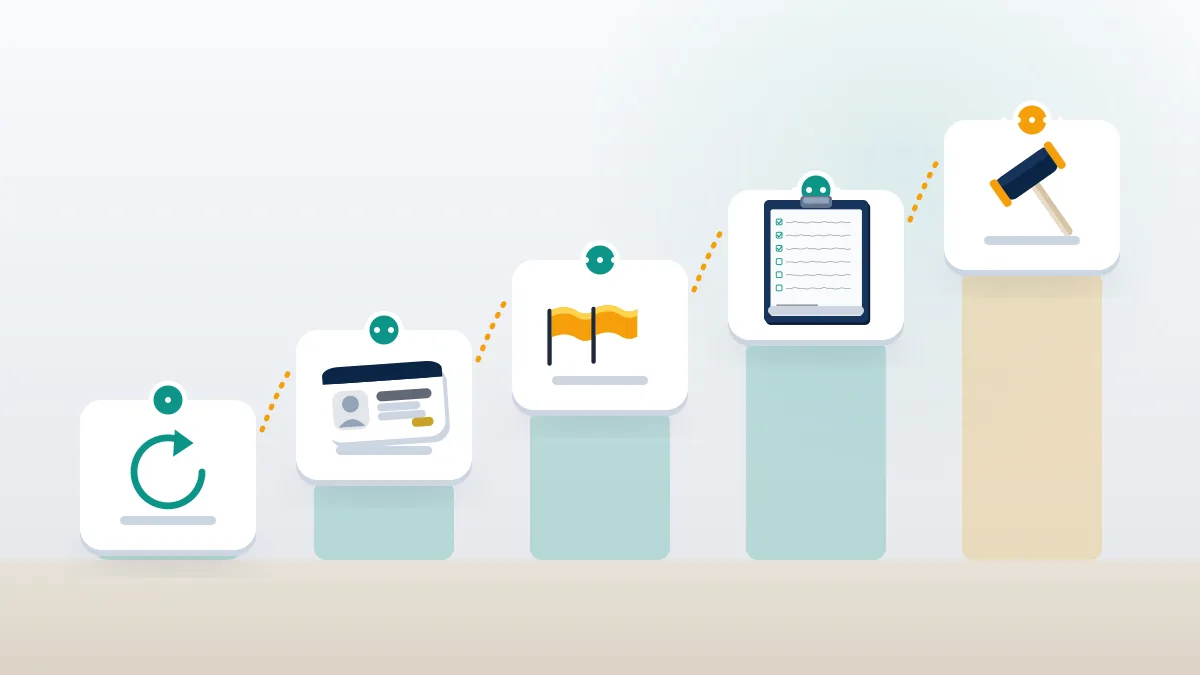
- Request another review. Open the Support Inbox, find the decision, and use the review option if it is offered. Meta's account integrity and authentic identity policy is the rule you are asking them to apply, so name it.
- Refile through the impersonation route with ID. From the fake profile, open the three-dot menu, choose "Find support or report profile", then "Pretending to be someone", then "Me". When prompted, upload a government ID. Cover the ID number if you like; Meta needs the name and photo.
- File from a second route. The "Report an impersonating account" form in the Help Center works without logging in, which matters if the fake has blocked you. A friend who knows you can also report it as pretending to be a friend.
- Build a side-by-side file. If someone created a fake Facebook account of me, my first exhibit would be the fake facebook account of me next to my real one, same crop, same date stamp. Screenshot your profile and the fake with dates visible, list every friend request it sent, and save any messages it used to ask for money. This is the evidence for steps 5 and beyond.
- Escalate outside the app. Police report, FTC filing, or a state impersonation statute, covered in the legal section below.
People also search how to get Facebook to delete a fake account that never answered at all. Silence is not a rejection; it is a queue. When we file these for clients, Meta usually decides an evidence-complete impersonation claim with ID attached within two to seven days, while bare "fake account" reports with no ID often sit for weeks or close without a human look (our internal case notes, Jan to Sep 2026). That gap, and not some hidden rule, is the reason most people think Facebook not taking down fake account reports means Facebook does not care.
The Oversight Board is a narrower door than most guides suggest. Its rules require you to finish Meta's own review first and receive a reference ID in the Support Inbox, and the Board mainly takes content decisions rather than whole-account cases, so an impersonation profile may not qualify (Meta, appealing to the Oversight Board). Try it if you get the reference ID, but do not wait on it.
Someone created a fake Facebook account with my pictures
When someone created a fake Facebook account with my pictures is the situation, you have two complaints, not one. The impersonation report covers the account. Your photos, if you took them yourself, are also your copyright, and Meta's intellectual property form is reviewed by a separate team that does not apply the same "is this really you" test. Filing both at once is the single most effective move we know of when the impersonation report has stalled.
The same photos usually travel. If you find that someone posted a photo of me on Instagram from the same album, the Instagram photo-removal routes use the same evidence pack. Impersonators also tend to grab your name on other apps before you do, so it pays to check Instagram name availability for your usual handle and its lookalikes.
When the fake uses your phone number
Someone created a fake Facebook account with my phone number is a different problem from a photo copy. Facebook lets one number sit on one account, so a fake holding your number either got it from an old account you abandoned, from a recycled carrier number, or from a SIM swap. Remove the number from any account you still control, add it back to your real profile, and ask your carrier whether a port or SIM change happened. If WhatsApp is tied to the same number, read up on the WhatsApp account recovery verification code process now, and keep the steps to recover your WhatsApp account on a new phone at hand in case the number gets hijacked there too. Telegram works the same way; the Telegram banned phone number recovery guide explains what happens when a number gets flagged because someone else abused it.
When it is "only" your name
A fake Facebook account in my name with no photos is the hardest to remove, because a shared name is not impersonation on its own. Facebook needs something that shows the account is pretending to be you specifically: your photos, your workplace, your friends being targeted, or messages that use your identity. If a fake Facebook account with my name is messaging your contacts, collect those messages; they are what turns a name clash into an impersonation case.
Knowing how to report a fake Facebook account in my name comes down to that link. When someone has created a fake Facebook account in my name and used my employer or hometown, Your Reputation Solution quotes those exact fields in the report text, because reviewers compare fields, not vibes. People also ask how to delete fake facebook account on my name directly; you cannot delete someone else's account yourself, only get Meta to remove it, which is why the report wording carries so much weight.
Someone keeps making fake accounts to harass me: Facebook's repeat-offender gap
If someone keeps making fake accounts to harass me, Facebook treats each new profile as a new case unless you connect them. Block the first fake and tick the option to block new accounts that person may create, which Facebook offers in the block flow. Then report each new account as harassment as well as impersonation, and mention the earlier profile URLs in the report text. Patterns are what move a case out of the single-report queue.
Keep a running log with the date, profile URL and screenshot of every new account; Your Reputation Solution builds exactly this log before escalating a harassment case. Our guide on how to report harassment on Facebook covers the harassment routes in detail. If the same person moves to YouTube comments, you can block someone on YouTube and delete their comments from your channel without waiting on a report.
Repeat fakes across platforms need cross-platform reports. When the harasser has also opened an X profile, the routes to delete someone else's Twitter account or tweet apply; when it is Snapchat, the honest answer to how to get someone's Snapchat deleted is that only a policy violation does it, never a request alone.
Close the doors an impersonator can walk through
Old, forgotten accounts are where a lot of impersonation starts. A dormant profile with your real photos can be hijacked, or its handle released and re-registered by someone else. So it is worth knowing whether Instagram deletes inactive accounts, does Twitter delete inactive accounts, and whether TikTok deletes inactive accounts or only frees the name. In most cases they do not delete them on a schedule, which means the old account and its photos stay online until you act.
If you no longer use an account, close it properly. Steps exist to delete an Instagram account or disable it, to delete an old Instagram account you can't access, to delete an old Twitter account you cannot access, to delete a Snapchat account, and to delete a TikTok account. Each one removes a set of photos an impersonator could reuse.
Then claim your name where you are active. If you see "this username is not available for use on Instagram" when you try your own name, a squatter or impersonator may already hold it; the guide on an Instagram username not available explains when Meta will release it. Browsing available usernames for Instagram helps you lock in close variants, and the same logic applies when you get a rare username on TikTok before a copycat does. For Instagram-side contact questions, the Instagram Help Center is the real channel, and there is no working Instagram support number that removes accounts on a call; anyone who offers one is running a scam.
A refused report is a starting point, not a verdict. Your Reputation Solution reviews the rejection notice, rebuilds the evidence file and files through the right Meta routes. Book a free 60-minute case review.
Taking it outside Facebook: police, FTC and impersonation law
If the fake is used to scam your friends, threaten you or damage your work, you have options that do not depend on Meta agreeing. In California, Penal Code 528.5 makes it a misdemeanor to knowingly and credibly impersonate a real person online to harm, intimidate, threaten or defraud, and it explicitly covers opening a social networking profile in someone's name; penalties reach a $1,000 fine and up to a year in county jail, and the victim can sue for damages and an injunction (Cal. Penal Code 528.5). Several other states have similar laws.
A police report gives Meta something it takes seriously: an official case number. Our page on reporting a fake Facebook account to cyber crime and the police walks through what officers need. If the fake was used for fraud or identity theft in the US, file at IdentityTheft.gov, the FTC's recovery site, which produces a report you can attach to future Meta submissions.
When the fake has already spread damaging posts that rank in search, the work shifts from removal to suppression and legal requests. The overview of how to remove negative content online maps the routes; in Australia, negative content removal in Australia adds the eSafety Commissioner, which can issue removal notices for adult cyber abuse. And if the impersonator dug up old records to use against you, the same legal-request logic applies when you remove an arrest record from Google.
What Your Reputation Solution will and won't do
Your Reputation Solution files the reports, builds the evidence and escalates through Meta's own channels and the legal routes above; Meta decides whether the profile comes down. No outside firm can guarantee removal, and anyone who promises it, or quotes a 24-hour deletion, is selling something Meta does not offer.
We will not use mass-report bots, file false reports, or pretend a profile broke rules it did not break. We never ask for your Facebook password or login codes, and you should refuse anyone who does. If the "fake" turns out to be a real person who shares your name, we will tell you that and stop. If the question is how to delete a fake Facebook account in my name that you yourself created years ago, that is an account-recovery task, and the guide on how to delete a fake Facebook account covers it. Our disclaimer sets out these limits in full, and the Your Reputation Solution home page explains how a case review works.