Does Instagram require permission before someone posts your photo?
No. That single fact catches almost everyone out, so it is worth stating plainly before anything else. Instagram's Community Guidelines govern what content does — whether it harasses, impersonates, exposes private information, sexualises someone, or endangers a child. They do not govern whether the person in the frame agreed to appear. A photograph taken of you in a public place, posted by somebody who was standing there with a phone, breaks no rule on its face.
That distinction decides everything that follows. When someone posted a picture of me on Instagram is the search, the question underneath it is really: which policy does this image plausibly break? Name the right one and a reviewer has something to act on. Name the wrong one and the report closes. Meta's queues do not quietly re-route a misfiled complaint into the correct category — they resolve it against the policy you selected, and a rejection on the wrong ground looks identical to a rejection on the merits.
Two reflexes are worth killing early. The first is that you can delete the post yourself. You cannot. Only the author, the platform, or a court can remove content, which is the same hard limit that applies on every network — only three parties can remove a post on X for identical reasons. The second is that reporting harder works. It does not. Enforcement turns on one confirmed violation rather than on how many people complain, and why report volume is not the lever sets out what actually moves an account-level decision.
The report route that works when someone posted a picture of me without my permission
Someone posted a picture of me on Instagram without my permission is the sentence people type into Google. Report a Violation of your Privacy on Instagram or Threads is the form that answers it, and hardly anyone finds it, because they stop at the three dots inside the app.
It sits at help.instagram.com/contact/504521742987441 and asks for your full name, your country, an email address, and the URL of the specific post. Then comes the question that actually matters: who are you reporting for? Three answers are on offer, and they are yourself, a child, or another adult. You will also be asked whether you are under 18, and if a child is involved, whether that child is under 13.
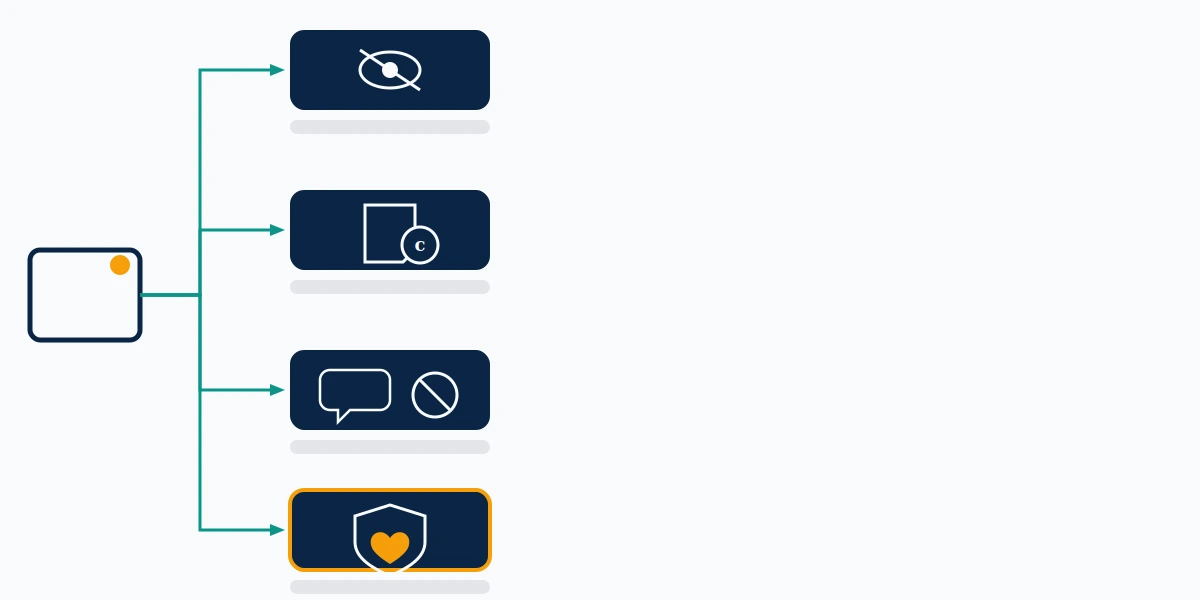
Those questions are not bureaucratic padding. They route your complaint to a different reviewer with different authority, which is why this form succeeds in cases where the in-app flow returns nothing.
Reporting from inside the app
That in-app path still matters, mostly for speed. Open the post, tap the three dots at the top right, choose Report, then pick the category that matches the violation rather than the one that matches your feelings. Your category choice is the policy the reviewer tests against, a mechanic our full walkthrough of Instagram's report menu covers across all five reportable surfaces. Posts designed to mock or humiliate you belong under Bullying or harassment, which is usually the category that survives review, and how to report harassment on Instagram breaks down the six routes available, including the one for people with no account at all.
The out-of-app form, and why it is different
You do not need an Instagram account to use the privacy form.
It matters enormously for people who deleted the app years ago and only heard about the post through a friend, and it matters again once you have been blocked, since the form is not tied to your login and a block does not remove your standing to complain about content depicting you. Anyone who has searched someone posted a picture of me without my permission on Instagram and then given up at the three dots is exactly who this form exists for. One constraint to plan around: Meta requires a minor aged 13 or over to submit the request themselves, so a parent filing for a fifteen-year-old is usually told to have the teenager file instead.
How to report someone on Instagram for using your photos
This is a genuinely different problem, and conflating it with the one above is the most expensive mistake in this whole area. Learning how to report someone on Instagram for using your photos assumes you own the photos. Sometimes you do — a portrait you shot, a product image from your own feed, a picture you took of yourself. Then Instagram's copyright form is the correct instrument, and our DMCA takedown walkthrough covers which of Meta's several copyright forms applies and what happens after you file.
Two things about that route deserve saying out loud. Copyright claims are not confidential the way ordinary reports are: Meta passes your name and contact details to the person you reported, because a counter-notice system requires an identifiable claimant.
And a knowingly false claim of ownership carries real legal exposure under US law. Nor will we file one on your behalf, which is part of what the limits of what removal work can promise sets out.
Who owns the copyright when someone posted a photo of me on Instagram?
Almost certainly not you. This is the single most useful thing on this page, and virtually no competing guide says it: the copyright in a photograph belongs to whoever pressed the shutter, not to whoever appears in the frame. According to the US Copyright Office, copyright protects the original photograph, not the subject of the photograph, and the subject of a photograph generally has nothing to do with ownership of the copyright in it (copyright.gov). Even paying a photographer does not transfer it; that requires a signed written assignment.
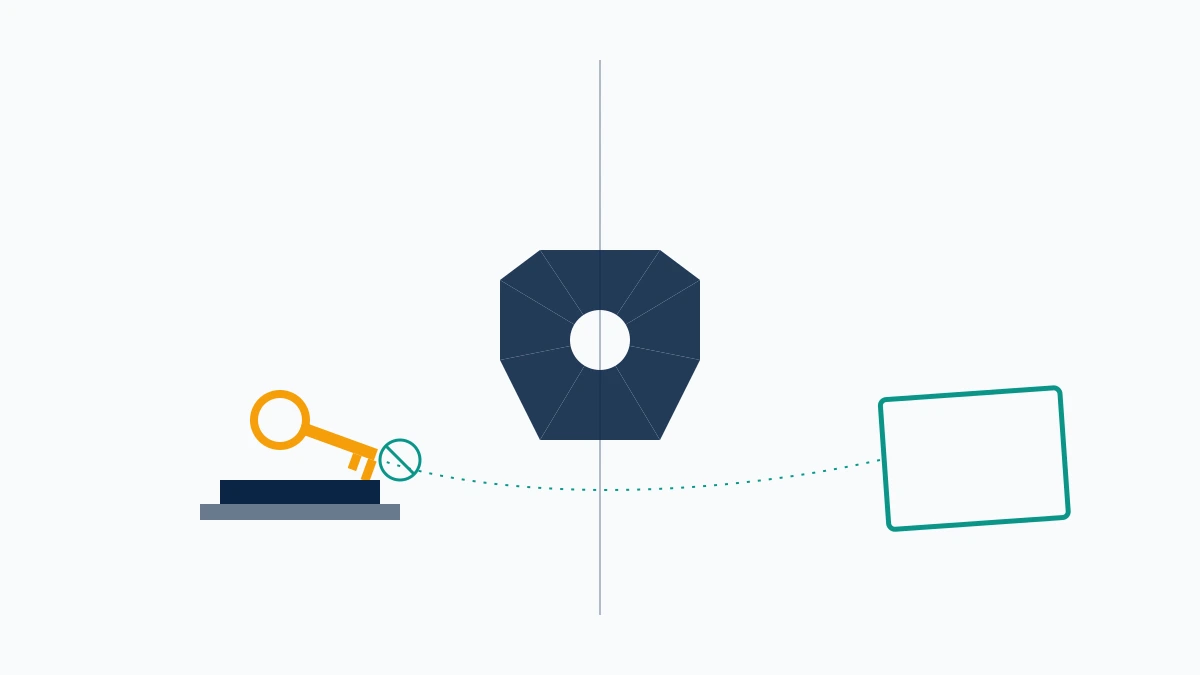
So when someone posted a photo of me on Instagram and a friend took that photo at a party three years ago, the friend owns it. Filing a DMCA notice yourself would be a false claim of ownership, and it would fail on the merits anyway. Your route is the privacy one described in the section above. Copyright belongs to the photographer, who can pursue it if they are willing.
Practitioner note. Most image-removal enquiries reaching my desk through 2026 arrive already framed as copyright problems, and most of them are not. Consider the client photographed at a wedding, the executive snapped at a conference, the person whose holiday picture was reposted by an ex: none of them owns the file. Reframing those as privacy or harassment complaints before filing costs nothing. Refiling after a rejection costs weeks, because a closed report does not reopen. If you are unsure which category yours belongs in, tell us what happened and we will say honestly which route applies, including when the answer is that you do not need us at all.
When someone posted a picture without my permission and it crosses a line
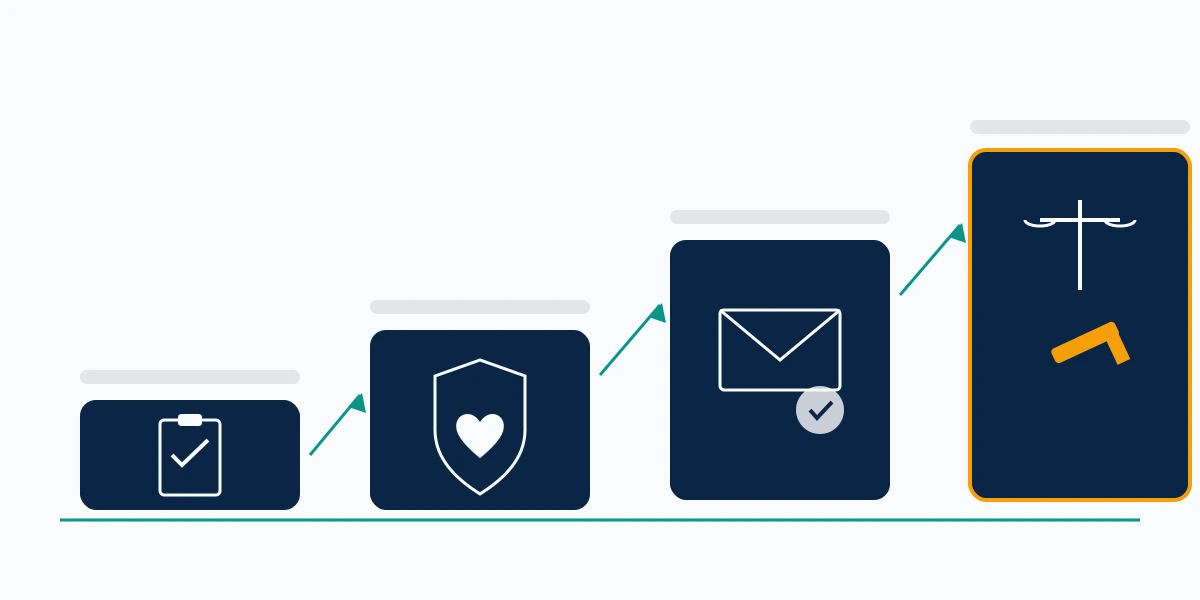
Some images stop being a privacy question and become something more serious, and the escalation path changes completely. Any picture carrying your home address, workplace, or phone number is a doxxing complaint rather than an image complaint, judged under different rules about who may file, and our read on X's 2026 privacy-violation policy shows how differently two platforms treat the same disclosure. Once a stolen picture is fronting a catfish or romance-scam profile, Scam or fraud outranks any image category, and our six-surface scam-reporting breakdown covers who else needs telling the same day.
If the images are intimate, or if someone is demanding money
This has its own law now. Signed in May 2025, the TAKE IT DOWN Act requires covered platforms to remove non-consensual intimate imagery — including AI-generated and digitally altered images — within 48 hours of a valid request. Enforcement of that obligation began on 19 May 2026, with civil penalties running to $53,088 per violation, and the FTC operates a complaints site at TakeItDown.ftc.gov for platforms that ignore valid requests. Stop replying if money is being demanded, keep every message, and treat the situation as extortion rather than a moderation dispute. Paying is what converts a single demand into a recurring one.
Someone posted a picture of my child on Instagram without my permission
Parents land here with the highest urgency of anyone, and they deserve straighter answers than the category usually gets. Start with the honest one: no general law requires another adult to ask before photographing your child in a public place, and Instagram will not remove an ordinary photograph simply because a parent objects. What Instagram does have is the routing described earlier — the privacy form's "child" branch, and its separate question about whether the child is under 13, which pushes the complaint toward a queue that treats minor safety differently from an adult privacy dispute.
When the poster is another parent, a school, or a club
Most of these cases are not malicious. Someone's team photo, a birthday party, a classroom group shot: the poster genuinely did not think to ask. Asking directly resolves a large share of them within a day, and it costs you nothing to try before filing anything.
When the relationship makes that impossible, the privacy form is the fallback. Schools and organised clubs in the UK and EU carry an additional obligation, because a child's image is personal data and a parent can ask for its erasure directly from the organisation rather than from Meta.
When it stops being a privacy problem
If the content is sexual in nature, or the account collecting it appears to be targeting children, this is not a reporting question and it is not ours to handle. Contact the National Center for Missing & Exploited Children's CyberTipline and your local police. Neither of those is work we take or charge for, and any service offering to make it disappear for a fee is exploiting you at the worst possible moment.
Parents searching in a panic are the most heavily targeted group in this entire market, which is why spotting a fake removal or recovery service is worth ten minutes before you pay anyone anything. Reposting is the other thing to plan for. If someone posted a picture of my child without my permission and the image has already travelled, our route-by-route Reddit removal guide covers the platform where these images most often resurface.
What changes when someone posted a video of me on Instagram without my permission
Nothing changes in the policy analysis. The practical problem is different. Video carries far more identifying signal than a still: voice, gait, location, the people around you. So the same clip clears the bar for a privacy or harassment finding more often than a photograph of the same moment would. Reviewers also have to watch it, which introduces a delay that still images do not have.
Stories, Reels, and the window that closes
A Story disappears after 24 hours. A screen recording of that Story does not. This asymmetry is what trips people up: by the time the removal process is moving, the original has expired and your evidence is gone, while copies made by other viewers persist indefinitely. So capture first. Screenshot the post, the profile, the URL, and the timestamp before you report anything, because a report that Meta closes leaves you with nothing to escalate if you did not keep a record. Reels behave like ordinary posts and stay up until removed.
Someone posted a video of me on insta and it has spread to other platforms
This is the situation that actually costs people money, and it is where a single-platform report stops being enough. Content that travels does not travel randomly. Clips taken from Instagram surface most often on TikTok, then Facebook, then X, then the messaging networks, and each one runs a separate queue with its own evidence requirements.
Once the clip has been reposted to build a fake profile of you, our three-route TikTok guide covers the one route that accepts identity documents. On Meta's other network the queues split again between profile fakes and Page fakes, with Facebook asking for ID where Instagram does not, and our four Meta routes and honest timelines sets out both. Anyone without an X account has exactly one way in, which is the form that reaches the authenticity queue. And stolen images are the raw material for fake Telegram profiles, where nothing resembles Meta's process at all; when your photos resurface on a Telegram profile covers the bot and the abuse address that work there.
What the law actually gives you in the US, the EU, and the UK
Jurisdiction changes the answer more than any other factor, and the guides ranking for these searches are almost uniformly silent on it. In the United States there is no federal right to control your own image. What exists is a patchwork: state right-of-publicity statutes that mostly protect commercial use rather than personal posting, intrusion-upon-seclusion claims that require a reasonable expectation of privacy, and defamation where the post carries a false statement. A photograph of you at a public event usually fits none of them.
Europe's position is materially stronger. Under Article 17 of the GDPR, a data subject can require erasure of personal data without undue delay on several grounds, and a photograph that identifies you is personal data. That right runs against the platform and, separately, against any organisation that published the image. Britain retains an equivalent right post-Brexit. This is the work our reputation practice does most often, and the ex-platform team behind these guides includes people who processed these requests from the other side of the desk.
What we will and will not do about it
We will tell you which route applies before you file, because filing on the wrong ground is the failure mode we see most. Our team prepares and submits privacy and harassment complaints, escalates erasure requests where a jurisdiction supports them, and handles the multi-platform version when a clip has already spread. Clean cases typically take 24 to 72 hours to prepare. Once the problem has reached search results rather than just the platform, suppression work runs 90 to 180 days, and we say so at the outset rather than at the invoice.
Here is what we will not do. We will not guarantee removal, because Instagram lawfully leaves up content that breaks no policy no matter who files or how well. No copyright notice gets filed on your behalf for a photograph you did not take. We will never ask for your password, and any service that does is either incompetent or harvesting accounts. CSAM, terrorism, and active law-enforcement matters sit outside what we handle. Nor will we sell you a case we do not believe is winnable, and a fair share of enquiries end with us saying the honest answer is that no notice will help.
One practical warning before you file. People who report frequently sometimes get mass-reported in return, and a wrongly restricted account is its own problem with a closing appeal window; appealing an Instagram suspension covers that window. One separate and duller risk is worth knowing about too: people who go after your images often go after your accounts next, and the six-digit login code is the usual entry point, which is why when the login code stops arriving is a useful thing to have read before it happens rather than after. If the fallout reaches your own account, our Instagram recovery service is the assessment to ask for, and what we actually take on lists the rest.