Is a TikTok DMCA takedown a separate filing from the copyright report?
A search for a TikTok DMCA form assumes a second, more legal door exists somewhere behind the everyday Report button. There is no second door: a TikTok DMCA takedown is the copyright infringement report, filed through one web form. On the form itself, the heading reads Report copyright infringement, and none of the fifteen headings in TikTok's policy mentions DMCA. Its Intellectual Property Policy, in force since April 26, 2025, instead says the US Digital Millennium Copyright Act and similar laws abroad define what a compliant notice must contain, and it tells rights owners to supply everything the online Copyright Infringement Report form requests (TikTok Intellectual Property Policy, 2025). That makes the page at tiktok.com/legal/report/Copyright the address for any DMCA takedown request TikTok can act on, whatever the sender calls it, and a missing element hurts a filing far more than the missing acronym ever could.
Your Reputation Solution is an account recovery and online reputation firm that prepares these notices for creators and brands through TikTok's official forms. It files nothing for a client who cannot show the work is theirs, and that check comes before any drafting.
When TikTok accepts a report, the copied video, sound or photo post comes down and the uploader gets an in-app notification explaining why. Its policy adds that TikTok may give that user information about the report, and the example it names is the copyright owner's name. Repeat infringement can end an account: TikTok reserves the right to ban immediately in severe cases and to refuse the same person a new account.
That form feeds a large queue. Between July and December 2025, TikTok says it received more than 470,000 requests to act on intellectual property, counterfeits included, and removed 4.9 million items in response, most of them for copyright infringement, up from more than 400,000 requests and 3.8 million removed items in the first half of the year (TikTok Transparency Center, 2025 reports). Copyright and trademark claims travel separately, much as on Instagram, where each type of legal claim lands in its own intake under its own burden of proof.
TikTok's policy is organized the same way. It runs in two halves, copyright and trademark, each with a section for rightsholders filing a report and a section for users appealing one, while counterfeiting and the EU Copyright Directive get sections of their own.
What a TikTok copyright report can and cannot remove
A TikTok copyright report reaches original expression: the clip you filmed, a track you recorded, a photo, a piece of artwork, a script long enough to be creative. It cannot reach an idea, a trend format, a hashtag challenge or a four-word caption, because US law leaves ideas, names, titles and short phrases outside copyright (U.S. Copyright Office, Circular 33). Your face and your name are not copyright either. Those belong to impersonation and privacy reports, and Your Reputation Solution files them there rather than dressing them up as copyright.
Music splits into two rights. A song's composition and a particular recording of it are separate copyrights under US law, which a publisher and a record label can own separately, so a notice about a reused track should say whether it covers the recording, the composition or both (17 U.S.C. § 102).
What decides a filing is proof tied to the exact claim. X runs its complaint queues on claim-specific evidence rather than general credibility, as our walkthrough of X's inauthentic-behavior suspensions explains, and a TikTok copyright infringement report rests on the same two facts: this work is yours, and these exact URLs copy it.
Which TikTok IP infringement report fits what was taken?
Match the report to the infringed right: copyright for copied creative work, trademark for a misused brand, neither for your face or name. Each TikTok IP infringement report asks the reviewer a different question, and the reviewer can answer only the one your form asked. For copyright, the form asks whether you own, or represent the owner of, a specific creative work that someone else uploaded. Its trademark counterpart asks whether a registered brand name or logo is being used in a way that confuses people about who is behind the account, the video or the product. A creator who files a stolen dance tutorial as trademark, or a brand that files a counterfeit listing as copyright, has put a true complaint in front of the wrong test, and a true complaint judged against the wrong test fails on paper.
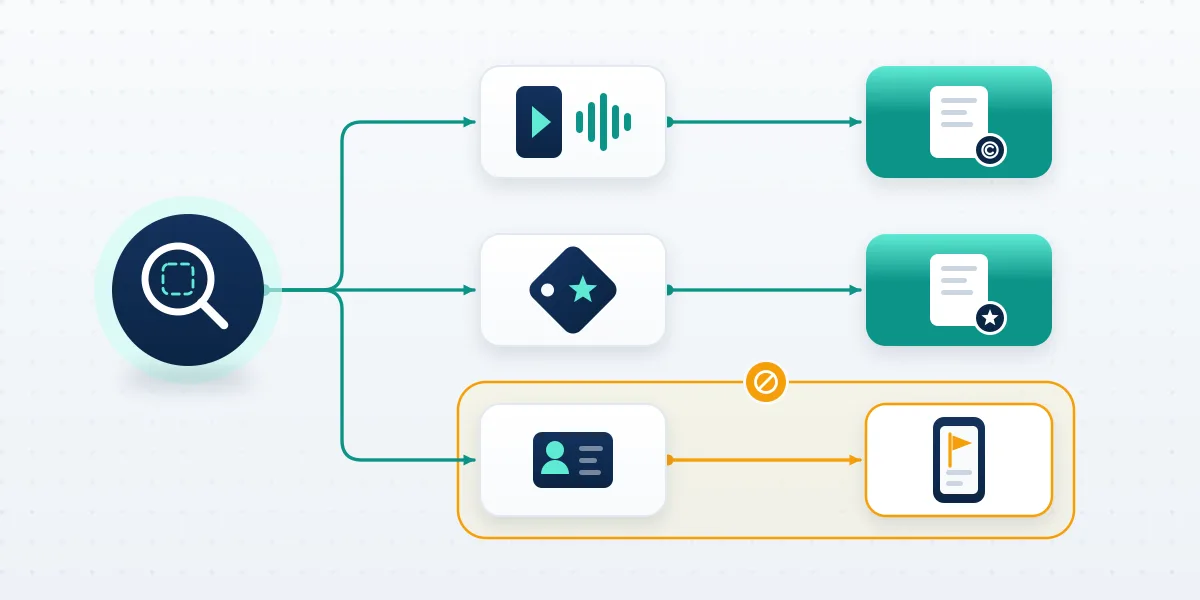
Your Reputation Solution sorts every new case by the right involved before touching a form, and the table below does the same.
| What was taken | Right involved | Where it goes | Who can file |
|---|---|---|---|
| Your video, sound, photo or artwork, reposted | Copyright | tiktok.com/legal/report/Copyright | The owner or an authorized agent |
| Your brand name or logo, used to pass as you | Trademark | tiktok.com/legal/report/Trademark | The mark's owner or an authorized agent |
| Counterfeit goods in a TikTok Shop listing | Trademark (counterfeit) | TikTok Shop Intellectual Property Protection Center | Rights owners with verified IP documents |
| Your face, name or identity | Not IP | Impersonation report, in the app or on the web | The person impersonated or a representative |
| An idea, a trend or a video format | Not protected | No IP route exists | Nobody |
Fake accounts that repost your clips can be reported down two lanes at once. One lane, impersonation, asks whether an account pretends to be you, and reporting a fake TikTok account that way never shows the account who filed; the copyright lane ignores the pretending, asks only whether the material is yours, and does not promise the same anonymity.
When the stolen asset is your face rather than your footage, TikTok's impersonation routes are the right door, because an IP form helps only when a registered mark or an owned work is in play.
On TikTok reporting trademark infringement runs through the second form in that table, and it needs a registration that copyright law never requires for a takedown notice. X splits the same work differently: a report there is tested only against the reason you pick when you report a tweet, and copyright claims sit outside that menu in a form of their own. TikTok's app does carry an intellectual property option, so the choice of lane is yours to get right.
Filing the TikTok copyright report form and the trademark form
Your Reputation Solution will not start a notice without the evidence bundle below, because the work starts before the form opens. Gather the original file with its creation date, a link to where you first published it, and the URL of every infringing video, because the form needs to know which uploads copy you, not merely which account does. Screenshot each copy with its view count and posting date visible, since an uploader can delete a video the moment a notice lands and your record should outlast theirs. Keep all of it until the matter is closed; a channel owner who deletes their account mid-dispute loses the evidence too, as deleting a YouTube channel during a copyright dispute shows. US law does not require a registered copyright to send this notice, though a certificate answers the ownership question before anyone asks it.
How to file a TikTok copyright infringement report on the web
- Open the TikTok Report copyright infringement page at tiktok.com/legal/report/Copyright. It loads without a TikTok login.
- Answer the first question, "What issue are you having?", with the option describing your own work being copied. Remaining fields open once you choose.
- Identify yourself as the copyright owner or as someone authorized to act for the owner, using contact details you are comfortable having reach the uploader.
- Describe the original work and link to the place it was first published.
- Paste the URL of each infringing video or post, not the profile that posted them.
- Complete the signature and the sworn statements, then submit.
- Save a copy of everything you entered, and use an inbox you check daily, because that address is how TikTok can reach you about the report.
Expect a decision on the specific URLs you listed, which is why step 5 carries more weight than any other.
What the TikTok copyright infringement form collects
Your Reputation Solution drafts every notice against the six elements in section 512(c)(3) of the Copyright Act, whatever labels a platform's form happens to use (17 U.S.C. § 512):
- A physical or electronic signature of the owner or the person authorized to act for them.
- Identification of the copyrighted work, or a representative list when several works are copied.
- Identification of the infringing material with enough detail to locate it, which on TikTok means the video URLs.
- Your contact information: address, telephone number and, where available, an email address.
- A statement that you believe in good faith the use is not authorized by the owner, its agent or the law.
- A statement that the notice is accurate and, under penalty of perjury, that you are authorized to act for the owner.
Telegram shows why that discipline pays off: it runs no copyright form at all, so only a Telegram copyright infringement report built to those six elements holds up, and the same completeness makes a TikTok notice harder to set aside as too vague to act on. Fair use enters at the good-faith line, because the Ninth Circuit held that a rights owner must consider fair use before sending a takedown (Lenz v. Universal Music Corp., 9th Cir. 2015).
The TikTok trademark report form, and where TikTok Shop fits
The TikTok trademark report form at tiktok.com/legal/report/Trademark follows the same pattern with a heavier ownership test. A TikTok trademark infringement report rests on a registered mark, so expect to supply the registration number and certificate, the infringing URLs and an explanation of how the use confuses people about who stands behind an account or a product. In practice, the TikTok trademark infringement form handles user content and account details such as a username. It is not a tool for a name you never registered. Usernames sit in trademark territory on Meta as well: once someone deletes a Facebook account and the handle comes loose, the only formal route to reclaim it runs through a trademark claim.
Counterfeits sold through TikTok Shop take a separate path, and Your Reputation Solution can file there as an agent once a brand grants that role inside its account. Rights owners verify their IP documents in the Intellectual Property Protection Center, then file and track notices inside it, and TikTok says it processed nearly 1.2 million requests there between July and December 2025 (TikTok Transparency Center, July–December 2025). Buyers holding no registration use the ordinary counterfeit report instead, covered in how to report a TikTok Shop seller.
Filing from the app instead
Inside the app, the route is shorter and narrower. Press and hold the video, or tap Share, then Report, and choose Counterfeits and intellectual property; the Intellectual property violation branch that follows is meant for rights owners and asks for a registration certificate (TikTok Help Center). For a copied video with no registered mark behind it, the web form is the cleaner route, because it is built around a description of the work and the infringing URLs. Buyers who only want a fake product flagged should stop at the counterfeit option. Report any copy while it is still up, since a deleted video leaves no URL for either route to act on. LIVE streams are reported the same way, from the Share menu while they are running.
Not sure which lane your case belongs in? Your Reputation Solution reviews the evidence, tells you whether copyright, trademark or an impersonation report fits, and files through TikTok's official forms. We never ask for your TikTok password. Start a free case check.
Is there a TikTok DMCA email, and what does the uploader see?
Yes, though TikTok's policy never mentions it: TikTok Inc.'s designated DMCA agent receives notices at [email protected]. The address comes from the US Copyright Office's DMCA Designated Agent Directory, where TikTok Inc. names the TikTok Intellectual Property Team at 5800 Bristol Parkway, Suite 100, Culver City, California, in a designation active since January 31, 2025 (DMCA Designated Agent Directory, checked September 2026). Section 512(c)(2) makes a host publish that agent to keep its safe harbor, which is why a TikTok DMCA email exists even though the policy page routes everyone to the web form. Use it when the form cannot carry your case, such as a signed notice from outside counsel that already exists as a document, and write it as a legal notice carrying all six elements. Similar logic runs through deleting an old Twitter account you cannot access, where a request only works once it reads as a legal request rather than a support ticket.
Any other address claiming to be TikTok's copyright desk deserves suspicion, which the scam section below takes apart.
What the uploader is told
The removal notification is the uploader's only official signal, and it is also the door to their appeal. A TikTok DMCA report is never fully anonymous for the rights owner: because TikTok's policy lets it share the owner's name with the uploader, file under a business or brand name when you have one, and give a business address where the form asks for one. Your Reputation Solution files under the client's business name whenever one exists, for exactly that reason.
Appeals, counter-notices and the 10-to-14-business-day window
An uploader who believes they had the right to post appeals from that notification inside the app, and TikTok's policy says it may reinstate the content. In US law, the formal version is a counter-notice under section 512(g): once a host receives a valid one, it restores the material 10 to 14 business days later unless the person who sent the takedown reports filing a lawsuit. TikTok publishes no clock of its own, so read the statutory window as the outer frame rather than a promise. It sets no deadline for the first review either, and the three-business-day figure several guides repeat cites no TikTok source. After a valid counter-notice, a rights owner's only remaining lever is a court action, which is exactly why no notice should be filed on a guess.
YouTube, by contrast, publishes its exits, and a YouTube copyright strike can also be cleared by a retraction from the claimant or a valid counter notification. TikTok's policy describes only the in-app appeal. Rights owners and uploaders in the EU meet one more section of it, headed EU Copyright Directive, because Article 17 of Directive (EU) 2019/790 makes content-sharing platforms obtain licenses or show best efforts to keep notified works off their service (EUR-Lex).
Strikes and account bans
The TikTok copyright infringement policy sets no strike count. It says TikTok has adopted and reasonably implemented a repeat-infringer policy, under which an account that infringes repeatedly can be banned, a severe case can be banned at once, and the person behind a banned account can be refused a new one. Any three-strike figure you read in a guide comes from that guide, not from TikTok. Across US platforms the logic holds, because repeat-infringer termination is a condition of the safe harbor, so a run of upheld notices can end an account.
When Your Reputation Solution handles the uploader side, the first question is whether the appeal rests on ownership, a license or fair use. An appeal that says only that the video was popular, or that the caption credited the creator, answers none of them, because credit is not permission under copyright law. Appeals worth filing attach something checkable: a license email, a receipt for the track, or an original project file dated before the claimant's upload.
When the content isn't yours, or the copyright email is fake
Two situations send people to the copyright forms by mistake: the work belongs to someone else, or the "copyright notice" they received never came from TikTok. Each has a right answer, and neither answer is a faster form.
How to report stolen content on TikTok when you don't own it
How to report stolen content on TikTok depends on whose it is, because only the owner of a work, or someone the owner has authorized, can send a copyright notice. For a bystander, the job is to reach the owner rather than to file. Send the creator the URL of each copy, a screenshot showing the account and posting date, and a link to the original, then let them decide whether to file. If the creator wants help, they can authorize you in writing, and that written authority is what lets an agent sign the sworn statement honestly. Deleting anything yourself never touches a copy someone else uploaded; a repost is a takedown request with a far higher bar than a delete button, a point the Snapchat deletion guide makes plainly. Your Reputation Solution takes these cases only with the owner's signed authorization on file.
A fan who searches "report copyright infringement TikTok" on a creator's behalf still cannot sign the notice, but the ordinary Report button stays open when a copy also breaks a Community Guidelines rule, such as spam or impersonation, and those reports are anonymous. Creators who answer theft by closing their own profile make it worse, since deleting a genuine Instagram account removes the real profile and leaves the copies standing.
The fake TikTok copyright infringement email
A TikTok copyright infringement email that warns of a violation, sets a deadline and links to a sign-in page is phishing, not a notice. TikTok's policy describes removals reaching uploaders as in-app notifications, with appeals starting from that notification, so a message pushing you to log in through an outside link has skipped the only channel TikTok documents. Open the app and check your notifications directly.
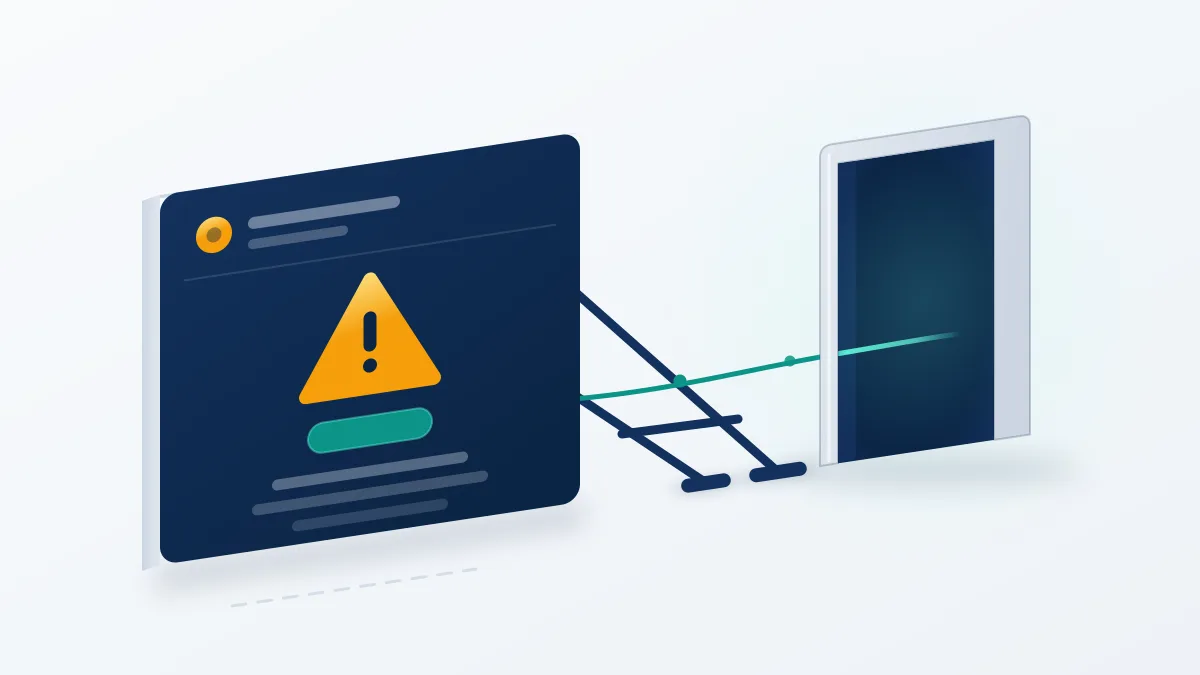
This lure is not unique to TikTok. On Instagram, the fake copyright violation message works the same way, while genuine intellectual-property complaints stay dull paperwork filed through platform forms.
Offers that arrive after you file deserve the same scrutiny. Test any paid service the way the Telegram scam guide vets report services: a stated price band, no request for a password or code, no guarantee, and a written list of what it cannot do.
What we will not file, and why
Your Reputation Solution prepares and files the report; TikTok's intellectual property team decides whether anything comes down, and nobody outside TikTok can promise that result. We will not file a copyright or trademark claim for content a client does not own or represent, and we will not use one to remove criticism, a review, parody or commentary that happens to show a client's work. Under section 512(f), a knowing misrepresentation of infringement exposes the sender to damages, costs and attorneys' fees, and the Ninth Circuit's fair-use ruling puts the burden on the sender to think before filing. We never ask for a TikTok password or a login code, we never sell priority or a guaranteed removal, and we tell a client plainly when a counter-notice has moved the dispute toward court. Our disclaimer sets out the full limits.
That line holds in account disputes too: the Google YouTube account recovery guide rules out false copyright or privacy complaints as a way to dislodge a channel, and a TikTok case gets the same answer.
Section 512(f) cuts both ways: an uploader who knowingly misstates that material was removed by mistake carries the same liability, so a counter-notice deserves the care of the notice it answers, since it carries its own statement under penalty of perjury.
Some requests have no filing at all. A video the uploader already deleted leaves nothing to remove, an idea or a trend was never protected, and a dispute a valid counter-notice has sent toward court belongs to the court. In those cases the honest answer is a documentation plan, not a report: dated captures, the original files and a log of every copy.