
Three routes into TikTok's impersonation queue, and how to pick one
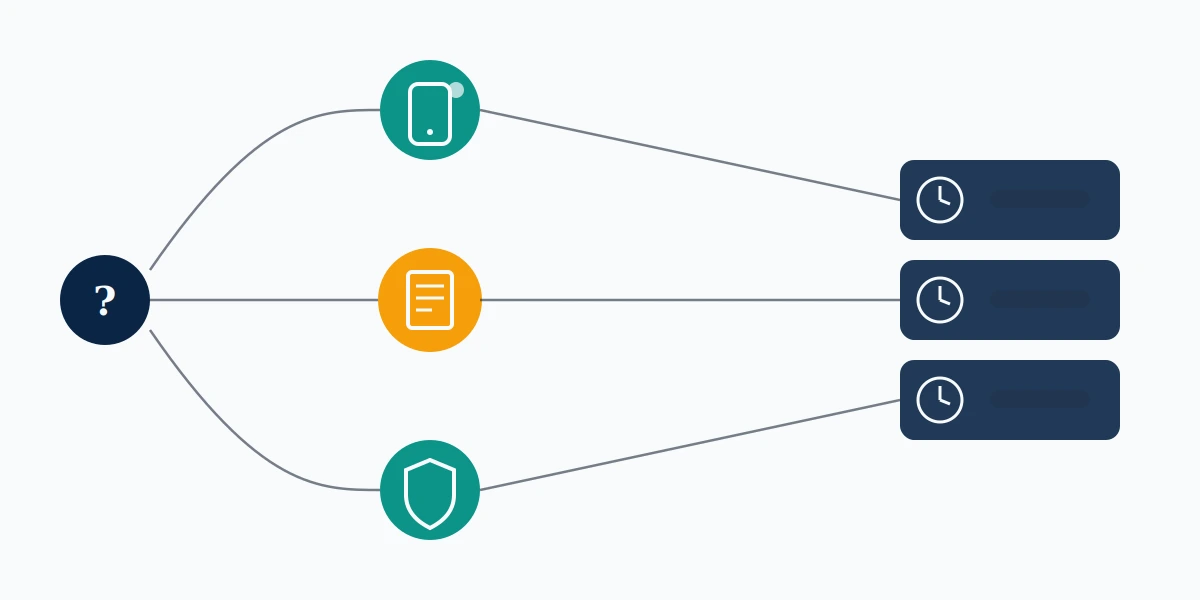
How to report impersonation on TikTok is really a routing question. There are three doors. They are read by different teams, they ask for different things, and picking the wrong one drops your case into a queue that was never built to decide it.
| Route | Who it is for | What it asks for | Typical decision window |
|---|---|---|---|
| In-app report | Anyone with the app open, including bystanders | A category, nothing else | 24 hours to 5 days |
| Impersonation web form | The person or brand being copied | Government ID or business registration | 3 to 10 days |
| Intellectual property form | Trademark and copyright owners | Registration number, proof of ownership | 5 days to several weeks |
In-app reporting is fast and shallow. Tapping through flags the account against a category and adds a signal to it, which is genuinely useful, and it is also the route most likely to close with no action, because the reviewer has nothing but the profile itself to work from. The web form at TikTok's legal reporting centre is slower and much stronger: it is the only route that lets you attach identity documents, and identity is the entire question in an impersonation case. Intellectual property is a different animal again. Trademark ownership is what it turns on, so the form helps when a registered mark is being used and does nothing at all when the stolen asset is your face.
One test decides whether you have a case at all. TikTok's rule turns on deception, not resemblance. An account that labels itself a fan page or parody, uses a different profile picture, and does not answer people as though it were you sits inside policy under Integrity and Authenticity, however irritating you find it. An account that copies your handle, your photo and your bio, then messages your followers about a giveaway, does not. Most declined reports are declined on exactly this line, and the platform's own impersonation policy explainer draws it the same way. Before you write anything, decide which side of it your case falls on. If you want the wider map of what TikTok will and will not remove, the category you choose matters far more than the wording of your complaint.
If the same person has cloned you across platforms, and in our casework they usually have, the Instagram version of this problem runs on four routes rather than three.
How to report an impersonation account on TikTok from the app
Screenshot everything before you touch the report button. When a report succeeds the profile disappears and your evidence goes with it, which feels like a win until you need that evidence for a bank dispute or a police report a fortnight later. Capture the profile page with the handle visible, the follower count, three or four posts, and any message the account has sent to somebody in your name. Save the profile URL as text, not only inside a picture, because a screenshot of a URL cannot be pasted into a form. Date each file as you save it. Of the impersonation cases that reach our desk already reported, close to a fifth arrive with the fake profile gone and nothing captured, which leaves the client unable to support a chargeback, an employer conversation or anything a lawyer could work with. Ten minutes of screenshots first is the cheapest insurance in this entire process.
Then file:
- Open the impersonating profile.
- Tap the share arrow in the top right, then Report.
- Choose Report account.
- Select Pretending to be someone.
- Pick who is being impersonated: Me, a celebrity or public figure, or a business or brand.
- Submit, then screenshot the confirmation screen and its reference.
Menu wording moves. Our team re-walked this path on 11 August 2026 on both iOS and Android, and if the labels on your build differ, follow the branch that names impersonation or a fake account rather than the one that names spam. Spam routes to an automated classifier. Impersonation routes to a person.
Filing once, properly, beats filing five times. TikTok deduplicates repeated reports from the same reporter against the same account, so a friend-brigade of identical flags adds noise rather than weight. There is one exception worth knowing: different people reporting different specific harms does help, because each report carries its own evidence instead of repeating yours. Your follower who received the scam message should report the message they received. You should report the stolen identity. Those are two facts, not one fact said twice.
Reporting from a desktop browser
Log in at tiktok.com, open the profile, and use the three-dot menu beside the follow button. Desktop carries fewer categories than the app, and on some accounts the impersonation branch is missing entirely. When it is missing, do not settle for the nearest available category. Go to the web form instead, which is the stronger route anyway, and which you can use without a TikTok account at all. That last detail matters more than it sounds: if the impersonator has already got your real account taken down through a report of their own, the web form is still open to you.
The Me, celebrity or business field, and what to write in the description box
Step 5 above is the one people get wrong, and it decides which queue reads your case.
Choose Me only when you are the person in the photos. Choose celebrity or public figure when you are filing on behalf of someone with a public profile, including when you are their manager or their agency. Choose business or brand when the copied asset is a company name, a logo or a shopfront rather than a face. Filing an agency client under Me is the most common error we see from marketing teams, and it parks a brand case in the personal-identity queue, where nobody will ever ask for the trademark certificate that would have settled it in one round. None of this is a formality, and the box is not a place to describe how you feel about the account. Each option routes to reviewers holding a different checklist, and each checklist asks for a different document. Pick the option matching the evidence you can actually produce, then attach that evidence in the same submission rather than promising to send it on later.

Next comes a free-text box, and every guide tells you to be specific without ever showing you what specific looks like. Use this shape:
My account is @yourhandle. The account at @fakehandle is using my display name, my profile photo from [date], and my bio text. It has messaged at least [number] of my followers claiming to be me, most recently on [date], asking them for [what they are asking for]. I am the person in the profile photo and have attached [ID type] as proof. I am not affiliated with @fakehandle and have not authorised it.
Six lines, no adjectives, every claim checkable. Reviewers work a queue with a fixed time per case, so the file that answers their checklist inside the first two sentences gets decided, and the file that opens with how upsetting the last week has been gets deferred to the bottom of the pile. That is not a criticism of anyone who is upset. It is simply what the queue rewards, and knowing it is worth more than any tone of voice you could adopt.
What happens after you file, and what TikTok actually does
Reports do not have two outcomes. They have four, and the first is the most common.
No action. The reviewer looked and found no breach, usually because the account is labelled parody or because your evidence never established who you are. Nothing stops you filing again with better evidence.
Forced edit. The account survives but loses the copied photo, the display name or the bio. This happens more often than people expect, and it is frequently enough to end the harm.
Temporary suspension. The account is restricted while its owner is asked to verify themselves.
Permanent removal. Reserved for clear, deliberate impersonation, usually with a financial angle or a repeat history behind it.
Anyone working out how to report someone on TikTok for impersonation is hoping for the fourth outcome and will most often get the second. Better to know that before you file than after.
On timing, across the 214 TikTok impersonation files our team handled between January 2025 and July 2026 the median evidence-complete case closed in 5 days, the fastest quarter inside 48 hours, and the slowest tenth ran past three weeks (our internal case records as of 12 August 2026). Roughly a third needed a second submission after a first-pass decline, and almost every one of those had gone in without an identity document attached. Two variables moved those numbers more than anything else. Cases naming a specific financial harm, with a dated message to prove it, closed faster than cases describing general distress. Cases filed through the web form closed faster than identical facts filed in-app, by a margin of several days. Neither finding is a trick, and neither is a private channel anyone can sell you. Both simply reflect that a reviewer decides on what sits in front of them, and a thin file gives them nothing to decide with.
In the Dublin moderation queue I sat in before joining YRS, an impersonation ticket was a two-minute decision. It turned almost entirely on whether the reporter had made the identity link obvious. Not on how many people had reported the account. Not on how long the complaint ran. That is the part nobody outside the queue quite believes, and it is the part that changes outcomes.
Reset one expectation while you wait. Reporting an impersonator does not delete their account for you, and no route exists by which a member of the public can delete somebody else's TikTok account. You are asking a moderator to reach a decision. You are not pressing a button.

Filed once and heard nothing back? Send us the fake profile URL and a screenshot of your confirmation reference. Our team reviews TikTok impersonation cases free for the first hour, and we will tell you plainly whether a second filing is worth your time or whether the route was wrong from the start. Send it to our TikTok desk.
When the report is declined, or the impersonator returns under a new handle
A decline is a routing signal, not a verdict. Read which route declined it. An in-app report that closed with no action tells you almost nothing, because the reviewer never saw a document; those same facts submitted through the web form with ID attached are a materially different case, and refiling there is the normal next move rather than an appeal.
Where a registered trademark is involved, change routes entirely. The intellectual property form is read by a team that assesses ownership rather than identity, and a certificate number settles in one round what a personal-identity claim can argue about for three.
Repeat impersonation is the harder problem. Take down @yourname_official and @yourname.official appears the following week, built from the same scraped photos. Each new handle needs its own report, because there is no standing order and no blanket block against a person. What shortens the cycle is closing the supply. Make the real account's photos harder to lift, and claim the obvious handle variants yourself before somebody else does, which is why reclaiming a squatted TikTok handle usually belongs in the same week as the takedown rather than six months after it. Where clones keep arriving, log every handle, every date and every report reference in one running document. A pattern of five removals against a single target reads very differently to a reviewer than a sixth isolated complaint, and that same document is the first thing a lawyer will ask for if this ever stops being a platform problem.
Is impersonation on TikTok illegal, or only against the rules?
These are two separate systems, and confusing them wastes weeks. Every impersonation account breaches TikTok's own policy, which is what a report addresses. Whether it is also a crime depends on where you live and what the account did. Using someone's identity to obtain money is fraud almost everywhere. Impersonating a police officer, a doctor or a government body carries its own offences in most jurisdictions. Making a fake profile of a private individual, on its own, often is not criminal at all. A platform report and a police report are not alternatives to each other, and where money has changed hands you want both running at once. Reporting the same thing on X splits along an identical line.
What no bot, ban service or paid takedown will do for you
Search results around this topic are thick with tools promising to remove an impersonator for a fee, and the mechanics do not survive contact with how the queue works. Volume is not evidence. TikTok collapses repeated reports against the same account and weighs what is attached to them, which is why mass report bots do not move an impersonation case in the direction their sellers describe, and why the accounts doing the reporting can collect restrictions of their own. Paid TikTok ban services sell an outcome they have no power to deliver.
Here is what we will not do, said plainly, because this category has earned the suspicion you brought to it. We never ask for your TikTok password, and no legitimate firm needs it to file an impersonation report. Nor do we file trademark claims on marks nobody owns. Retaliatory work is refused outright, which means we turn down anyone asking us to report a rival, an ex or a critic as an impersonator when no impersonation is happening. Filing a false report is a violation in its own right, and it puts the account behind it at risk of restriction. Removal is not something we guarantee either, because TikTok makes that decision and we do not. Roughly a third of the enquiries reaching this desk are turned away on one of those grounds, which is a strange thing to advertise and the most honest number on this page. Our published service limits put the same boundaries in less friendly language.
What we actually do is narrower than the adverts around us. We work out which of the three routes fits, assemble the identity evidence in the form a reviewer can act on inside two minutes, file it, and escalate once when the first pass declines. If your own account was pulled down by a retaliatory report while all this was going on, that is a separate job with its own process, handled through our TikTok account recovery service.