There is no Instagram legal department, only a switchboard
Nobody sits in a room marked legal at Instagram waiting for your email.
What exists instead is a bank of intake forms, each wired to a separate review queue, each demanding a different kind of proof, and each closing your case against its own narrow policy rather than against the harm you actually described. Send the right facts to the wrong form and the rejection reads exactly like a judgement on the merits. It is nothing of the kind. It is a routing failure, and routing failures are fixable, which is the one piece of good news in this subject.
Your Reputation Solution is a reputation and account-recovery practice that prepares and escalates platform removal filings on behalf of the person the content is about. The thing our team corrects most often on an Instagram case is not the evidence a client gathered. It is where they sent it.
Meta did not invent this architecture. Facebook runs it too, which is why there is no standalone harassment desk to write to — you flag the object, not the offence. Reddit splits its routes by who holds authority to act, so a moderator report, a copyright claim and a statutory takedown travel three separate paths from the same post. Platforms converged on this design for an unglamorous reason: one legal inbox at Instagram's scale would receive millions of messages a week and read almost none of them.
The useful question, then, is never how to reach the Instagram legal department. It is which queue your particular problem belongs in, and what that queue demands before a human being looks at it.
Why the Instagram legal department email address you found is a dead end
Every Instagram legal department email address circulating publicly is defunct, invented, or somebody else's.

The address people find most often, [email protected], stopped accepting mail years ago and now bounces or vanishes without a trace. Consumer-complaint aggregators keep republishing it beside executive names and switchboard numbers, because those pages are assembled from reader submissions rather than from anything Meta publishes. Nothing on Meta's own properties offers a general legal contact address to members of the public.
That vacuum is where the fraud lives. The message announcing a copyright violation on your account and offering twenty-four hours to appeal through a link is the Instagram scam Your Reputation Solution sees most across Meta cases, precisely because it impersonates the department you have spent the afternoon hunting for. It arrives looking official. It uses the exact words you have been typing into Google. The nine patterns these messages follow are worth reading before you answer any of them, because the tell is always the destination, never the wording.
How to contact Instagram legal department without an email address
You choose a form, and the choosing is the whole skill. Impersonation, to take the most common case, has no legal channel on any major platform — it runs through the ordinary in-app report, the same way reporting a fake profile on LinkedIn does, and it stays anonymous to the person reported. Dressing it up as a legal matter slows it down.
Which Instagram legal request form matches your problem?
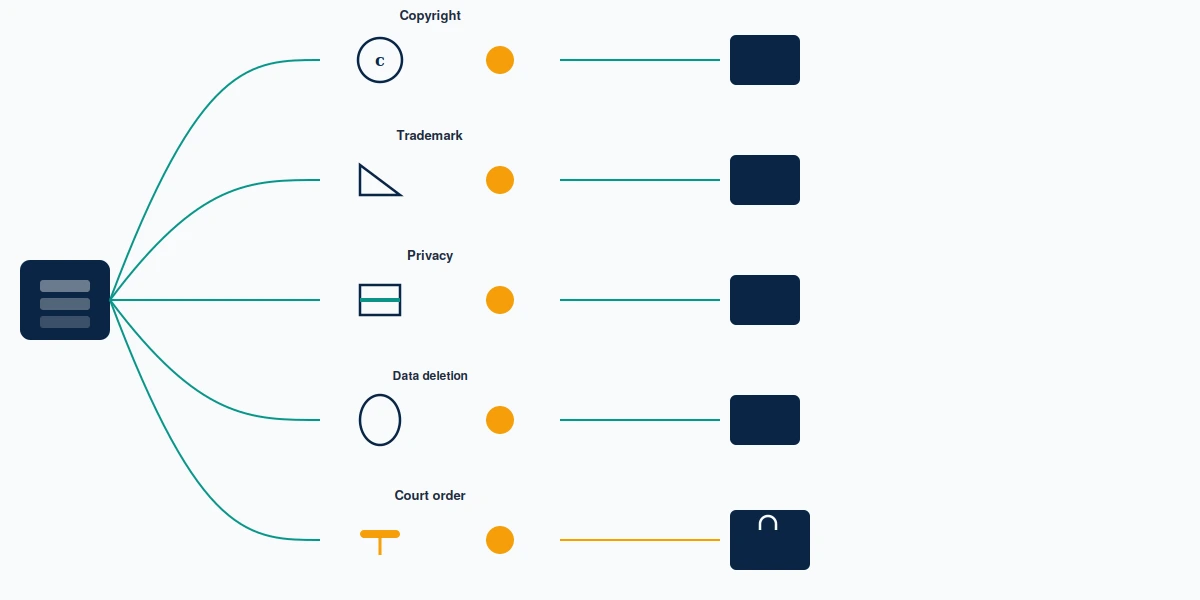
Choose by the right you are asserting, because each intake tests a different one and none will re-route your case for you.
| Your claim | Where an Instagram legal request goes | What it must show | What it can reach |
|---|---|---|---|
| You own the work that was copied | Copyright report form | Proof you hold the rights, plus the infringing URLs | The specific posts named, not the account |
| You own a registered mark | Trademark report form | Registration number and confusing use | Posts, bios, sometimes the handle |
| The content exposes you personally | Privacy violation report form | That you are identifiable and did not consent | The individual post, reel or story |
| Content is unlawful where you live | Legal Removal Request form | The law breached and why this content breaches it | Geographic restriction, sometimes removal |
| You hold a subpoena, order or warrant | Law enforcement portal, or service on Meta's agent | Legal authority and correct service | Records, and in narrow cases content |
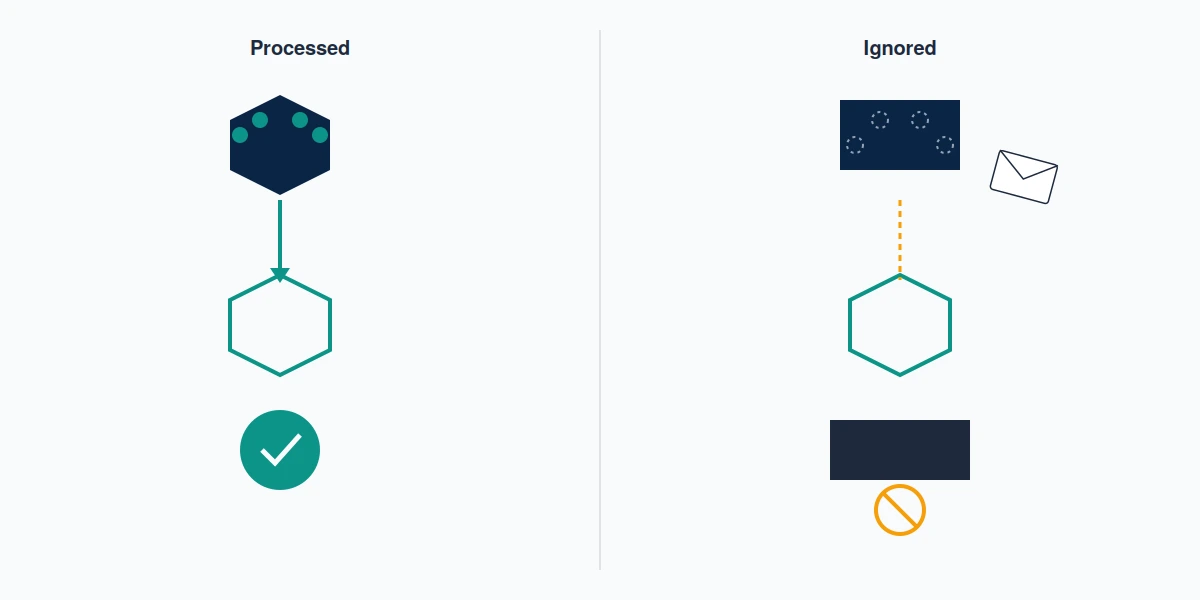
Row one is the row people misuse. Copyright is a property right rather than a grievance, and the Instagram content removal form for copyright asks whether you shot the photograph, not whether the post is unfair — what separates a claim Instagram processes from one it closes turns on that single question. Row two behaves identically across the industry: X says outright that a registered mark is the entry requirement, and Meta's trademark report form applies the same test less plainly.
Row three is the quiet workhorse. Meta's privacy violation report covers content that identifies you without your consent, and it requires you to own nothing at all. Most people filing an Instagram removal request under copyright should have filed here.
Every form in that table is free and public. Any service charging you for access to one is charging for a link. Your Reputation Solution charges for the diagnosis, the drafting and the escalation that follow, never for the URL itself, and a firm that will not draw that line for you is worth walking away from.
The Instagram legal removal request form is narrower than its name
A form called exactly that exists, and it will not do what most people searching for it need.
Meta's Legal Removal Request page is scoped to people in the European Union reporting content they believe unlawful under EU or member-state law, and the page states on its face that reporting content does not guarantee its removal. Two consequences follow, and the top ten results state neither plainly. Filing from outside the EU means this is not your form, and submitting anyway produces a slow rejection rather than a redirect. Filing from inside it usually produces a geographic restriction — the post disappears for viewers in the country whose law it breaks and stays live everywhere else.
Which is why searching for a legal removal request Instagram will actually act on surfaces this EU form first and leaves most people worse informed than when they started. The name promises a general legal channel. The scope delivers a regional illegality mechanism.
An Instagram photo removal request is the clearest casualty of that gap. Someone posts a picture of you, the word legal suggests itself, and you land here — when the route that works for an image of yourself is the privacy violation form, which asks only whether you are identifiable and did not agree. Appearing in a photograph is not itself a policy breach, so the description you write carries most of the weight.
Meta's forms carry a case as far as their own queue and no further. When one stalls, or returns rejected on a technicality, Your Reputation Solution rebuilds the filing for the correct route and escalates it — send us the case for a free review.
What an Instagram takedown request needs before a reviewer reads it
Assume about a minute of human attention, and write for that minute.
An Instagram takedown notice fails on incompleteness far more often than on merit. Reviewers work from what sits in the form. They do not open your profile, read the thread history, or reconstruct the backstory from an angry paragraph. Four things decide it: who you are, which specific content you mean, what rule or right it breaks, and what proves the link between you and the claim. Miss one and the queue closes it, because an unprovable claim and a false claim look identical from inside the review tool.
Direct links are the omission that costs most. Name an account rather than a post, and an Instagram takedown request hands the reviewer nothing to act on — account-level action rarely follows a single filing in any case. Capture the permalink of every item before you file, because the person you are reporting controls the delete button and a deleted post takes your evidence with it.
On nearly every case arriving from someone who already tried once, Your Reputation Solution rewrites the free-text description before anything is resubmitted. Emotion is not evidence. A reviewer cannot action how badly this has affected you, only what they can verify in the fifty seconds available.
One route carries a statutory clock instead of a policy one. Under the TAKE IT DOWN Act, US platforms must remove reported non-consensual intimate imagery within 48 hours of a valid request, and that is the only deadline in this landscape written into law rather than into a help page. Where no form exists at all — as across much of Telegram, where the fraud patterns outrun any reporting route — evidence and speed become the entire strategy.
Beyond that 48-hour rule, Meta publishes no turnaround for any form in the table above. Queue position is invisible from outside, and no amount of polite chasing changes it. Anyone quoting you a guaranteed removal date is quoting a figure Meta has never printed.
Worth saying plainly, because the whole cluster implies otherwise: labelling a request legal does not move it faster than a correctly filed ordinary report. Accuracy moves it. Framing does not.
Deletion request or data deletion request? Two very different asks
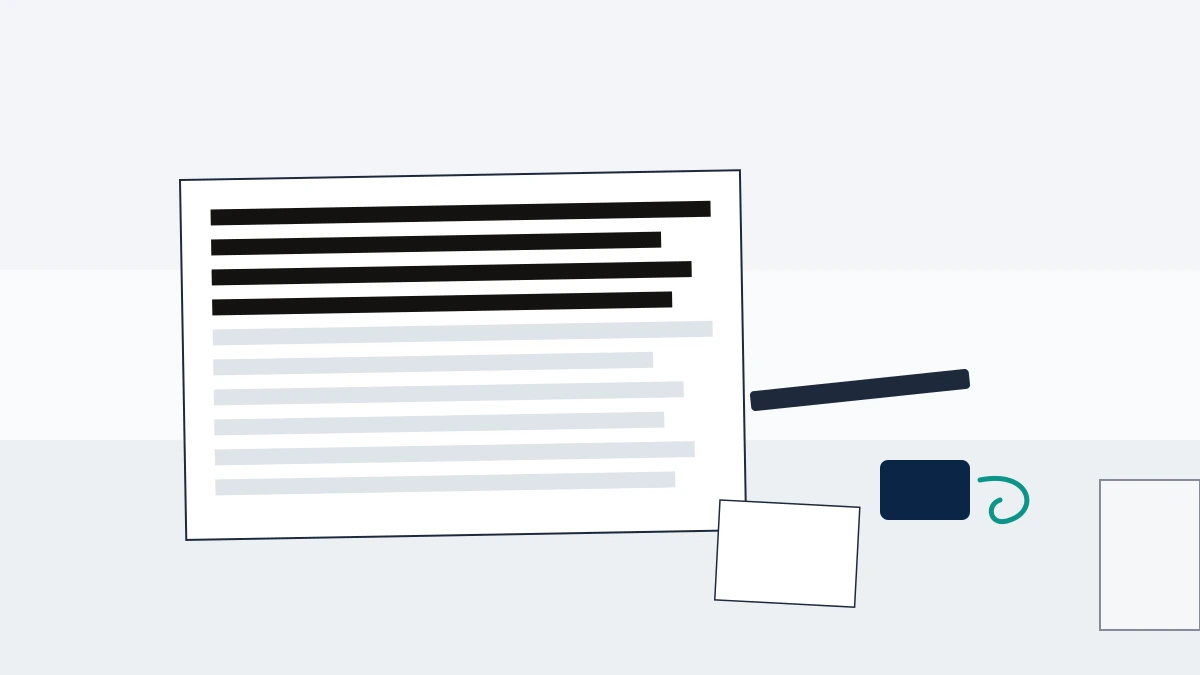
One closes an account. The other asks a company to erase what it holds about you. They are not the same request and they do not share a route.
An Instagram deletion request, in the sense nearly everyone means it, is a self-service action the account holder performs: Accounts Center, then Personal details, then Account ownership and control. Deletion runs a 30-day grace period during which signing back in cancels the whole thing, and Meta allows itself up to 90 days beyond that to clear copies from backup systems. No form, no legal argument, no third party — the full walkthrough of deleting or disabling your own account covers all of it. Aimed at somebody else's account, an Instagram account removal request becomes an entirely different animal, and it is not this one.
An Instagram data deletion request is the legal instrument. It rests on data-protection law rather than platform policy, and in Europe on the right to erasure under GDPR Article 17, which carries statutory deadlines and named exceptions that platform policy does not. What survives it is the part people miss: content other users posted about you, records Meta must keep for legal reasons, and anything already copied elsewhere. One procedural point matters more than it sounds — a data subject request is made by the data subject. Your Reputation Solution can help you assemble and time one, and cannot become the requester in your place.
The two-clock pattern is not Meta's invention either. Snapchat runs a thirty-day deactivation followed by a longer erasure window, and Telegram documents both a manual deletion and an automatic inactivity timer that behave differently from one another.
Granularity varies just as much. On YouTube, the channel, the account and a single video are three separate buttons with three separate consequences, and picking the wrong one deletes more than the person intended.
What changes when a court order arrives instead of a report
Legal authority does not accelerate a report. It opens a different door.
Meta operates a dedicated intake at facebook.com/records for law enforcement and government officials, gated by verified government email. A lawyer, a company or a private individual cannot use it, whatever a search result implies. Through it, authorised requesters can seek a 90-day preservation hold that freezes records while legal process is prepared, which is frequently the genuinely urgent step in a criminal matter.
What that process reaches afterwards is tiered, and the tiers decide everything. A subpoena reaches basic subscriber records. A court order reaches non-content records such as log data. Stored content — the posts and messages themselves — requires a search warrant. Meta's stated policy is to notify the user before disclosing their information, with exceptions where notice is legally barred or would be counterproductive, and delayed notice once any non-disclosure period expires.
Civil litigation runs elsewhere again. Nobody serves Instagram by email; process goes to Meta's registered agent, and Meta's own guidance on serving requests points to Corporation Service Company rather than to any address at Instagram. Widely republished claims naming CT Corporation appear to be out of date, so confirm the current agent of record on the relevant Secretary of State register before anyone serves anything.
If you arrived here as a paralegal hunting a records address, take this section as the reference and stop: Your Reputation Solution is not a law firm, gives no legal advice, and drafts and serves no legal process. For subpoenas, preservation letters and court orders, a licensed attorney and Meta's law enforcement guidelines are the correct sources. Where an account is gone and identity is the obstacle rather than authority, the escalation path is proof instead of argument, much as it is when recovering a Meta account without the original email.
Why most Instagram takedown notices are closed unread
Because they reach a queue built to answer a different question from the one being asked.
A privacy claim filed on the copyright form gets tested for ownership, fails, and is closed correctly by a reviewer doing the job properly. A defamation complaint filed anywhere but a jurisdiction-specific legal route gets tested against Community Guidelines, which contain no defamation rule, and closes the same way. Neither rejection tells you that you were simply in the wrong room. That silence is the design flaw at the centre of the whole system.
Filing carries a cost nobody advertises, either. Meta passes your name and address to the party you accused in a copyright claim, because the statute requires it. Exposure differs by platform and is worth checking first — who sees your name when you report a TikTok Shop seller is not the same answer. Anonymity is the default for ordinary reports. It is not the default for legal claims.
Then comes the second fight, which begins the moment the first one succeeds. Removal from Instagram removes nothing from search, and no single request clears a name from Google results once they are indexed. Third-party listings behave the same way, in that removing a business from Google Maps needs a qualifying reason rather than an objection. Your Reputation Solution scopes both fights at intake for exactly this reason, because a client who budgeted for one and met two tends to abandon the second halfway. Plan for both, or win the easy one and be ambushed by the other.
Appeal routes exist, narrowly. Meta's Oversight Board accepts a small slice of content decisions, and the EU's Digital Services Act obliges platforms to issue a statement of reasons and created certified out-of-court dispute bodies — Ireland's media regulator certified the Appeals Centre Europe in September 2024. Which platforms and case types any given body currently accepts changes over time, so check its published scope before building a plan around it.
What Your Reputation Solution will and will not file
The refusals are the useful part, so they go here rather than in small print.
We will not file a copyright claim over material you did not create. A copyright notice is a statement made under penalty of perjury, and the shortcut it seems to offer is a criminal exposure in a costume. We will not tell you a legal filing removes somebody's account, because single filings reach content while account-level enforcement follows a pattern of breaches. We claim no relationship with Meta's review teams, and nobody honestly can — no legal form on any platform deletes another person's account on request, and a service implying otherwise is selling access that does not exist.
We never ask for your password. Not for a takedown, not for an appeal, not at any point. A firm that needs your credentials to submit a form is not submitting a form.
Some things no legal channel reaches, and knowing them early saves months. Content Meta has already reviewed and upheld rarely moves on a resubmission of the same claim. Satire and newsworthy material generally survives, because the policies protect it deliberately. A request from someone who is neither the depicted person nor the rights holder lacks standing at every intake in the table above. Anything genuinely requiring a court order stays put until a court issues one.
We also decline cases whose aim is removing true, lawful and unflattering content about someone. Platforms remove material breaching their published rules or a specific law, not material that embarrasses its subject — which is why two identical-looking reports about the same post end differently. Where content is lawful, suppression and rebuilding are honest work on published timelines; removal is not, and quoting one where the other applies is how people lose money.
What our team does instead is narrower and more useful: identify the correct queue, assemble a filing a reviewer can verify inside their fifty seconds, escalate one that has genuinely stalled, and handle the search-results fallout that outlives the post. The limits of that service are set out in full, and they are worth reading before hiring anyone for this work, ourselves included.