Which report reason should you pick for a tweet?
Pick the category that names the rule the tweet actually breaks, because a reviewer only ever tests it against that one rule.
That sounds obvious until you open the menu. The three-dot flow offers a short list — spam, abusive or harmful content, inappropriate ads, self-harm, impersonation — while the X Rules sitting behind it run to seventeen named policies across three groups: Safety, Privacy and Authenticity. Your tap collapses seventeen into one. Which team sees the case, what evidence they need, and what enforcement is even available to them all follow from that collapse. Your Reputation Solution is a reputation and account-recovery firm that files platform reports for clients and logs what each category sends back, and the pattern below is the part that decides most cases before a human ever opens them.
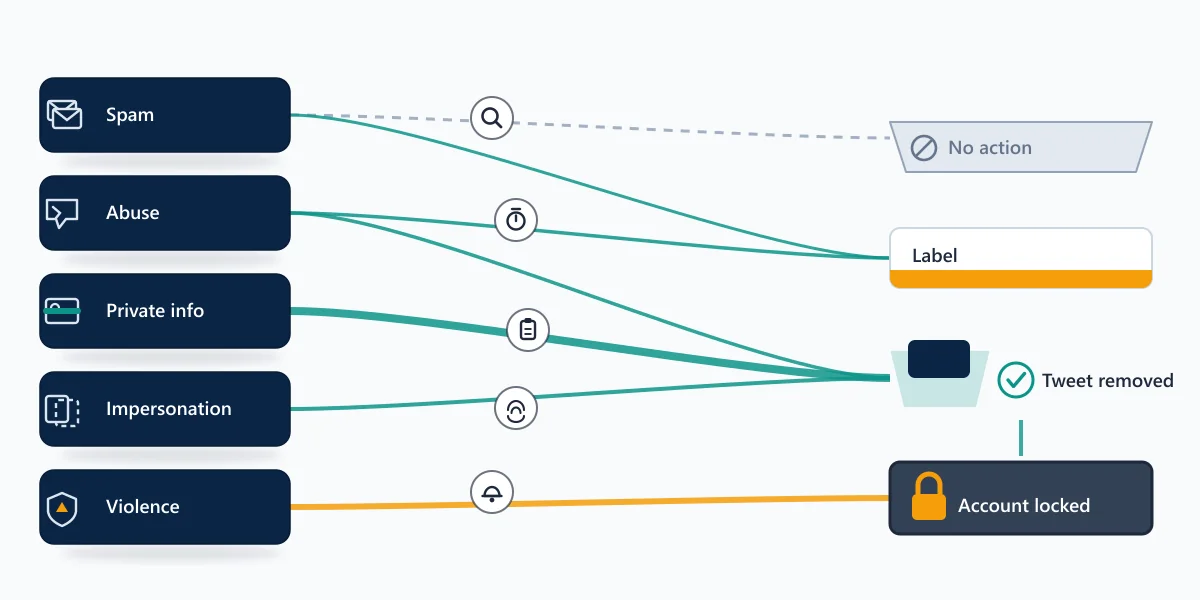
| What you tap | The X Rule it gets tested against | What enforcement can reach from there |
|---|---|---|
| Spam or platform manipulation | Platform Manipulation and Spam | Visibility limits, forced post removal, read-only lock, suspension for bulk or repeat behaviour |
| It is abusive or harmful | Abuse/Harassment or Hateful conduct | Label, visibility limits, forced removal, suspension when the target is a named person |
| Private information posted | Private Information | Forced removal of the post, and the fastest escalation of any in-app category when it is a home address or phone number |
| Impersonation | Misleading and Deceptive Identities | Forced removal and account suspension, but only once you prove who the real person or brand is |
| Self-harm or suicide | Suicide | Support resources sent to the author, removal of content that promotes or encourages |
| Sensitive or adult media | Adult Content or Violent Content | Interstitial notice, age withholding, label; removal only when the media is non-consensual, or unlabelled and prominently displayed |
| Copyright or trademark | Copyright and Trademark | Post withheld or removed, but the claim is only accepted through a Help Center form, never the three-dot menu |
What you report on Twitter is only half the decision. The other half is which rule you are asking a stranger to apply to it.
Two rows in that table cause most wasted reports. The first is spam. It is the default reflex, it closes fastest, and it produces the least. A harassment campaign filed as spam gets checked for automation and bulk posting, found to have neither, and closed correctly under a rule it was never breaking. The second is the copyright and trademark row, along with counterfeit goods and non-consensual nudity, which have no honest equivalent in the in-app menu at all. Picking the nearest-looking option for those routes a legal claim into a safety queue. Mis-categorised copyright claims reach Your Reputation Solution most weeks, and a refile starts from scratch rather than resuming the closed case. Meta splits the same decision across five separate intakes with five different burdens of proof, which is why our walkthrough of Instagram's legal removal routes exists as its own page, and Facebook runs profile and Page impersonation through separate menus and separate review queues. Cross-platform, the shape is identical: the complaint type picks the queue.
One more category needs a caveat rather than a row. If the tweet is a crypto giveaway, a fake investment signal, or a job that wants a fee up front, report it — then stop reading and call your bank, because a report is the slow lane and a reversal window is not. The same ordering applies to what to do if you were scammed on any platform. If you genuinely cannot tell which category fits, describe the tweet to us on the contact page before you file; a mis-filed report is harder to fix than an unfiled one.
How to report a tweet on Twitter, screen by screen
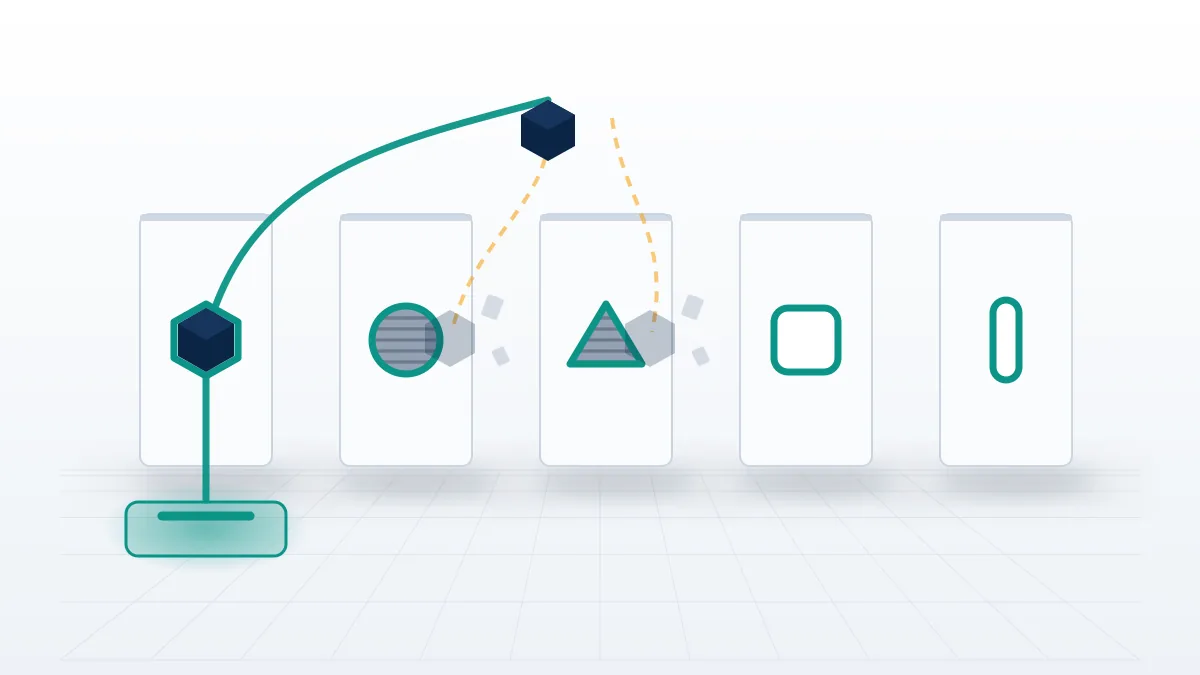
Twitter reporting has changed shape since the old five-option dropdown. X now runs what it calls a symptoms-first flow, which means the questions start with who is being hurt and only later arrive at which rule covers it. You can report Twitter accounts, posts, lists, direct messages and Spaces, and every surface opens that same flow with a different scope attached. Your Reputation Solution files on the surface where the harm actually sits, which is not always the one the client noticed first.
Where is the report tweet button, and what does each screen ask?
The report tweet control sits in the same place on web, iOS and Android. Open the post, tap the three dots at its top right, choose Report, and the flow begins.
- Who is this report for? Three answers: Myself, Someone else or a specific group of people, or Everyone on X. This is the first question asked, and it is not cosmetic — choosing Myself opens evidence prompts about your own experience, while Everyone on X routes the case toward a broad-harm review with a higher bar.
- What is happening? Described in plain language rather than policy names, which is the symptoms-first part.
- Add context. X may ask you to select additional posts from the same account. Take this seriously. One rude reply in isolation reads as an argument; five across a week reads as targeted behaviour, and targeted behaviour is what the Abuse/Harassment policy is written to catch.
- Confirmation. X restates what you reported and which rule it may have violated. Read this screen. It is the only place you find out whether your description was mapped onto the rule you intended.
- The notification checkbox. Before you submit there is a box labelled Updates about this report can show these posts. Leave it ticked and the text of the reported tweet appears inside X's follow-up emails and notifications to you. Untick it when the content is something you would rather not have reappearing in your inbox, which is the usual choice in harassment and image-abuse cases.
Before any of that, save the evidence. Copy the post URL, screenshot it with the timestamp visible, and note the handle, because a tweet the author deletes after your report still has to be described to X in an appeal, or to the police. Your Reputation Solution keeps a dated evidence file on every case for that reason, and X does not keep one for you.
Reporting an account rather than a single post runs the same five screens with a wider scope. A Twitter report tweet review stays inside one post's text, media and immediate context. Reporting the profile widens it, because the display name, bio, avatar and recent behaviour all come into scope, which is why Twitter reporting tweets one at a time and reporting the account behind them are genuinely different requests. Our page on what happens when you report someone on Twitter covers that surface-by-surface split, direct messages and Spaces included, in more detail than belongs here.
So how do you report a tweet on Twitter when the reason you need is not in that menu at all? You leave the app. Copyright, trademark, counterfeit goods, child safety and law-enforcement requests each have a dedicated Help Center form, and pushing one of them through the three-dot flow hands a legal claim to a safety reviewer with no authority to act on it.
One detail is worth catching before you leave the confirmation screen. If you are reporting a violent threat from a post, that screen carries an Email report button, and it sends you a copy of your own report — the document your local police will ask for first.
What X does with a Twitter report once it lands
A Twitter report is not a vote. It is a routing instruction with one policy attached, and the number of people filing the same instruction changes nothing about the test applied to it. For exactly that reason, Your Reputation Solution files one documented report per violation and nothing more.
X states that it acknowledges properly submitted reports within twenty-four hours, that most resolve within a few days, and that resolution can stretch to thirty days when it needs user input or an appeal is filed. Inside that window the case meets automated classifiers first. Clear-cut categories — platform spam, unlabelled adult media, a copyright claim with a matching work — are frequently closed without a human opening them at all. Ambiguity escalates, and almost everything involving sarcasm, a running feud, or two accounts with history is ambiguous.
YouTube runs this logic with a more visible ladder, which is why one report, one policy, one reviewer is the sentence that explains both platforms. What differs is the ceiling. X's published enforcement options form a graded set rather than a switch: excluding a post from search, trends and recommendations; pulling it out of the For You and Following timelines; restricting likes, replies, reposts and bookmarks; attaching a label that tells the author their reach was cut; requiring the author to delete the post before they can post again; placing an account in read-only mode; requiring phone or email verification; and, at the end of the ladder, suspension.
Notice what sits in the middle of that list. Requiring post removal makes the author delete their own tweet, and while that request is outstanding the post is hidden behind a notice. The tweet disappears, but X did not delete it; the author did, under instruction. That distinction matters the moment you try to work out what actually happened.
Across the 214 reports our team filed on X for clients between January and July 2026, the ones that produced a visible action were overwhelmingly those where the violation was legible inside the reported item itself, with no outside context required (our internal case records, as of September 2026). When we have to explain why something is a violation, we are usually already losing. That is not a complaint about reviewers, it is what a queue built for speed does with a case that needs a backstory. The credentials behind that casework sit on our team page.
Reported something serious and watched it close with no action? Tell us what you filed, under which category, and when. Your Reputation Solution will read the case and say plainly whether a refile under a different policy is worth trying, or whether nothing on X's ladder reaches what you are describing — start on the contact page.
Tweet removed, or only hidden from you?
Here is the most misread thing about reporting on X, and it costs people hours.
After you submit, X replaces the original content of the reported post with a notice saying you reported it. You can click through and view it if you want to. To you, in your own timeline, the tweet is gone. To everyone else it is exactly where it was. A tweet removed by enforcement and a tweet hidden by your own report look identical from your account, and nothing on screen tells you which one you are looking at.
So check from outside. Open the post's direct URL in a private window while logged out — Your Reputation Solution does this before telling any client that something moved, because the in-app view is not evidence. If it loads, nothing was removed. If it returns a page saying the post is unavailable, something did happen — though even that has two readings, because the author may simply have deleted it, and only three parties can remove a post on X in the first place, a point our guide to deleting someone else's tweet sets out in full.
Twitter report notifications: what X sends, and what silence means
Twitter report notifications arrive in two places, and neither of them is a status page you can go and check.
The first is the acknowledgement that your report was received, which can take up to twenty-four hours to appear. The second is the follow-up, which X sends if it needs more information from you, or when it takes action on the reported post or account. Read that sentence slowly, because the negative case is hiding inside it. There is no third notification for "we looked and found nothing." Silence is the verdict on a closed-with-no-action report, and it is indistinguishable from a report still sitting in a queue.
One more notification confuses almost everyone. X sends an in-product notice when action is taken on an account you recently reported, and X itself adds that the action may or may not be related to your report. A suspension landing the day after you file is not proof that your file caused it. Treating it as proof is how people come to believe that one category works and another does not, when what they actually measured was coincidence.
Of the 214 X reports in Your Reputation Solution's 2026 client dataset, fewer than a third produced any follow-up naming an action, and the remainder closed with no message of any kind (our internal case records, as of September 2026). That ratio is the honest baseline to set expectations against.
Three limits on what removal means are worth stating outright. Removal is not erasure: screenshots, quote posts and reposts of a removed tweet survive it, and so do archives. Removal at the post level leaves the account standing, the same way deleting one YouTube video leaves the channel intact. And enforcement gives no grace period — where Instagram lets you cancel your own deletion by logging back in within thirty days, a post X required the author to remove is simply gone, and platforms that treat termination as final, like Telegram's irreversible account deletion, sharpen the contrast further. An account that vanishes still tells you nothing about why, which is the same ambiguity that makes an Instagram banned account so hard to read from outside, where one error page covers ban, deactivation and deletion alike.

What reporting on Twitter cannot do
Reporting on Twitter works on evidence against a written rule. It does not work on volume, on outrage, or on how unfair the post feels to the person it names.
A tweet that is rude, wrong, unflattering or humiliating is not, by that fact alone, against the X Rules. Every platform states this limit in its own words; LinkedIn's version is that it acts on verified evidence rather than report volume, and it removed 83.4 million fake accounts in the first half of 2025 while leaving lawful criticism alone. Twitter reports work the same way. If you have typed twitter reported into a search box at two in the morning wondering why nothing moved, this is usually the answer: the report was filed correctly, reviewed correctly, and the content did not break the rule you filed it under.
Volume does not help either. A reported Twitter account does not accumulate points toward a threshold, and the services selling mass reporting are selling a mechanic that does not exist — the same pitch, one platform over, that we take apart in paid Facebook ban services. Sellers quote report counts because counts are the only thing they can actually deliver.
Here is what Your Reputation Solution will not do, stated plainly. We do not file a category we know does not fit in the hope that a reviewer re-routes it. We do not file copyright or trademark claims over content that does not infringe, because a knowingly false takedown notice carries a perjury declaration under the DMCA. We never ask for your password, for X or for anything else. No vendor can bypass a platform's identity check either, which is why recovering the Google account behind a YouTube channel runs through Google's own form and nowhere else. We do not sell report volume, and we cannot promise that any specific tweet comes down, because the decision belongs to X and X takes no instructions from vendors. The full limits are written out on the disclaimer page.
One practical note for scam cases. When a tweet is bait for a channel or a bot, the tweet is the smallest part of the problem, and removing it does not close the operation — that usually lives wherever the conversation moves next, commonly one of the Telegram scam patterns we document. Report the tweet, then deal with the destination.
If your own tweet or account was reported
Being on the receiving end changes which question matters. It is no longer which category someone picked; it is which enforcement rung you landed on, because each rung has a different exit.
A label or a visibility limit comes with an appeal on the label itself. A required removal means deleting the post before you can post again, or appealing the removal request if you believe X got it wrong. Read-only mode and a verification challenge both lift once you complete what X asked for. Suspension is the only rung with a separate form, and when the stated reason is spam or automation, the policy underneath is almost certainly the one behind an X account suspended for inauthentic behavior — most of which trace back to a third-party automation tool rather than anything the owner wrote.
Picking the right exit matters as much as picking the right report reason did on the way in. YouTube makes that explicit by running four separate appeal routes, each with its own form and its own deadline, where filing the wrong one burns a window you may not get back.
Two traps catch people here. The first is assuming a lockout is an enforcement action when it is something else entirely; Instagram alone has seven distinct lockout states, and telling them apart decides which route you take. The second is trying to delete your way out. Enforcement takes your own controls away first, which is why a banned Snapchat account cannot even be deleted until an appeal restores the login, and why the difference between deleting, deactivating and being disabled is worth understanding before you touch anything, as our Facebook account deletion guide spells out.
Your Reputation Solution handles the appeal paperwork and the escalation; X's enforcement team makes the decision, and no honest firm will tell you otherwise. Clean, well-documented recoveries typically resolve in 24 to 72 hours once filed. Anything involving a contested policy call takes longer, and some suspensions — child safety, terror content, sustained targeted harassment — are not reversible on appeal at all.