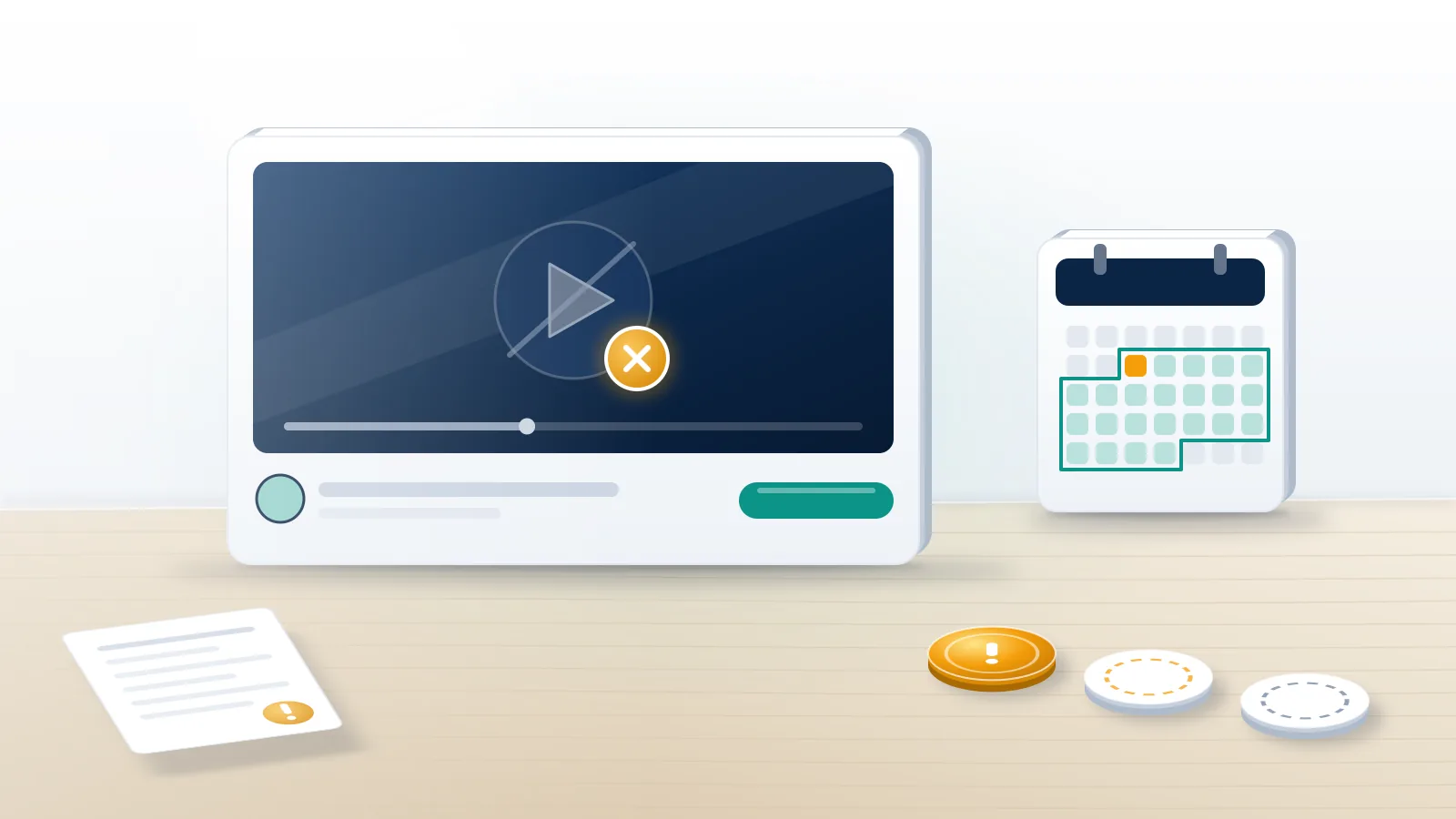
What is a copyright strike on YouTube, and what doesn't count as one?
A copyright strike is the penalty YouTube puts on your channel after removing an upload over a rights holder's complete legal takedown request.
Every copyright strike in YouTube's system is tied to one removed video, one claimant and one date. It sits on the channel that uploaded the video and stays active until it expires or is cleared. One strike on its own closes nothing: the channel keeps its other uploads, its subscribers and its ability to post. What changes is the margin for error, because an account whose channel holds three active strikes at once is subject to termination. Creators use "strike on YouTube" loosely for any red notice in Studio, yet YouTube runs two separate strike systems plus a claim system that looks similar and carries no strike at all. Knowing which notice you received decides everything after it, from how long the penalty lasts to whether a dispute, an appeal or a counter notification is the right reply.
Your Reputation Solution is an account recovery and reputation management firm that reads strike notices with creators, checks whether each takedown holds up and drafts the reply they choose to send. It cannot delete a strike, and no third party can.
What are YouTube strikes, and which notices are only claims?
What is a YouTube strike, then? Either of two penalties that count toward termination, while a Content ID claim is the lookalike that doesn't.
| Notice | Content ID claim | Copyright strike | Community Guidelines strike |
|---|---|---|---|
| Trigger | Automated match | Owner's legal removal request | YouTube policy review |
| The video | Blocked, monetized or tracked | Removed | Removed |
| Counts toward termination | No; a claim "typically" causes no strike | Yes, at 3 active strikes | Yes, at 3 strikes in 90 days |
| Lasts | Until released or disputed | 90 days, after Copyright School | 90 days |
| Way out | Dispute or edit | Wait, retraction, counter notification | Appeal, or wait |
Claims outnumber strikes by orders of magnitude: YouTube processed 2,502,941,368 Content ID claims in 2025, and 99.48% of all copyright actions ran through Content ID (TorrentFreak, June 2026). YouTube copyright strikes are the rare, legal end of that pipeline. Strikes and claims also sit in separate systems, since "copyright strikes are different from Community Guideline strikes and copyright claims."
Other platforms act on the same notices without a public counter: an Instagram take down notice over a song removes the post with no published strike number, and a TikTok video taken down for no reason is sometimes an unread copyright removal.
Telegram handles a Telegram DMCA takedown through its own review with no public tally, and a shadow ban on X limits reach with no count attached. YouTube, by contrast, shows the exact count, so Your Reputation Solution opens every YouTube case from the Studio dashboard.
How do you get a copyright strike on YouTube?
You get one when a copyright owner, or their agent, files a takedown request against your upload and YouTube accepts it as complete.
Searches for how to get a copyright strike on YouTube come from two groups: creators trying to understand a notice they already have, and people who want to hand one to someone else. For the first group, the removed material is rarely exotic. Full-length songs under a vlog, sports or TV clips posted without a license, reuploads of another creator's video and livestreams of a paid event all draw notices, usually through YouTube's copyright webform, because their owners monitor with Content ID and manual searches. Keeping a clip short doesn't protect it, and credit in the description is not permission. Fair use is a real US defense, but it is decided case by case, after the strike has landed. Anyone in the second group will find the filing side in a separate walkthrough of how to copyright strike a YouTube video.
A scheduled request gives you "7 days to delete your content and avoid the copyright strike," the cheapest exit in the whole system.
Trademark disputes use a separate form, the kind brands use to claim an Instagram username or to claim an inactive Twitter username, and never add a copyright strike.
Volume doesn't create a strike either. Viewer flags can trigger a Community Guidelines review, but only a complete ownership notice produces a copyright strike, so a TikTok mass report bot has nothing to grip and a Facebook mass report campaign hits the same wall on Meta's side.
When Your Reputation Solution reviews a disputed notice, the claimant's name comes first, because a bad-faith notice still has to name one and section 512(f) makes knowing misrepresentation costly (US Copyright Office). Weaponized takedowns sit in the same toolkit as trying to get someone banned on WhatsApp or burying an account under an Instagram spam report bot, with more legal risk than either.
What happens after one, two and three copyright strikes?
One strike brings Copyright School, a second adds no new penalty, and three active strikes put the whole account at risk.
What happens if you get a copyright strike on YouTube for the first time?
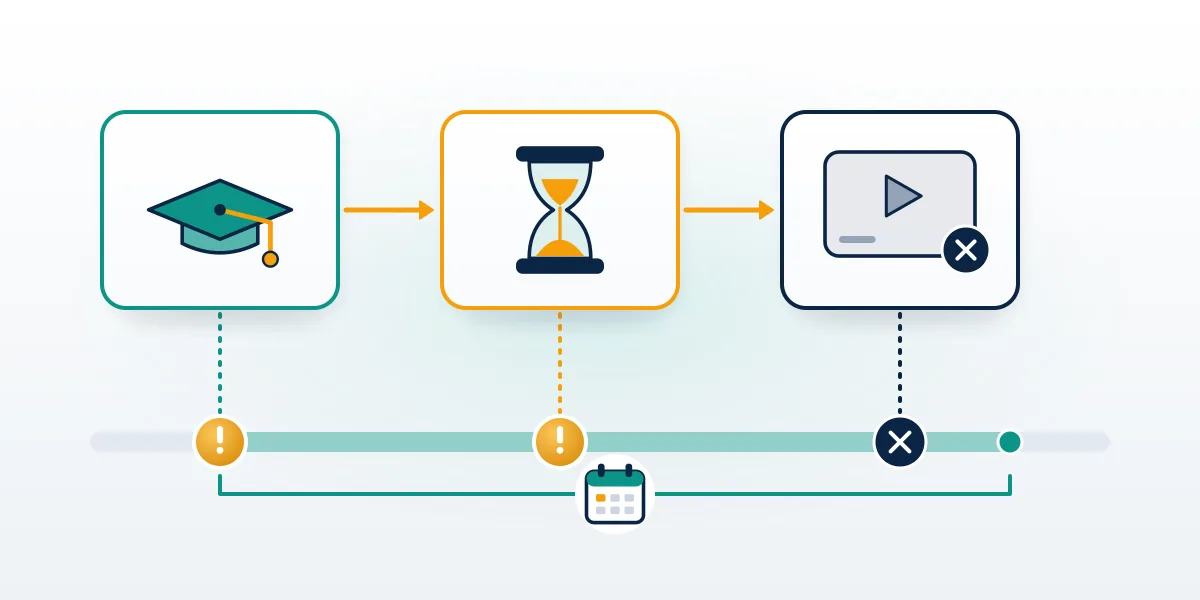
YouTube removes the video, emails you and lists the strike in YouTube Studio under Dashboard > Active copyright strikes. You then complete Copyright School; without it, the strike "will remain active on your channel" instead of expiring after 90 days. Removing a live stream mid-broadcast also restricts live streaming for 7 days. As of September 2026 the help page lists no upload freeze or monetization penalty for a first YouTube channel copyright strike, and Partner Program eligibility names only Community Guidelines strikes.
What happens if you get 2 copyright strikes on YouTube?
Officially, nothing new: the help page answers the two-strike case with "Same steps as above." People searching "2 copyright strikes YouTube" or "2 copyright strike YouTube" want one fact: a third active strike before either of the first two expires can end the channel. The 3 copyright strikes YouTube rule counts active strikes only, so dates beat totals:
| Strike | Received | Expires | Active on April 15, 2026? |
|---|---|---|---|
| 1 | January 10, 2026 | April 10, 2026 | No |
| 2 | February 20, 2026 | May 21, 2026 | Yes |
| 3 | April 15, 2026 | July 14, 2026 | Yes |
On April 15 this channel, which finished Copyright School each time, holds two active strikes and survives, but moving strike 3 to April 5 makes all three overlap.
Holding two strikes, or one you believe is wrong? Your Reputation Solution reviews the notices, maps each expiry date and says whether a retraction or a counter notification is defensible before anything is sent. Ask for a strike notice review
What happens if you get 3 copyright strikes on YouTube?
Three active strikes make your account, along with any associated channels, subject to termination, and YouTube states that you "can't create new YouTube channels" afterward. Uploads on a terminated channel become inaccessible, and the termination policy covers existing channels plus any new ones you create or acquire (Channel or account terminations, YouTube Help). Linked channels share the exposure in both directions: if a channel linked to yours reaches 3 active copyright strikes, yours is also subject to termination. Few exits remain. Counter notifications against strikes filed in error and retractions from claimants still work, while the second-chance pilot YouTube announced on October 9, 2025 excludes "creators terminated for copyright infringement" (Second chances on YouTube). If you're already there, the steps to recover a terminated YouTube channel start with the official route, not a new account.
Can a strike be removed early, and what should outside help never promise?
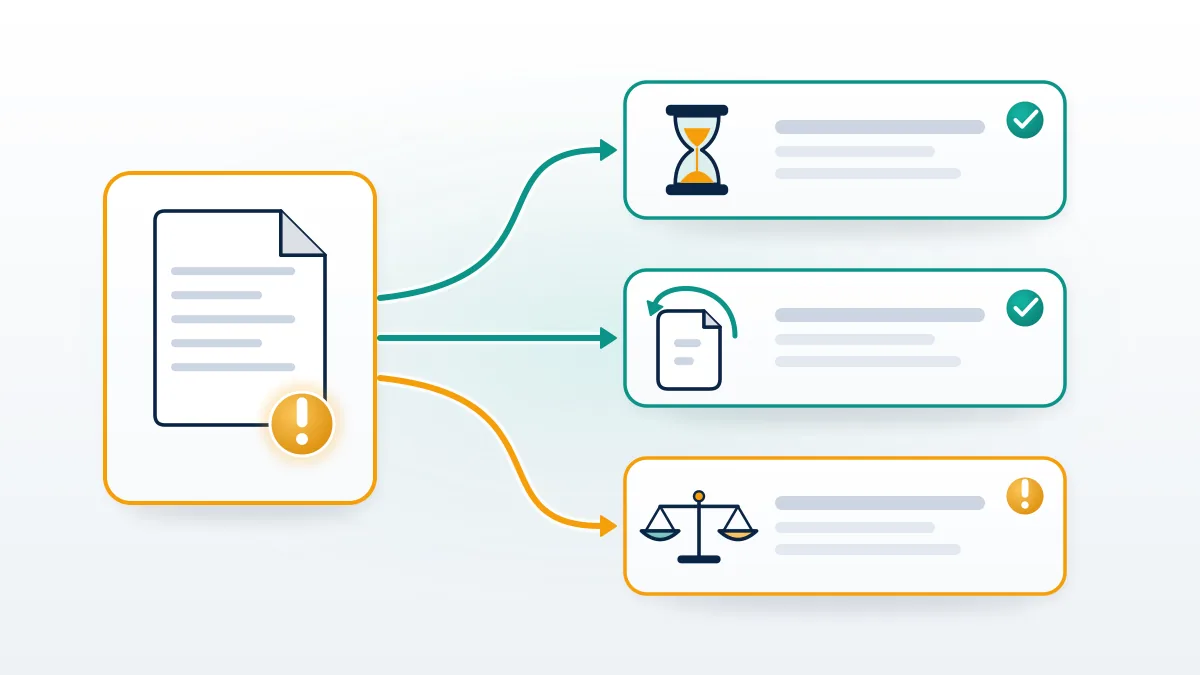
Yes: let it expire after 90 days with Copyright School done, get the claimant to retract, or file a valid counter notification.
Asking the claimant for a retraction
Only the claimant or someone acting for them can retract, and a retraction clears the strike unless other videos are associated with it (Retract a copyright removal request, YouTube Help). Send a short message with the video and your license; Your Reputation Solution drafts it when an agency or label filed the claim.
Filing a counter notification
A counter notification is a legal statement, not an appeal button. You, or a representative such as an attorney, swear under penalty of perjury that the video was removed by mistake or misidentification, consent to a federal court's jurisdiction and accept that the claimant receives your contact details. The claimant then has 10 US business days to show it has filed a court action; if it doesn't, YouTube reinstates the video (Submit a copyright counter notification, YouTube Help). Section 512 frames that window as 10 to 14 business days. File only when you own the material, hold a license or have a fair-use position you'd defend in court, because YouTube warns that misuse of its processes can lead to account termination. Uploaders counter-noticed 9.9% of webform removals in 2025, about 267,000 notices (TorrentFreak, June 2026).
Where outside help ends
Strike-removal offers tend to appear right after a notice, when creators are anxious enough to pay, and many ask for a login code by DM. On WhatsApp, how to ban someone on WhatsApp beats an argument; a code typed into a Telegram bot makes how to recover a Telegram account urgent.
If in-app steps fail, a Telegram account recovery review comes next; treat anyone selling a Telegram mass report panel to "strike" a rival with suspicion.
Paid strike sellers run the playbook of an Instagram mass report bot or a WhatsApp mass report bot, plus 512(f) exposure.
Some limits never bend (see the disclaimer page): no payment to a claimant, no counter notification you can't truthfully swear to, no promise that a strike disappears and no request for your Google password. Your Reputation Solution drafts and checks the paperwork; the claimant, YouTube and, in a contested case, a court decide.
How many copyright strikes are allowed on YouTube before a ban?
Two: a third active copyright strike makes the account subject to termination, and Community Guidelines strikes run a separate count.
The honest answer to how many strikes on YouTube to get banned depends on which ladder you're on, since two copyright strikes plus one guidelines strike don't make three under either. Community Guidelines enforcement normally starts with a warning, which expires after 90 days if you take the optional policy training. After that, the first strike freezes uploads, live streams and other posting for one week, the second for two weeks, and a third in the same 90-day period removes the channel (Community Guidelines strike basics). Each guidelines strike expires after 90 days. Copyright strikes have no warning stage and no posting freeze beyond the live-stream restriction. One rule cuts across both ladders: YouTube says "a single case of severe abuse" can end a channel without warning, so three is a ceiling, not a promise.
Meta publishes no fixed number at which an account is disabled. That leaves permanently disabled Instagram account recovery and Facebook disabled account recovery starting after the threshold has passed.
Marketplace has its own restriction, so the route to get unbanned from Facebook Marketplace differs from the account appeal, and how to unban an Instagram account differs again.
TikTok says its strike thresholds vary by policy and feature. That makes TikTok suspended account recovery and banned TikTok account recovery different jobs.
X publishes no general strike ladder for anyone trying to recover a suspended Twitter account, and Telegram posts no strike count before Telegram frozen account recovery becomes necessary.