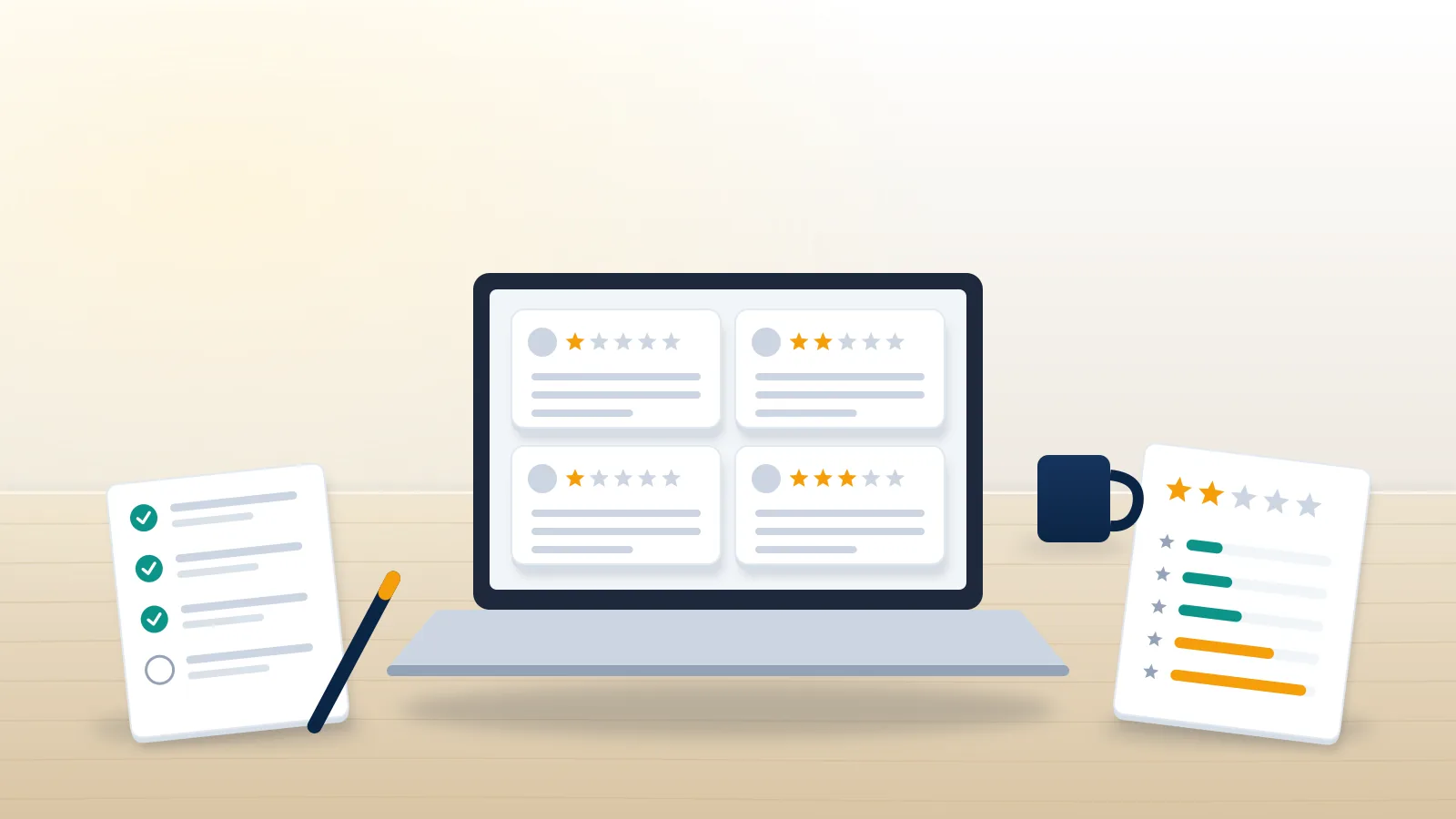
What counts as a bad Yelp review?
A bad Yelp review is any one-to-three-star review that sits on your public listing and feeds your average rating. Yelp does not remove reviews for being negative, unfair, or exaggerated; it removes them only when they break its written Content Guidelines, such as reviews with no firsthand experience, a conflict of interest, threats, or hate speech. Everything else stays, however much it stings. The scale is worth knowing before you react: users contributed about 22 million reviews to Yelp in 2025, and the company's recommendation software showed roughly 70% of them, marked 17% as not recommended, removed 11% through its User Operations team, and logged 2% as deleted by the reviewers themselves (Yelp 2025 Trust and Safety Report, February 2026). So a bad review is rarely alone in a queue; it has already survived one machine filter by the time you see it.
Your Reputation Solution is a reputation management firm that helps business owners respond to review damage, document review-based attacks, and recover the social accounts those disputes spill into. The service does not erase honest criticism, and this guide does not pretend anyone can.
What follows is the response order that actually holds up: measure the damage, understand the filter, reply well, flag what genuinely breaks the rules, and protect the rest of your online presence while you do it.
Why negative reviews on Yelp move real money
Negative reviews on Yelp are not a vanity problem. Michael Luca's Harvard Business School research matched Yelp ratings to restaurant revenue in Washington state and found each extra star worth a 5-9% revenue change for independent restaurants, while chains showed no effect, since customers already know what a chain serves (Reviews, Reputation, and Revenue, HBS working paper 12-016). The asymmetry matters as much as the average. A listing that slides from 4.5 to 4.0 loses filter placement in Yelp's own search, loses the shortlist spot in map results, and starts conversations with a doubt it never used to face.
Three stars is not neutral. Readers treat it as a verdict.
Recency compounds the effect, because Yelp sorts by its own relevance model and fresh reviews carry weight. One angry week can out-shout two quiet years, which is exactly why the response plan below starts with triage rather than rebuttal.
There is a quieter cost too. Yelp pages rank high in searches for your own business name, so a prospective customer who never opens the app still meets your worst reviews on page one of Google. Lenders, landlords, and potential buyers read the same page during due diligence. A dropped star changes those conversations months before it shows up in the till, and none of those readers will ever tell you the review was the reason.
Where filtered reviews go: the recommendation software
Yelp negative reviews fall into two buckets, and the split is decided by software before any human looks. The recommendation engine weighs four published considerations: conflicts of interest, solicited reviews, reliability, and usefulness. Reviews that fail land behind the grey "not currently recommended" link at the bottom of your review list; they stay readable there, but they stop counting toward your star average and stop appearing in the default view. In 2025 that filter caught 17% of all contributed reviews. The sorting is also not final. An independent 2022 study that tracked Yelp's classifier over eight years estimated its accuracy at about 77.6% and found up to 8% of reviews migrated between the recommended and not-recommended classes over time. A bad review that disappears can come back, and a filtered one can resurface once the account that wrote it builds history.
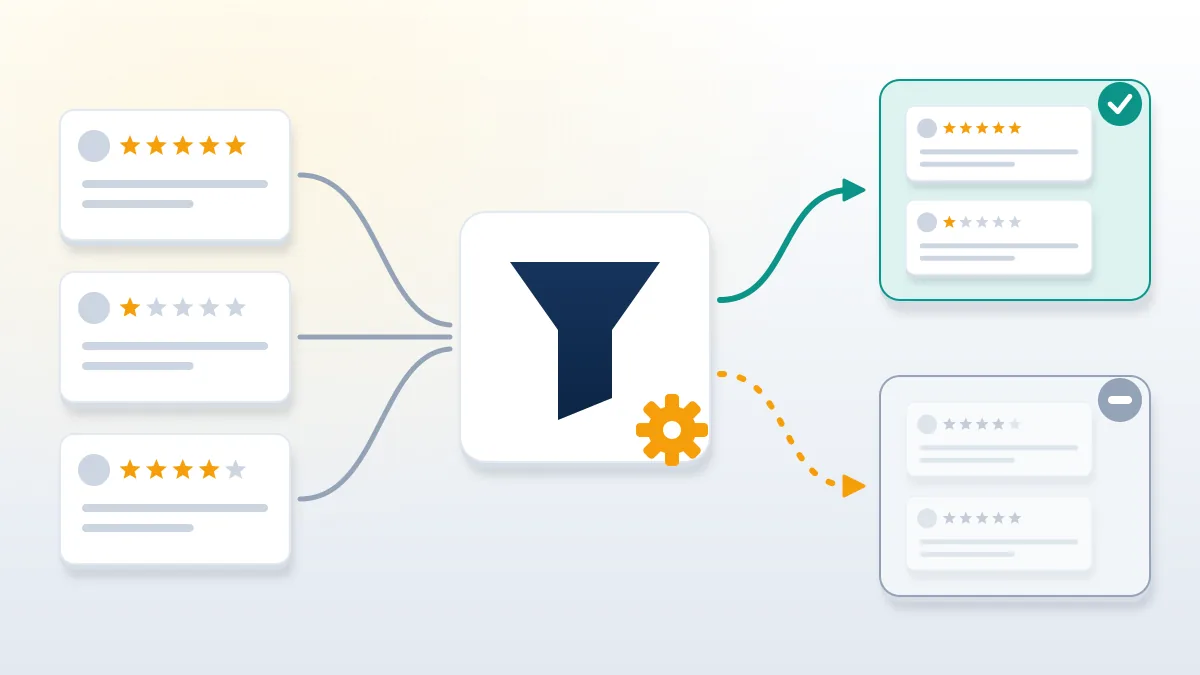
Check the grey link before you panic about a new one-star review, and check it again before you celebrate a deletion. When Your Reputation Solution audits a listing after a ratings drop, the not-recommended queue is read first, because it shows which direction the filter is already leaning for that business.
How should you respond to bad reviews on Yelp?
Bad reviews on Yelp deserve a reply in almost every case, and the reply is written for the next hundred readers, not for the one reviewer. Claim your listing through Yelp for Business, open the Reviews tab, and you get two tools per review: a public comment and a private message. Use both, in this order:
- Read the review twice and check your records. A dated receipt, a booking entry, or a staff note changes what you can honestly say.
- Reply publicly within a few business days. Thank them for the specifics, state the one thing you fixed or checked, and skip the lawyerly hedging. Four sentences is usually enough.
- Move the detail private. Offer a direct contact in the private message; never demand the review be changed as a condition of helping.
- Let the fix speak. A reviewer who returns and updates their own review is worth more than a deletion, and Yelp allows them to edit at any time.
What you never do: argue, reveal a customer's personal details, or offer payment for removal or revision. Paying for review changes crosses into the territory the FTC now penalizes, and it reads as guilt to everyone scrolling past. When Your Reputation Solution drafts owner replies, each one is checked against a single question: would a stranger reading this trust the business more afterward? If the answer is no, the reply is rewritten, not posted.
When does a negative review break Yelp's rules?
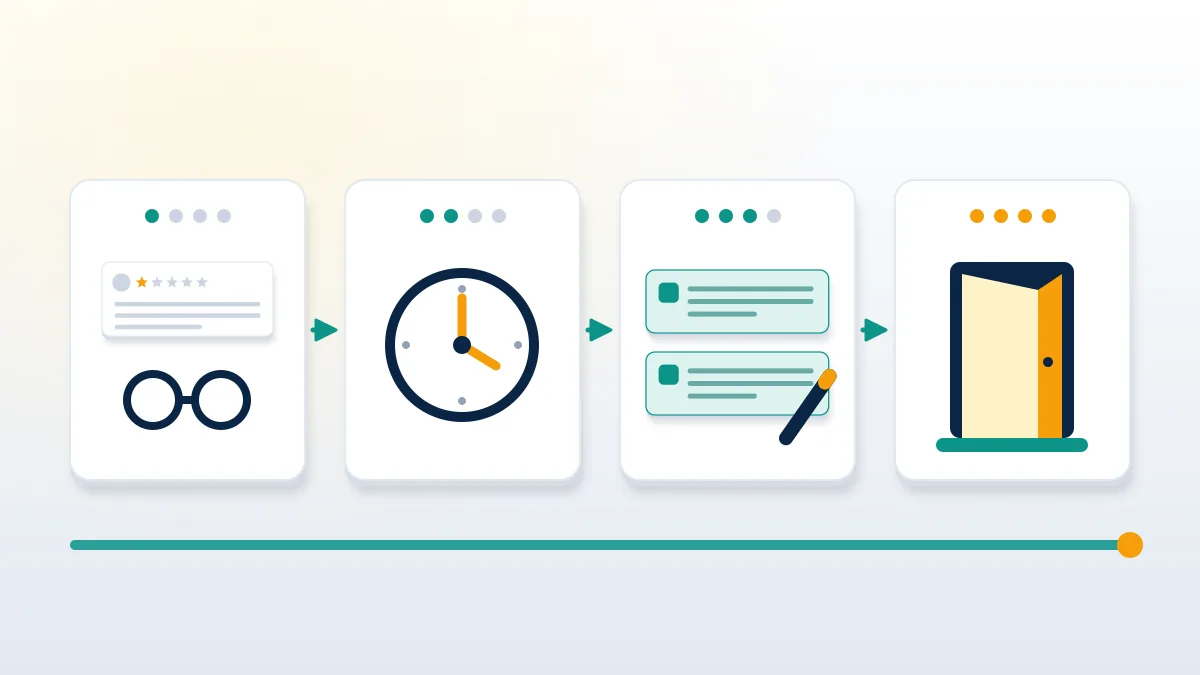
Flagging works only on violations, so learn the short list in Yelp's Content Guidelines. Reviews qualify for removal when they describe no firsthand consumer experience, come from a competitor or an employee (a conflict of interest), contain threats, harassment, or hate speech, demand money to be taken down (review extortion), or publish someone's private information. To report one, open the review's three-dot menu, choose Report review, pick the reason, and a moderator decides; in 2025 Yelp removed more than 193,700 reported reviews, and 25% of those removals were for not reflecting a firsthand experience. The decision can take days, and most flags fail, because most bad reviews are real customers having a documented bad day. Removal as a strategy is its own topic; this page stays with response and management, where owners control far more of the outcome.
The legal floor moved in 2024. The FTC's rule on fake reviews and testimonials took effect on October 21, 2024, and lets the agency seek civil penalties of up to 51,744 dollars per violation for buying, selling, or faking reviews, with the cap inflation-adjusted since. The Consumer Review Fairness Act already voids contract clauses that gag honest customer reviews. Between the two, every shortcut around a bad review now carries federal risk, not just platform risk.
That is also where the scam economy lives, so be explicit about boundaries. Your Reputation Solution files and escalates reports on reviews that break written rules; Yelp's moderators make every final decision, and nobody can promise a removal or a deadline for one. Anyone guaranteeing deletion of a legitimate review, asking for your Yelp password, or selling five-star reviews to drown the bad ones is offering you an FTC violation with your name on it. We never ask for passwords, and we turn down removal requests for honest criticism; the limits are written out on the disclaimer page.
Dealing with a review pile-on and a locked business account in the same week? Tell Your Reputation Solution what happened and the free case review will tell you which fix comes first.
Prevention: the review profile you build before trouble
The cheapest bad review is the one that lands on a listing already carrying two hundred good ones. Building that cushion on Yelp works differently than on Google, and the difference trips up owners constantly: Yelp's guidelines prohibit asking customers for reviews at all, politely or otherwise. No "leave us a review" signs at the register, no follow-up emails with a Yelp link, no QR codes on receipts. Solicited reviews are one of the four signals the recommendation software screens for, which means a well-meaning review drive can push your genuine five-star feedback into the not-recommended drawer. What Yelp permits is passive visibility: the Find us on Yelp branding, a complete listing with current hours and photos, and the check-in offers inside Yelp for Business that reward a visit rather than a verdict.
The platform is also policing volume manipulation harder each year. In 2025 its systems filtered nearly half a million reviews showing signs of AI generation and closed over a million policy-violating accounts, a 138% jump from 2024 (Yelp 2025 Trust and Safety Report). Buying reviews to pad an average is no longer a grey zone; it is a detectable pattern with a federal price tag attached.
So prevention comes down to habits, not hacks. Deliver the experience, make the Yelp page complete and current, check the review feed weekly so nothing festers unanswered for a month, and keep records that let you respond with facts. Owners who do those four things walk into every bad-review week with the average, the history, and the paper trail already on their side.
The spillover problem: review anger rarely stays on Yelp
A dispute that starts as a one-star review often continues as comments, DMs, and callout posts on the platforms where your business is easiest to reach. The playbook there is documentation plus the platform's own reporting flow. If the harassment lands on your business Instagram, file through the in-app flow described in our guide to report harassment on Instagram and keep screenshots with timestamps. On X, skip the shortcuts: paid Twitter mass report bots do not get content removed and can get your own account flagged, while a single accurate report does more. The same discipline applies on video platforms, where reporting someone on YouTube stays anonymous and the flow to report someone on Twitch runs through each channel's own tools.
Marketplace disputes deserve the same paper trail. A customer feud that started over a transaction sometimes needs you to report a seller on eBay or to report a scam Facebook ad impersonating your business. And when a platform's automated answers loop, there are still ways to reach a human at X support with a case number in hand.

Your response channels are accounts — keep them usable
You answer a review crisis through accounts you control, and those accounts fail at the worst moments: a password reset loops, a strike lands, a hacked profile starts posting. Response capacity is part of reputation management, which is why Your Reputation Solution treats account recovery and review response as one case, not two.
The common failures have documented fixes. When Facebook account recovery is not working, the usual cause is retrying a dead route instead of switching to one that can still reach you; a page that was deleted outright follows the recover a deleted Facebook account window instead. The same deadline logic governs how to recover a permanently deleted Instagram account and to recover a deleted Twitter account within its 30-day reactivation period. On TikTok, deleted account recovery and the slower path to recover an old TikTok account after a lost login are different procedures, and knowing how many violations get an account banned on TikTok tells you whether you are managing strikes or appealing a termination.
Video channels carry the most sunk cost. A hacked YouTube channel can usually be restored through Google's hijacking flow if you act quickly, while a terminated YouTube channel is an appeal case with different odds. If your customer contact runs through Telegram, keep its lifelines current before trouble: recovery with an email only works when Telegram has one on file, finding the account again is easier if you can recover it by username, and the harder scenarios, recovering Telegram without the phone number or without a verification code, punish businesses that treated the app as disposable.
Guard the business name on every other platform
The quiet half of review damage is name control. Customers who read a bad review go looking for your accounts; if squatters hold your handle, they find someone else wearing your name. Run a Telegram username check and its equivalents everywhere you trade, and register the matches before you need them. The aftermarket is the expensive route: buying Telegram usernames on Fragment is at least auditable, while buying a TikTok username from a stranger carries recovery-clawback risk, and the honest paths to getting a rare username on TikTok or buying a Twitter handle take patience or a broker with an escrow.
Treat the handle work as an afternoon's audit, once a year. List every platform where a customer might search your name, note which profiles you hold, which sit empty, and which belong to someone else, then close the gaps in order of traffic. The audit costs nothing and removes the single most common surprise in the cases this site documents: a business fighting a review fire while a stranger answers DMs under its name.
None of this deletes a bad review. It decides what a reader finds in the thirty seconds after they close Yelp, and that half of the outcome has always belonged to you.