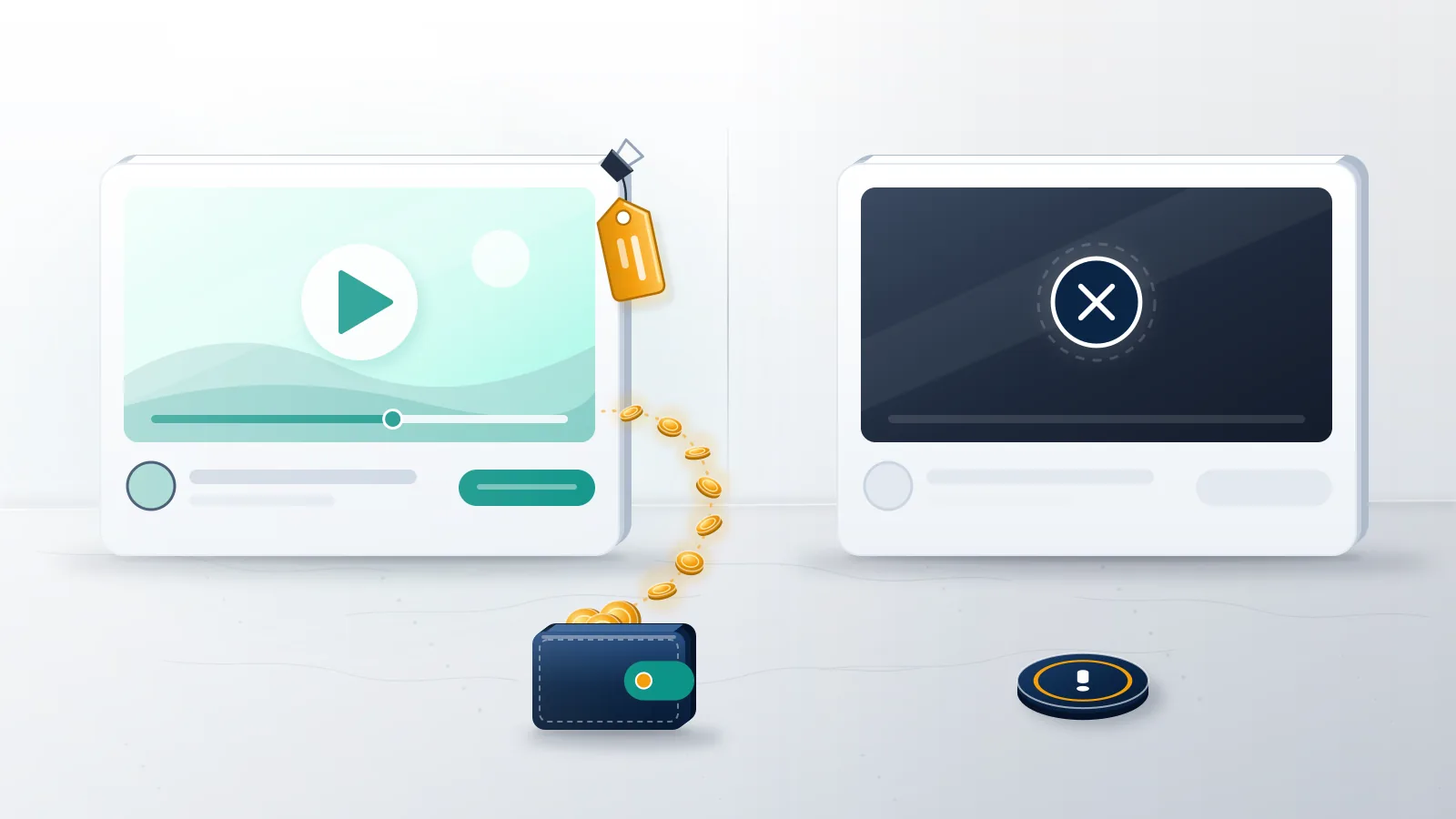
What is a copyright claim on YouTube?
A copyright claim is an ownership notice on one video that lets the rights holder block, monetize or track it while it stays up.
That sentence is the whole YouTube copyright claim meaning; everything else is detail about who files the claim and what it controls. Most claims come from Content ID, the matching system YouTube runs for record labels, film studios, broadcasters and collecting societies that have uploaded reference files, and when your upload matches one of those files the claim appears without anyone watching your video. Manual claims make up a smaller share, placed by the same partners after finding the material themselves. So what does copyright claim mean on YouTube for the person who uploaded the video? The video keeps its link, its comments and its view count, and the claimant's chosen policy decides whether it plays, in which countries, and who collects the ad money. Nothing is placed on the channel itself. YouTube's help page says claims affect videos "but usually don't impact your channel or account" (Learn about copyright claims).
Your Reputation Solution is an account recovery and online reputation firm, and for YouTube creators it reads claim notices, separates claims from strikes and drafts disputes the creator can sign with a clear conscience.
Scale explains why no person reviews a claim before it lands. Content ID claims YouTube recorded in 2025 passed 2 billion, coming from over 7,600 Content ID partners whose claims made up over 99% of all copyright actions on the platform (YouTube Copyright Transparency Report, 2025 data). Statistically, a copyright claim in YouTube Studio is the ordinary case.
Elsewhere the word "claim" does other jobs, which muddies search results. When you ask whether you can claim an Instagram username or try to claim a Twitter username, you are asking for a handle, and copyright never enters it.
How does YouTube copyright claim work, from upload to notice?
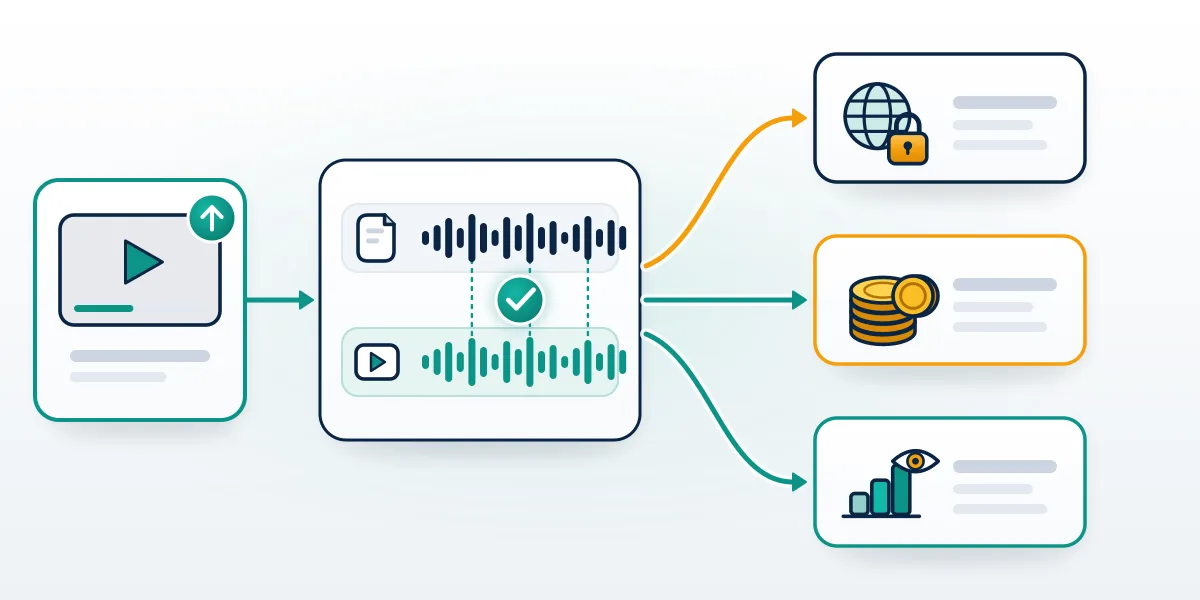
Content ID compares every upload with owners' reference files, and a match applies the owner's preset policy automatically, often before you publish.
- Rights holders with Content ID access upload reference files and pick a policy for matches: block, monetize or track.
- You upload, and the Checks step in the upload flow screens the video for copyright matches before it goes public.
- Any matching segment, audio or visual, creates the claim and applies the policy, which can differ by country.
- YouTube emails you, and the video shows "Claims" in the Restrictions column under Content in YouTube Studio.
- You then leave it, remove the claimed content, share revenue where that option appears, or dispute.
In a claim review, Your Reputation Solution starts from the Claimant line under Content used, because an unfamiliar name there is not proof of a bad claim, as YouTube's own help page points out.
Automatic claims and manual claims
A YouTube automatic copyright claim needs no human decision at the moment it lands. Fingerprint matching does the work, which is why a claim can hit a video minutes after upload, or much later once a new reference file is added. That speed is also the weakness: background music in a café, a game soundtrack or a recording someone else registered can all trigger a match. What is a Content ID claim on YouTube, then, if not an accusation? It is a record that software found overlap, plus a policy the owner chose in advance. Manual claims work differently, since a partner's staff find the video, select the segment and file through the manual claiming tool, and YouTube requires that "manual claims must have accurate timestamps so creators know exactly what content is being claimed." Only owners holding exclusive rights to "a substantial body of original material" that is frequently uploaded qualify for Content ID at all (How Content ID works).
Report volume plays no part in any of this. Content ID matches fingerprints, so the mass reporting TikTok crowd and anyone paying for a Facebook mass report bot are aiming at review queues a claim never passes through.
Sellers of a mass reporting Instagram bot or a WhatsApp mass report panel can't create or erase a YouTube claim either.
What are YouTube's copyright claim rules and policy?
Claimants pick the policy and YouTube sets the limits: who may claim, how Shorts and live streams are treated, and what counts as abuse.
| Claim policy | What viewers get | Where the money goes |
|---|---|---|
| Monetize | The video plays, with ads | To the claimant, sometimes shared with you |
| Track | The video plays normally | The claimant receives viewing statistics |
| Block | An unavailable notice in the blocked countries | Nowhere, because nothing plays |
Before a creator disputes anything, Your Reputation Solution checks which countries the policy covers. Blocking in one market calls for a different reply than a worldwide block.
Those three options are the core of the YouTube copyright claim policy, and YouTube says "monetize" is the most common one applied to music claims. On top of them, the YouTube copyright claim rules add conditions most guides skip. Any policy can be geography-specific, so a video can earn for the claimant in one country and be blocked in another. Shorts follow a harsher rule. Since October 15, 2024, new vertical videos of one to three minutes count as Shorts, and a Short longer than one minute with an active claim is blocked on YouTube regardless of the claimant's policy; for Official Artist Channels and channels linked to a music content owner, the cut-off date was December 8, 2025. Live streams are handled in real time, where a match can swap your broadcast for a placeholder image or interrupt it, and the claim itself lands only if you archive the stream (Live stream copyright help). Writing "no copyright intended" or crediting the artist changes none of this.
Claimants face rules too. Those who repeatedly make erroneous claims can have their Content ID access disabled and their partnership terminated, and uploaders who abuse the dispute process risk penalties on the video or channel.
Other platforms skip the claim layer. On Instagram a rights holder's report usually removes the post, which is why guides on how to take down a photo on Instagram read like takedown manuals.
TikTok tends to mute a flagged sound or pull the video, a different process from trying to get a TikTok page taken down. Telegram has no matching system at all, so a Telegram takedown runs on notices sent to Telegram. For creators who post the same video on all three, Your Reputation Solution handles each notice under that platform's own process, not one blanket reply.
YouTube copyright claim vs strike: which one can end a channel?
Only a strike can: a claim acts on one video, while three active copyright strikes make the account subject to termination.
| Copyright claim | Copyright strike | |
|---|---|---|
| Starts with | A Content ID match or a manual claim | A legal copyright removal request |
| The video | Stays up unless the policy blocks it | Removed |
| Ad revenue | Goes to the claimant under a monetize policy | None, because the video is gone |
| Channel standing | Usually untouched | Counts toward termination at 3 active strikes |
| Lasts until | Released, expired or edited out | 90 days after Copyright School |
| Your reply | Edit, dispute, then appeal | Wait, retraction, counter notification |
| Studio label | Claims | Copyright—Takedown |
Copyright claim vs strike YouTube questions come down to the one point where the two systems touch. Escalation is that point, and only the claimant can trigger it. After you dispute, the claimant has 30 days to release the claim, reinstate it, let it expire or "submit a copyright removal request", and that removal request is what produces a strike. Rejected disputes can lead to an appeal, where the claimant has just 7 days to respond and the removal option is still on the table (Dispute a copyright claim). Leave a claim alone, or fix it by editing, and it never turns into a strike on its own. Risk sits in disputes you can't back up, because each one invites the claimant to move from a revenue decision to a legal one. Shorts get one explicit protection here: YouTube states you "will not receive a copyright strike" for Shorts that contain active claims, even though those Shorts are blocked.
When a creator arrives holding both kinds of notice, Your Reputation Solution sorts the claims from the strikes first, since only the strikes carry a termination clock.
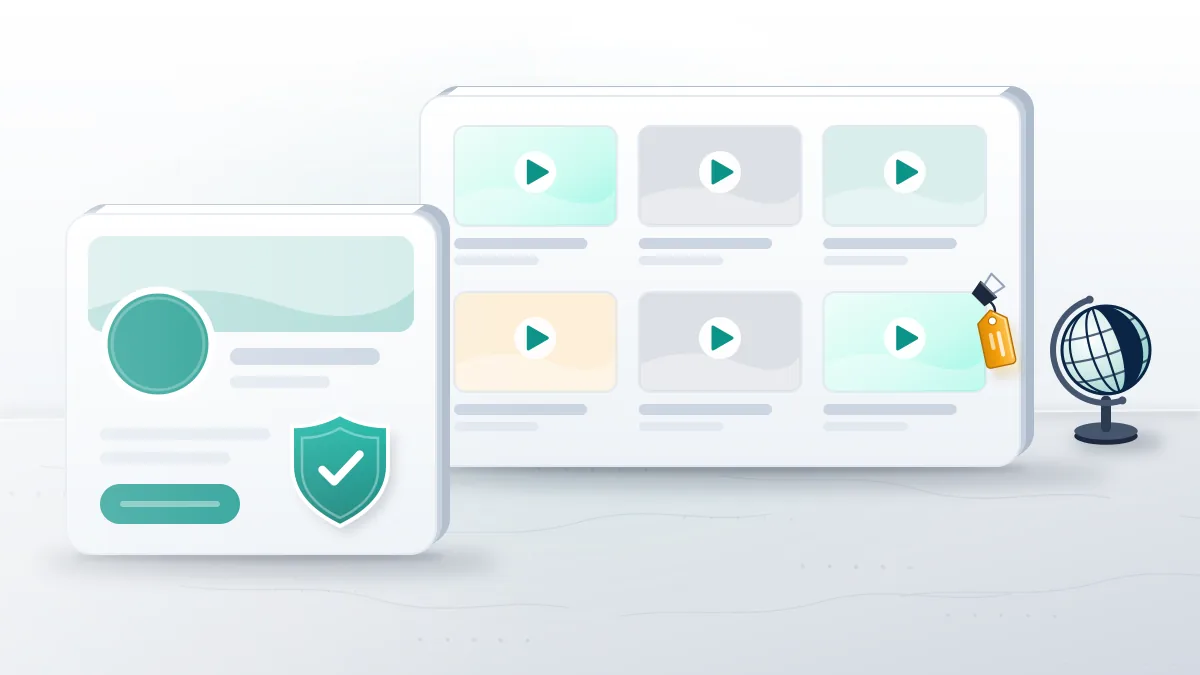
Strike mechanics, with Copyright School and the 90-day expiry, have their own walkthrough on what one, two and three copyright strikes do, and the rights holder's side is covered in who can file a copyright strike on a YouTube video.
If strikes already ended the channel, a claim dispute is the wrong tool. The path to reinstate a terminated YouTube account starts with YouTube's own appeal.
What happens if you get a copyright claim on YouTube?
Usually little beyond one video: it keeps playing or is blocked in some countries, and a monetize policy sends its ad money to the claimant.
Who earns from a claimed video?
YouTube copyright claim monetization follows the claimant's policy, not your settings. Under "monetize", ads run and the revenue goes to the rights holder, sometimes shared with the uploader, and rights holders chose to monetize over 90% of all Content ID claims in 2025 (YouTube Copyright Transparency Report). Once every claim on the video is released, your own monetization settings come back automatically. Disputes add a holding period when both sides want to monetize. Dispute within 5 days of the claim and "any revenue from the video will be held, starting with the first day the claim was placed"; dispute later and only revenue from the dispute date onward is held. Whoever the dispute favors receives the held money, and the video's revenue stays out of Analytics until 10 to 20 days after resolution (Monetization during copyright claim disputes).
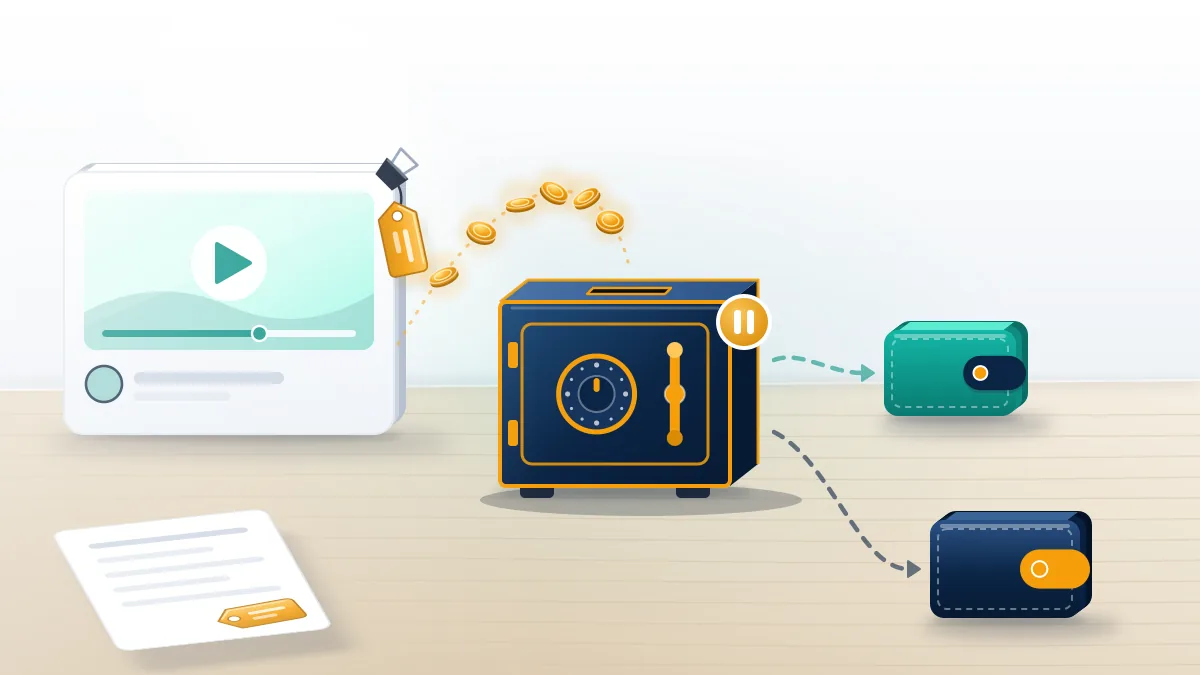
On a disputed monetize claim, Your Reputation Solution logs the claim date before drafting a word, because missing the 5-day mark shrinks what can be held.
Partner Program decisions are a separate matter. If monetization was switched off for the whole channel, the fix is a YouTube monetization appeal, not a claim dispute.
Does a copyright claim affect your YouTube channel?
Does copyright claim affect YouTube channel standing? YouTube's answer is that claims "usually don't impact your channel or account", and none of the help pages checked for this guide ties claims to Partner Program eligibility or to a penalty count. Costs stay narrower: one video earns less, or disappears where the claimant blocks it.
Regional blocks are sometimes read as a reach penalty, the way people on X blame X shadow banning for every quiet week; the Restrictions column shows which one you have.
Meta is stricter at account level, where repeated copyright takedowns can disable an account under its repeat-infringer rules. That is where Instagram banned account recovery and Facebook suspended account recovery begin.
X runs a repeat-infringer policy too, so owners hit by stacked copyright notices there end up needing to appeal a Twitter suspension.
How many copyright claims are allowed on YouTube?
No number is published, because claims don't count toward anything. How many copyright claims are allowed on YouTube has no official answer; a channel can carry dozens without a single strike, and the only published ceiling belongs to strikes. What grows with volume is exposure, since every claim comes from a separate claimant who can later escalate to a removal request.
Asked how many claims is too many, Your Reputation Solution points creators to their claimant list rather than a count: one aggressive claimant outweighs forty passive monetize claims.
How do you clear a claim without turning it into a strike?
Remove the claimed content in YouTube Studio first, and dispute only when you own it, hold a license or have a defensible fair-use case.
Open YouTube Studio, select Content, click the filter bar and choose Claims, then hover over Claims in the Restrictions column and click See details. From there, Take action offers the editing routes. Trim cuts out only the claimed segment. Replace song swaps claimed audio for a track from the YouTube Audio Library, and works on audio claims only. Erase song mutes the claimed audio, either the song alone or all of the video's sound. Any of these clears the claim automatically once no claimed content remains, but "if some copyright-claimed content stays in your video, the claim won't be removed." Two limits catch people out: channels outside the Partner Program can't save edits on videos with more than 100,000 views, and since June 2025 a saved edit can't be reverted (Remove copyright-claimed content). Editing is the only route that carries no escalation risk at all, which is why it comes first even when the claim looks wrong.
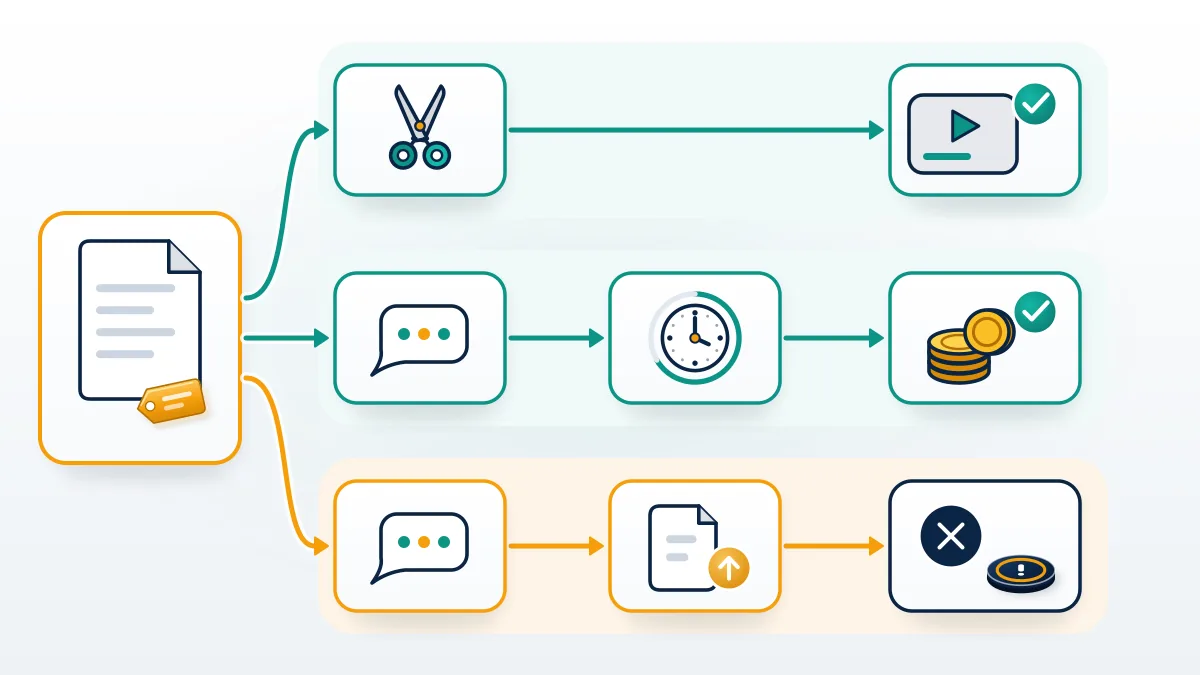
Disputes win more often than creators expect. Fewer than 1% of the 2 billion-plus claims in 2025 were disputed, yet over 65% of those disputes ended in the uploader's favor, either because claimants released the claim or didn't respond in time (YouTube Copyright Transparency Report, 2025). Valid grounds are narrow: you hold all the necessary rights, the use falls under an exception such as fair use, or the video was misidentified. When we review a claim with a creator, the order never changes. Confirm the claimant and the matched segment, try an edit if the segment is incidental, and draft a dispute only when the creator holds the license or the use would survive a fair-use argument.
Think a claim is wrong, or unsure about a dispute? Your Reputation Solution reads the claim details with you, checks the license or fair-use position and drafts a dispute only if you can stand behind every line of it. Book a claim review
Claim appeals contest ownership of one video. Account-wide appeals are broader: a TikTok account ban appeal or the route to get an Instagram account unbanned puts the whole account at stake.
Account-level cases on other platforms keep their own clocks: a permanent Marketplace ban has one appeal path, and TikTok account recovery after being banned follows another.
What should a "claim removal" offer never ask you for?
A password, a login code or payment for a promised result: only the claimant can release a claim, and YouTube rules on disputes and appeals.
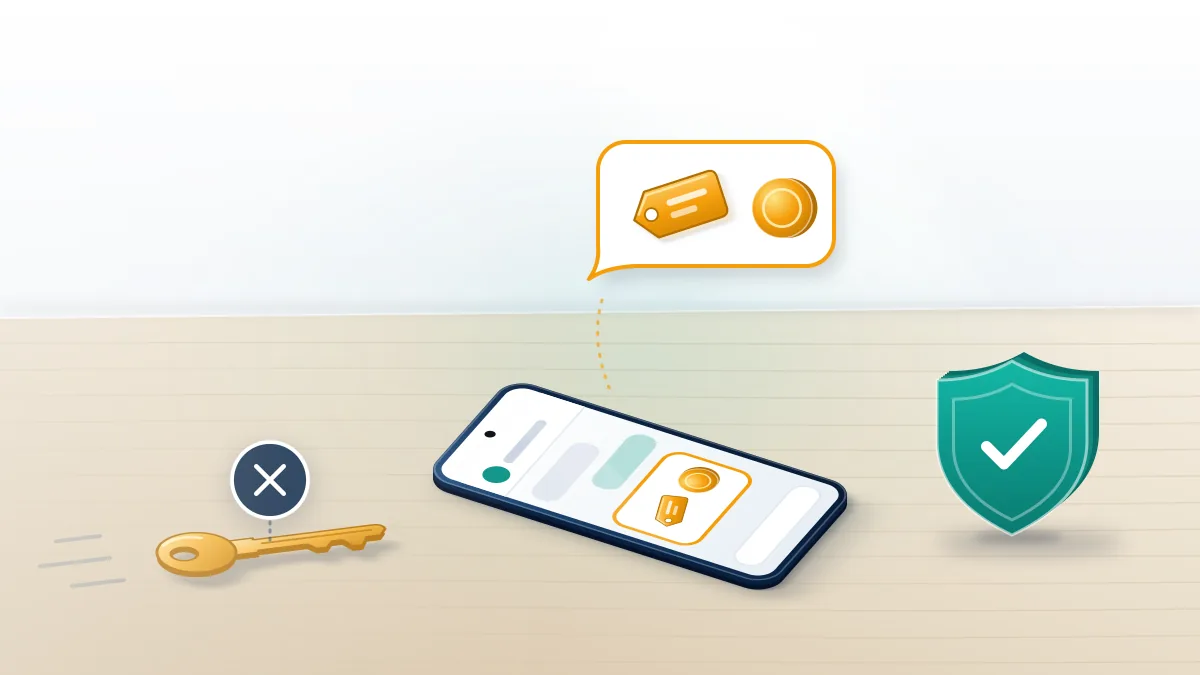
Claim notices open a sales window. Creators who just lost a video's revenue are easy to reach through comments, email and DMs, and the pitch rarely changes: pay a fee, hand over access to the channel, and the claim "disappears". Nothing in YouTube's system works that way. Claims are released by the claimant, expire when the claimant ignores a dispute for 30 days, or clear automatically when the claimed content is edited out, and every one of those paths runs through your own Studio account at no cost. Anyone asking for your Google password or a sign-in code wants the channel, not the claim. Another pitch sells disputes written to sound legal, but a dispute is your own statement, and YouTube warns that "repeated or malicious abuse of the dispute process can result in penalties against your video or channel." False ownership claims are real as well: over 6% of videos requested for removal through YouTube's public webform in 2025 were targets of abusive requests.
The work Your Reputation Solution does ends at preparation: reading the claim, checking the license or fair-use position and drafting text you submit yourself, while the claimant and YouTube make the call.
Some things are off the table in every case, and the disclaimer page lists them. No request for your Google password or sign-in codes, no dispute you can't truthfully sign, no payment to a claimant to drop a claim, and no promise that a claim will be released.
Those same sellers often run a Telegram mass report tool or a spam report bot for Instagram on the side, which says plenty about the product.
If one keeps messaging you on WhatsApp after a refusal, report and block the number; the guides on how to ban someone from WhatsApp and what it takes to get someone's WhatsApp banned explain why a report beats an argument.
Typing a sign-in code into a "claim removal" bot on Telegram hands over the account itself. Recovery begins with ending unknown sessions, as the Telegram account recovery steps explain.
Where the account was frozen or reset after that login, the guide to recover a Telegram account after a reset covers that path, and the Telegram account recovery service handles cases the in-app steps can't.