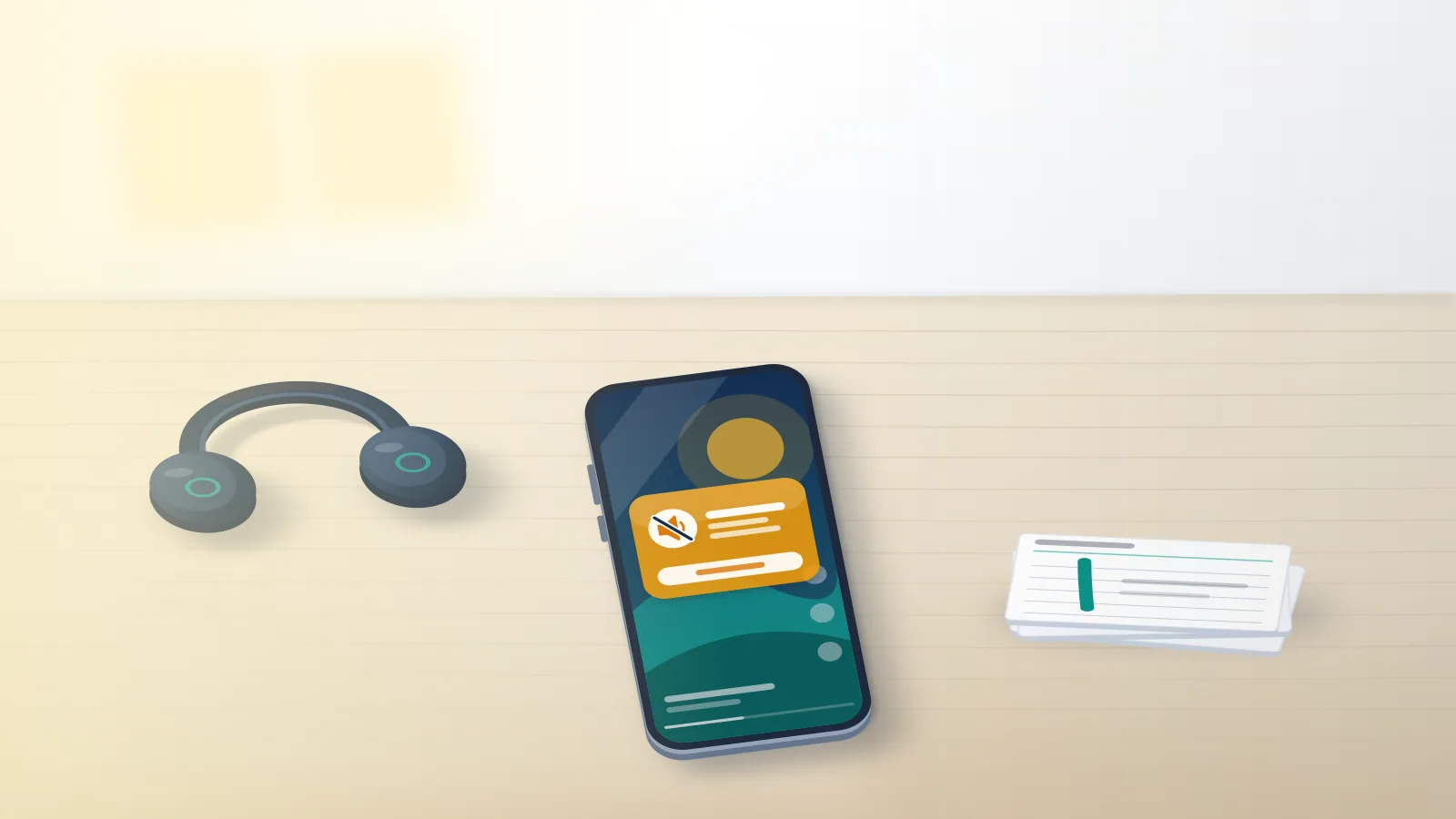
What is a copyright claim on TikTok, read from the notice you got?
A copyright claim on TikTok is a rights holder's notice that TikTok acted on, and its effect on your post shows how serious it is. Labels, photographers, film studios and fellow creators file these notices under TikTok's Intellectual Property Policy once audio recognition or their own search turns up their work in your video. TikTok reviews the notice, acts on it, and only then tells the uploader through an inbox notification that names the policy and offers an appeal. So anyone asking what is a copyright claim on TikTok really wants to know which of four things happened: a muted sound, a removed video, a strike on the account, or a ban. Each has its own fix and its own risk. Screenshot the notice before tapping anything, since an appeal or counter-notice will need its exact wording.
Read your notice against this table, which follows TikTok's policy and help pages as of October 2026:
| Notice you see | What TikTok did | Effect on the account | First move |
|---|---|---|---|
| Sound muted or removed | Matched audio your account has no licence to use | Video stays up, a violation is logged | Appeal the mute if you hold a licence |
| Video removed for intellectual property | Took the post down after a rights holder's notice | A copyright strike that lasts 90 days | Collect proof, then appeal or counter-notify |
| Several removals close together | Stacked strikes in the copyright track | The account nears its copyright limit | Stop posting disputed material |
| Account banned | Limit passed, or one severe violation | Login still works for an appeal and a data download | Appeal from the ban banner |
Two rows surprise most creators. Strikes are temporary: TikTok's help center says accrued strikes expire from your record after 90 days, and an approved appeal removes one sooner. Bans can also arrive without a count, since the policy reserves the right to ban an account at once for a severe copyright violation.
Your Reputation Solution is an account recovery and reputation firm that reads each Tik Tok copyright claim with the creator who received it, checks whether a dispute has a lawful basis, and drafts the appeal or counter-notice alongside them. Rights holders get their own walkthrough in our TikTok copyright infringement report and DMCA takedown guide.
People asking how to get a TikTok taken down immediately over a stolen clip use that same form, which is why viral videos collect claims in bunches. If the last row of the table already describes your account, the appeal steps sit in TikTok suspended account recovery.
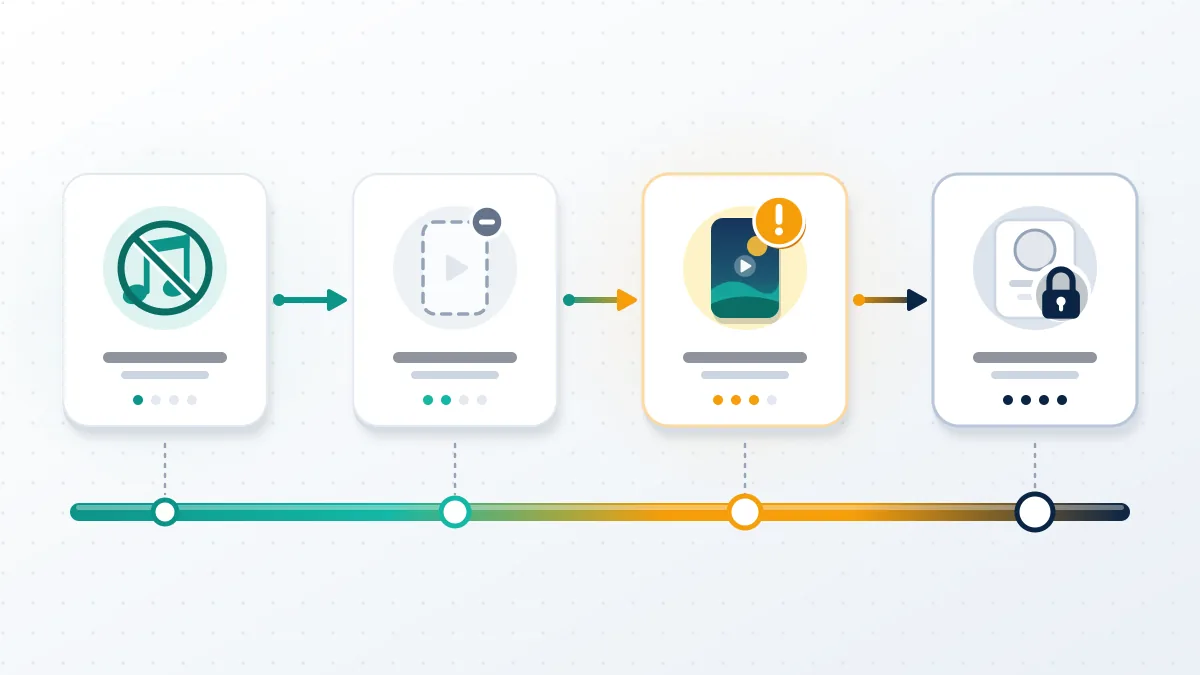
Who owns a TikTok video, and which copyright laws apply?
You own the original video you film; TikTok holds a licence to host it, and national statutes decide everything else.
Is there copyright on TikTok? Yes, and nobody has to apply for it. According to the US Copyright Office, a work is protected the moment it is created and fixed in a tangible form, with no registration required (copyright.gov). Once a clip is saved to your camera roll it is fixed, so are TikTok videos copyrighted? Original ones are, by whoever made them. Under TikTok's Terms of Service you keep ownership and grant TikTok a wide licence to host, show and distribute it. That licence covers TikTok's use, not anyone else's, which is why one creator can file against a reposter on the same app. Borrowed material is the trap: the song under your dance, the film scene in your edit and the photo in your slideshow belong to someone else, and their copyright travels with them.
In the US, TikTok copyright laws start with the DMCA, whose notice-and-takedown rules in 17 U.S.C. § 512 cover counter-notices, knowingly false notices, and ending repeat infringers' accounts. EU law adds Article 17 of Directive 2019/790, which makes sharing platforms license works or make best efforts to keep notified works off. Searching TikTok legal copyright brings up the policy that applies those statutes.
Fair use is the defence most creators reach for, and Your Reputation Solution backs one only with dated proof, such as a raw file or a licence receipt that predates the claimant's upload. No formula decides it, the Copyright Office says, with no safe number of seconds, words or percentage (copyright.gov), so the popular "15-second rule" protects nobody.
Copyright has edges too. Names and short phrases fall outside it, so a fight over a handle runs through trademark or inactivity rules instead, the route people use to claim an inactive Instagram username or to claim an inactive Twitter username.
Section 512 itself travels well: it powers a Telegram DMCA takedown and the notice a photographer files to take down a photo on Instagram, so what you learn here applies on other apps.
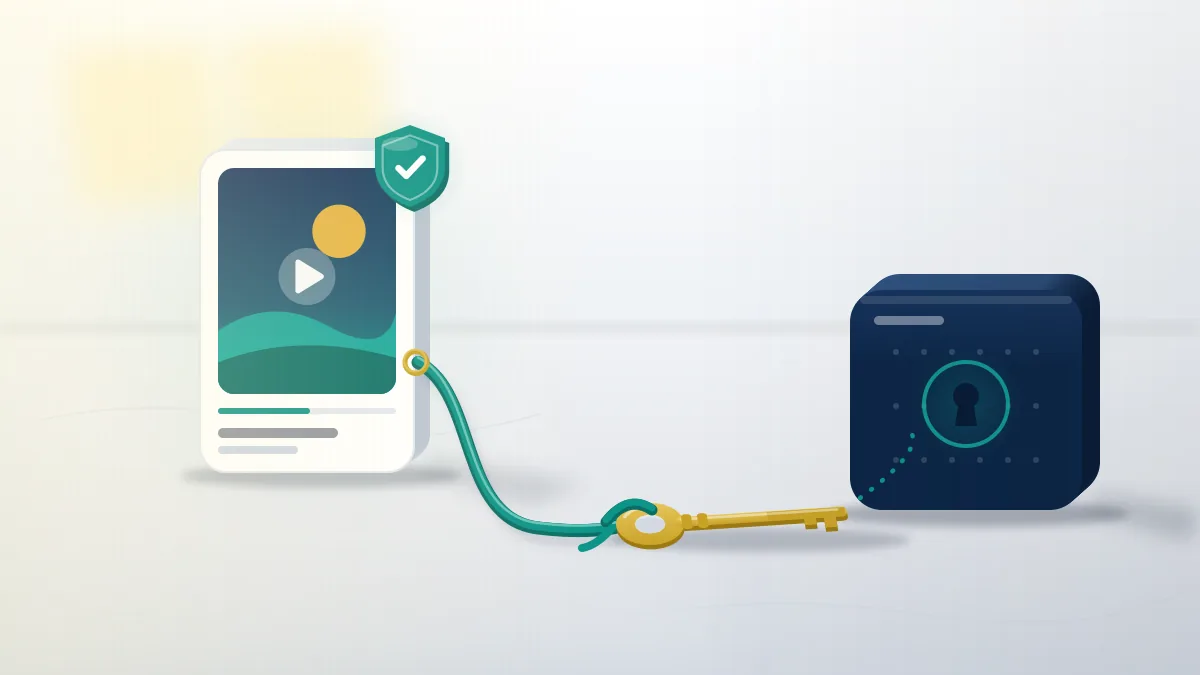
How does copyright work on TikTok between a notice and your inbox?
Rights holders file, TikTok reviews, and the uploader hears last, after the post is already muted or gone.
How does copyright work on TikTok day to day? It runs on two tracks. Audio recognition is the automated one: TikTok matches sounds, and when a track isn't licensed for your account type, the sound is muted or removed while the video stays up. Notices from rights holders are the manual one, filed with the original work, the infringing link and a sworn good-faith statement; TikTok removes the post when the notice checks out and sends an inbox notification naming the policy. Business accounts meet a stricter automated track, because TikTok's ads help center says businesses cannot use the general music library for commercial use and must choose from the Commercial Music Library. Brand profiles that post over a chart song sit one audio match away from a muted video, even where a personal account could use the same sound.
Before drafting any dispute, Your Reputation Solution checks that account type, because an appeal claiming a licence the account never had will fail. Most TikTok copyright rules that catch creators out fit in four lines. Original footage is yours to post. Library sounds are licensed for use on TikTok, not for re-uploads elsewhere. Film, TV and sports clips are someone else's work however short, and crediting the artist in a caption is not permission. Those TikTok copyright guidelines sit in the Intellectual Property Policy; harmful-content strikes fall under the Community Guidelines.
Does TikTok have copyright claims the way YouTube does? It has notices and removals but no Content ID split between revenue claims and strikes, so an upheld removal adds a strike. Volume is high: TikTok's transparency report counts over 470,000 IP takedown requests and 4.9 million items removed from July to December 2025, mostly for copyright (TikTok Transparency Center).
YouTube publishes its count, so anyone who must recover a terminated YouTube channel knows three strikes ended it. Muted sounds also differ from a shadow ban on X, where posts stay up but travel less.

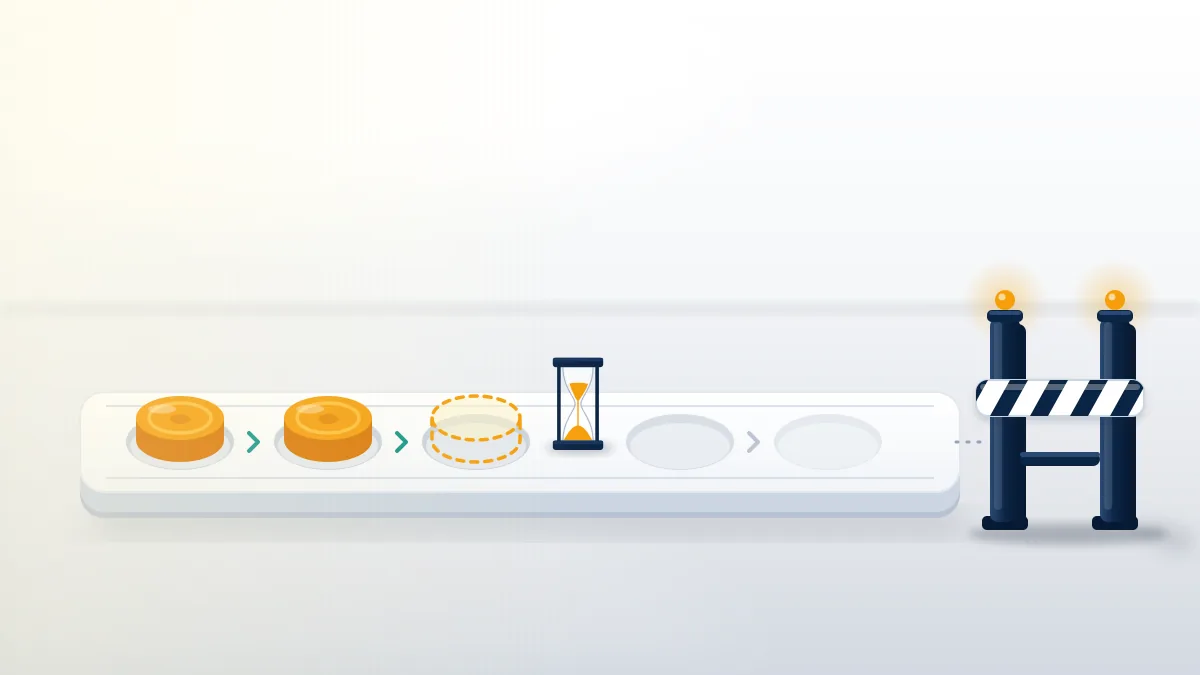
How many copyright strikes are allowed on TikTok?
TikTok doesn't publish the number; its policy says each intellectual property type has a strike limit, and passing it removes the account permanently.
How many copyright strikes on TikTok can one account carry? The policy answers with a structure rather than a figure. Strikes are counted separately for each type of intellectual property, so copyright and trademark run on different tracks, and TikTok's own example says an account holding two copyright strikes and two trademark strikes won't be banned. That example shows the copyright limit sits above two, and nothing more. Accrued strikes expire from your record after 90 days, according to TikTok's help center page on content violations and bans, and an approved appeal removes a strike early. Forum talk of three strikes comes from YouTube's published system, not from TikTok. Severe cases skip the count entirely, because the policy reserves the right to ban an account at once for a severe copyright violation without defining severe.
When Your Reputation Solution reviews a strike history with a creator, the first job is a dated list: each removed video, the notice date, the claimant, and the day each strike drops off. That list sets the order of disputes. Winning an appeal on a strike that expires next week changes little; winning one on the newest strike gives the account three months of room.
So does TikTok have copyright strikes? Yes, counted by IP type and kept apart from the per-policy Community Guidelines strikes that how many violations get you banned on TikTok explains, with the same 90-day clock. Passing the copyright limit, or one severe violation, brings a TikTok copyright ban, and the policy lets TikTok refuse the same person a new account.
Instagram also disables accounts for repeated IP violations, which is why creators there end up reading how to unban an Instagram account and, when the disable is final, permanently disabled Instagram account recovery.
X suspends repeat infringers as well, and the route back is the appeal in recover a suspended Twitter account. On Facebook, the same logic runs through the Facebook disabled account recovery form.
Facing a copyright strike or a ban? Your Reputation Solution reviews the notice, your proof and the strike dates, then says plainly whether a dispute is worth filing. Request a free case review. We never ask for your password.
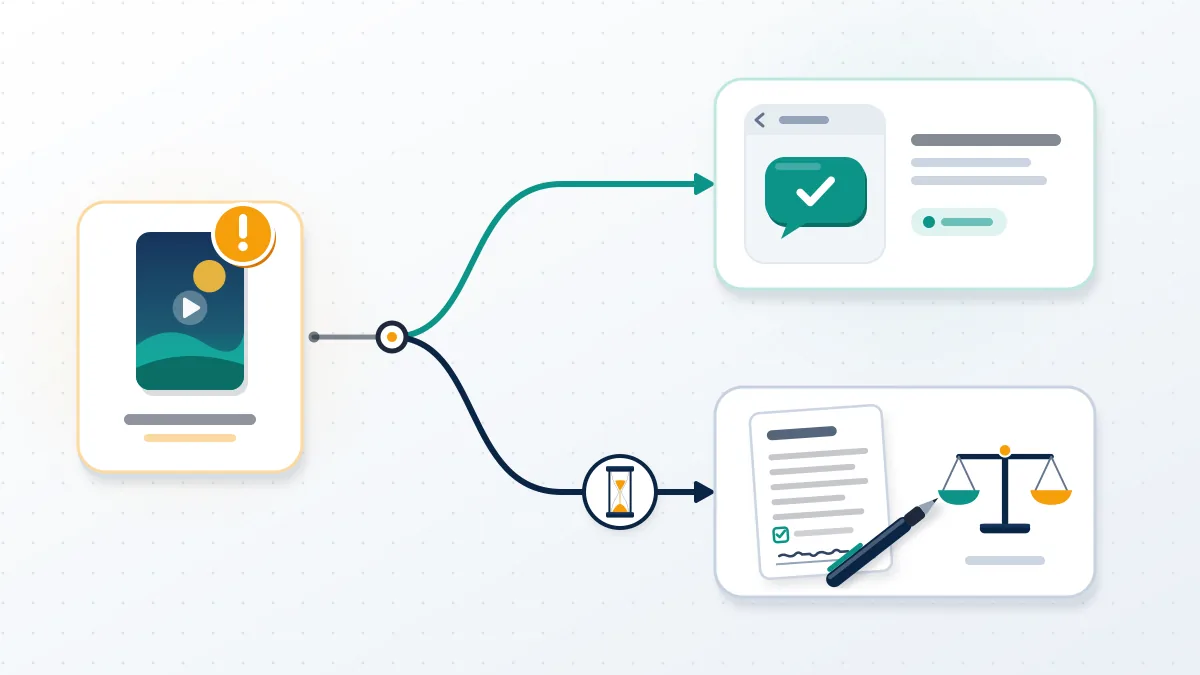
Appeal or counter-notice: which route fits a copyright strike on TikTok?
Appeal in the app when TikTok's decision is wrong; file a counter-notice when you own or licensed the material and can prove it.
Appealing inside the app
TikTok's policy offers two dispute routes: the in-app notification process and a counter-notification form. The in-app appeal is the light one: open the notification, tap appeal, and explain plainly why the removal or mute was wrong. According to TikTok's Creator Academy, an approved appeal on a muted video removes the violation and restores the audio. It suits misidentified audio or a sound you licensed.
Filing a counter-notice
A counter-notice is the formal version, and it carries legal weight. Under section 512(g) of the DMCA it must include your physical or electronic signature, the removed material and where it appeared, a statement under penalty of perjury that it was removed by mistake or misidentification, and your name, address and phone number with consent to a US federal court's jurisdiction. TikTok forwards it to the claimant, so your contact details reach the person who flagged you. The statute then has the host restore the material 10 to 14 business days later unless the claimant reports filing a lawsuit. No TikTok-specific timeline is published for this step, so treat the statutory window as the frame rather than a promise. Section 512(f) makes anyone who knowingly misrepresents a takedown or a counter-notice liable for damages.
Work through it in this order:
- Screenshot the notice and note its date to track the 90-day expiry.
- Match the route to the facts: a wrong match gets an appeal, your own or licensed work a counter-notice, borrowed work neither.
- Gather proof: raw footage, project files, licence receipts, or your dated original upload.
- File once, accurately.
- Post only material you can prove you own while the dispute runs.
From there, Your Reputation Solution prepares the appeal or counter-notice with you and checks every line against the evidence; TikTok, and after a counter-notice the claimant, decides what happens next. Sellers banned for counterfeit listings meet a similar IP review on Meta, covered in how to get unbanned from Facebook Marketplace.
After a TikTok copyright ban: what still works on the account
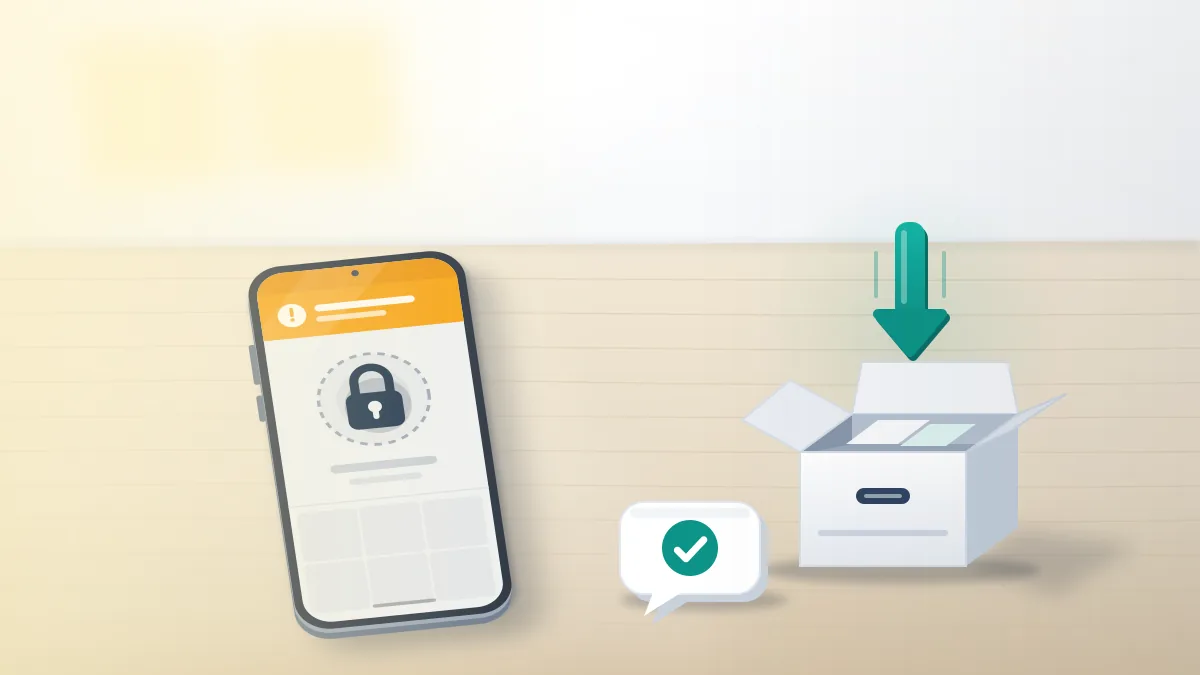
A ban ends posting, not access. TikTok's safety help center says a banned user sees a banner at login and can still log in to submit an appeal and download personal data (TikTok Help Center). Do both, in that order: the appeal while the strike evidence is fresh, then the data export, so a lost appeal doesn't also cost you the archive of every video you made. Copyright ban appeals are stronger than most in one respect, because their facts are documents rather than judgment calls: a licence either exists or it doesn't, and a project file either predates the claimant's upload or it doesn't. Open new accounts with care. Under its IP policy TikTok can refuse a new account to someone whose account it banned, so a replacement profile can be taken down under that same rule.
For the full appeal sequence, including what to write, see how to recover my banned TikTok account.
Creators who move their audience to a Telegram channel during the appeal need that fallback reachable. See how to recover a Telegram account for a lost number and Telegram frozen account recovery for a frozen login.
When both routes stall, Telegram account recovery is available as a service.
Strike-removal offers, mass reports and other dead ends
Some services promise to wipe copyright strikes, or to get a rival's video struck for a fee, and both promises are false. Your Reputation Solution sells neither: it files no false claims or counter-notices, buys no reports, and never asks for your TikTok password, login codes or email password. Nobody outside TikTok can delete a strike from your record; it expires after 90 days or falls with an approved appeal. Signing a counter-notice for content you don't own means a false statement under penalty of perjury, and a notice filed against a video someone merely dislikes exposes the filer to damages under section 512(f). Emails dressed as TikTok copyright notices that ask you to log in through a link are phishing, so check the app's inbox instead. Those limits, and the others we keep, are spelled out on the disclaimer page.
Mass reporting is the other false promise. Ordinary reports, however many, are not a copyright notice, which is why a TikTok mass report bot can't produce a copyright strike, and why tools sold to mass report an Instagram account fail for the same reason.
Pitches for an Instagram spam report bot or paid Facebook mass report services rest on that confusion too. Report volume decides nothing in an IP case.
Messaging apps attract the same sellers, with pitches on how to ban someone on WhatsApp or tools sold as a WhatsApp mass report shortcut.
Guides on how to get someone banned on WhatsApp and on the Telegram mass report bot trade explain why those platforms act on violations, not on report counts. Copyright strikes work the same way: one valid notice from the owner outweighs a thousand reports from strangers.