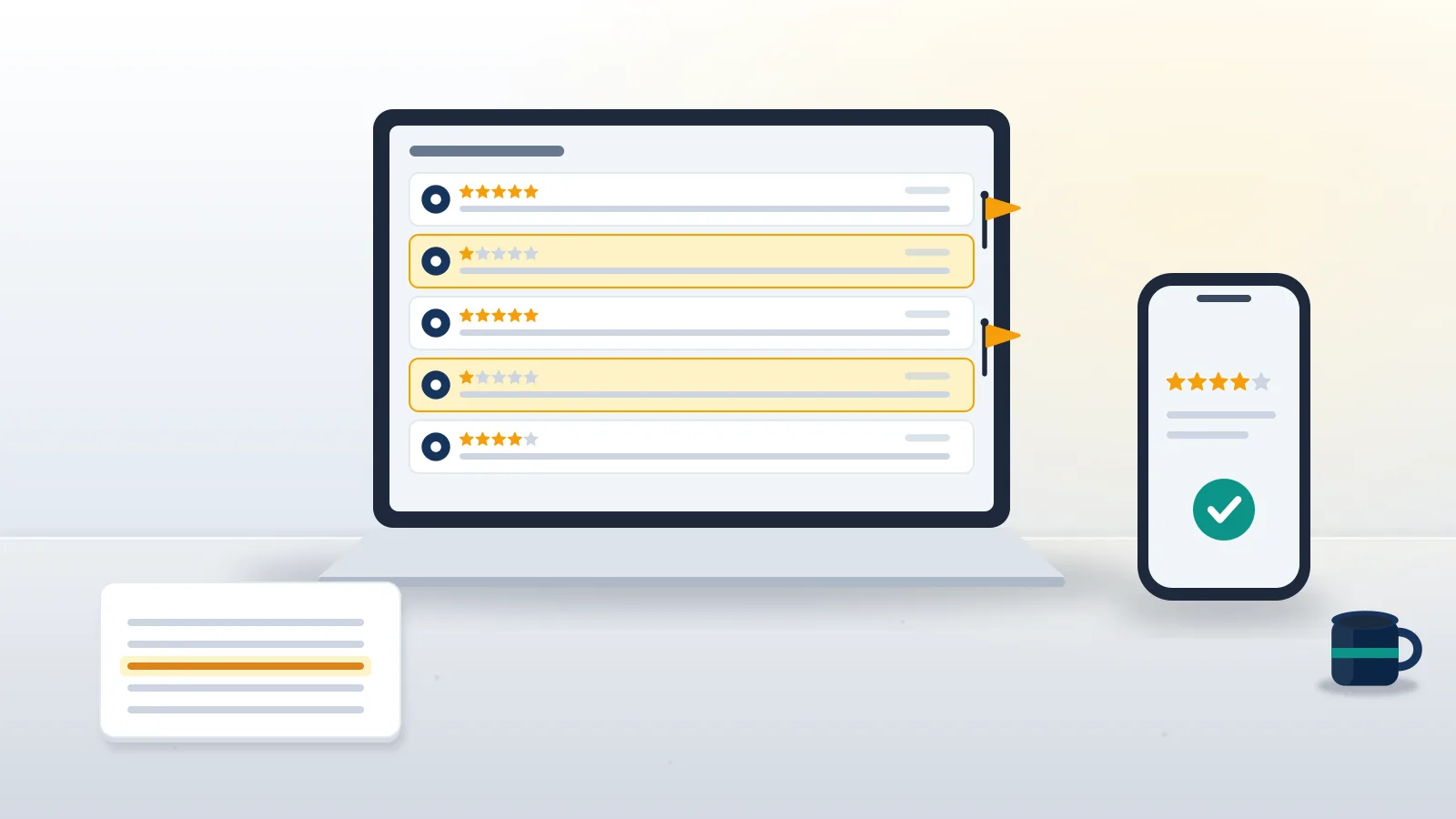
What makes a negative review removable?
Google, Yelp, Amazon and Trustpilot remove a negative review when it breaks their written content policy, not when it is merely harsh. Their rules overlap heavily: Google's user contributed content policy removes fake engagement, paid reviews, conflict-of-interest posts from staff, competitors or family, off-topic rants, harassment and personal information. Amazon adds a seller-specific rule, since a product review about the seller, the order or the shipping belongs in seller feedback and can come down. Yelp bans reviews written under a conflict of interest and reviews the business solicited, and Trustpilot's guidelines follow the same pattern. None of the four removes a review because the owner disagrees with the stars, and that single line decides whether you can remove negative reviews or only answer them. It also explains why two flags on the same listing, filed the same day, end differently.
Your Reputation Solution is a reputation management firm that matches each review against the exact policy line before a business owner files anything. For a truthful, on-topic review, the plain answer to can you remove negative reviews is no, and effort shifts to the reply and to fresh reviews, which is how to get rid of bad reviews that are accurate.
How to remove negative reviews on Google, Yelp, Amazon and Trustpilot
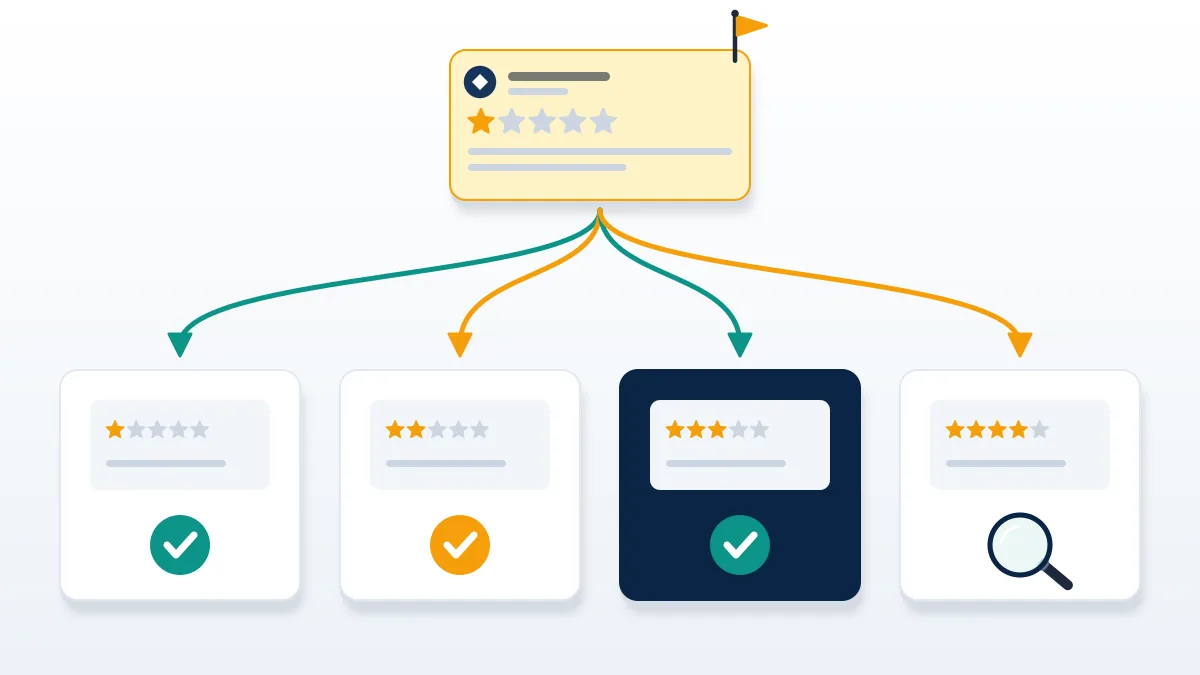
Every platform has one built-in flag, and that flag is where legitimate bad review removal begins. On Google, the owner opens the Business Profile, picks Read reviews and taps the report icon, or files through the Reviews Management Tool, which shows statuses such as "Decision pending", "Report reviewed - no policy violation" and "Escalated" (Google Business Profile Help). Rejected reports get one appeal, and Google says evaluation typically takes several days. Yelp owners report from the business account, and Yelp's support staff cannot edit a review because an advertiser asks. Amazon sellers use the "Report abuse" link under the review on the product page, and Amazon does not disclose its finding. Trustpilot lets a claimed business flag a review that breaches its guidelines for businesses. Remove bad reviews this way, one flag per review with the rule named, and keep a screenshot of each before you file.
Bulk tools do not exist, so how to remove bad reviews online and how to remove negative reviews online come down to the same slow routine. Nobody can delete bad reviews in a batch, and flooding the queue with weak reports teaches moderators to skim the next one. Only the platform can delete negative reviews, since no outside party holds that button.
Video reviews follow the same logic: a hostile YouTube review is reported as one video, while a youtube channel takedown is a far rarer outcome reserved for repeat policy breaks.
Facebook and BBB reviews play by other rules
Facebook calls its reviews Recommendations, and a Page admin can report one that breaks the Community Standards or switch the tab off entirely. On these two sites Your Reputation Solution checks dates before anything else, because a missed BBB window cannot be reopened. Facebook's help page describes the switch, and turning it off hides every recommendation, good ones too, so it is a trade rather than a fix. Better Business Bureau staff vet each customer review and send it to the business before publication, which puts the dispute window earlier than on Google or Yelp (BBB review FAQ). BBB reviews also sit outside the BBB rating. To remove bad business reviews on either site, answer inside that window and point to the specific rule or factual error. Facebook reviews from a fake profile are better reported as the profile itself, since a removed profile usually takes its recommendations with it.
Deleted accounts work the same way elsewhere: a reviewer who closes an account usually takes the review along, much like the steps for how do i delete an account on instagram wipe a profile's posts. Dormant profiles are the opposite case, and asking will instagram delete inactive accounts shows how slowly platforms prune accounts by themselves.
Can you get a 1-star review removed for being unfair?
No. Unfair is not a policy category, so a truthful 1-star review stays up.
When Your Reputation Solution files these, reports quoting the policy line with one piece of proof hold up, and fairness arguments come back rejected.
Knowing how to get a 1 star review removed comes down to finding a rule the review actually breaks: a non-customer author, a competitor or former employee, a review aimed at the wrong business, or a post with a phone number or slur. Google's help page tells owners not to report a review just because they disagree with it. Underline the sentence that breaks the policy; if nothing can be underlined, the report will fail. That is how to get a bad review removed, and how to remove a bad review on stricter sites like Yelp. To get negative reviews removed, proof has to live in the review or in records you can show, such as an order log with no matching name or a staff roster proving the "employee" never worked there on that date.
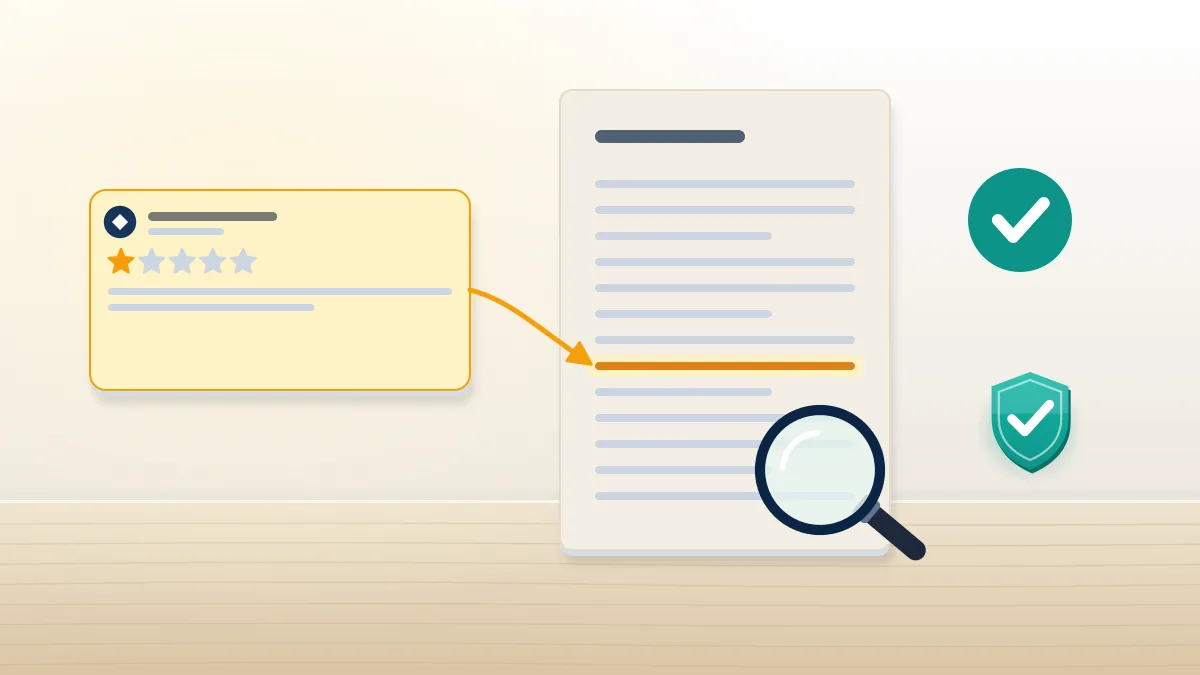
Remove negative product reviews on Amazon with the same test. Late delivery breaks the product review rule, while a blender that broke in a week does not.
Reply first, then ask for an update
Public replies work on every platform, and they are the honest form of negative review feedback removal. They also answer how to remove a negative review that no policy covers, and how to get rid of negative reviews that are fair. Reply within a day or two, name the fix, and leave customer details out. The FTC rule does not stop a business from contacting a customer to resolve a problem, so once the issue is fixed, a short note asking whether the customer would consider updating the review is allowed, provided nothing is offered in exchange (FTC rule Q&A). Amazon is the exception, because sellers may not ask buyers to change or remove a review at all. Two messages is the ceiling, and zero if the reviewer asked to be left alone. Removing bad reviews this way is slow, yet here the customer decides.
Not sure which reviews qualify? Your Reputation Solution can sort a flagged list with you and draft calm replies for the rest. Request a free review audit before you file anything.
When does the legal route make sense?
A court order is the remaining lever to remove bad online reviews that are false and damaging rather than simply negative. Defamation needs a false statement of fact, not opinion: "the owner stole my deposit" can be defamatory if untrue, while "worst service ever" cannot. In the US, Section 230 shields platforms from being treated as the publisher of user reviews (47 U.S.C. 230), and in Hassell v. Bird (2018) the California Supreme Court held that an order against a reviewer could not be enforced against Yelp. Platforms often remove a review after a court finds it defamatory, though the platform still decides. Deadlines matter too, since defamation limitation periods run between one and three years depending on the state. Forged orders are a real problem: a Manhattan businessman was sentenced to nine months for faking federal court orders sent to Google. Groundless lawyer letters aimed at the reviewer are now their own FTC risk.
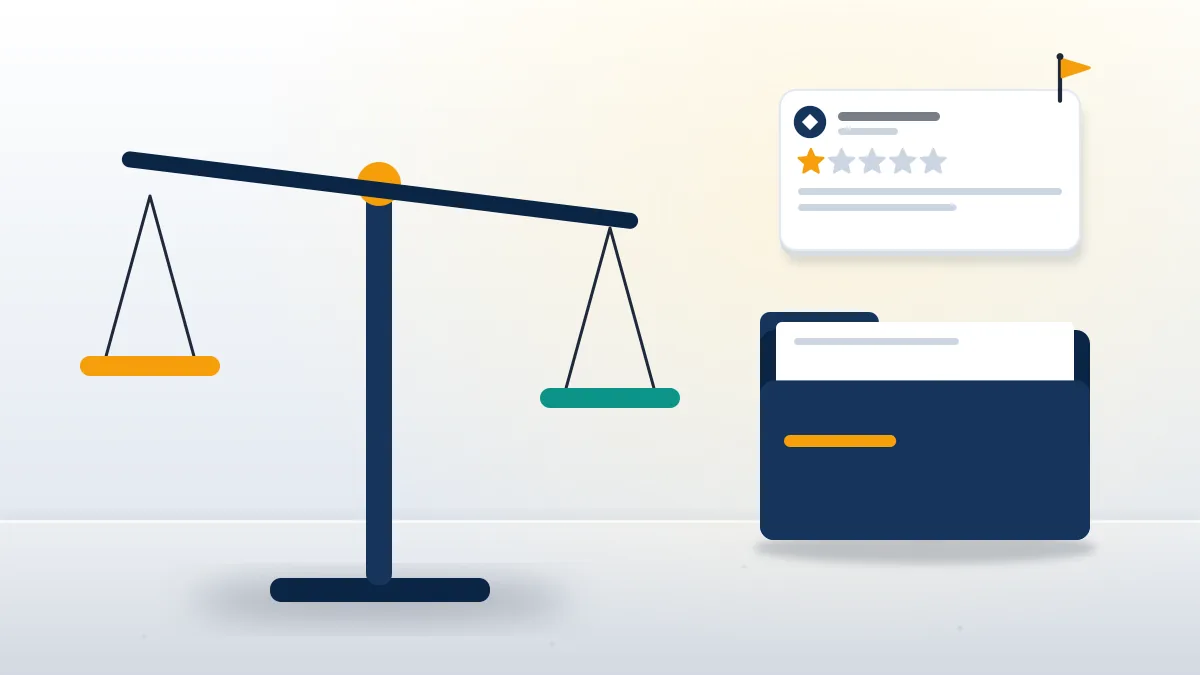
Congress's Consumer Review Fairness Act of 2016 also voids form-contract clauses that punish honest reviews, so a non-disparagement line in your terms will not help either.
What never works, and what the FTC can fine
Since October 21, 2024, the FTC rule on consumer reviews (16 CFR Part 465) bars fake reviews, incentives tied to a positive sentiment, and review suppression through groundless legal threats, intimidation or false accusations, and knowing violations can draw civil penalties. Review gating, where only happy customers receive the review link, breaks Google's policy as well. Paying a reviewer to pull a truthful review can count as unfair or deceptive under the FTC Act, and buying five-star reviews to bury the bad ones is fake engagement everywhere. For that reason Your Reputation Solution never pays reviewers, never threatens one and never asks for a password; it documents and files reports, and the platform makes every final call. Anyone offering to erase negative reviews through insider contacts at Google or Yelp is selling access nobody outside has.
Searches for how to delete bad reviews or how to delete negative reviews fast lead straight to these sellers, whose pitches arrive dressed as platform staff, the same trick as a fake instagram customer service number or a spoofed "we got a request to reset your instagram password" email.
Every service has hard limits, and the limits of what any reputation service can do are written out in full.
Angry reviewers rarely stay on one platform
Losing a dispute on Google sometimes sends a reviewer to the business's social accounts, with comment floods, copied posts and coordinated mass reports. Those reports can push a profile into automated review, and owners in that spot ask why was my instagram account suspended in the same week they try to remove bad reviews online. Sudden security prompts are common too, and an instagram account locked for suspicious activity notice after a review fight is usually an automated login check, not a verdict on the review. Keep the two problems apart. Review reports go through the review site's tools, while account problems go through the social platform's own appeal screens, and mixing them in one complaint gets both ignored. Screenshot the comments with dates, since the same evidence often supports a harassment report later.
Recovery comes first, because a business that cannot log in cannot reply. With my instagram account disabled on screen, follow the appeal path for how to recover disabled instagram account rather than paying a stranger who promises a shortcut.
Fake support thrives on that panic. Your Reputation Solution points owners to the real channels for how to contact instagram and to the one email address for instagram that genuinely exists, which cuts out most impostors.

Paused accounts behave predictably: posts from instagram deactivated accounts vanish until the owner returns, and how to reactivate account on instagram brings them back.
Clocks differ by network: a twitter deactivated account has its own window, and how long before inactive twitter accounts are deleted explains why silent profiles linger.
TikTok is no faster, as does tiktok automatically delete inactive accounts shows.
If a staff login is hijacked, my twitter account was hacked covers the report-and-secure order, and a broken instagram email reset can stall recovery.
Pile-ons leave traces: a snapchat access temporarily disabled message often follows a burst of reports, and a twitter shadow ban check shows whether replies still show.
How do companies remove negative reviews without breaking rules?
Companies that do this well run a fixed loop: audit, flag only rule-breakers, reply, fix the cause, and invite every customer to review. That is how to remove negative reviews at scale without tripping the FTC rule, and how to remove bad reviews from public view, because steady new reviews push old ones down the default sort, the slow but real answer to how to get rid of bad reviews online. Removing negative reviews online is one part of that loop, usually the smaller part; no tool can remove negative reviews online in a click, and firms that remove negative online reviews legitimately still file one report at a time. Rebranding is no shortcut either. Google and Yelp attach reviews to the listing, not the name, so owners who ask can i buy an instagram username during a rename keep the same review history.
Handle shopping is fine for a launch: owners check if username is taken instagram and browse available instagram usernames routinely.
Paid handles are a different market: asking can you buy instagram handles or chasing an instagram 4 letter username will not move a single review.