What does an auto FB report tool actually do?
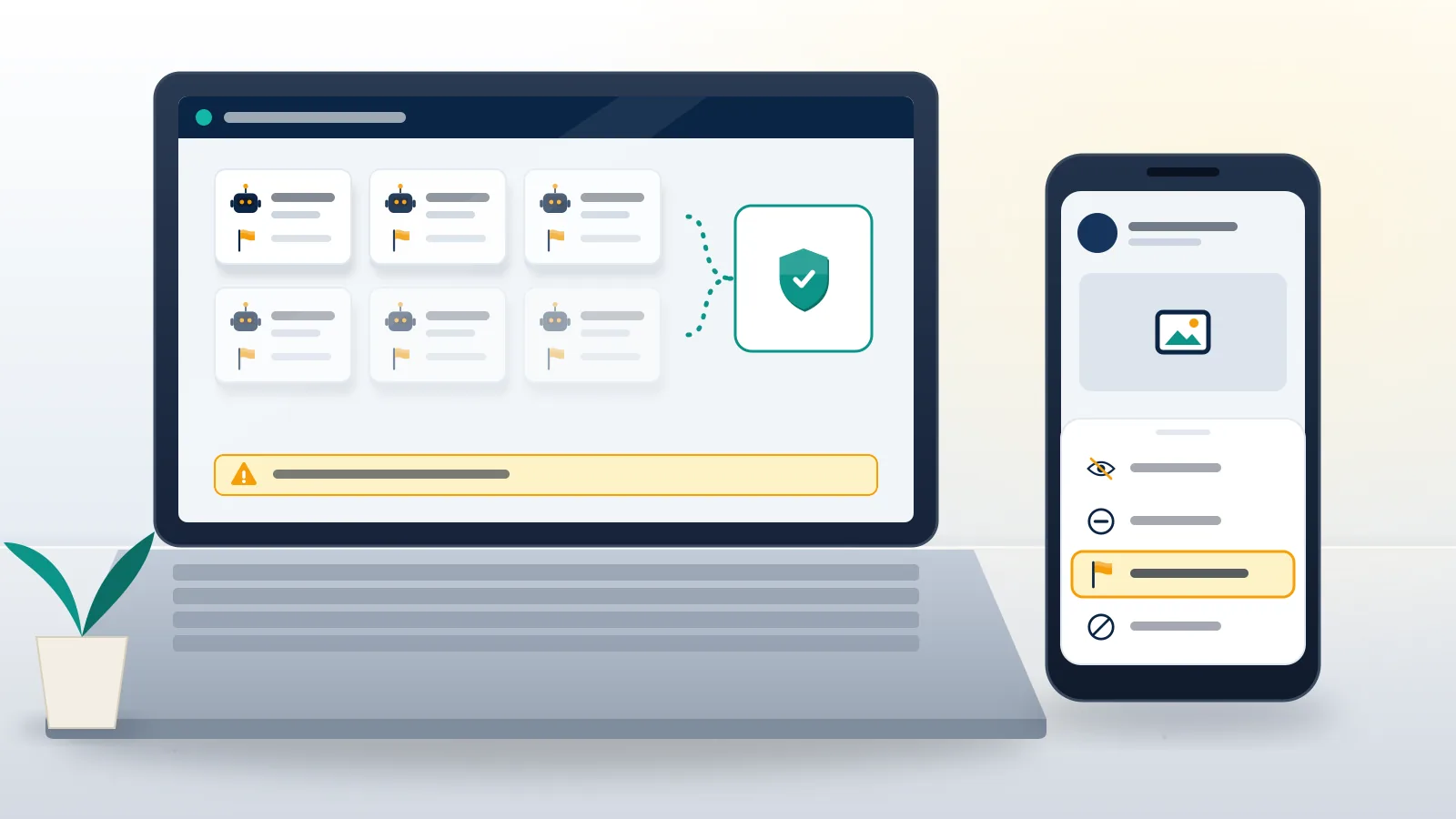
An auto FB report tool automates the clicks of Facebook's report menu, never the decision that follows them. Every facebook auto report tool, whether it is sold as a bot, a browser extension or a website, promises the same thing: to send a report, or many reports, against a profile, Page, post or group without you doing the clicking. Listings use the words interchangeably, auto report Facebook, fb auto report, a facebook auto reporter, auto report on Facebook, but all of them describe the same clicking. What none of them can touch is the review. That review happens inside Meta, on Meta's systems, against Meta's Community Standards, and no script outside Facebook can reach it. So the honest description of these tools is narrow: they change who does the clicking and how often, not whether the content breaks a rule.
Sales pages blur that line on purpose, because "we send 500 reports" reads a lot like "we remove the account" when you are angry at someone. This page is about the gap between those two sentences. How report volume is weighed differently across profiles, Pages and groups is a separate question, covered in our breakdown of whether a Facebook mass report actually works.
Your Reputation Solution is an account recovery and reputation management firm that files evidence-based reports and appeals with platforms for people and businesses facing impersonation, harassment or wrongful takedowns. We write about these bots because clients often arrive after paying for one and getting nothing.
Does a facebook auto report bot remove an account?
On its own, no. A facebook auto report bot cannot remove an account, because removal is a decision Meta makes after reviewing the report, not an outcome the report count triggers. This is the single most important thing to understand before you pay anyone.
Meta publishes the numbers that explain why. In a single recent quarter the company actioned roughly 1 billion fake accounts, and it has stated that it finds the large majority of them through its own automated detection before a single user report arrives (Meta Transparency Center, 2025-2026). User reports are a minor channel feeding a system that is already removing fakes at that scale. A facebook report bot online, a downloaded fb report bot, or any bot report facebook service adds more items to a queue that a reviewer or a classifier still has to judge one by one.
What survives that review is the material that genuinely breaks a policy: a real impersonation, a credible threat, graphic content, a scam. When our team files against those, one clear report with evidence usually moves. When the target is simply an account someone dislikes, no number of automated reports moves it, because there is nothing for a reviewer to act on. The volume was never the deciding input.
Why a facebook auto report bot free download usually does nothing
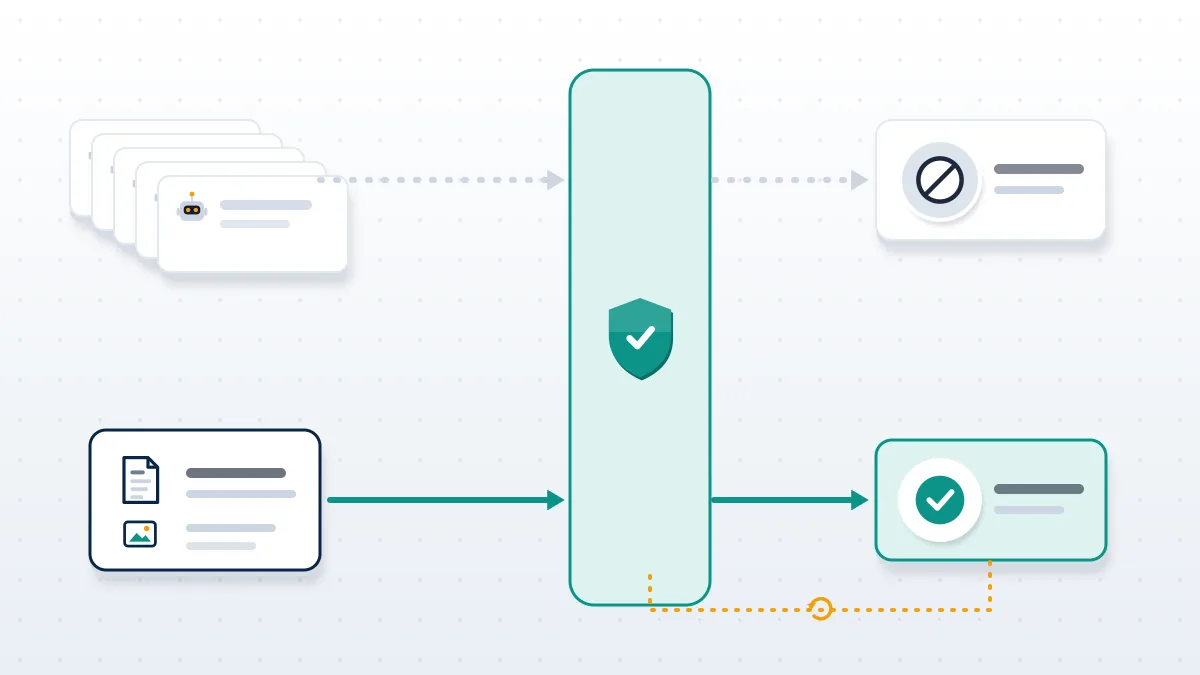
A facebook auto report bot free download, and the paid versions too, lean on accounts that Facebook already distrusts. Automated reporting at volume needs many accounts, and those accounts tend to be freshly made, bought in bulk, or compromised logins. Meta's systems weigh the reporter as well as the report: signals like account age, history and behaviour feed how much a report is trusted. Reports arriving in identical bursts from low-history accounts through shifting IP addresses are exactly the pattern its integrity systems are tuned to discount.
So the mechanism that a facebook auto report website sells as its strength, mass identical submissions, is the same pattern that makes each submission count for less. It is self-defeating by design. The screenshot a seller sends as "proof" is almost always Facebook's "Thanks for letting us know" confirmation. That screen appears for every submitted report, real or automated. It proves a click happened. It does not prove review, and it never proves removal.
If the account you are fighting is a genuine fake or an impersonation of you, you do not need a bot at all. Facebook's own impersonation flow, filed once with ID, is the route that works, and it is the same route we walk clients through. The bot adds cost and risk without adding anything Meta will weigh.
What about a facebook auto report extension?
A facebook auto report extension does the clicking inside your own browser and your own account instead of a pool of others. That sounds safer, and in one narrow sense it is: you are not buying stranger accounts. But it moves all the exposure onto you. Repeating the same report many times from one account, or filing reports a reviewer later reads as unfounded, is the behaviour Meta's policy on misusing its reporting tools names directly. The platform can and does act against the reporter.
Browser extensions carry a second problem that has nothing to do with Facebook. A facebook profile report tool installed as an extension runs with access to the pages you browse, which can include your logged-in sessions. Extensions in this category are frequently abandoned, resold, or quietly updated to harvest data. We have seen clients whose own account was compromised by the very tool they installed to attack someone else's. If you are weighing any browser tool that asks for broad permissions, treat its access to your session as the real price.
Is a facebook auto report github project any different?
A facebook auto report github project is usually the same idea published as open source, and the GitHub or GitLab listing being public does not make the activity allowed. Searching facebook report bot or facebook auto report bot turns up repositories tagged "mass-report" and "ban", often advertised through a chat channel and marketed as the #1 tool of their kind. The code being visible tells you how it clicks. It tells you nothing about whether it works, because, again, the deciding step is inside Meta.
Two things are worth knowing before you clone one. First, running it against accounts you bought or against a target to get them banned is a Terms of Service violation on Facebook's side and, depending on where you are and what you are trying to do, can cross into harassment on the legal side. Second, a surprising share of these repositories bundle something extra: credential-stealing code, a miner, or a backend that logs every account you feed it. A free facebook account report tool on a code host is not vetted by that host. You are the quality control, and most people cloning one cannot read what it does.
The pattern is not unique to Facebook. We have written the same caution for a TikTok account ban service, for the question of whether a Twitter ban service is real on X, and for what a WhatsApp ban service can actually take down. Across every platform the automated-reporting pitch sells volume and delivers a confirmation screen.
What a facebook report service or SMM panel is really selling
A facebook report service, and the facebook report smm panel listings that sit beside follower and like packages, package the same automated clicking as a paid, managed product. You paste a link, choose a quantity, and pay. What you are buying is submissions, not outcomes, and the panel's own small print almost never promises removal, because it cannot.
Your Reputation Solution files and escalates the report; the platform makes the final decision, and we say so before taking any case. That is the line a report service blurs. A reputable firm scopes what a report can and cannot achieve against the actual policy at issue, documents the violation, and tells you plainly when the honest answer is that the content stays up and suppression is the realistic route instead. A panel sells you a counter that ticks up.
Before you pay for any facebook account reporting tool, ask the seller one question: which Community Standard does my target break, and what evidence proves it? If they cannot answer, the tool cannot help, and a free case review with our team will tell you the real route in one conversation.
If the problem running underneath all of this is not one account but a reputation one, content that outranks you or follows you across search, the report menu is the wrong tool entirely. That is removal and suppression work, and we cover the routes for it in our guide to removing negative content online.
What to do instead of a facebook account report tool
The replacement for a facebook account report tool is a single, well-built report, or a professional escalation when the stakes justify it. The method is boring and it is what works.
Document first. Capture the URL, screenshots with timestamps, and a one-line note of which rule the content breaks, impersonation, a threat, a scam, nudity. Report from one real account through Facebook's own flow, choosing the reason that matches the evidence. For impersonation of you, use the dedicated impersonation form and be ready to submit ID. Then wait for the review, and if it comes back wrong, appeal, because the appeal is read by a different queue.
When the target is coordinated, a harassment campaign, a network of fakes, or a business being review-bombed, that is where a firm earns its fee: not by clicking faster, but by assembling the evidence package Meta's teams respond to and escalating through the right channel. Our anti-scam promise is simple and it limits us on purpose: we never ask for your password, we never sell report "volume", and we never imply a removal we cannot stand behind. The limits of what we will and will not do are written down.
That discipline is the same one behind every recovery and takedown service we run, from a Telegram account recovery service and a TikTok account recovery service to a Twitter account removal and a WhatsApp account recovery service. None of them is a button that sends 500 clicks. Each is evidence matched to the policy that governs the decision.
The platforms this question keeps coming up on
The auto-report pitch follows the same template on every service, so the honest answer rarely changes. If you are researching one platform, you are usually about to research the next, and the reasoning carries over.
On Telegram, the equivalent is a Telegram ban service; on TikTok, a TikTok account ban service and the separate question of a professional TikTok unban service; on YouTube, both a YouTube ban service and the recovery side, where people ask whether a YouTube recovery service is legit and how a YouTube channel recovery service actually operates. The removal-of-content side has its own guides, including TikTok content removal, negative content removal in Australia, and the narrow legal path to remove an arrest record from Google.
A recurring theme in our inbox is people who could not reach a human and turned to a bot out of frustration. If that is you, two guides save time before you spend a cent: who actually answers at the IG support number, and what the Instagram Help Center email and number options really are. Knowing the real support path is usually faster than any facebook auto report bot.
When the account itself is the asset: identity and usernames
Sometimes the report is not about taking something down at all, it is about protecting a handle or an identity you own. That is a different corner of the same field, and it has its own honest and dishonest routes. On the buying side, our guides cover how to buy a Twitter handle the way X allows, what it costs to buy Telegram usernames on Fragment, and the warning signs before you buy a TikTok username for sale.
On the checking side, a username tool that merely tests availability is legitimate and useful, unlike a report bot. See our walkthroughs of the Telegram username availability checker, the TikTok username checker versus the official check, how to land a rare short username on TikTok, and what to do when your Instagram username is not available or taken. The distinction is the whole lesson of this page: a tool that reads public information is fine, a tool that tries to force a platform's enforcement decision is not.
The bottom line on auto FB report tools
Auto FB report tools, bots, a facebook auto report extension, a facebook account reporting tool, or a GitHub script, automate submission and nothing past it. Meta still reviews every report against its own rules, finds most fake accounts itself, trusts low-history reporting accounts less, and acts against people who misuse its reporting system. A report that would succeed needs evidence, not repetition, and a report that lacks a policy violation does not succeed no matter how many times it is sent.
If an account is impersonating you or a page is genuinely harming you, the fastest route is one documented report and, where needed, a professional escalation, not a counter that ticks up on a panel. If you are not sure which route fits your situation, a free case review with Your Reputation Solution will give you the honest answer before you spend anything.