What does it mean to take down a Twitter (X) account?
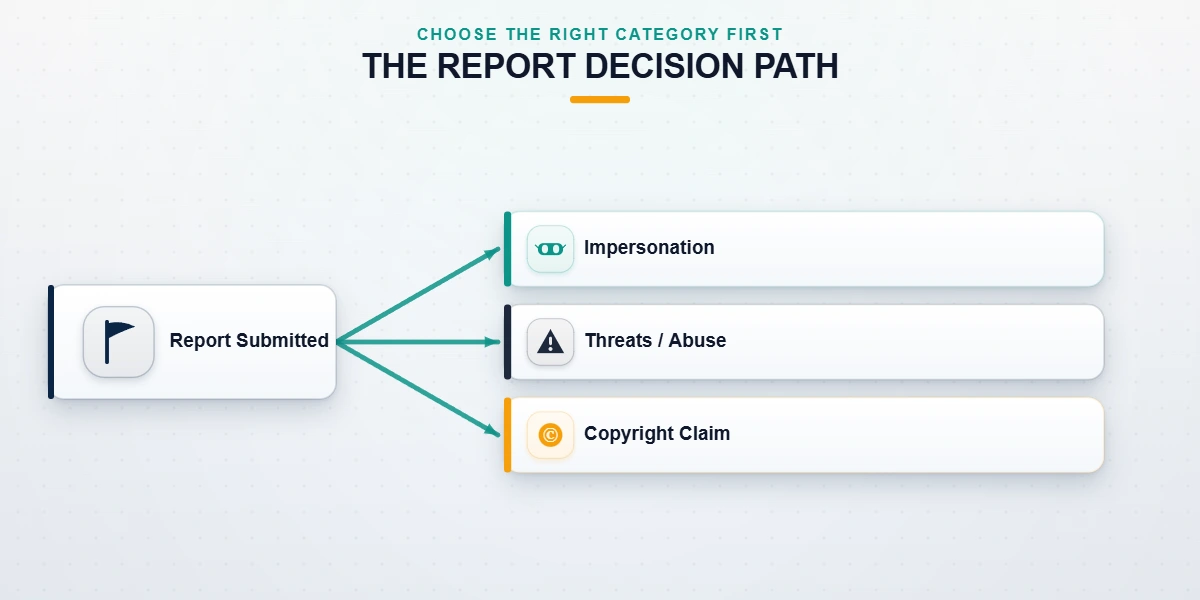
Taking down a Twitter account means asking X (formerly Twitter) to suspend, remove, or restrict an account — or a single post, reply, or media item on it — because it breaks the X Rules, a specific policy, or a law such as copyright. As of July 2026, only X can carry out a takedown. No user can delete another person's account directly; you submit a report or a legal notice, and an automated system or a human reviewer decides. The phrase "take down a Twitter account" actually covers five separate actions with five separate processes: reporting a single post or reply, reporting an entire account for abuse, filing an impersonation claim when someone poses as you, submitting a copyright/DMCA notice, and — often overlooked — taking down your own account. Each has its own form, its own evidence bar, and its own realistic outcome. Confusing them is the single most common reason a legitimate report goes nowhere.
The team behind YRS has handled hundreds of platform-enforcement cases since January 2024 (our internal records as of July 2026), and roughly one in four people who ask us how do you take down a Twitter account actually want something else — usually to recover a hacked account or delete their own old posts. So get the category right before you report anything. The evidence-first method is identical across platforms: the same framework drives our Instagram account takedown guide, and every case here is handled by a named specialist — meet the team behind our takedown guidance.
How many reports does it take to take down a Twitter account?
The honest answer to "how many reports to take down a Twitter account" is that there is no number, because X does not count reports. This is the most persistent myth in the topic, so let's be blunt. X's enforcement systems weigh the severity of the violation, the credibility of the evidence, and the reported account's history — not how many people tapped "Report." A hundred thousand reports against a post that breaks no rule will remove nothing; a single, well-documented impersonation or copyright report can remove an account within days. If you got here from a seller's landing page, the arithmetic behind a twitter mass report bot subscription is explained, with the legitimate alternative, on our page about that market. So the real method for how to get a Twitter account taken down is a truthful report of a genuine policy violation, filed under the correct category, backed by evidence. High report volume can, at most, push content into a faster human-review queue — it never manufactures a violation that isn't there.
Why does the myth survive? Because timing coincidences look like cause. An account with a real pattern of abuse gets suspended the same week a group happens to pile on, and everyone credits the volume. In reality, the violation did the work. Worse, organizing people to mass-report an account you simply dislike is itself against the X Rules on platform manipulation and coordinated reporting — X's systems recognize and discount brigades, and the effort can get the reporters actioned instead of the target. If your own account was swept up by a wave of false reports, that's an appeal problem, not a takedown problem — our guide to appeal a wrongful action on X covers how to document that the reports were coordinated and false.
How to take down a Twitter account that's impersonating you
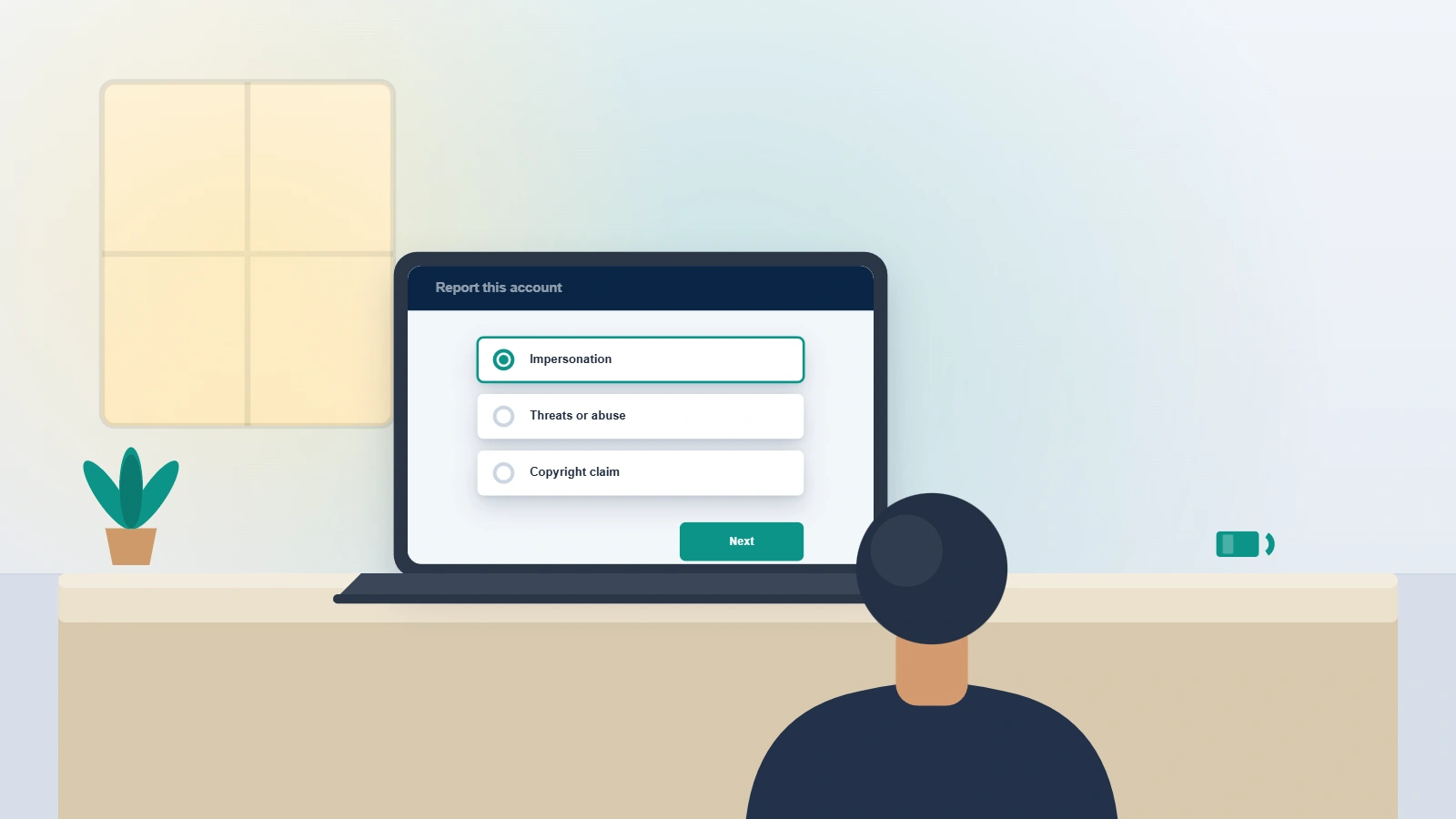
Impersonation — someone using your name, photos, or brand to pose as you — is one of the clearest legitimate grounds to take down a Twitter account, and you can report it even if you don't have an X account yourself. Genuine parody, commentary, and fan accounts that are clearly labelled are generally exempt; the policy targets confusing or deceptive identities, not satire. To report it, open the impersonating profile, tap the three-dot menu, choose Report, then select "Pretending to be someone else" and follow X's impersonation reporting flow. A verified representative can file on your behalf, and X may ask for a photo of your government ID to confirm you are the real person — it uses that only to verify identity, not to share with the impersonator.
The steps, as of July 2026:
- Gather evidence. Screenshot the fake profile, copy its @handle and profile URL, and note specific examples of it passing itself off as you.
- Open the report. From the profile's three-dot menu choose Report, then the impersonation option (or use X's dedicated impersonation form for a fuller submission).
- Verify your identity if prompted, and describe the deception plainly.
- Submit and wait for the in-app or email decision.
This same route handles ban evasion — when a suspended user spins up a fresh account to keep harassing you. Report the new profile as impersonation/evasion and cite the original suspended @handle as evidence. Once the impersonator is gone, you may be able to claim the inactive X username it was squatting on.
How to take down someone's Twitter account for abuse, harassment, or threats
If the problem is targeted harassment, threats, or hateful conduct aimed at you, that's reported under X's abusive-behavior policy rather than the impersonation flow. This is the honest core of how to take down someone's Twitter account: you don't "delete" it, you report the specific abusive conduct and let X apply proportionate enforcement — which can range from a labelled or hidden post, to a temporary lock, to full suspension for severe or repeated violations. You can file the report straight from an offending post, from a List, or from the profile. One important nuance: for some harassment cases X states it may need input directly from the person being targeted before it acts, so a stranger's third-party report is sometimes not enough — the affected individual should file where possible.
Two categories are fast-tracked and treated far more severely than ordinary abuse: non-consensual intimate imagery (NCII) and any content sexualising minors. X removes these on a priority basis, permanently terminates the poster, and preserves evidence for law enforcement — do not delay reporting them. The mechanics mirror takedowns on other platforms; if the same person is harassing you elsewhere, the evidence-first approach in our guide to report an abusive WhatsApp account applies there too.
Not sure which report actually fits your situation? Getting the category and evidence right is the whole game. Talk to our team for a free 60-minute case review — we'll tell you plainly what's removable, what isn't, and exactly what evidence X will want, before you spend anything.
How to get a Twitter account taken down for copyright (a DMCA notice)
If someone reposted your photo, video, artwork, or writing without permission, you don't rely on the ordinary Report button — you file a copyright complaint, which is X's version of a DMCA takedown notice. This is a formal legal process under the U.S. Copyright Office's DMCA framework, and it's often the most reliable route because X is legally required to act on a valid notice. Use X's copyright policy and DMCA form, identify the exact infringing post URLs, describe the original work you own, and affirm under penalty of perjury that you hold the rights. Valid notices are typically actioned within a couple of days; filing duplicate complaints slows the queue rather than speeding it.
Two cautions matter here. First, X notifies the reported user and shares the complainant's contact details, so rights-holders who want privacy can appoint a designated agent to file. Second — and this is a hard line — filing a fraudulent copyright or takedown notice against content you don't own is itself unlawful under 17 U.S.C. § 512(f) and can expose you to damages. We never file a notice we can't stand behind, and no legitimate service should either.
How to take down your own Twitter (X) account
If the account you want gone is your own, you don't report anything — you take it down yourself, and it's fast and reversible. On the web, go to Settings and privacy → Your account → Deactivate your account; the mobile apps follow the equivalent path, per X's official deactivation guide. This is the real answer to how to take down a Twitter account when it's yours: deactivation opens a 30-day window during which simply logging back in fully restores everything. Do nothing for 30 days and X permanently deletes the account and its data.
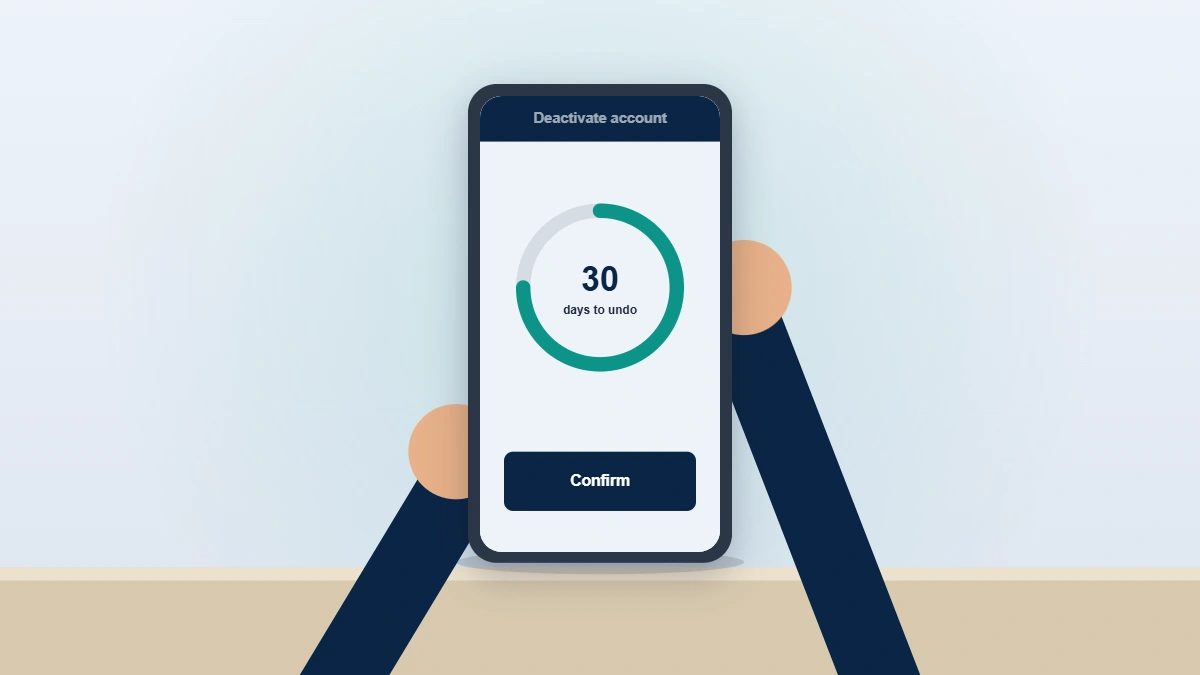
Before you deactivate, download your data archive (Settings → Your account → Download an archive of your data), because posts and media are not guaranteed to be recoverable after permanent deletion. This 30-day grace period is the same kind of window data-protection law contemplates under GDPR Article 17 (the "right to erasure"). One catch: X won't let you delete an account you can't log into, so if you're locked out or hacked you must regain access first — our Twitter account recovery guide walks through that before you can close or clean up the account.
How long does it take — and what about "immediately" or "without the password"?
There is no button that takes down a Twitter account immediately, and any thread or seller promising instant, guaranteed removal is describing something that doesn't exist — X does not publish an official decision SLA, and reviews take time because a system or a human has to verify a real violation first. Third-party trackers put the realistic range at roughly 12 hours to 7 days, which we treat as an industry-observed estimate, not an X guarantee. Searches like "how to take down Twitter account" fast, or "how to get someone's Twitter taken down" overnight, all run into the same wall: category and evidence decide the outcome, not speed hacks.
| Takedown type | Typical review window | What decides the outcome |
|---|---|---|
| Impersonation of you (with ID) | ~1–7 days | Identity match + evidence of passing-off |
| Copyright / DMCA notice | ~1–3 days | Valid proof of ownership |
| Abuse, harassment, threats | ~1–7 days | Severity + documented evidence |
| NCII / content harming minors | Priority / fastest | Immediate termination, evidence preserved |
| Single post or reply | Hours to a few days | Clear, specific policy breach |
| Whole account (pattern of abuse) | Days to weeks | Repeat or severe violations on record |
"How to take down a Twitter account without the password" is really two questions. If it's your account and you're locked out, you don't report a stranger — you recover access first. If it's someone else's account, you never needed their password anyway; you report a genuine violation and X decides. Nobody legitimate takes down an account by logging into it. The same logic drives our sibling walkthrough on how to take down a TikTok account, and if your real worry is protecting your own profile, our guide to what actually triggers an X ban is the place to start.
What we won't do — the anti-scam and abuse boundary
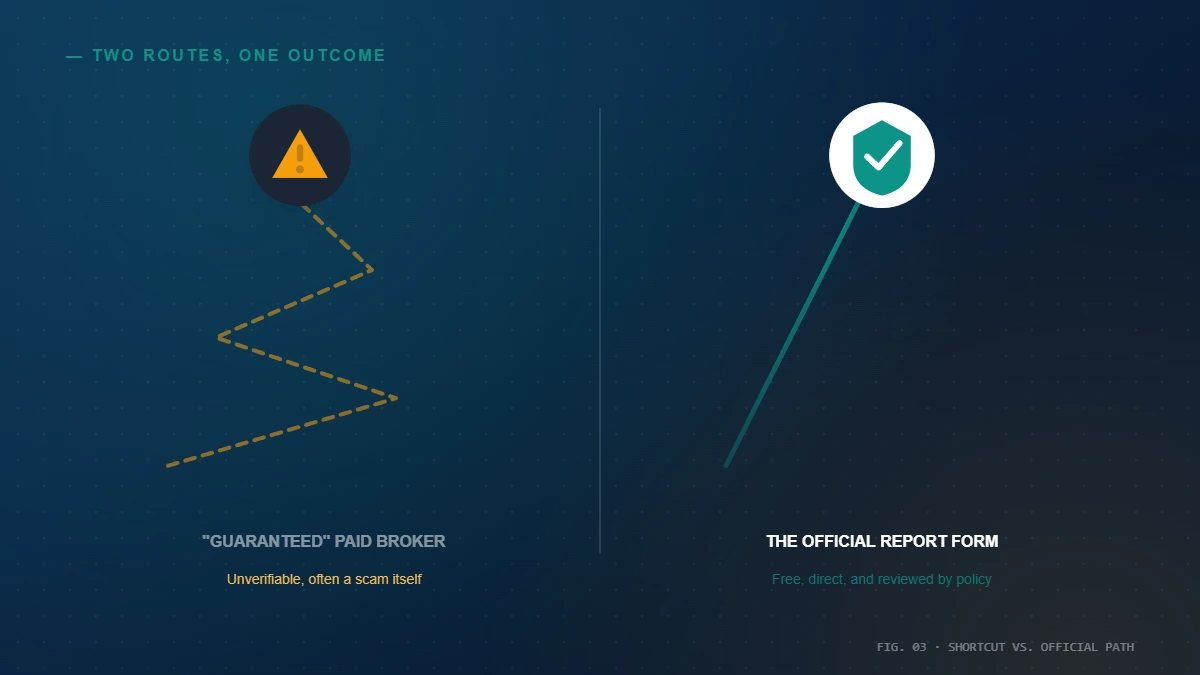
This is a topic crawling with scams and bad-faith requests, so here is exactly where we draw the line. We will never ask for your password or anyone else's — legitimate reporting and recovery never require it, and any "service" that asks is phishing. We don't offer pay-to-remove: no amount of money makes X delete content that breaks no rule, and anyone charging for a "guaranteed instant takedown" is reselling the free report form or simply taking your money. We won't help you weaponize reports. Mass-reporting or filing false claims against a legitimate account you dislike — an ex, a critic, a competitor — doesn't work, is against the X Rules, and can get you suspended. And some content simply stays up: lawful opinion, satire, criticism, and public-figure commentary that violates no policy generally cannot be removed, and we'll tell you that honestly rather than take a case we can't win.
If you suspect a support-impersonation scam, report it to the FTC at reportfraud.ftc.gov. You can read exactly why we won't help take down a legitimate account in our disclaimer, and if you thought a shadowban was a "soft takedown," our explainer on how X's reach limits really work clears that up. We don't guarantee removal. We do guarantee a sober, evidence-based assessment of whether your case is actually removable — before you spend a cent.